Unisciti a noi in un viaggio nel mondo dei libri!
Aggiungi questo libro allo scaffale
Grey
Scrivi un nuovo commento Default profile 50px
Grey
Iscriviti per leggere l'intero libro o leggi le prime pagine gratuitamente!
All characters reduced
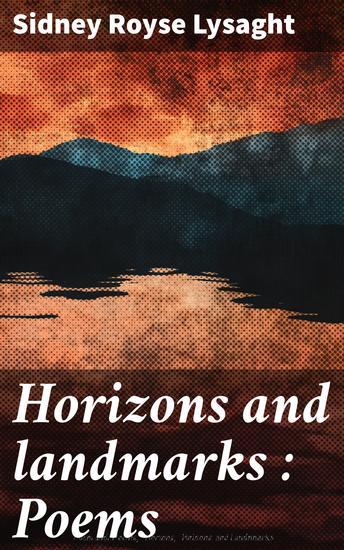
Horizons and landmarks : Poems - cover

Horizons and landmarks : Poems

Sidney Royse Lysaght

Casa editrice: Good Press

  • 0
  • 0
  • 0

Sinossi

In "Horizons and Landmarks: Poems," Sidney Royse Lysaght presents a reflective collection that traverses the intricate landscapes of human experience and nature. Through his deft use of meter and vivid imagery, Lysaght encapsulates both the ephemeral beauty of the physical world and deeper existential themes. The poems are rich with lyrical resonance, showcasing a keen observation of everyday life while evoking the spiritual undertones that often accompany moments of clarity. Set against the backdrop of early 20th-century literature, Lysaght's work resonates with the introspection found in contemporary movements, bridging the gap between modernism and the pastoral tradition. Sidney Royse Lysaght, an Irish poet, brings his diverse backgrounds and experiences to bear on this collection. With an affinity for the natural world and a profound interest in mythology, Lysaght's work reflects his lifelong journey of exploration and discovery. His extensive travels and deep-rooted connection to his Irish heritage undoubtedly influenced his poetic voice, allowing him to anchor universal themes in the specificity of place and memory. Readers seeking a profound exploration of nature, identity, and the human condition will find in "Horizons and Landmarks" a captivating and enriching experience. Lysaght's ability to weave personal introspection with broader cultural commentary makes this collection not only a testament to his poetic prowess but also a timeless journey inviting introspection and emotional resonance.
Disponibile da: 02/03/2025.
Lunghezza di stampa: 140 pagine.

Altri libri che potrebbero interessarti

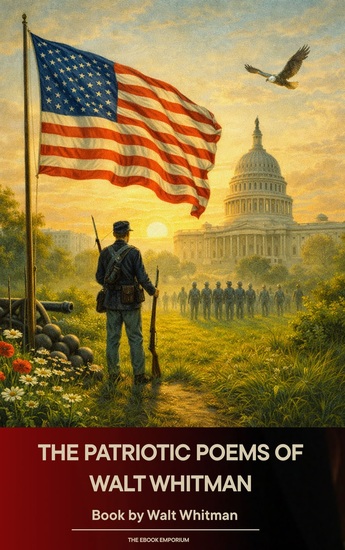
  • The patriotic poems of Walt Whitman - cover

    The patriotic poems of Walt Whitman

    Walt Whitman

    • 0
    • 0
    • 0
    What does patriotism sound like when it speaks from the soul?
    
    The Patriotic Poems of Walt Whitman brings together powerful verses that celebrate the ideals, struggles, and spirit of the United States. Written during times of national growth, conflict, and reflection, these poems capture Whitman's deep belief in democracy, unity, and the dignity of ordinary people.
    
    From the rhythms of marching soldiers to quiet moments of national mourning, Whitman's poetry gives voice to both pride and sacrifice. His free-verse style, bold imagery, and inclusive vision transformed poetry and shaped the way America understood itself.
    
    This collection highlights Whitman's most stirring patriotic works, offering readers an inspiring journey through American identity, freedom, and resilience.
    
    Inside this eBook, you'll explore:
    
    Poems inspired by the American Civil War and national unity
    
    Themes of liberty, democracy, and collective identity
    
    Whitman's revolutionary free-verse style
    
    A poetic tribute to the American people and their ideals
    
    Widely studied and deeply influential, Whitman's patriotic poetry continues to resonate with readers who seek meaning in history, nationhood, and shared humanity.
    
    Celebrate the voice that sang of America. Buy now and experience the patriotic poetry of one of the nation's greatest writers.
    Mostra libro
  • Top 10 Poets The - The War Poets - Five poems each from some of the best war poets ever - cover

    Top 10 Poets The - The War Poets...

    Wilfred Owen

    • 0
    • 0
    • 0
    The language of Poetry is an art that most of us attempt at some point in our lives.  Although its commonplace exposure has been somewhat marginalised in today’s often fast-paced lives we all recognise good verse that can empathise with our thoughts or open us up to experience new things in new ways, to better understand and to enjoy the many strands of our lives. 
     
    But finding a starting point can be overwhelming, even off-putting, so in this series we offer up our Top 10 classic poets, who brim with talent and verse, on a range of subjects and themes that we can all enjoy. 
     
    War may be called diplomacy by other means but for the youth of a nation, pressed into service for that nation, its effects are horror, terror, injury, trauma and the likelihood of death.  Within the words of these 10 poets, dreams, ambition and reality collide into some very vivid and moving words. 
    1 - The Top 10 Poets - The War Poets - An Introduction 
    2 - Soldier's Dream by Wilfred Owen 
    3 - Anthem For Doomed Youth by Wilfred Owen 
    4 - Futility by Wilfred Owen 
    5 - From My Diary July 1914 by Wilfred Owen 
    6 - Sonnet - On Seeing A Piece of Our Heavy Artillery Brought into Action by Wilfred Owen 
    7 - This Is No Case of Petty Right or Wrong by Edward Thomas 
    8 - These Things That Poets Said by Edward Thomas 
    9 - The Trumpet by Edward Thomas 
    10 - Cock Crow by Edward Thomas 
    11 - Adlestrop by Edward Thomas 
    12 - Libido by Rupert Brooke 
    13 - Dead Men's Love by Rupert Brooke 
    14 - Desertion by Rupert Brooke 
    15 - The Funeral of Youth. Threnody by Rupert Brooke 
    16 - Soldier by Rupert Brooke 
    17 - Killed in Action by Isaac Rosenberg 
    18 - August 1914 by Isaac Rosenberg 
    19 - Spring 1916 by Isaac Rosenberg 
    20 - Isolation A Fragment by Isaac Rosenberg 
    21 - Break of Day in the Trenches by Isaac Rosenberg 
    22 - The Lost Ones by Francis Ledwidge 
    23 - A Soldier's Grave by Francis Ledwidge 
    24 - Lament for the Poets, 1916 by Francis Ledwidge 
    25 - Growing Old by Francis Ledwidge 
    26 - The Call to Ireland by Francis Ledwidge 
    27 - Blighty by Ivor Gurney 
    28 - Sonnets 1917 - V - England the Mother by Ivor Gurney 
    29 - On Somme by Ivor Gurney 
    30 - Strange Hells by Ivor Gurney 
    31 - In Memoriam (Easter 1915) by Ivor Gurney 
    32 - The Dying Patriot by James Elroy Flecker 
    33 - No Coward's Song by James Elroy Flecker 
    34 - Pillage by James Elroy Flecker 
    35 - Destroyer of Ships, Men, Cities by James Elroy Flecker 
    36 - Epithalamion by James Elroy Flecker 
    37 - The English Graves by Laurence Binyon 
    38 - The Distant Guns by Laurence Binyon 
    39 - For the Fallen by Laurence Binyon 
    40 - England's Poet by Laurence Binyon 
    41 - Ypres by Laurence Binyon 
    42 - A Call to Action by Charles Sorley 
    43 - A Letter From the Trenches to An Old School Friend by Charles Sorley 
    44 - Such Such Is Death by Charles Sorley 
    45 - German Rain by Charles Sorley 
    46 - To Germany by Charles Sorley 
    47 - Prayer Before Battle by Alfred Lichtenstein 
    48 - The Battle at Saarburg by Alfred Lichtenstein 
    49 - Monday in the Courtyard of the Barracks by Alfred Lichtenstein 
    50 - Soldiers' Songs by Alfred Lichtenstein 
    51 - The End by Alfred Lichtenstein
    Mostra libro
  • Wild Life - cover

    Wild Life

    James McDermott

    • 0
    • 0
    • 0
    Wild Life by James McDermott explores the nature of queerness, the queerness of nature, and the queerness of 'natural' masculinity. In bold poems that root themselves firmly in the coastal landscapes of North Norfolk, a vivid and radical dialogue between nature, sexuality and self-discovery emerges. McDermott brings a lyrical physicality to poetry which focuses on the body, desire, shame, and tenderness, creation and re-creation, and where there is 'everything always opening / everything always coming out'. These poems skilfully graft and touch, draw parallels between moments of transformation in the many kinds of ecosystems we exist in – whether outside and between woodland, shoreline and skyline, where the wildlife will 'see me as just another animal', or in human interactions in schools, gyms, and pubs where ideas of manhood, self, and society's expectations collide. Like the coastal spaces where McDermott finds an innate connection, Wild Life identifies that which is fluid and constantly changing – and that nature itself isn't afraid of being colourful, excessive, too much.
    Mostra libro
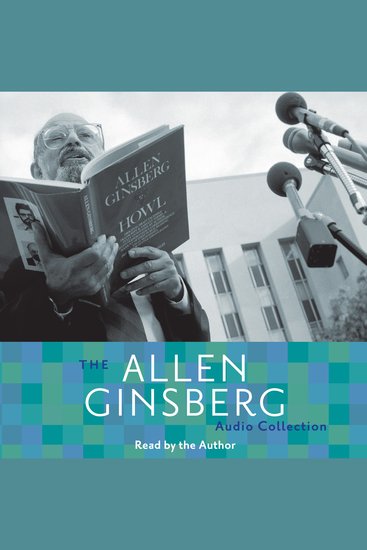
  • Allen Ginsberg Poetry Collection - Booklet and - cover

    Allen Ginsberg Poetry Collection...

    Anonimo

    • 0
    • 0
    • 0
    A collection of recordings written and read by one of the greatest literary and cultural figures of the 20th. The collection is accompanied by a special 64 page booklet containing the poems.  
     
     Upon the release of his first published work, Howl and Other Poems (1956), Allen Ginsberg became the unlikely force of a movement that would change a generation: art, literature, sex, love, family and politics. None would ever be seen the same way again. The Beat Generation was born. And with it, the legend of the free-spirited, rule-breaking, brillian group of friends Ginsberg kept close--Jack Keroac, William Burroughts, Gregory Corso and Neal Cassady. 
     Including Ginsberg’s two seminal works, Howl and Kaddish, as well as nearly two dozen other works, this collection celebrates a cultural icon who was of his time, ahead of his time, and whose legacy will transcend time. The collection includes such important works as: 
    Who Be Kind To, White Shroud, Footnote to Howl, Sunflower Sutra, America, Supermarket in California, My Sad Self, Wales Visitation, Sad Dust Glories, Plutonian Ode, My Green Automobile, Neal’s Ashes, Many Loves, The Names, September on Jessore Road, Father Death Blues, and more... 
     What makes this collection very special is the accompanying 64 page booklet featuring the text of the poems.
    Mostra libro
  • The Poetry of John Milton - Sparkling poems from the famed man behind Paradise Lost - cover

    The Poetry of John Milton -...

    John Milton

    • 0
    • 0
    • 0
    John Milton was born in Bread Street, London, on December 9th, 1608.  His early years were privately tutored before gaining a place at St Paul’s School and in 1625 he matriculated at Christ's College, Cambridge, earning a BA in 1629 and an MA in 1632. At Cambridge he had developed a reputation for poetic skill but also experienced alienation from his peers and university life as a whole.  
    The next 6 years were spent in private study. He read both ancient and modern works of theology, philosophy, history, politics, literature and science, in preparation for a poetical career.  Milton mastered Latin, Greek, Hebrew, French, Spanish, and Italian. To these he would add Old English (whilst researching his History of Britain) and also acquired more than a passing acquaintance in Dutch.  
    Although he was studying, some of his poetry from this time is remarkable; L’Allegro and Il Penseroso in 1631 and Lycidias in 1638. 
    In May 1638, Milton embarked upon a 15 month tour of France and Italy. These travels added a new and direct experience of artistic and religious traditions, especially Roman Catholicism.  He cut the journey short to return home during the summer of 1639 because of what he claimed were "sad tidings of civil war in England."  
    Once home, Milton wrote prose tracts against episcopacy, in the service of the Puritan and Parliamentary cause.  
    He married 16-year-old Mary Powell in June 1643 but she left him after only a few months during which he wrote and published several writings on divorce. Mary did return after 3 years and their life thereafter seemed harmonious.  Milton received a hostile response to the divorce tracts and drove him to write Areopagitica, his celebrated attack on pre-printing censorship.  
    With the parliamentary victory in the Civil War, Milton wrote The Tenure of Kings and Magistrates (1649) which defended popular government and implicitly sanctioned the regicide which led to his appointment as Secretary for Foreign Tongues by the Council of State.  
    On 24 February 1652 Milton published his Latin defense of the English People, Defensio Pro Populo Anglicano, also known as the First Defense. Milton's Latin prose and intellectual sweep, quickly gained him a European reputation.  
    Tragically his first wife, Mary, died on May 5th, 1652 following the birth of their fourth child.   The following year Milton had become totally blind, probably due to glaucoma.  He then had to dictate his verse and prose to helpers, one of whom was the poet Andrew Marvell. 
    He married again to Katherine Woodcock but she died in February 1658, less than four months after giving birth to a daughter, who also tragically died.  
    Though Cromwell’s death in 1658 caused the English Republic to collapse Milton stubbornly clung to his beliefs and in 1659 he published A Treatise of Civil Power, attacking the concept of a state-dominated church. Upon the Restoration in May 1660, Milton went into hiding for his life. An arrest warrant was issued and his writings burnt. He re-emerged after a general pardon was issued, but was nevertheless arrested and briefly imprisoned before influential friends, such as Marvell, now an MP, intervened 
    His third marriage was to Elizabeth Mynshull. Despite a 31-year age gap, the marriage seemed happy and Milton spent the remaining decade of his life living quietly in London, apart from a short spell in Chalfont St. Giles, during the Great Plague of London.  
    Milton was to now publish his greatest works, which had been gestating for many years.
    Mostra libro

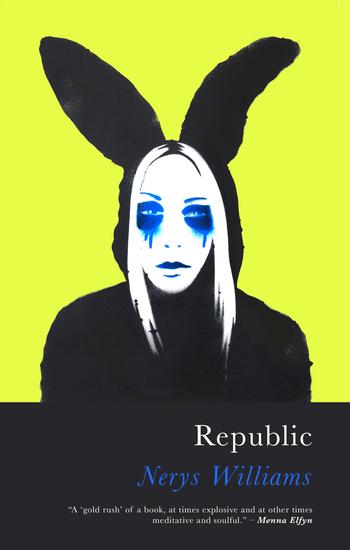
  • Republic - cover

    Republic

    Nerys Williams

    • 0
    • 0
    • 0
    Nerys Williams' new collection questions what makes a  Republic? Machinations of power? The speeches of politicians? The broad sweep of official histories? This sequence of 80 prose-poems, each constructed in 20 sentences, has arisen from the author's need to tell a more intimate history, to commit an untold oral history to paper. Williams returns to the meaning of "republic" in its Latin origins which meant "wealth of the people". 
    The poems tell the story of  a young Welsh woman growing up and coming of age in the 1980s and 90s, a time that culminated with new devolutionary powers in Wales. The explosion of the arts and culture looms large, through bands from New Order to my bloody valentine, but it is explored specifically through Cŵl Cymru', and the power of Welsh-language bands like Datblygu. This story is also about class, as we explore a family history of hard work in jobs from retail to caregiving. The poems introduce us to family influences, from a father who urges the narrator as a child to 'own the stage' in an early school Eisteddfod, to a grandmother who worked long hours in her rural shop, and a mother who was the local midwife.
    There are stories told, overheard, handed down, sometimes translated from Welsh. Together, they create an expansive portrait of the era, including the challenges for women, Welsh-speakers, and other marginalized groups. Ferocious remarks about the Welsh in the popular media are dissected with satirical humour and appalled fascination, while other poems describe being a token woman and political outsider on a TV current affairs show panel, tolerated but ostracized.
    From her more recent home, the republic of Ireland, Williams poses the possibilities of a nation looking at itself and its history from afar. Wales has not been allowed to be a republic, but is subject to a state that has military claims on its landscape and a second home explosion which has a severe impact on its communities. There is rebellion to be found in the older meaning of "republic": since the wealth of the people is a wealth of sounded stories, culture, art, and history.
    'Nerys Williams's Republic is a tour de force, a masterful account of the intellectual, political and personal development of a young woman from Welsh-speaking rural Wales and out in the world. Pitched against nostalgia, Nerys Williams's prose poems are tough-minded, shrewd and hugely evocative of the times she chronicles. She deploys details so vividly and with such a light a touch that she's created a new music all of her own. This book, like a waistcoat belt she describes, is a 'steel buckle, once harnessed to silk'.' —Gwyneth Lewis
    'The poetry of Nerys Williams is both playful and sharply preceptive, drawing on a wide range of often unexpected influences. She brings a unique set of interests to bear not just poetry in Wales, but on poetry generally.'—Zoë Skoulding
    'Nerys Williams brings precision, scrutiny, and synaesthesia to her terse, contemplative poems.' -Ben Wilkinson, The Guardian
    '…a strong imagism and an engaging 'I' voice that sometimes subverts expectations, allowing for a shift into more collective concerns. In addition, her deft handling of soundplay (especially the use of alliteration and assonance) greatly add to the experience of the poem as art.' -Michael S. Bengal  Poetry Ireland 
    Mostra libro