Unisciti a noi in un viaggio nel mondo dei libri!
Aggiungi questo libro allo scaffale
Grey
Scrivi un nuovo commento Default profile 50px
Grey
Iscriviti per leggere l'intero libro o leggi le prime pagine gratuitamente!
All characters reduced
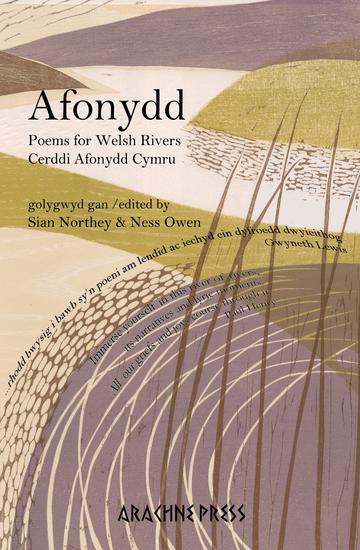
Afonydd - Poems for Welsh Rivers Cerddi Afonydd Cymru - cover

Afonydd - Poems for Welsh Rivers Cerddi Afonydd Cymru

Sian Northey, Ness Owen

Casa editrice: Arachne Press

  • 0
  • 0
  • 0

Sinossi

Inspired by the positive reaction to our earlier bilingual Welsh/English poetry anthology about a Welsh road, A470 Poems for the Road/Cerddi'r Ffordd; we expanded our scope to Welsh rivers - any of them. with over 600 to choose from this proved a rich seam of invention for our Welsh poets, and a wide geographical range within Wales too. Our poets range from novices to luminaries of the Welsh Poetry scene. The outcome - 50 poems in their original language, whether that was English or Welsh, next to a translation, celebrating everything about Welsh rivers, from source to estuary, fresh and clean or culverted and polluted, childhood memory to recent flooding.
Disponibile da: 29/05/2025.
Lunghezza di stampa: 110 pagine.

Altri libri che potrebbero interessarti

  • Routes - cover

    Routes

    Rhiya Pau

    • 0
    • 0
    • 0
    At the core of this debut collection is a question – what is worth holding onto?
    Through poetic experiments that blend the academic and the artistic, Rhiya Pau queries complex characters and tender landscapes. Routes journeys from Ba's kitchen in Sonia Gardens to Independence hour in Delhi, across the pink shores of Nakuru, to meet a painter on Lee High Road.
    Celebrating fifty years since her community arrived in the UK, Pau chronicles the migratory histories of her ancestors and simultaneously lays bare the conflicts of identity that arise from being a member of the East African-Indian diaspora. In this multilingual discourse exhibiting vast formal range, Pau wrestles with language, narrative and memory, daring to navigate their collective fallibilities to architect her own identity.
    '[Routes]...holds up to the light the wisdom of the past, and asks what else is passed down along with it...a work of humane intelligence, formal experiment and linguistic verve' - Sarah Howe, Judge of Eric Gregory Awards 2022
    Mostra libro
  • Grains of Galaxies - A Collection of Short Stories & Poetry - cover

    Grains of Galaxies - A...

    Kristi Brooks

    • 0
    • 0
    • 0
    This collection of short stories and poems ranges from mysterious fires that spring up from the earth to ghostly spirits roaming in a long-forgotten home to true love that is found and lost way too soon. 
    There are tales of gods who have gone mad and those who have forgotten what it feels like to create and love with empathy. There are encounters that seem like normal everyday situations, but they are anything but normal. Dispersed throughout are poems that tie together the ideas of worlds within worlds and galaxies within a grain of sand.
    Mostra libro
  • Statues - cover

    Statues

    Azan Ahmed

    • 0
    • 0
    • 0
    'He grew up to be a man whose sighs and slumps replaced sentences. Is that gonna be me?'
    Days after his father's passing, Yusuf discovers a dusty mixtape that changes everything he knew about a man who barely spoke. Turns out, his dad spent the '90s rapping about pretty girls and Kilburn life, plotting dreams of superstardom with his best friend Omar. How did this passionate wordsmith become a silent statue?
    Yusuf's mourning becomes a journey into the past, soundtracked by Omar's thumping beats and his father's bars, as he begins to uncover secrets that turn his world upside-down.
    Witty, honest and deeply moving, Azan Ahmed's play Statues is a lyrical love letter to the original code-switchers, exploring the impact of loss, and what you can gain from it. It premiered at the Bush Theatre, London, in 2024, with a cast featuring the playwright himself.
    Mostra libro
  • Four Arthurian Romances - cover

    Four Arthurian Romances

    Chrétien de Troyes

    • 0
    • 0
    • 0
    Four twelfth-century epic poems detailing the quests of the knights of King Arthur, as well as their loves.Erec and Enide: One of King Arthur’s knights, Erec, is assigned to keep Guinevere and her maiden company when a strange group of visitors arrive. Guinevere orders Erec to follow one of them, and his journey leads him to the fair Enide . . . Cligès: The tale of Cligès begins with his father, Alexander, who leaves his home in Greece to serve King Arthur. In England, he marries Arthur’s niece, and together they have a son, Cligès. Alexander and his family return to Greece where his son becomes a man and falls for a married woman . . . Yvain, the Knight of the Lion: In his search for revenge, Yvain finds love with a beautiful widow. But when Gawain encourages him to pursue a chivalric quest, it places their relationship in jeopardy . . . Lancelot, the Knight of the Cart: This epic story details the knight Lancelot’s trials in his rescue of the beautiful Guinevere from the hands of Meleagant, son of Bademagu, King of Gorre . . . Four Arthurian Romances collects some of the greatest works of medieval literature. Chrétien de Troyes is credited with inventing the Arthurian romance genre and originating the character of Lancelot. The adventure and romance contained in these epic poems is sure to delight readers.
    Mostra libro
  • The Dictator's Eyebrow - cover

    The Dictator's Eyebrow

    Cyril Wong

    • 0
    • 0
    • 0
    This is a disturbing, poetic account of an unnamed dictator’s eyebrow whose longings, delusions of grandeur, and curious influence have shaped history in ways previously unknown—until now. Within a surreal tale about an eyebrow’s thirst for recognition and power, a love story also unexpectedly emerges. 
     
    Finalist for the Singapore Book Publishers Association Awards 2016. 
     
    “An enthralling pyroclastic flow of poetic flagellation ripping the mask of stoic indifference and lapdog-media concocted majestic stature of a narcissistic tyrant. And every wordstroke of the poet never fails to decode and eviscerate the megalomaniac to the grave.” 
    - Elangovan, recipient of the 1997 SEA Write Award
    Mostra libro
  • The Nose - Gogol uses the absurd in expert form to show us the problems with society status class and their places in the world around us - cover

    The Nose - Gogol uses the absurd...

    Nikolai Gogol

    • 0
    • 0
    • 0
    Nikolai Vasilievich Gogol was born on 1st April 1809 to a father, descended from Ukrainian Cossacks and a mother with a military background in the Ukrainian town of Sorochyntsi, then part of the Russian Empire and rich in Cossack traditions and folklore.   
     
    His father wrote poetry and plays which the young Gogol helped stage at his uncle’s home theatre.  This helped ignite in him a love of literature and blossomed when he attended, what is now, the Nizhyn Gogol State University at the age of 12.  Here he participated in school theatre productions and refined his mastery of his native Ukrainian and also the Russian of his Imperial masters. 
     
    In 1828 he went to St Petersburg and unsuccessfully tried to begin a career as an actor after finding that with no money and no connections the civil service was barred to him. 
     
    Embezzling money from his mother he embarked on a trip to Germany. When the money ran out, he returned to St Petersburg but the experiences were used in a series of stories he contributed to periodicals.  These tales were steeped in his childhood memories of the Ukrainian landscape and peasantry enlivened with the supernatural of its folklore woven with realistic events of the day.  He wrote in Russian in a whimsical, colloquial style with a smattering of Ukrainian words and phrases that provided an authenticity.  Eight stories were published as ‘Evenings on a Farm near Dikanka’.  Seemingly all at once fame and fortune arrived. Gogol was hailed by his contemporaries, including Pushkin, as a pre-eminent writer of Russian literature.   
     
    His success continued with his brilliant plays ‘The Inspector General’ and the comedy ‘The Marriage for the Theatre’, both being highly acclaimed.   
     
    In 1834 he became Professor of Medieval History at the University of St. Petersburg but with little academic or teacher training, failed to adequately fulfil many of his duties and soon resigned this post.  With no obligations and using his earnings from his writing, which now included the impressionistic and immortal ‘Dead Souls’, Gogol travelled around Europe, spending the most time in Rome where he studied art, read Italian literature and developed a passion for opera.  
     
    In the 1840s Gogol became preoccupied with a need to purify his soul and embarked on a pilgrimage to Jerusalem. In tandem he fell under the influence of a strict and austere spiritual ascetic who persuaded him to observe strict fasts that, allied with his depression and deteriorating health, contributed to his death on 21st April 1852 at the age of only 43. 
     
    In the Nose Gogol reaches out with the absurd premise that a Nose can have, and enjoy, a life of its own regardless of the complications and consequences to its former owner.
    Mostra libro