Unisciti a noi in un viaggio nel mondo dei libri!
Aggiungi questo libro allo scaffale
Grey
Scrivi un nuovo commento Default profile 50px
Grey
Iscriviti per leggere l'intero libro o leggi le prime pagine gratuitamente!
All characters reduced
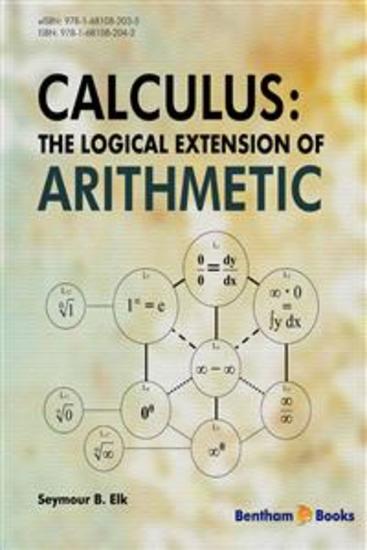
Calculus: The Logical Extension of Arithmetic - cover

Calculus: The Logical Extension of Arithmetic

Seymour B. Elk

Casa editrice: Bentham Science Publishers.

  • 0
  • 0
  • 0

Sinossi

Calculus: The Logical Extension of Arithmetic re-examines the calculus paradigm by expanding the set of ‘indeterminate forms’ espoused by l’Hôpital 320 years ago.  Starting from the 54 possible binary combinations of the foundational numbers (zero, one and infinity), a replacement for the function theory formulated earlier by Newton and Leibniz, is presented. A logical extension of the three concepts of differentiation, integration and the Naperian base number e follows this introduction, which is interpreted as ‘zero divided by zero’, ‘infinity times zero’ and ‘one raised to the infinite power’, respectively. The concept that a number postulated as representing ‘nothing’ is reinforced a useful connection to calculus theory. This treatise proposes a ‘similar’ number to denote and quantify ‘all’, in order to understand the concept of infinity. Other topics covered in this text include analytical geometry, infinite sequences and infinite series.
Calculus: The Logical Extension of Arithmetic is a useful reference on advanced calculus theory for mathematics students and researchers.
Disponibile da: 15/03/2024.


Altri libri che potrebbero interessarti

  • The Human Brain - Anatomy Functions and Disorders - cover

    The Human Brain - Anatomy...

    Ava Westwood

    • 0
    • 0
    • 0
    The human brain is the command center of the body, responsible for processing information, regulating bodily functions, and enabling cognitive abilities such as thinking, memory, and emotions. As the most complex organ in the human body, the brain contains billions of neurons that communicate through intricate networks, allowing for seamless coordination of voluntary and involuntary actions. Understanding the structure and function of the brain is essential for gaining insights into neurological health, mental well-being, and the mechanisms underlying various cognitive and motor processes. 
    The brain is divided into three primary regions: the cerebrum, cerebellum, and brainstem. The cerebrum, the largest part of the brain, is responsible for higher cognitive functions such as reasoning, problem-solving, language, and sensory perception. It is further divided into four lobes—frontal, parietal, temporal, and occipital—each with distinct roles in processing information. The cerebellum, located at the back of the brain, is crucial for coordinating movement, maintaining balance, and fine motor control. The brainstem, connecting the brain to the spinal cord, regulates vital autonomic functions such as breathing, heart rate, and digestion, ensuring the body’s survival. 
    Neurons, the fundamental units of the brain, communicate through electrical and chemical signals. This intricate communication network enables the processing of sensory inputs, the initiation of motor responses, and the storage of memories. Supporting cells known as glial cells play a crucial role in maintaining brain health by providing nutrients, removing waste, and protecting neurons from damage. Neurotransmitters, chemical messengers in the brain, facilitate signal transmission between neurons and influence mood, behavior, and cognitive functions.
    Mostra libro
  • 3D-Printing Houses - cover

    3D-Printing Houses

    Martin Drake

    • 0
    • 0
    • 0
    3D printing is transforming industries worldwide, and construction is no exception. As housing shortages and high building costs continue to challenge communities, 3D-printed homes offer a promising solution. This technology enables faster, more affordable, and adaptable construction, making homeownership and safe housing accessible to more people. By automating traditional processes, 3D printing redefines what's possible in construction—reducing waste, customizing designs, and speeding up building times. This book explores the groundbreaking impact of 3D printing on housing, highlighting its potential to revolutionize construction, improve affordability, and reshape the future of urban and rural living. 
      
    3D printing, also known as additive manufacturing, is reshaping the construction industry by introducing innovative approaches to building homes, offices, and infrastructure. Traditionally used in manufacturing and prototyping, 3D printing has now evolved into a reliable construction method that involves layering material to create structures, walls, and entire buildings from digital models. This technology allows construction companies to bypass many of the labor-intensive processes typically associated with conventional building techniques, offering an efficient, cost-effective, and flexible approach to construction. 
      
    In 3D printing for construction, materials like concrete, mortar, and specialized compounds are extruded layer by layer, following a precise digital design that directs robotic arms or large-scale printers. These printers can operate continuously, producing walls, floors, and structural elements at a faster pace than manual construction. As a result, 3D printing not only reduces the time required to build but also significantly decreases labor costs, as fewer workers are needed on-site. Projects that once took months can now be completed in weeks or even days, depending on the scale of the building.
    Mostra libro
  • Exploring the Invisible - How Dark Energy Drives Universal Expansion - cover

    Exploring the Invisible - How...

    Dirk Fallon

    • 0
    • 0
    • 0
    The universe, in all its vastness, is a mysterious and awe-inspiring expanse that has captivated humanity for centuries. Our understanding of the cosmos has evolved significantly, from ancient mythologies to modern scientific theories. At the heart of this understanding lies the concept of cosmic expansion, a phenomenon that has reshaped our view of the universe and its origins. 
    The story of the universe begins with the Big Bang, approximately 13.8 billion years ago. This singular event marked the beginning of time, space, and matter. Before the Big Bang, there was no space or time as we understand them, and all the matter in the universe was concentrated in an infinitesimally small point. The Big Bang was not an explosion in space but rather an expansion of space itself, setting into motion the vast universe we see today. 
    As the universe expanded, it cooled, and matter began to form into the stars, galaxies, and other cosmic structures. Initially, this expansion occurred at a rapid rate, but over time, it slowed down due to gravitational forces pulling matter together. For much of the universe's history, this expansion followed a predictable pattern. However, about 5 billion years ago, something extraordinary happened. The expansion of the universe began to accelerate, a discovery that fundamentally changed our understanding of cosmic evolution.
    Mostra libro
  • Emerging Technologies - Trends and Predictions - cover

    Emerging Technologies - Trends...

    Craig Dames

    • 0
    • 0
    • 0
    Artificial Intelligence (AI) has evolved from a niche concept into a transformative force shaping various sectors. From healthcare to finance, AI is driving innovation and improving efficiencies. At its core, AI refers to the development of machines that can perform tasks that typically require human intelligence, such as problem-solving, learning, and decision-making. Over the past few years, advancements in machine learning, deep learning, and neural networks have pushed the boundaries of AI capabilities, making it more accessible and integrated into our everyday lives. 
    One of the most significant areas where AI has made an impact is automation. Industries like manufacturing, logistics, and customer service have harnessed AI-driven automation to streamline processes, reduce errors, and enhance productivity. Tasks that once required human labor are now being carried out by intelligent systems, allowing businesses to optimize their operations. The rise of AI-powered virtual assistants, such as Siri, Alexa, and Google Assistant, further highlights the technology’s growing presence in daily activities. These virtual assistants, powered by machine learning algorithms, help users perform a range of tasks, from setting reminders to controlling smart home devices, all through natural language processing. 
    Another critical application of AI is in data analysis and decision-making. With the exponential growth of data in the digital age, organizations are using AI to sift through vast amounts of information to uncover insights that were previously hard to detect. AI systems are capable of analyzing patterns in data far more efficiently than humans, enabling businesses to make faster, data-driven decisions. For example, in healthcare, AI is used to analyze medical records and imaging data, helping doctors make more accurate diagnoses. In finance, AI-powered algorithms assist in fraud detection and risk management, improving security and reliability.
    Mostra libro
  • Called by the Wild - The Dogs Trained to Protect Wildlife - cover

    Called by the Wild - The Dogs...

    Conraad De Rosner, Graham...

    • 0
    • 0
    • 0
    The thrilling story of a pioneering conservationist working with dogs to protect wildlife from poachers 
    Conraad de Rosner is a pioneering game ranger, working with dogs to protect wildlife against poachers – both ‘bushmeat’ poachers, who use cruel snares to trap animals, and criminal syndicates killing for rhinoceros horn and capturing critically endangered pangolins, the most trafficked animal in the world. 
    Con’s life – constantly at risk from poachers, wildlife and even his own fellow rangers – has been saved on numerous occasions by his devoted canine companions. His first dog, Zingela, a Weimaraner, saved Con from near certain death at the hands of two fellow rangers; on another occasion, Zingela alerted Con to a concealed wounded buffalo, one of Africa’s most dangerous animals, about to charge. When Zingela was tragically killed, hit by a car while Con was away, the only meagre consolation was that Con had kept Landa, one of the nine puppies sired by Zingela. Landa followed in his father’s footsteps as the leader of the canine anti poaching team that is still operating today. 
    Con’s story is an epic of modern-day African wildlife conservation, filled with courage, adventure and romance. 
    Contains descriptions of violence
    Mostra libro
  • Ultimate MLOps for Machine Learning Models - Use Real Case Studies to Efficiently Build Deploy and Scale Machine Learning Pipelines with MLOps - cover

    Ultimate MLOps for Machine...

    Saurabh Dorle

    • 0
    • 0
    • 0
    The only MLOps guide you'll ever need
    Book Description
    This book is an essential resource for professionals aiming to streamline and optimize their machine learning operations. This comprehensive guide provides a thorough understanding of the MLOps life cycle, from model development and training to deployment and monitoring. By delving into the intricacies of each phase, the book equips readers with the knowledge and tools needed to create robust, scalable, and efficient machine learning workflows. 
    Key chapters include a deep dive into essential MLOps tools and technologies, effective data pipeline management, and advanced model optimization techniques. The book also addresses critical aspects such as scalability challenges, data and model governance, and security in machine learning operations. Each topic is presented with practical insights and real-world case studies, enabling readers to apply best practices in their job roles. 
    Table of Contents
    
    1. Introduction to MLOps
    2. Understanding Machine Learning Lifecycle
    3. Essential Tools and Technologies in MLOps
    4. Data Pipelines and Management in MLOps
    5. Model Development and Training
    6. Model Optimization Techniques for Performance
    7. Efficient Model Deployment and Monitoring Strategies
    8. Scalability Challenges and Solutions in MLOps
    9. Data, Model Governance, and Compliance in Production Environments
    10. Security in Machine Learning Operations
    11. Case Studies and Future Trends in MLOps   
    Index
    Mostra libro