Unisciti a noi in un viaggio nel mondo dei libri!
Aggiungi questo libro allo scaffale
Grey
Scrivi un nuovo commento Default profile 50px
Grey
Iscriviti per leggere l'intero libro o leggi le prime pagine gratuitamente!
All characters reduced
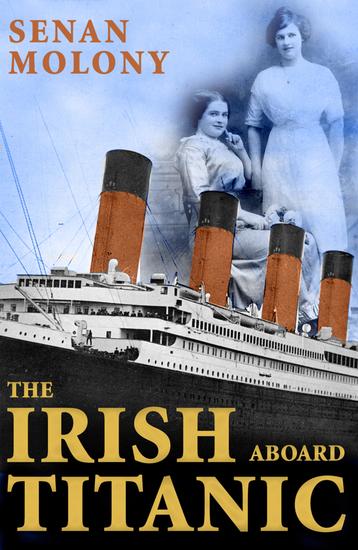
The Irish Aboard Titanic - cover

The Irish Aboard Titanic

Senan Molony

Casa editrice: Mercier Press

  • 0
  • 0
  • 0

Sinossi

The unspeakable tragedy of the Titanic disaster can only be fully appreciated through the tales of the people who were aboard on the night the ship went down. The Irish Aboard Titanic gives those people a voice, focusing on the Irish who were aboard the 'unsinkable' liner. In it are stories of agony, luck, self-sacrifice, dramatic escapes and heroes left behind. Senan Molony also records the heartache that continued long after that fateful night. In her wake the Titanic cast a long shadow over the families forced to endure the agonising wait to learn the fate of loved ones, over the lives of the survivors who had to start their lives anew and over those who lost relatives and friends. If you want to know about the Irish passengers and crew of the Titanic, this is the only book to have.
Disponibile da: 06/03/2023.
Lunghezza di stampa: 256 pagine.


Altri libri che potrebbero interessarti

  • My Bipolar Backpack - cover

    My Bipolar Backpack

    Susan Ralphe

    • 0
    • 0
    • 0
    In this powerful memoir Susan Ralphe employs sharp storytelling skills honed over a long  newspaper reporting career to tell her own story of long-term, heart-wrenching bipolar madness.She recounts soaring accomplishments alternating with. black periods of tenseness, brain freeze and despair.
    Mostra libro
  • Charles Babbage and Ada Lovelace: The History of the Partnership Behind the World’s First Computer - cover

    Charles Babbage and Ada...

    Charles River Editors

    • 0
    • 0
    • 0
    While many are familiar with those facts, and a recent movie revived interest in Alan Turing’s achievements with computing during World War II, it was Charles Babbage who was the first to conceive the notion of a programmable and automatic universal computer, which, on top of its ability to calculate any mathematical equation at an unmatched speed, could also be used for a seemingly infinite number of other applications. In other words, he envisioned the precursor to the modern computer.   
    At first blush, Babbage hardly seemed the type, because in many ways, Babbage was the antithesis of the debonair, silver-tongued, and effortlessly charismatic CEOs of present-day tech giants. Babbage was a quirky individual to say the least. He was highly observant, but was in the same breath a habitual daydreamer, often caught in a trance of deep thought.  Indeed, his unquenchable thirst for knowledge and his brilliant mind were unparalleled, but this was paired with his restless, addictive, and extreme nature, as well as his obsession with precision and factual accuracy.  
    	Working with Babbage was certainly an unusual path for any woman, but Ada Lovelace managed to do so before an incredibly premature death. Augusta Ada King, Countess of Lovelace, died in 1852 at the age of 36, but during her short and tumultuous life, she was one of the first to recognize that computers could do far more than complex calculations. This was all the more surprising given that, during her life, no computers existed, and her ideas were based on an implicit understanding of the theoretical work of Charles Babbage, who himself is today recognized as the “Father of the Computer.” What makes her work truly startling is that she did this more than 100 years before the first computer had even been created. But Ada Lovelace was a woman, and in Victorian England, her work was generally either ignored or disparaged.
    Mostra libro
  • Guy Gibson: The Life and Legacy of the Royal Air Force’s Most Distinguished Bomber Pilot during World War II - cover

    Guy Gibson: The Life and Legacy...

    Editors Charles River

    • 0
    • 0
    • 0
    Given the RAF’s importance, it should come as no surprise that some of the pilots ranked among Britain’s most recognized war heroes, and Guy Gibson remains one of the most famous and highly decorated British soldiers in World War II. His exploits in the RAF as the leader of the audacious raid to blow up German dams in May 1943 remain renowned, and for generations of British boys after the war, he served as the benchmark of a legendary hero. His tragic death at the young age of 26 only served to deepen his mythology, but his war record was impressive even before his most famous missions, with three operational tours of duty under his belt. 
    The mythmaking aside, Gibson was a complex and controversial character, probably caused, in part, by a turbulent and disrupted upbringing. Although his bravery, self-sacrifice, and leadership in battle were undeniable and highly impressive, he could be demanding and difficult to get along with. It is probably fair to say he was not universally loved by the crews and service personnel who served alongside him, and he after the Dam Busters raid, he embarked on a months-long tour of the United States and Canada that many (including Air Officer Commanding Bomber Commander Arthur “Bomber” Harris) felt had gone to his head slightly. After the raid and the fame, he drifted somewhat, having been forbidden from flying in further operations (which he bypassed in the end). He wrote a book about his exploits as a bomber pilot, Enemy Coast Ahead, and was interviewed on radio programs. He flirted with politics, applying for and succeeding in becoming the Conservative Party’s prospective candidate for Macclesfield in 1944 before withdrawing, claiming the war still required his attention. After D-Day on June 6, 1944, Gibson seemed to feel an urgent need to get back into operations for fear of missing out.
    Mostra libro
  • The Majesty Of Hanuman Neem Karoli Baba - cover

    The Majesty Of Hanuman Neem...

    Sripad Jagannatha Dasa

    • 0
    • 0
    • 0
    AN INSIDE LOOK AT INDIA’S GREATEST MYSTIC SAINT! 
     
    THE CHANT 
     
    The Hanuman Chalisa is a hymn in praise of Hanuman authored by Tulsi Das. The word 'chālīsā' means the number forty in Sanskrit, as the Chalisa has forty verses. Hanuman is a great devotee of Ram and one of the central characters in the epic, Ramayan. He is also an incarnation of Shiva. The qualities of Hanuman – his strength, courage, wisdom, celibacy, devotion to Ram, and the many names by which he is known are all in the Hanuman Chalisa. 
     
    Hanuman is the epitome of ultimate devotion manifested with its full glory unchallenged. By the power of his devotion to Sita Ram, he easily achieved supreme status as the perfect devotee and servitor. 
     
    Reciting the Hanuman Chalisa infuses one with unlimited energy and prana. This sacred mantra also increases a person’s resilience and they emerge victorious in every situation. 
     
    THE TEACHER 
     
    Neem Karoli Baba known to his followers as Maharaj-ji - was a mystic saint and devotee of Hanuman. Here is the essence of his remarkable life and teachings. He is known outside India for being the spiritual master of a number of Americans who traveled to India in the 1960s and 70s, including Ram Dass and Bhagavan Das, as well as musicians Krishna Das and Jai Uttal. 
     
    Dr. Richard Alpert, a former Harvard professor and Timothy Leary cohort, was an icon of the hippie, LSD-fueled revolution of the 1960s. Thereafter, on a trip to India - like Clark Kent changing into Superman - he became the much-beloved spiritual teacher Baba Ram Das. His 1970s' iconic book 'Be Here Now' turned on a generation to the deep, non-sectarian spirituality within us all.
    Mostra libro
  • Genesis of a Nation of We the People - cover

    Genesis of a Nation of We the...

    James Robert Boynton

    • 0
    • 0
    • 0
    In Genesis of a Nation of We the People, Jim Boynton clearly defines values envisioned by our founding fathers, tracing them back over 4250 years .A look into the Unknown, things you are not taught in school, an in-depth look at the genesis of the colonial colonies, and the ancient principles of successful "We the People" governance that shaped our modern Democratic Republic. We, the People of the colonies, as a united body, are represented within the manuscript using historical examples, with the guidance of the colonial independent government's unity, to form the durable set of guiding documents we use today. Boynton enables readers to renew their knowledge of the protections and guidance these enlightened colonial founders gave us in these documents. This essential history reveals the timeless importance of values like liberty, unity, and justice, providing guidance for the future-a must-read for history enthusiasts and patriots alike. Jim Boynton holds dual majors in Business and Accounting, with a minor in Computer Science, and Persued a Ph.D. in Operations Management. With 55 years of experience in industry, consulting, and farming, he served as President of Focus NH Institute, held leadership roles in APICS and ASQ, and contributed to education and politics in New Hampshire. A Navy and National Guard veteran, he retired in Tennessee, breeding Desert Arabian horses until 2014.
    Mostra libro
  • Little Women Podcast: Social Life In Victorian Times (and why Jo lost the trip to Europe) - cover

    Little Women Podcast: Social...

    Niina Niskanen, Emily Lau

    • 0
    • 0
    • 0
    In the chapter “Calls,” Amy and Jo decide to make some social calls, a common custom among well-bred young ladies of their time. Amy, who enjoys proper manners and society, convinces Jo to accompany her, even though Jo finds such formalities dull and pretentious. Throughout the afternoon, Amy’s social grace and tact contrast sharply with Jo’s blunt honesty and impatience with convention. Amy enjoys the ritual of polite society, while Jo realizes that she prefers sincerity and simplicity to artificial manners. Join Emily and Niina when they dissect chapter Calls, and talk about various things, such as Amy's fondness towards the aristocracy, Jo's difficulties in taking compliments and also the last part of the chapter, where we get the explanation why Jo did not get to go to Europe with Aunt March.
    Mostra libro