Unisciti a noi in un viaggio nel mondo dei libri!
Aggiungi questo libro allo scaffale
Grey
Scrivi un nuovo commento Default profile 50px
Grey
Iscriviti per leggere l'intero libro o leggi le prime pagine gratuitamente!
All characters reduced
Rwandan Kingdom - cover

Rwandan Kingdom

Sebastian Farnham

Traduttore A AI

Casa editrice: Publifye

  • 0
  • 0
  • 0

Sinossi

Rwandan Kingdom explores the captivating history of Rwanda's monarchy, examining its pre-colonial power structures, the disruptions of European colonialism, and its ultimate fall in post-independence politics. The book argues that understanding the Rwandan monarchy is crucial for grasping Rwanda's modern political landscape and the roots of its contemporary social dynamics. Intriguingly, the pre-colonial kingdom had an intricate system of clientage and land tenure that significantly shaped later sociopolitical transformations.

 
The book traces Rwandan history from the kingdom's origins and zenith, analyzing its social hierarchy and economic system to the shifts in power dynamics brought about by colonial rule and the instrumentalization of ethnic divisions. The study uses historical documents, oral traditions, and scholarly research to offer a balanced perspective. Rwandan Kingdom is unique because it provides a long-term historical perspective, tracing the roots of conflict and resilience within Rwandan society, unlike many works that focus solely on the Rwandan genocide.

 
It progresses chronologically, offering a comprehensive view of the Rwandan monarchy's evolution and its lasting impact.
Disponibile da: 19/03/2025.
Lunghezza di stampa: 58 pagine.
Altri libri che potrebbero interessarti

  • Will I Hate Myself? - A Story About Going For It - cover

    Will I Hate Myself? - A Story...

    Pat Treuer

    • 0
    • 0
    • 0
    What if chasing your dream didn’t lead to fame or fortune—but to something far more honest? 
    At 36, Pat Treuer had the life people post about: six-figure job, corporate status, an apartment with a skyline view—and a quiet voice in his head screaming, “Is this it?” So he did what any rational person would do: he walked away from it all to tell jokes in bars for drink tickets and half-interested crowds. 
    Then came the pandemic. Pat launched a comedy business that brought in a million dollars—then reinvested every penny into a YouTube series that made exactly zero. Not a typo. Zero. 
    By 42, he found himself not chasing the next punchline, but rebuilding a life from scratch. On purpose, this time. 
    Will I Hate Myself is a hilariously raw, painfully honest memoir about risking everything, failing gloriously, and learning to create a life that actually fits. It’s part comedy crash reel, part spiritual sledgehammer. 
    If you’ve ever wondered whether you waited too long to change your life, felt stuck in a “successful” version of someone else’s dream, or asked yourself, “Is this all there is?”—this book is for you. 
    Through panic attacks, bad gigs, and moments of absurd grace, Pat offers more than laughs—he offers proof that it’s never too late to go off-script and start telling the truth. 
    This isn’t about making it. It’s about making it count.
    Mostra libro
  • No Second Chances - The Inside Story of the Campaign for a Second EU Referendum - cover

    No Second Chances - The Inside...

    Morgan Jones

    • 0
    • 0
    • 0
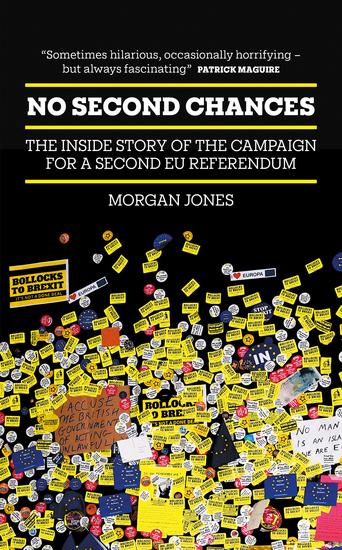
    Between 2016 and 2019, a unique coalition assembled within British politics. Combining Corbynite campaigners and Conservative Cabinet ministers, celebrities and grassroots activists, seasoned political veterans and novice political amateurs, this disparate assemblage of forces was brought together by one aim: stopping Brexit. What began as the unfocused, often deeply emotional belief that Britain must not leave the EU morphed, fleetingly, into a mass movement: the People's Vote campaign, a mess of organisations united by the call for a second referendum on Europe.
    From the stunts of youth campaigners and the online antics of new pro-EU influencers to the million-person marches of 2019 and the launch of new centrist parties, many people, serious and unserious alike, dedicated themselves to securing a new vote. A campaign premised on telling the nation that they had gotten it catastrophically wrong was always going to be hard, and it was only made more so by parliamentary maths that never seemed to quite add up. Based on interviews with the people who were there, No Second Chances tells the dramatic, bizarre, and (at times) embarrassing story of one of recent British history's most feted roads not taken.
    Mostra libro
  • On Sense and the Sensible - cover

    On Sense and the Sensible

    Aristotle

    • 0
    • 0
    • 0
    On Sense and the Sensible by Aristotle is a philosophical text that discusses the nature of sensation and how it relates to knowledge. Aristotle argues that the senses are the foundation of all knowledge, and that the sensible world is the only true reality. He also contends that the intellect is not capable of grasping abstract concepts without the aid of the senses. Read in English, unabridged.
    Mostra libro
  • urban Geography and Land Use - The Spatial Organization of Cities (3 in 1) - cover

    urban Geography and Land Use -...

    Lyric Vale

    • 0
    • 0
    • 0
    Cities are fundamentally exercises in spatial organization—complex arrangements of human activity, physical infrastructure, and natural systems that collectively define how metropolitan regions function, evolve, and adapt. The geographic logic of urban environments—how different uses are distributed, how resources are allocated, and how communities develop within specific physical contexts—represents one of the most profound expressions of human social organization and values. This comprehensive exploration delves into the intricate domains of Urban Geography, Urban Land Use, and Community Development—examining how spatial patterns emerge, how they reflect deeper social and economic forces, and how they ultimately shape the lived experiences of urban inhabitants. 
    The narrative of urban spatial organization is far more than a technical study of land allocation; it encompasses the dynamic interactions between physical geography, economic systems, social forces, and political decisions that collectively determine the form and function of our cities. By examining the complex mechanisms that drive urban spatial development—from market dynamics and zoning regulations to community activism and cultural preferences—this book illuminates how cities represent physical manifestations of our collective choices, priorities, and power structures. Readers will journey through diverse urban landscapes—from the historic patterns of concentric development to the fragmented geographies of postindustrial cities and the emerging forms of sustainable urbanism—while exploring how community development initiatives seek to reshape urban spaces to better serve human needs.
    Mostra libro
  • First Bull Run: The History of the Civil War’s First Major Battle - cover

    First Bull Run: The History of...

    Jonathan Gianos-Steinberg

    • 0
    • 0
    • 0
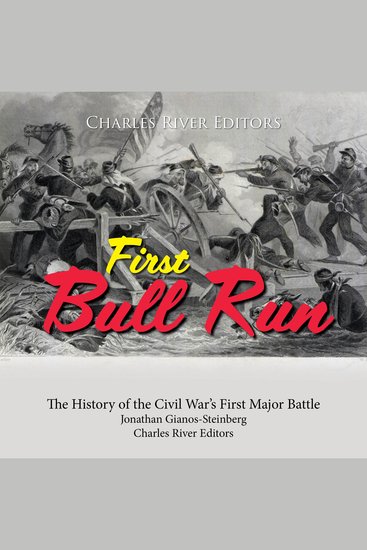
    After Fort Sumter, the Lincoln Administration pushed for a quick invasion of Virginia, with the intent of defeating Confederate forces and marching toward the Confederate capitol of Richmond. Lincoln pressed General Irvin McDowell to push forward. Despite the fact that McDowell knew his troops were inexperienced and unready, pressure from Washington politicians forced him to launch a premature offensive against Confederate forces in Northern Virginia.  
    	McDowell’s strategy during the First Battle of Bull Run was grand, and in many ways it was the forerunner of a tactic Robert E. Lee, Stonewall Jackson and James Longstreet executed brilliantly on nearly the same field during the Second Battle of Bull Run in August 1862. McDowell’s plan called for parts of his army to pin down General P.G.T. Beauregard’s Confederate soldiers in front while marching another wing of his army around the flank and into the enemy’s rear, rolling up the line. McDowell assumed the Confederates would be forced to abandon Manassas Junction and fall back to the next defensible line, the Rappahannock River. In July 1861, however, this proved far too difficult for his inexperienced troops to carry out effectively.  
    	As the first major land battle of the Civil War, the First Battle of Bull Run made history in several ways. The two sides fought near the railroad junction at Manassas on July 21, 1861, just 25 miles away from Washington, which was close enough for many civilians from the nation’s capital to come and watch what they expected to be a rout of Confederate forces, and for awhile it appeared as though that might be the case.  
    	McDowell’s strategy ultimately fell apart though, mostly thanks to the use of the railroad. Confederate reinforcements under General Joseph E. Johnston, including a brigade led by Thomas Jonathan Jackson, arrived by train in the middle of the day, a first in the history of American warfare.
    Mostra libro
  • The Need for an Evolutionary Movement in Politics - cover

    The Need for an Evolutionary...

    Stephen Dinan

    • 0
    • 0
    • 0
    Stephen Dinan encourages us to ground ourselves in the deeper values that unite us such as liberty, equality, and justice for all - which are bedrock principles of the United States. He says we must take on the spirit of nonviolent evolutionaries as we hold a vision of possibility rather than one of opposition.
    Mostra libro