Unisciti a noi in un viaggio nel mondo dei libri!
Aggiungi questo libro allo scaffale
Grey
Scrivi un nuovo commento Default profile 50px
Grey
Iscriviti per leggere l'intero libro o leggi le prime pagine gratuitamente!
All characters reduced
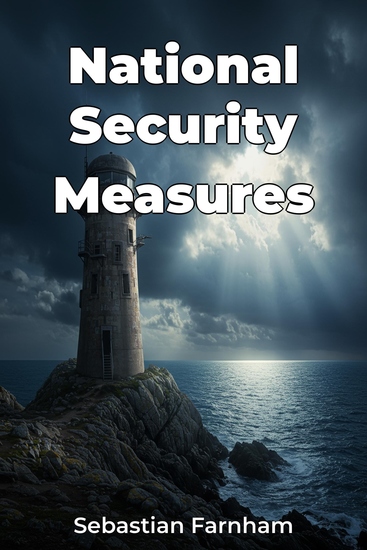
National Security Measures - cover

National Security Measures

Sebastian Farnham

Traduttore A AI

Casa editrice: Publifye

  • 0
  • 0
  • 0

Sinossi

National Security Measures examines the core principles that bolster a nation's resilience in an era of evolving threats. It explores the multifaceted strategies underpinning national defense, drawing from defense studies, security reports, and historical analyses. The book argues that a robust national security framework extends beyond military strength, integrating diplomatic, economic, intelligence, and technological capabilities. Readers gain insights into the evolution of threat assessment, the dynamics of resource allocation in defense spending, and the crucial role of international cooperation.

 
The book begins by introducing fundamental concepts and historical developments in national security. It progresses through analyzing threat landscapes, evaluating resource optimization strategies, and investigating international alliances. For instance, it addresses balancing military spending with investments in cybersecurity and infrastructure.

 
The book uses primary source documents, statistical data, and expert interviews, presenting complex information in an accessible manner. It emphasizes proactive security measures over reactive strategies, offering a framework applicable to real-world contexts and addressing debates like balancing security with civil liberties.
Disponibile da: 21/02/2025.
Lunghezza di stampa: 64 pagine.

Altri libri che potrebbero interessarti

  • End Boring - A Tactical Approach to Public Speaking and Communication - cover

    End Boring - A Tactical Approach...

    Ivan Wanis Ruiz

    • 0
    • 0
    • 0
    Flex your public speaking muscles with this practical crusade to end boring presentations! In this updated second edition, you’ll find new examples, visuals, and tactics for both in-person and online engagement- so when you speak, people listen. 
    We’ve all sat through dull presentations: endless slides, lifeless delivery, messages that vanish the second they’re over. And most advice? Fluff. “Connect with your audience,” they say. But how? 
    Ivan Wanis Ruiz’s End Boring is the antidote. Drawing from neuroscience, poker, police interrogations, viral videos, and even pro wrestling, Ivan shares the same tactical playbook he’s used to train over half a million people worldwide. No vague inspiration- just practical tactics you can use immediately. 
    Built from real-world cases in business, sales, education, fitness, and healthcare, End Boring teaches you how to create muscle memory in the way you speak, move, and command a room. It’s not about following cookie-cutter rules- it’s about building a flexible toolkit you can use anywhere, from a boardroom to a Zoom call. 
    Inside, you’ll learn:The Belly Button Rule that makes you look instantly more confident.Why traditional eye contact advice is wrong-and what to do instead.The sneaky Liar’s Parallel killing your credibility (and how to fix it).How to structure sentences so people remember more than just 2% of your talk.Virtual hacks to transform your online presence. 
    Great speakers aren’t born- they’re trained. Through practice, repetition, and audience focus, you can become the communicator people remember. 
    Don’t just read about communication. Train it. Use it. Live it. And join the mission to End Boring.
    Mostra libro
  • Impasse - Climate Change and the Limits of Progress - cover

    Impasse - Climate Change and the...

    Roy Scranton

    • 0
    • 0
    • 0
    A Next Big Idea Club "Must Read" for August 2025! 
     
    Extreme heat, fires, floods, and storms are transforming our planet. Yet we get increasing emissions, divisive politics, and ersatz solutions that offer more of the same: more capitalism, more complexity, more "progress." 
     
    The impasse we face is not only political and institutional, but cognitive, existential, and narrative. We're incapable of grasping the scale, speed, and impact of global warming. And we optimistically cling to a narrative that promises a better tomorrow if we just keep doing what we're doing. 
     
    It's past time to free ourselves from our dangerous and dogmatic faith. Such unwarranted optimism will accelerate our disintegration. If we want to have hope for the future, it must be grounded in a recognition of human limits—a view Scranton calls ethical pessimism. 
     
    Scranton describes the challenges we face in making sense of our predicament, from problems in communication to questions of justice, from the inherent biases in human perception to the difficulties of empirical knowledge. What emerges is a challenging but hopeful proposition: if we have the courage to accept our limits, we may find a way to embrace our future.
    Mostra libro
  • Forgiveness - An Alternative Account - cover

    Forgiveness - An Alternative...

    Matthew Ichihashi Potts

    • 0
    • 0
    • 0
    A deeply researched and poignant reflection on the practice of forgiveness in an unforgiving world 


    In this sensitive and probing book, Matthew Ichihashi Potts explores the complex moral terrain of forgiveness, which he claims has too often served as a salve to the conscience of power rather than as an instrument of healing or justice. Though forgiveness is often linked with reconciliation or the abatement of anger, Potts resists these associations, asserting instead that forgiveness is simply the refusal of retaliatory violence through practices of penitence and grief. It is an act of mourning irrevocable wrong, of refusing the false promises of violent redemption, and of living in and with the losses we cannot recover. 


    Drawing on novels by Kazuo Ishiguro, Marilynne Robinson, Louise Erdrich, and Toni Morrison, and on texts from the early Christian to the postmodern era, Potts diagnoses the real dangers of forgiveness yet insists upon its enduring promise. Sensitive to the twenty-first-century realities of economic inequality, colonial devastation, and racial strife, and considering the role of forgiveness in the New Testament, the Christian tradition, philosophy, and contemporary literature, this book heralds the arrival of a new and creative theological voice.
    Mostra libro
  • The Carolingian Renaissance - Revival of Learning - cover

    The Carolingian Renaissance -...

    Harris Ropes

    • 0
    • 0
    • 0
    The Carolingian Renaissance was a pivotal moment in European history, marking a revival of learning, culture, and intellectual activity during the reign of Charlemagne and his successors. To fully appreciate this movement, it is essential to understand the historical context from which it emerged. In the centuries following the fall of the Western Roman Empire, Europe experienced a period of cultural and intellectual decline often referred to as the Dark Ages. Classical texts were lost or neglected, education was limited, and much of the knowledge from antiquity was confined to isolated monastic communities. 
    Charlemagne, who became King of the Franks in 768 and later Emperor of the Carolingian Empire in 800, envisioned a unified Christian realm grounded in both faith and knowledge. He recognized that in order to strengthen his empire, he needed educated clergy, literate administrators, and a shared cultural foundation rooted in Roman and Christian traditions. Inspired by this vision, Charlemagne initiated a series of reforms aimed at restoring learning and promoting intellectual growth throughout his territories. This commitment to education and scholarship laid the groundwork for the Carolingian Renaissance. 
    One of the most significant influences on this movement was the Church. As the central institution of medieval Europe, the Church played a crucial role in preserving what remained of classical knowledge. Monasteries, in particular, became the hubs of literacy, where monks copied ancient manuscripts and engaged in theological study. Charlemagne capitalized on this religious infrastructure by encouraging the establishment and reform of monastic schools. These institutions became centers of education not just for future monks, but also for clergy and even lay officials serving in the empire.
    Mostra libro
  • How to Write a Book - cover

    How to Write a Book

    Desmond Callaghan

    • 0
    • 0
    • 0
    This is the one audiobook that will help you write not only your first book but every book you've ever dreamt of writing. Unlike the countless boring and serious materials you may find online that promise overnight success and deliver frustration in the end, this audiobook is read in a fun and engaging way to make the learning process as easy and efficient as possible. In this audiobook, the steps on how to write your first book are carefully broken down, merging knowledge from research and personal experiences to highlight principles that can lead you to literary success overtime. This audiobook is a lamp that reveals that with discipline, focus, and adequate skills anybody can be a writer.
    Mostra libro
  • Truman and the Bomb - The Untold Story - cover

    Truman and the Bomb - The Untold...

    D. M. Giangreco

    • 0
    • 0
    • 0
    Many myths have grown up around President Harry S. Truman's decision to use nuclear weapons against Imperial Japan. In destroying these myths, Truman and the Bomb will discomfort both Truman's critics and his supporters, and force historians to reexamine what they think they know about the end of the Pacific War. 


    Using previously unpublished material, D. M. Giangreco busts myths and more. An award-winning historian and expert on Truman, Giangreco is perfectly situated to debunk the many deep-rooted falsehoods about the roles played by American, Soviet, and Japanese leaders during the end of the World War II in the Pacific. Truman and the Bomb, a concise yet comprehensive study of Truman's decision to use the atomic bomb, will prove to be a classic for studying presidential politics and influence on atomic warfare and its military and diplomatic components. 


    Making this book particularly valuable for professors and students as well as for military, diplomatic, and presidential historians and history buffs are extensive primary source materials, including the planned United States naval and air operations in support of the Soviet invasion of Manchuria. These documents support Giangreco's arguments while enabling the listener to enter the mindsets of Truman and his administration as well as the war's key Allied participants.
    Mostra libro