Unisciti a noi in un viaggio nel mondo dei libri!
Aggiungi questo libro allo scaffale
Grey
Scrivi un nuovo commento Default profile 50px
Grey
Iscriviti per leggere l'intero libro o leggi le prime pagine gratuitamente!
All characters reduced
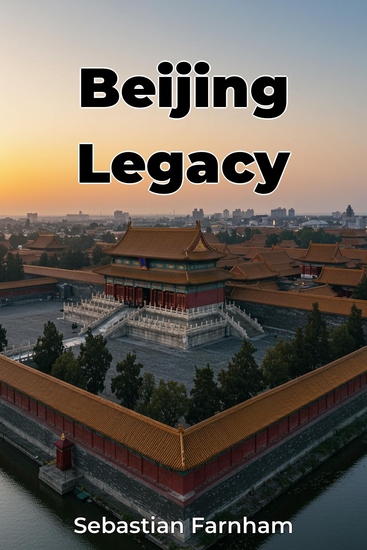
Beijing Legacy - cover

Beijing Legacy

Sebastian Farnham

Traduttore A AI

Casa editrice: Publifye

  • 0
  • 0
  • 0

Sinossi

"Beijing Legacy" explores the historical, political, and global dimensions of Beijing, revealing how it became the epicenter of China's identity and power. From its roots as an imperial capital with landmarks like the Forbidden City and Temple of Heaven to its current status as a global metropolis, the book examines how Beijing reflects China's transformation. Intriguingly, the city's urban planning has always been deeply intertwined with political symbolism, and its modern development is pivotal to understanding China's Belt and Road Initiative.

 
The book progresses chronologically, first establishing Beijing's imperial past and the shaping of its landscape by successive dynasties. It then transitions to Beijing's role in modern Chinese history, covering periods of revolution and the rise of the Communist Party. Finally, it analyzes Beijing's contemporary rise as a global city, looking at economic reforms and its increasing influence in international affairs, while also addressing the challenges it faces. This approach provides a comprehensive viewpoint of understanding China's evolving global posture.
Disponibile da: 20/02/2025.
Lunghezza di stampa: 64 pagine.
Altri libri che potrebbero interessarti

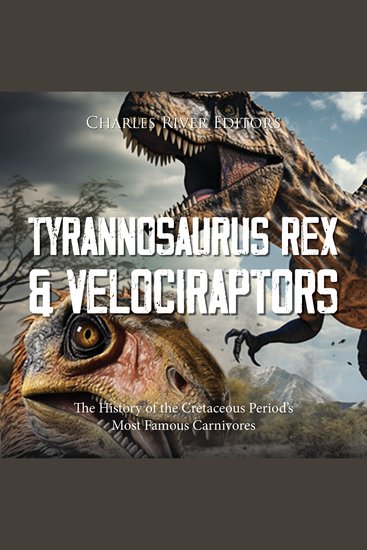
  • Tyrannosaurus Rex and Velociraptors: The History of the Cretaceous Period’s Most Famous Carnivores - cover

    Tyrannosaurus Rex and...

    Editors Charles River

    • 0
    • 0
    • 0
    The massively popular 1990 novel Jurassic Park by Michael Crichton and its subsequent movie adaptations led to a huge resurgence in interest in dinosaurs and the prehistoric world. That interest continues to the present day, even though most of the dinosaurs in Jurassic Park weren’t actually from the Jurassic period. Triceratops, Velociraptor, Tyrannosaurus Rex and the huge sauropods such as Brachiosaurus that feature in the book and movies all actually belong to the Late Cretaceous period, more than 40 million years after the end of the Jurassic. Regardless, certain kinds of dinosaurs remain instantly recognizable, and among them, the “king” is undoubtedly the Tyrannosaurus.  
    The first discovery of a Tyrannosaurus was made in 1902 and the largest carnivorous dinosaur ever found at the time quickly gripped the popular imagination. Even its name was dramatic - Tyrannosaurus Rex means “King of the Tyrant Lizards.” The T-Rex as it quickly became known didn’t appear until the last age of the Late Cretaceous period, the Maastrichtian, but when it did, it was the biggest and most terrifying of all the theropod predators.  
    	Thanks to the movie, there has been some unwitting confusion over the identity of the Velociraptor, and this confusion was due in large part to the fact the name sounds far more scary than the creature to which the name originally belonged. Moreover, the creature to which the label was applied in the novel and movie was actually a distant cousin named Deinonychus, but as the story goes, the author, Michael Crichton, thought “Velociraptor” sounded “more dramatic.” The actual Velociraptor lived not in the badlands of North America, but in the badlands of central-eastern Asia, and it was not nearly as intimidating as Deinonychus. In fact, the main species of genus Velociraptor - Velociraptor mongoliensis - was no bigger than a turkey.
    Mostra libro
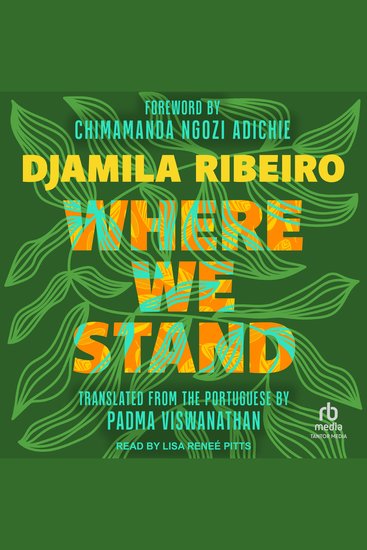
  • Where We Stand - cover

    Where We Stand

    Djamila Ribeiro, Chimamanda...

    • 0
    • 0
    • 0
    The instant bestseller from Djamila Ribeiro that sparked a major Black feminist movement in Brazil 


    In a society shaped by the legacies of enslavement, white supremacy, and sexism, who has the right to a voice? In this elegant essay, Djamila Ribeiro offers a compelling intervention into contemporary discussions of power and identity: the concept of "speaking place." A crucial component of conversations on race and gender in Brazil, speaking place is the idea that everyone has a social position in the world and that what we are able to say, and how it is received by others, depends on it. Ribeiro traces the history of Black feminist thought through several centuries, examining the ways that Black women have been silenced, ignored, and punished for speaking. 


    Building on feminist standpoint theory, and in conversation with the works of Sojourner Truth, bell hooks, Audre Lorde, and others, Ribeiro invites all of us to recognize where we stand, to imagine geographies different from those we've inherited, and to speak a more humane world into being.
    Mostra libro
  • The Plot Module - The Ultimate Chapter-by-Chapter Guide on How to Write a Novel Outline - cover

    The Plot Module - The Ultimate...

    Jason Hamilton

    • 0
    • 0
    • 0
    Looking for an easy, step-by-step solution to plot your novel from start to finish? 
    Jason Hamilton—overnight YouTube success and practicing fantasy author—introduces The Plot Module, a groundbreaking guide that simplifies novel plotting like never before. This comprehensive 40-chapter roadmap tells you exactly what to include in each chapter, bridging the gaps most story structure books leave behind. 
    Discover:A Detailed 40-Chapter Blueprint: Know precisely what happens in every chapter.Adaptable Methods for Any Novel Length: Customize the module for shorter or longer works.Seamless Integration of Subplots and Viewpoints: Effortlessly manage multiple narratives.Proven Techniques from an Active Author: Apply strategies Jason uses in his own writing.Harnessing Technology for Writing: Enhance creativity and efficiency with modern tools. 
    With clear instructions and practical advice, The Plot Module empowers you to turn your ideas into a compelling, well-structured novel without the guesswork. Say goodbye to plot struggles and hello to a clear path forward. 
    Join writers who have unlocked their creative potential with The Plot Module. Now it's your turn to bring your story to life.
    Mostra libro
  • Rocking in the Free World - Popular Music and the Politics of Freedom in Postwar America - cover

    Rocking in the Free World -...

    Nicholas Tochka

    • 0
    • 0
    • 0
    Progressive and libertarian, anti-Communist and revolutionary, Democratic and Republican, quintessentially American but simultaneously universal. By the late 1980s, rock music had acquired a dizzying array of political labels. These claims about its political significance shared one common thread: that the music could set you free. 


    Rocking in the Free World explains how Americans came to believe they had learned the truth about rock 'n' roll, a truth shaped by the Cold War anxieties of the fifties, the countercultural revolutions (and counter-revolutions) of the sixties and seventies, and the end-of-history triumphalism of the eighties. How did rock 'n' roll become enmeshed with so many different competing ideas about freedom? And what does that story reveal about the promise-and the limits-of rock music as a political force in postwar America?
    Mostra libro
  • Disconnect - Chapter 6 - cover

    Disconnect - Chapter 6

    Open Boundaries

    • 0
    • 0
    • 0
    Chapter 6 - Disconnect - Disconnect is about the psychological action of disconnecting from everything that influences you in a negative manner. To not listen to the thoughts and voices of others who begin to steer your life, but instead, to focus on what you want and what you believe in. In short, it is the disconnection from outside influences, replaced with the connection to what's inside.
    Mostra libro
  • Reagan-Mondale Debate 2 - cover

    Reagan-Mondale Debate 2

    Ronald Reagan, Walter Mondale

    • 0
    • 0
    • 0
    The second of two debates between President Ronald Reagan and former Vice President Walter F. Mondale was held in Kansas City, Missouri on October 21, 1984. Edwin Newman was the debate moderator. Georgie Anne Geyer, Marvin Kalb, Morton Kondracke, and Henry Trewhitt were the four panelists who asked questions. 
    This second debate was on defense and foreign policy. Questions focused on the following topics: Central America, the Soviet Union, regions vital to U.S. interests, Eastern Europe, use of military force, Nicaragua, Lebanon, the president’s age, strategic missiles, the president’s leadership, illegal immigration, Armageddon, the Strategic Defense Initiative, nuclear freeze, support for U.S. allies, nuclear weapons, and closing statements. Reagan won a landslide victory in 1984 winning every state except Minnesota and the District of Columbia. 
    To see both a text version and a video version of this debate, search online for “Ronald Reagan major speeches”. Audio recording courtesy of the Ronald Reagan Presidential Library. 
    aspenleafmedia.com
    Mostra libro