Unisciti a noi in un viaggio nel mondo dei libri!
Aggiungi questo libro allo scaffale
Grey
Scrivi un nuovo commento Default profile 50px
Grey
Iscriviti per leggere l'intero libro o leggi le prime pagine gratuitamente!
All characters reduced
Absurd Laws Worldwide - cover

Absurd Laws Worldwide

Sebastian Farnham

Traduttore A AI

Casa editrice: Publifye

  • 0
  • 0
  • 0

Sinossi

Absurd Laws Worldwide explores the peculiar world of antiquated legislation still in effect across the globe. These strange laws, often rooted in specific historical events or cultural norms, reveal surprising insights into a nation's past and evolving sense of justice. For example, some regions still have laws regulating seemingly trivial activities, like poultry crossing roads, highlighting how outdated regulations can persist. The book not only examines these legal oddities but also delves into their impact on society and the reasons for their continued existence. The book takes an interdisciplinary approach, drawing connections to world history, political science, and even sociology to understand the broader context of these peculiar bans and legal loopholes. Organized around themes like outdated regulations and peculiar bans, the book progresses from introducing the concept of legal absurdity to detailed case studies from various countries. By examining court records and historical documents, the book sheds light on the challenges of legal reform and the ongoing debate between tradition and progress in legal systems.
Disponibile da: 31/03/2025.
Lunghezza di stampa: 67 pagine.
Altri libri che potrebbero interessarti

  • We Philologists - cover

    We Philologists

    Friedrich Nietzsche

    • 0
    • 0
    • 0
    Nietzsche argues that philology is not just an academic discipline, but a way of life that requires a deep appreciation for language and culture. He emphasizes the importance of understanding the historical context of texts, and the need to read them in their original language to fully appreciate their meaning and beauty. "We Philologists" is a passionate and insightful reflection on the value and meaning of philology, and a call to approach the study of language and literature with greater creativity and sensitivity. Read in English, unabridged.
    Mostra libro
  • Phocion - Good Citizen in a Divided Democracy - cover

    Phocion - Good Citizen in a...

    Thomas R. Martin

    • 0
    • 0
    • 0
    "Elegant and enlightening." —Dominic Green, Wall Street Journal 


    Phocion (402–318 BCE) won Athens's highest public office by direct democratic election an unmatched forty-five times and was officially honored as a "Useful Citizen." A student at Plato's Academy, Phocion gained influence and power during a time when Athens faced multiple crises stemming from Macedonia's emergence as an international power under Philip II and his son Alexander the Great. Following Athens's defeat by Macedonia, Phocion unsuccessfully sought mild terms of surrender. Oligarchy was imposed on democratic Athens, and more than twelve thousand "undesirable" Athenians were exiled. When the oligarchic regime was overthrown and the exiles returned, dispossessed Athenians took out their volcanic anger on Phocion, who throughout his career had often been a harsh critic of the citizens' political decisions. His inflammatory rhetoric contributed to the popular conclusion that he lacked a genuine sense of belonging to the community he wished so desperately to preserve. When he was eighty-four, the Athenians convicted him of treason and condemned him to die by hemlock. In this fresh biography, Thomas R. Martin explores how and why Phocion ultimately failed as a citizen and as a leader. His story offers unsettling lessons for citizens in democracies today.
    Mostra libro
  • Let It Go - Free Yourself from Old Beliefs and Find a New Path to Joy - cover

    Let It Go - Free Yourself from...

    Chelene Knight

    • 0
    • 0
    • 0
    For readers of Ross Gay and listeners of Therapy for Black Girls, a reflective examination of Black self-love and joy that guides the reader to ditch old beliefs, achieve difficult unlearnings and redefine language, relationships and love to find their own unique path to joy.   
    A warm, candid and essential book that will guide the reader to carve a new path to joy as unique as each individual. Created by the founder of Breathing Space Creative Literary Studio, acclaimed writer and editor Chelene Knight, Let It Go draws on personal experience and the advice of leaders from various Black communities to share hard-won tools for joy-discovery—tools such as how to say no with love; how to call back activities that feel good; how to reshape communication with those closest to you; how to revise language; and most of all, how to learn to let go in order to redefine what we think joy is. 
    Organized around the seasons and the natural cycle of reflection and renewal, Let It Go showcases, through conversation and solitary reflection, the broad spectrum of Black realities and reveals the colourful kaleidoscope of joy and your own ways to find it.  
    From Let It Go: 
    “My own path to joy has been blurred by hardship, but part of my journey is that I refuse to believe that all of my negative experiences are tethered to being a Black woman, even though it can feel like this, even when some people want me to feel like this. And when I feel it, it’s a pain that swells and refuses to subside. I didn’t learn this on my own and I don’t think I can unlearn it on my own. But I’m willing to do the work. I want my joy as I find it; I want my joy as it comes. I’m willing to let the wind push me backwards through the difficult moments. Maybe there’s something big holding you back too. Take a breath. What is it? Maybe we can let go, together.” 
    Mostra libro
  • Dead Wake: Book Summary & Analysis - cover

    Dead Wake: Book Summary & Analysis

    Briefly Summaries

    • 0
    • 0
    • 0
    This is a concise summary and analysis of Dead Wake, by Erik Larson. It is not the original book and is not affiliated with or endorsed by Erik Larson. Ideal for those seeking a quick and insightful overview.
     
    In this gripping historical narrative, the tragic sinking of the Lusitania comes to life with vivid detail and meticulous research. As World War I rages, the luxury ocean liner embarks on its fateful journey across the Atlantic, unaware of the deadly threat lurking beneath the waves. Through the perspectives of passengers, crew members, and military strategists on both sides of the conflict, this compelling account reveals the political tensions, human stories, and crucial missteps that led to one of the most infamous maritime disasters in history. A masterful blend of suspense and historical insight, this book captures the dramatic final voyage of the Lusitania and its lasting impact on global events.
    Mostra libro
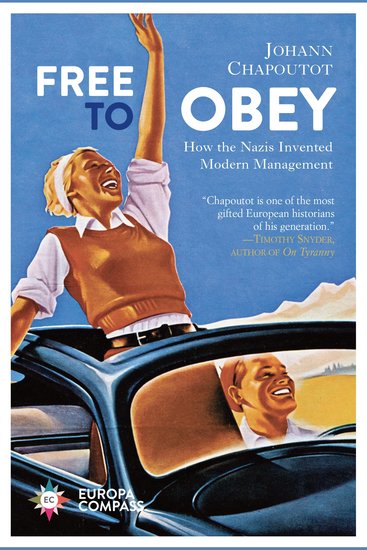
  • Free to Obey - How the Nazis Invented Modern Management - cover

    Free to Obey - How the Nazis...

    Johann Chapoutot

    • 0
    • 0
    • 0
    What if the rules of modern capitalism were written during the Third Reich?
     
    Reinhard Höhn (1904-2000) was a commander of the SS, one of Nazi Germany’s most brilliant legal minds, and an archetype of the fervid technocrats and intellectuals that built the Third Reich. Following Germany’s defeat, after a few years in hiding, he emerged in the early 1950s as the founder and director of a renowned management school in Lower Saxony.
     
    Höhn’s story wouldn’t be very different from that of many other prominent Nazis if not for the fact that a vast number of Germany’s postwar business leaders—more than 600,000 executives—were educated at his management school.
     
    In this fascinating book, Johann Chapoutot, one of France’s most brilliant historians, traces the profound links between Nazism and the principles of modern corporate management, our definitions of success, and a concept of personal freedom that masks rigid hierarchical structures of power and control.
     
    “One of the most gifted European historians of his generation.”—Timothy Snyder, New York Times best-selling author of On Tyranny
    Mostra libro
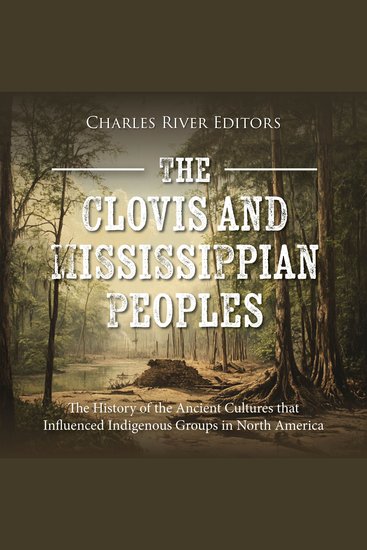
  • Clovis and Mississippian Peoples The: The History of the Ancient Cultures that Influenced Indigenous Groups in North America - cover

    Clovis and Mississippian Peoples...

    Editors Charles River

    • 0
    • 0
    • 0
    When most people think of “ancient American civilizations,” the Aztec, Maya, or Inca cultures probably come to mind immediately, because the societies in Mesoamerica and South America left behind permanent structures for millions of visitors from around the world to see each year. But in fact, there were people inhabiting the region over 11,000 years earlier. 
    The discovery of distinct arrow tips throughout the United States, Canada, and parts of northern Mexico in the early 20th century, often referred to by archaeologists as projectile points, is a testament to the success of the Paleolithic culture, now known as Clovis. Modern scholars point to the extensive nature of Clovis archaeological sites as proof of its importance, yet these same scholars have only begun to uncover this culture, and as they do, more questions are raised than there are answers. Although most of the questions are not controversial, some of the answers scholars have forwarded are. Any examination of the Clovis culture begins with what is known. Archaeologists know the approximate chronological and geographic range of the Clovis culture, and they can identify what made the Clovis people unique. These were the projectile points the Clovis people made, setting them apart from most people that came before and after them 
    	In North America, from about 1000-1500 CE, an equally complex culture formed along the banks of the Mississippi, Missouri, and Ohio Rivers. From Red Wing, Minnesota to Greenhouse, Louisiana, and from Spiro, Oklahoma to Macon, Georgia, societies built impressive mound structures that served as ritual platforms, burial sites, and residences for the elites. These mounds also served as the focal points of urban areas of varying sizes that were connected to each other through trade and ideology, forming a culture that modern historians have since designated the “Mississippian culture.” 
    Mostra libro