Unisciti a noi in un viaggio nel mondo dei libri!
Aggiungi questo libro allo scaffale
Grey
Scrivi un nuovo commento Default profile 50px
Grey
Iscriviti per leggere l'intero libro o leggi le prime pagine gratuitamente!
All characters reduced
Diary of Samuel Pepys - Enriched edition - cover

Diary of Samuel Pepys - Enriched edition

Samuel Pepys

Casa editrice: Musaicum Books

  • 0
  • 0
  • 0

Sinossi

Samuel Pepys' 'Diary of Samuel Pepys' is a firsthand account of life in 17th century England, providing readers with a unique insight into the political and social landscapes of the time. Pepys' diary is known for its detailed descriptions of major events such as the Great Plague and the Great Fire of London, as well as his personal experiences and daily life. Written in a candid and informal style, Pepys' diary is considered a valuable historical document and a masterpiece of English literature, showcasing his keen observations and lively storytelling. The diary offers a window into the past, shedding light on the challenges and triumphs of the period. Samuel Pepys, a naval administrator and Member of Parliament, utilized his position to record contemporary events and personal reflections in his diary. His firsthand experiences and intimate observations provide readers with a vivid and engaging narrative that brings history to life. I highly recommend 'Diary of Samuel Pepys' to readers interested in history, literature, and the human experience, as it offers a captivating glimpse into the past through the eyes of a curious and insightful observer.

In this enriched edition, we have carefully created added value for your reading experience:
- A succinct Introduction situates the work's timeless appeal and themes.
- The Synopsis outlines the central plot, highlighting key developments without spoiling critical twists.
- A detailed Historical Context immerses you in the era's events and influences that shaped the writing.
- An Author Biography reveals milestones in the author's life, illuminating the personal insights behind the text.
- A thorough Analysis dissects symbols, motifs, and character arcs to unearth underlying meanings.
- Reflection questions prompt you to engage personally with the work's messages, connecting them to modern life.
- Hand‐picked Memorable Quotes shine a spotlight on moments of literary brilliance.
- Interactive footnotes clarify unusual references, historical allusions, and archaic phrases for an effortless, more informed read.
Disponibile da: 17/12/2020.
Lunghezza di stampa: 2449 pagine.

Altri libri che potrebbero interessarti

  • Everybody Listen To The Constitution - cover

    Everybody Listen To The...

    The Founding Fathers

    • 0
    • 0
    • 0
    The Constitution of the United States is the supreme law of the United States of America. It superseded the Articles of Confederation, the nation's first constitution, in 1789. Originally comprising seven articles, it delineates the national frame of government. Its first three articles embody the doctrine of the separation of powers, whereby the federal government is divided into three branches: the legislative, consisting of the bicameral Congress (Article I); the executive, consisting of the president and subordinate officers (Article II); and the judicial, consisting of the Supreme Court and other federal courts (Article III). Article IV, Article V, and Article VI embody concepts of federalism, describing the rights and responsibilities of state governments, the states in relationship to the federal government, and the shared process of a constitutional amendment. Article VII establishes the procedure subsequently used by the 13 states to ratify it. It is regarded as the oldest written and codified national constitution in force. 
     
    Since the Constitution came into force in 1789, it has been amended 27 times, including one amendment that repealed a previous one, in order to meet the needs of a nation that has profoundly changed since the 18th century. In general, the first ten amendments, known collectively as the Bill of Rights, offer specific protections of individual liberty and justice and place restrictions on the powers of government within the U.S. states. The majority of the 17 later amendments expand individual civil rights protections. Others address issues related to federal authority or modify government processes and procedures. Amendments to the United States Constitution, unlike ones made to many constitutions worldwide, are appended to the document. The original U.S. Constitution was written on five pages of parchment.
    Mostra libro
  • Battle of Borodino The: The History and Legacy of Napoleon’s Pyrrhic Victory during the Invasion of Russia - cover

    Battle of Borodino The: The...

    Editors Charles River

    • 0
    • 0
    • 0
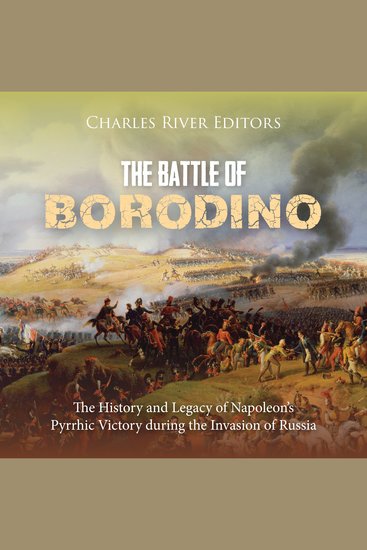
    On July 23, 1812, he launched his army across the border, despite the protestations of many of his Marshals. The Russian Campaign had begun, and it would turn out to be Napoleon’s biggest blunder. Russia’s great strategic depth already had a habit of swallowing armies, a fact many would-be conquerors learned the hard way. Napoleon, exceptional though he was in so many regards, proved that even military genius can do little in the face of the Russian winter and the resilience of its people. 
    From a purely military standpoint, much of the campaign seemed to be going in Napoleon’s favor since he met with little opposition as he pushed forwards into the interior with his customary lightning speed, but gradually this lack of engagements became a hindrance more than a help; Napoleon needed to bring the Russians to battle if he was to defeat them. On September 7, 1812, he must have thought his prayers had finally been answered, as the Russians had decided to stand and fight almost at the very gates of Moscow. Through his looking glass, Napoleon’s well-trained eye observed the weakness of his opponent’s defensive position. French and allied infantry advanced, anticipating that their Russian foes would again break as they had done two months earlier at Smolensk. The cavalry and Imperial Guard stood ready to complete the rout, this time preventing any organized withdrawal, and laying open an unopposed march to seize Moscow.  
    The Battle of Borodino, as it was later called, resulted in a combined casualty toll of over 75,000, a hideously long butcher’s bill that represented the bloodiest single day of the Napoleonic Wars. The Russian army retreated and Napoleon was able to occupy Moscow, hoping this would persuade the tsar to sue for peace. However, even as his advance guard pushed into the city, the retreating Russians put the capital to the torch. The Russian army’s retreat also ensured that it would live to fight another day, if necessary.
    Mostra libro
  • Capitalism and Crises - How to Fix Them - cover

    Capitalism and Crises - How to...

    Colin Mayer

    • 0
    • 0
    • 0
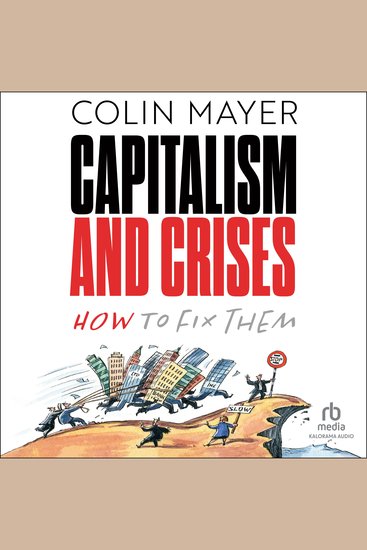
    The world is encountering multiple crises—climate, droughts, floods, energy, food, and pandemics, to name a few. We have a problem, this is the solution. 


    Capitalism and Crises is about how capitalism can fix them—how it can solve not cause them. The reason why it has caused them is that we have misconceived the nature of our capitalist system. We have failed to understand the key institution at the heart of it—business—and as a result we have allowed it to cause as well as solve problems. This book describes why this has happened and what needs to change to address it. 


    Drawing on history, philosophy, psychology, and biology as well economics, law, and finance, Mayer describes what has gone wrong, what needs to change, and how to fix it. He sets out the big challenges that capitalism must address and how it should set about doing that, and discusses how financial institutions should be at the heart of this, and how the public sector can work with the private on a common purpose of solving problems and creating shared prosperity. Capitalism and Crises provides an inspiring and motivational roadmap of how we as practitioners, policymakers, consumers, employees, communities, students, and citizens of the world can together tackle the challenges of the twenty-first century—to flourish and survive.
    Mostra libro
  • Summary: High Performance Habits - How Extraordinary People Become That Way by Brendan Burchard: Key Takeaways Summary & Analysis - cover

    Summary: High Performance Habits...

    Brooks Bryant

    • 0
    • 0
    • 0
    Disclaimer: This is a summary; not the official book nor does it accompany it. 
    Performance Habits: How Extraordinary People Become That Way' by Brendan Burchard. This insightful book lays out the crucial habits used by top performers to excel in their personal and professional lives. 
    Burchard, a world-renowned high-performance coach, has based his findings on one of the most extensive research projects on high performance ever conducted. He provides a scientifically-backed approach to achieving extraordinary success across multiple domains of life. 
    Our efficient summary highlights the six habits that high performers have in common and how these practices can help you rise above the rest. Learn how to increase productivity, enhance your energy, condition your mind for success, maintain motivation, develop influence, and demonstrate courage.
    Mostra libro
  • Great Escapes of World War I The: The History of the Most Famous Prisoner Breakouts during the Great War - cover

    Great Escapes of World War I...

    Editors Charles River

    • 0
    • 0
    • 0
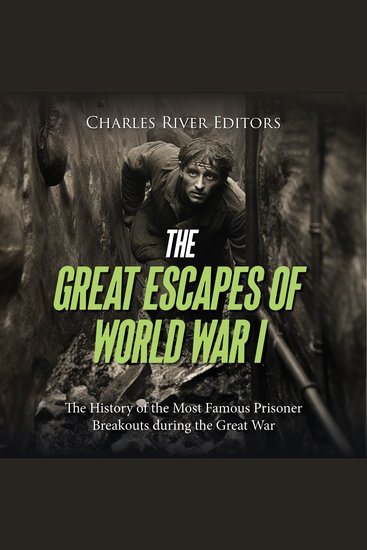
    In the first half of the 20th century, war was fought on a global and industrial scale. Millions of men were flung into the grinder of World War I and World War II, leading to commensurately huge numbers of prisoners of war (POWs). Camps were built to hold thousands of captives, with their own barracks blocks, parade grounds, and even farms. In World War I, there were several fronts in the war - Britain, France, Belgium, and Germany faced each other on the Western Front, fought mostly in northeast France and Belgium, while Germany and Austria Hungary faced Russia on the Eastern Front, where much of the war was fought in East Prussia and what is now Poland. The Italians and Austrians fought in the region of northeast Italy, and the Austrians and Bulgarians faced Serbia and then later an Allied army based in Salonica in the Balkans. The Ottomans faced Russia in northeast Anatolia, the British and Allied forces in the Mesopotamian campaign (mainly in today’s Iraq), the British in Palestine, and the Allies at Gallipoli.  
    	Regardless of rank, throughout the war, many of these men did not sit idle. Many spent their time preparing elaborate escape plans in the hopes of returning to their home nations and back to the fight. Following World War I, several books were published giving romantic accounts of successful escapes. For example, the wildly popular film The Great Escape (1963), has been a main factor in how the public views prisoners of war, and while that film was based on a book that details a mass escape of British and Allied prisoners from a World War II German prison camp for aviators, Stalag Luft III, a real escape from a German prisoner camp in World War I inspired the 1944 great escape from Stalag Luft III. 
    Mostra libro
  • End Hatred - cover

    End Hatred

    Raphael Terra

    • 0
    • 0
    • 0
    This audiobook has been recorded using Text to speech (TTS). 
     
    From the news media to politicians. From social media to the movies. From the pulpit to the playground. Hatred is engineered, sold and spread. It is used as a tool to control and manipulate the masses. It has been this way for a very long time. 
     
    It is in fact a natural part of being human and grows from that basic universal and instinctual inner element of fear. This fear is natural. All animals have it. It helps us and them to spot threats to our lives and way of life. But this fear is being used by very clever leaders in government, media, religion and business. These four elements are in fact all connected at many levels. 
     
    This fear causes hatred and that hatred is used to garner votes, sales and members. The threats created by those in power manipulate our thoughts and beliefs and cause us to hate other countries, races and everything else you can imagine. We take sides because we are conditioned to do so. 
     
    There is a route out of this hatred and it is as old as man. It is an ancient wisdom seldom spoken of in the media and yet it is greatly needed in our divided world. 
     
    It is time to end hatred.
    Mostra libro