Unisciti a noi in un viaggio nel mondo dei libri!
Aggiungi questo libro allo scaffale
Grey
Scrivi un nuovo commento Default profile 50px
Grey
Iscriviti per leggere l'intero libro o leggi le prime pagine gratuitamente!
All characters reduced
Ocean Plastic Crisis - cover

Ocean Plastic Crisis

Samuel Livingston

Traduttore A AI

Casa editrice: Publifye

  • 0
  • 0
  • 0

Sinossi

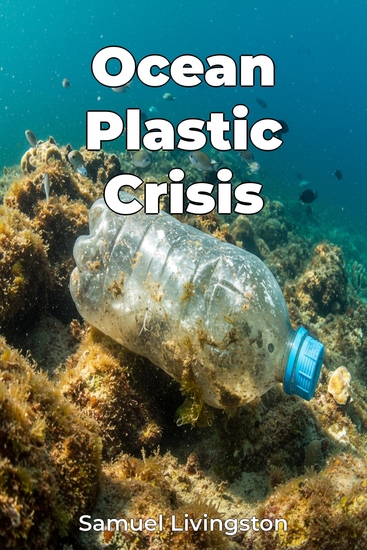
Ocean Plastic Crisis examines the escalating threat of plastic pollution in our oceans, a pervasive issue impacting marine life and ecosystems. It highlights how the exponential increase in plastic production since the mid-20th century has led to widespread contamination, affecting everything from plankton to marine mammals. The book emphasizes the urgent need for action, revealing that plastic pollution isn't just an aesthetic problem but a systemic threat with ecological and economic implications.

 
The book meticulously analyzes the sources and distribution of plastics, detailing how they impact marine organisms through physical harm, chemical toxicity, and habitat modification. It explores the journey of plastic debris, from its origin to its accumulation in oceanic gyres, and delves into the complexities of microplastics.

 
Beginning with a historical overview, the book progresses to examine the effects on various marine species before culminating in a discussion of potential solutions like waste reduction and improved recycling. Drawing from research in oceanography, marine biology, and environmental science, Ocean Plastic Crisis provides a comprehensive assessment of the problem. It connects to fields like environmental economics and public policy, demonstrating the need for integrated solutions and a shift towards a circular economy to protect our marine environment and aquatic environments.
Disponibile da: 22/02/2025.
Lunghezza di stampa: 77 pagine.
Altri libri che potrebbero interessarti

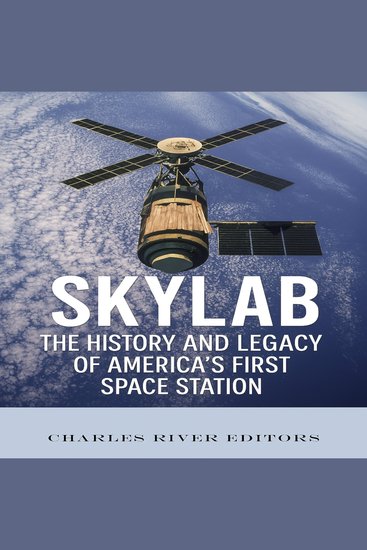
  • Skylab: The History and Legacy of America’s First Space Station - cover

    Skylab: The History and Legacy...

    Charles River Editors

    • 0
    • 0
    • 0
    During the Space Race, many people envisioned a future in which space travel would be a common undertaking for ordinary citizens. Just as riding in an airplane was once a daring endeavor, travel by rocket could be refined and made safer over time. That collective aspiration to someday take part in dreams NASA brought to life was integral to inspiring public interest in the space program. However, in the years following Apollo 11 in 1969, popular enthusiasm for space travel waned, and dreams of vacationing like the Jetsons gave way to more grounded goals. The level of interest NASA enjoyed would never again be comparable to the culturally defining moments of the agency’s most celebrated missions during the Mercury, Gemini and Apollo Programs.  
    	Nonetheless, in 1972 and 1973, NASA sent nine astronauts to spend extended periods of time living in a craft named Skylab, the very first experimental American space station. Though Skylab would not last long, and the International Space Station remains far more famous, Skylab’s history is one of ingenuity and challenge, as well as how NASA found itself without a mission after the triumph of the Apollo Program. 
    Mostra libro
  • The Tale of Daddy Long Legs - cover

    The Tale of Daddy Long Legs

    Arthur Scott Bailey

    • 0
    • 0
    • 0
    Arthur Scott Bailey (1877 – 1949) was author of more than forty children's books. He was born on November 15, 1877, in St. Albans, Vermont, United States, the second child of Winfield Scott Bailey and Harriet Sarah Goodhue.THERE was great excitement in the neighborhood of Farmer Green's house. Rusty Wren had found some strange tracks. And nobody knew whose they were.Now, when they were puzzled like that the field- and forest-folk usually went straight to Mr. Crow for advice. But this time it happened that the old gentleman had gone on an excursion to the further side of Blue Mountain, where Brownie Beaver lived. And there seemed to be no one else at hand who was likely to be able to explain the mystery. http://www.gutenberg.org/etext/21426
    Mostra libro
  • The New Creationism - Building Scientific Theory on a Biblical Foundation - cover

    The New Creationism - Building...

    Paul Garner

    • 0
    • 0
    • 0
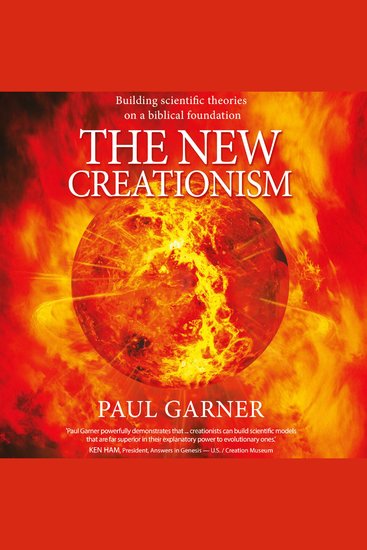
    The academic culture in which science is practiced today is one of tacit - if not explicit - atheism. Nowhere is this more evident than in the scientific study of how the universe began and developed - the field of origins. This book has been written in the conviction that the first eleven chapters of the book of Genesis - the Bible's book of beginnings - provide a trustworthy and accurate account of the early history of the universe. In the increasingly secular age in which we live, it is all too easy to forget that the major disciplines of science were founded by men of broadly Christian convictions. Their names are perhaps familiar to us - Boyle, Ray, Hooke, Newton, Faraday - but there is often an embarrassed silence concerning the spiritual beliefs that motivated these scientific giants. Like the astronomer, Kepler, these men perceived that in their scientific insights they were thinking God's thoughts after him'. Today, however, there is a sense of collective amnesia about the religious motivations of these men.
    Mostra libro
  • What We Talk About When We Talk About God - cover

    What We Talk About When We Talk...

    Rob Bell

    • 0
    • 0
    • 0
    New York Times bestselling author Rob Bell, whom The New Yorker describes as “one of the most influential Christian leaders in the country,” does for the concept of God what he did for heaven and hell in his book Love Wins: He shows how traditional ideas have grown stale and dysfunctional and how to return vitality and vibrancy to lives of faith today.Pastor Rob Bell explains why both culture and the church resist talking about God, and shows how we can reconnect with the God who is pulling us forward into a better future. Bell uses his characteristic evocative storytelling to challenge everything you think you know about God. What We Talk About When We Talk About God tackles the misconceptions about God and reveals how God is with us, for us, ahead of us, and how understanding this could change the entire course of our lives.
    Mostra libro
  • The Nature Book - cover

    The Nature Book

    Tom Comitta

    • 0
    • 0
    • 0
    Part sweeping evocation of Earth's rhythms, part literary archive, part post-human novel, The Nature Book collages descriptions of the natural world into a singular symphonic paean to the planet. 


    What does our nature writing say about us, and more urgently, what would it say without us? Tom Comitta investigates these questions and more in The Nature Book, a "literary supercut" that arranges writing about the natural world from three hundred works of fiction into a provocative re-envisioning of the novel. With fiction's traditional background of flora and fauna brought to the fore, people and their structures disappear, giving center stage to animals, landforms, and weather patterns—honored in their own right rather than for their ambient role in human drama. The Nature Book challenges the confines of anthropocentrism with sublime artistic vision, traversing mountains, forests, oceans, and space to shift our attention toward the magnificently complex and interconnected world around us.
    Mostra libro
  • Time Talks - cover

    Time Talks

    Tenzin Trepp

    • 0
    • 0
    • 0
    This is a series of discussions on Existential Realism — a framework that rethinks time, existence, and reality from the ground up. 
    At its core is a simple distinction: 
    The present alone exists — but the past and future are still real. 
    The past persists as traces, constraints, and records. 
    The future exists as structured possibilities, tendencies, and open directions. 
    This series develops that idea across multiple domains. 
    We examine why the block universe fails to account for becoming, how quantum physics may favor a present-centered ontology, and why relativity does not eliminate the present but reshapes it into a relative structure. 
    We move through entropy, causality, and the emergence of time — into biology, where organisms live in bounded temporal horizons, and into cognition, where time is both constructed and constrained. 
    We explore ethics grounded in the present, the role of agency in an open world, and formal logic systems that model these distinctions precisely. 
    Along the way, we confront competing views — presentism, eternalism, and various hybrid theories — not by dismissing them, but by placing them within a shared logical and conceptual space. 
    This is not a single argument, but a cumulative framework. 
    Each episode adds a piece: from physics to phenomenology, from formal logic to lived experience — all centered on one claim: 
    Reality is not a frozen totality, but an unfolding structure in which the present is the only point of existence.
    Mostra libro