Unisciti a noi in un viaggio nel mondo dei libri!
Aggiungi questo libro allo scaffale
Grey
Scrivi un nuovo commento Default profile 50px
Grey
Iscriviti per leggere l'intero libro o leggi le prime pagine gratuitamente!
All characters reduced
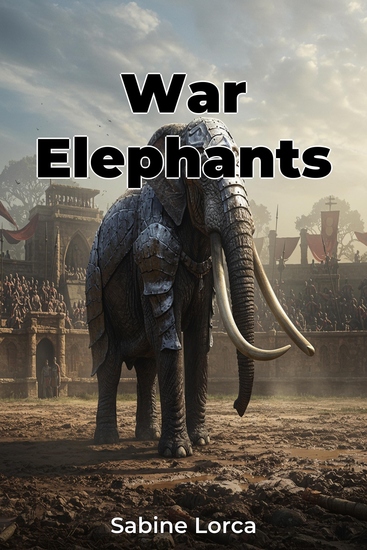
War Elephants - cover

War Elephants

Sabine Lorca

Traduttore A AI

Casa editrice: Publifye

  • 0
  • 0
  • 0

Sinossi

War Elephants explores the fascinating history of elephants in ancient warfare, highlighting their initial dominance and eventual decline. These massive animals, often armored and bearing armed riders, were once a formidable tactical asset. The book reveals intriguing details, such as how some cultures invested heavily in elephant domestication and training, while others developed specialized anti-elephant tactics to neutralize their impact.

 
The book progresses chronologically, beginning with the natural history of elephants and their suitability for war. It then examines their use in significant battles and campaigns, from Alexander the Great's encounters to Hannibal's daring crossing of the Alps. Finally, it analyzes the factors that led to their obsolescence, including logistical challenges and new military technologies.

 
This study uniquely examines the ecological and economic context surrounding the use of war elephants, detailing the resources needed for their upkeep and deployment. By combining historical narrative with scientific insights, War Elephants provides a comprehensive account of these magnificent creatures as instruments of war, appealing to military history enthusiasts and anyone interested in the intersection of humans, animals, and conflict.
Disponibile da: 29/03/2025.
Lunghezza di stampa: 61 pagine.


Altri libri che potrebbero interessarti

  • Saddam Hussein - Warmonger Invader Dictator and Oil Trader - cover

    Saddam Hussein - Warmonger...

    Kelly Mass

    • 0
    • 0
    • 0
    Saddam Hussein, the sixth president of Iraq, held power from July 16, 1979, until his downfall on April 9, 2003. A central figure in Iraq's political history, Saddam was a founding member of the Arab Socialist Ba'ath Party, which advocated for a fusion of Arab nationalism and socialism, known as Ba'athism. The party's rise to power in Iraq was marked by the 1968 coup, often referred to as the 17 July Revolution, which saw the Ba'ath Party assume control. Saddam, a key figure in the party, was instrumental in establishing its dominance in Iraq. 
    Saddam's path to the presidency was shaped by his political astuteness and ruthless consolidation of power. He became vice president under General Ahmed Hassan al-Bakr, who was severely weakened by ill health. At a time when numerous factions within the country threatened to destabilize the government, Saddam focused on building and strengthening the security forces that would enable him to suppress dissent. He carefully navigated the complexities of power struggles between the administration and the military, ensuring his influence over both the party and the state apparatus. His careful maneuvering eventually led to his formal assumption of power in 1979, though he had already been Iraq's de facto leader for several years. 
    In the early 1970s, Saddam took aggressive steps to nationalize Iraq's most important industries, including the Iraq Petroleum Company and various independent banks. This move, though initially successful in securing Iraq's economic independence, led to long-term financial instability. The nationalization policies, combined with inflation and a series of bad loans, contributed to the eventual collapse of Iraq's financial sector. Nevertheless, Saddam's regime was buoyed by the economic boom fueled by Iraq's oil exports, which provided the government with significant wealth and the ability to fund state projects.
    Mostra libro
  • Are White Men Smarter Than Everybody Else? - Playing Offense in the Fight for Racial Justice in America - cover

    Are White Men Smarter Than...

    Steve Phillips

    • 0
    • 0
    • 0
    Just six years after the Racial Reckoning that followed the murder of George Floyd, we are witnessing a full-scale assault on equality in America unparalleled since the overthrow of Reconstruction. Building on the urgency and clarity of his New York Times and Washington Post bestseller Brown Is the New White and his "spirited and persuasive" (Publishers Weekly) How We Win the Civil War, Steve Phillips now calls on the nation to go back on the offensive in the fight for racial justice. 
    In twelve short, animated chapters covering the fields of government, education, business, philanthropy, media, arts and entertainment, and democracy itself, Phillips exposes how Straight White American Male Preference (or S.W.A.M.P.) has come roaring out of the shadows once again. He makes a powerful argument for how widespread persistent inequality largely stems from the deeply ingrained practice of providing unfair, if not unconstitutional, preferences to straight white men. 
    Are White Men Smarter Than Everybody Else? calls for nothing less than draining the swamp of white male privilege. Fearless, sharp, and deeply researched, this much-needed corrective offers those who wish to help make this nation a multiracial democracy—where all people are truly equal—the arguments, evidence, and inspiration they need to launch a new counterattack.
    Mostra libro
  • The Social Animal Bundle 2 in 1 Bundle - cover

    The Social Animal Bundle 2 in 1...

    Drew Culby, Diane Helter

    • 0
    • 0
    • 0
    The Social Animal Bundle, 2 in 1 Bundle: Better Small Talk Techniques and How to Analyze People to Improve Your LifeMany dread small talk and shy away from it as much as possible. But whether we like it or not, there’s no way we can escape small talk because it is part of everyday interactions. Humans are social creatures and we use conversation as our way to emotionally connect with each other.  If you are one of them, worry not because you are about to learn the techniques to gracefully jumpstart a conversation with anyone in any situation. Another way to improve your social intelligence and skills is to master the art of reading people. This means reading their body language. This way, you understand not just what is actually spoken but their inherent meaning as well.In this bundle, you will learn ways to improve not just your communication skills but also your social skills through the art and science of small talk. It will help you improve your communication and social skills through the art of small talk. It will also teach you how to read other people's body language, learn their motivations, and uncover their true intentions. You will learn the true power of reading and analyzing other people and how it can help you create more meaningful relationships in your life.This 2 in 1 bundle includes the following audiobooks:1. Better Small Talk Techniques: The Essential Guide on the Art of Small Tall. Discover Small Talk Techniques That Can Help You Master Conversations in Any Situation!2. How to Analyze People to Improve Your Life: Learn Tips on How to Read People's Body Language to Understand Better and Build Stronger ConnectionsIf you want to learn more, download your copy of The Social Animal Bundle today!
    Mostra libro
  • Self-Censorship - cover

    Self-Censorship

    Glenn C. Loury

    • 0
    • 0
    • 0
    There is no such thing as free, unconstrained speech. Laws and constitutions may protect us from the state when we speak our minds. But the state is just one possible constraint. Glenn Loury, one of America's most outspoken and important intellectuals, provides a provocative and dazzling analysis of the powerful social forces that can prevent speakers from voicing unpopular views in public forums.Every society, Loury notes, has norms to enforce. That can be a good thing: There ought to be social sanctions for, say, compulsive liars. When, however, a society shows a low degree of tolerance for speech about matters of political importance, self-censorship proliferates and public discourse and policy suffer. The answer, Loury argues, is for as many of us as possible to be braver and more human—to take a risk and unapologetically "live within the truth".Loury first presented these ideas in the 1990s in a celebrated and prophetic essay about "political correctness." In Self-Censorship he expands and updates the account, deploying his analytical powers and psychological acuity to diagnose our current political climate. The result illuminates prevailing social dynamics with the same brilliant and startling effect that made the paper an instant classic thirty years ago.
    Mostra libro
  • Desiderata - cover

    Desiderata

    Max Ehrmann

    • 0
    • 0
    • 0
    Desiderata is a short prose poem by Max Ehrmann. Written in 1927, offers guidance for a meaningful, ethical, and peaceful life. It emphasizes on inner calm, moral integrity, and harmony with others. Ehrmann’s tone is gentle, almost meditative, blending practical advice with philosophical reflection.  
    The poem, which could be seen as a very short self-help essay, encourages readers to accept themselves and others, “go placidly amid the noise and haste,” and avoid unnecessary conflict. Ehrmann stresses honesty, kindness, and maintaining personal values even in the face of criticism or societal pressure. The text advocates a balanced approach to work, relationships, and self-expectations, warning against overindulgence or obsession. There is a spiritual or cosmic awareness, urging respect for nature and humanity, as well as mindfulness of one’s place in the universe.
    Mostra libro
  • Milk Baba - The Non Eating Saint Of Nepal - cover

    Milk Baba - The Non Eating Saint...

    Radha Krsna Das

    • 0
    • 0
    • 0
    "When a man has reached the point where he can sit in meditation for six months there is no need of eating, No need of latrine or of rest. Only one drop of amrit nectar from the top of the head to the body keeps him alive." Dude Baba,1993  
     
    "Dude Baba was a dear friend and god brother to Maharaji. His deep, soulful kirtans and lectures are the highest bhakti, or devotion to Lord Ram, and yes, Babaji ate nothing for the last forty-five years of his life. A true Siddhi Yogi. You are blessed to be in his divine company." Baba Ram Das / Author 'BE HERE NOW'  
     
    Ram Krishna Das Vaishnaba, or Dude Dehari Baba, or Milk Baba was so named because he lived forty-five years entirely on one small cup of milk per day. No other food ever passed his lips. Baba lived in a small room by the Bagmati river at Pashiputinath temple, five kilometers outside of Katmandu. His beautiful matted hair, or jata, was over twenty-six feet long. Baba was a lifelong devotee of Lord Rama and God Brother and confidant of Neem Karoli Baba, the iconic guru of Baba Ram Das. Lord Rama, also known as Ramachandra, is the seventh avatar of Krishna, one of his most popular incarnations along with Parshurama, and Gautama Buddha. Rama was born to Kaushalya and Dasharatha in Ayodhya, the ruler of the Kingdom of Kosala. Dude Baba was always chanting the name of Rama and was a master musician and great singer of bhajans. In 1993 he met American devotee author Jagannatha Dasa and subsequently travelled to his farm community in Lockport, New York for a six-month residency at the SRI ashram there. While there Dasa arranged for Baba to begin a mammoth two week recording session with a host of popular Indian musicians in order to get his collected bhajans down on tape for posterity. Recorded too were several inspirational lectures. Here then is the fruit of a lifetime spent as an ardent servant of Lord Rama and liberating transcendental vibrations of a pure devotee.
    Mostra libro