Unisciti a noi in un viaggio nel mondo dei libri!
Aggiungi questo libro allo scaffale
Grey
Scrivi un nuovo commento Default profile 50px
Grey
Iscriviti per leggere l'intero libro o leggi le prime pagine gratuitamente!
All characters reduced
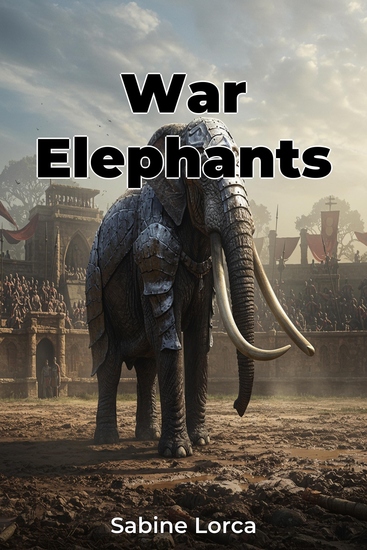
War Elephants - cover

War Elephants

Sabine Lorca

Traduttore A AI

Casa editrice: Publifye

  • 0
  • 0
  • 0

Sinossi

War Elephants explores the fascinating history of elephants in ancient warfare, highlighting their initial dominance and eventual decline. These massive animals, often armored and bearing armed riders, were once a formidable tactical asset. The book reveals intriguing details, such as how some cultures invested heavily in elephant domestication and training, while others developed specialized anti-elephant tactics to neutralize their impact.

 
The book progresses chronologically, beginning with the natural history of elephants and their suitability for war. It then examines their use in significant battles and campaigns, from Alexander the Great's encounters to Hannibal's daring crossing of the Alps. Finally, it analyzes the factors that led to their obsolescence, including logistical challenges and new military technologies.

 
This study uniquely examines the ecological and economic context surrounding the use of war elephants, detailing the resources needed for their upkeep and deployment. By combining historical narrative with scientific insights, War Elephants provides a comprehensive account of these magnificent creatures as instruments of war, appealing to military history enthusiasts and anyone interested in the intersection of humans, animals, and conflict.
Disponibile da: 29/03/2025.
Lunghezza di stampa: 61 pagine.

Altri libri che potrebbero interessarti

  • The Art of Influencing People Without Them Knowing - cover

    The Art of Influencing People...

    MARC RYAN

    • 0
    • 0
    • 0
    Ever wish you could evoke a desired response with a simple gesture or tone of voice? Do you dream of commanding more respect in your social and professional circles? Then you need to keep reading...For centuries, psychologists have agreed on a powerful fact: the human mind is highly malleable. Special techniques can incite unusual responses and in many cases, trigger behavior that conflicts with one's true personality. Whether you're aware of it or not, these techniques are used on you daily. Big companies, your employer, and some of your closest friends are wielding influence over your personal choices. Will you continue to be played like a puppet or will you, too, learn to pull the strings?In this book, you'll discover:- Nine ways to cultivate powerful emotional intelligence NOW. (Follow these expert-approved tips to develop a strong hold over your emotions and become psychologically untouchable!)- How to turn someone into their own worst enemy so they immediately refer to YOU for leadership. No aggression required!- The secrets behind manipulating your boss and negotiating your way to the top.- A step-by-step guide to reverse psychology and getting people to enjoy giving you what you want.- Little-known tricks to decipher the hidden messages in common facial expressions and other types of behavior.- The dangerously powerful tool that can seduce nearly anyone you desire.- Subtle body language that asserts dominance and INSTANTLY makes it known that you're in control. (Display highly effective "top dog" behavior and subconsciously make everyone follow YOUR rules!)And much, much more...By relying on the expert tools in this guide, you'll immediately pick up dominant behavior like it's second nature and make a habit of getting what you want exactly when you want it.If you want to access these advanced techniques and transition from "played" to "major player," then you need to start this book!
    Mostra libro
  • Mosque-Cathedral of Córdoba and Mosque of Cristo de la Luz The: The History the Moors’ Most Famous Mosques in Spain - cover

    Mosque-Cathedral of Córdoba and...

    Editors Charles River

    • 0
    • 0
    • 0
    The Calle Cardenal Herrero in Córdoba is an iconic cobbled street impossible to overlook, for it is home to the Andalusian city's spectacular Mosque-Cathedral. Also known as “La Mezquita,” this one-of-a-kind Moorish and Christian place of worship reels in about 1.5 million visitors each year, most of whom find themselves spellbound by its hypnotic architectural features and the riveting history that has transpired and continues to within the beautifully weathered walls of the dual-church. That said, the Mezquita is far more than a mere tourist attraction - in recent years, the Mosque-Cathedral of Córdoba has become the crux of a complicated religious conflict resurrected by impassioned worshipers and patriotic locals who fear not only for the future of its legacy, but the preservation of its true history. 
    	It is easy for those on the outside looking in to make hasty judgments about the ongoing dispute, considering the endless amount of information that is uploaded online by the second. The contentious debates surrounding the Mezquita are often products of outdated prejudices, festering distrust, and whitewashing, all of which make it harder for the Mezquita to remain a non-discriminatory space serviceable to and appreciated by everyone today.  
    	The Mezquita del Cristo de la Luz is nowhere near the largest monument in Toledo. The grand Toledo Cathedral, for instance, dwarfs this modest, two-level structure with its height of 146 feet. The simple elegance of the mezquita pales in comparison to the city's stupendous landmarks. Toledo is, after all, home to the mighty stone fortification known as the Alcazar of Toledo, and the breathtaking masonry showpiece that is the Synagogue of Santa Maria la Blanca. Nevertheless, this multicultural mezquita is often hailed as one of the most precious treasures of Toledo, a place that truly embodies the unique, cross-cultural spirit of the city. 
    Mostra libro
  • Chechnya and Dagestan: The History of the Chechen Republic and the Ongoing Conflict with Russia - cover

    Chechnya and Dagestan: The...

    Charles River Editors

    • 0
    • 0
    • 0
    Today, Chechnya is a republic with some degree of autonomy in the contemporary Russian Federation. Its population is just over a million people, and it stretches over an area of 17,000 square kilometers. The majority of Chechnya’s population is comprised of Sunni Muslims, meaning religion has played a key role in the territory’s development. In southwestern Russia, landlocked within 100 kilometers of the Caspian Sea, Chechnya is north of the Caucasian mountains, bordering other North Caucasus provinces such as North Ossetia, and Dagestan, and Georgia. 
    Russia itself is a well-established Slavic, Orthodox Christian country, though its majority Muslim provinces were not obvious to outsiders until the post-Soviet conflicts of the 1990s. The history of the Chechen people in the region is, nevertheless, long-established, and Chechnya has become synonymous with conflict, civil war, and discontent. While many people are aware of that, few understand how things reached that point. The area is complex and fascinating, representing one of the world’s true fault lines in terms of religion, empire, and geography. 
    Wedged in the North Caucasus mountain range and bordering the Caspian Sea, Dagestan is a true meeting point of cultures, religions and geopolitical rivalries. A crossroad between east and west, Dagestan has been vitally important at different times for various powers in Asia, Europe, and the Middle East, and even between different religious and ethnic groups. In spite of all that, and in large measure because of it, Dagestan’s society is a composite of these rivalries over the centuries. 
    Mostra libro
  • Confronting Saddam Hussein - George W Bush and the Invasion of Iraq - cover

    Confronting Saddam Hussein -...

    Melvyn P. Leffler

    • 0
    • 0
    • 0
    America's decision to go to war in Iraq in 2003 is arguably the most important foreign policy choice of the entire post–Cold War era. Nearly two decades after the event, it remains central to understanding current international politics and US foreign relations. 


    In Confronting Saddam Hussein, the eminent historian of US foreign policy Melvyn P. Leffler analyzes why the US chose war and who was most responsible for the decision. Employing a unique set of personal interviews with dozens of top officials and declassified American and British documents, Leffler vividly portrays the emotions and anxieties that shaped the thinking of the president after the shocking events of 9/11. He shows how fear, hubris, and power influenced Bush's approach to Saddam Hussein's Iraq. At the core of Leffler's account is his compelling portrait of Saddam Hussein. Rather than stressing Bush's preoccupation with promoting freedom or democracy, Leffler emphasizes Hussein's brutality, opportunism, and unpredictability and illuminates how the Iraqi dictator's record of aggression and intransigence haunted the president and influenced his calculations. Throughout, Leffler highlights the harrowing anxieties surrounding the decision-making process after the devastating attack on 9/11 and explains the roles of contingency, agency, rationality, and emotion.
    Mostra libro
  • First Crusade The: The History of the Christian Church’s Initial Campaign in the Holy Land - cover

    First Crusade The: The History...

    Charles River Editors

    • 0
    • 0
    • 0
    Of the many campaigns during the Middle Ages, few are as remarkable or seemingly impossible to win at the start as the First Crusade (1095-99), and the true crowning achievement of that crusade, which resulted in two centuries of Western European Christian states in the Middle East and the permanent firing of the European imagination, was the conquest of Jerusalem on July 15, 1099 after three weeks of siege. That victorious siege came four years after the call for a crusade first went out, and had the Crusaders not taken Jerusalem, the First Crusade would not likely have been followed by any more and the campaign might have been no more than an historical footnote of what could have been.  
    	As it turned out, the siege of Jerusalem and the crusade as a whole says much about the first major clash of Western and Eastern military tactics after the fall of the Roman Empire, as well as the power of faith and even fanaticism to motivate people beyond ordinary human endurance. For better and worse, the siege and fall of Jerusalem to the Crusaders has become a fundamental piece in the current view of the West in that part of the world. Indeed, to this day, the First Crusade remains a polarizing event, even among modern historians. For some, the Crusaders were heroes and saints, and for others they were devils who disrupted the peaceful local sects of Muslims, Jews, and Christians, establishing an alien colony that heralded modern European imperialism. In fact, the First Crusade is a good example of why it is unwise to choose sides in history, because neither side was correct and the situation was highly complex. 
    Though it went largely unremarked in the Islamic world at the time, the First Crusade has since become a contentious symbol of European imperialism in the Middle East. Debate over whether the Crusades can truly be perceived as an early example of European colonialism continues in medieval historiography, though the evidence for this is thin.
    Mostra libro
  • The World of Juliet Kinzie - Chicago before the Fire - cover

    The World of Juliet Kinzie -...

    Ann Durkin Keating

    • 0
    • 0
    • 0
    When Juliette Kinzie first visited Chicago in 1831, it was anything but a city. An outpost in the shadow of Fort Dearborn, it had no streets, no sidewalks, no schools, no river-spanning bridges. And with two hundred disconnected residents, it lacked any sense of community. In the decades that followed, not only did Juliette witness the city’s transition from Indian country to industrial center, but she was instrumental in its development. 
     
    Juliette is one of Chicago’s forgotten founders. Early Chicago is often presented as “a man’s city,” but women like Juliette worked to create an urban and urbane world, often within their own parlors. With The World of Juliette Kinzie, we finally get to experience the rise of Chicago from the view of one of its most important founding mothers. 
     
    Ann Durkin Keating offers a moving portrait of a trailblazing and complicated woman. Keating takes us to the corner of Cass and Michigan (now Wabash and Hubbard), Juliette’s home base. Through Juliette’s eyes, our understanding of early Chicago expands from a city of boosters and speculators to include the world that women created in and between households. We see the development of Chicago society, first inspired by cities in the East and later coming into its own midwestern ways. We also see the city become a community, as it developed its intertwined religious, social, educational, and cultural institutions. Keating draws on a wealth of sources, including hundreds of Juliette’s personal letters, allowing Juliette to tell much of her story in her own words. 
     
    The World of Juliette Kinzie offers a new perspective on Chicago’s past and is a fitting tribute to one of the first women historians in the United States.
    Mostra libro