Unisciti a noi in un viaggio nel mondo dei libri!
Aggiungi questo libro allo scaffale
Grey
Scrivi un nuovo commento Default profile 50px
Grey
Iscriviti per leggere l'intero libro o leggi le prime pagine gratuitamente!
All characters reduced
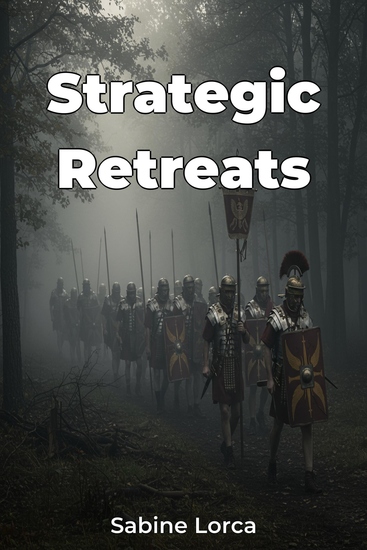
Strategic Retreats - cover

Strategic Retreats

Sabine Lorca

Traduttore A AI

Casa editrice: Publifye

  • 0
  • 0
  • 0

Sinossi

Strategic Retreats challenges the conventional view of retreats as defeats, arguing instead that they are vital military maneuvers. The book explores how strategic withdrawals have been used throughout history to conserve forces, gain tactical advantages, and ultimately achieve strategic objectives. Military leaders often face the difficult decision to retreat when facing overwhelming odds; this book examines how these decisions, when meticulously planned, can disrupt enemy offensives and set the stage for future counterattacks.

 
The book progresses chronologically and thematically, beginning with the theoretical underpinnings of strategic withdrawals and then delving into historical examples ranging from ancient battles to modern conflicts. Examining specific campaigns, it analyzes the commander's decisions, the execution of the retreats, and their subsequent impact on the course of the war. The book also considers the psychological impact of retreats on both sides, alongside the logistical challenges involved. By analyzing military history, the book demonstrates how retreats can be as effective as offensive maneuvers.
Disponibile da: 29/03/2025.
Lunghezza di stampa: 83 pagine.

Altri libri che potrebbero interessarti

  • Great Escapes of World War I The: The History of the Most Famous Prisoner Breakouts during the Great War - cover

    Great Escapes of World War I...

    Editors Charles River

    • 0
    • 0
    • 0
    In the first half of the 20th century, war was fought on a global and industrial scale. Millions of men were flung into the grinder of World War I and World War II, leading to commensurately huge numbers of prisoners of war (POWs). Camps were built to hold thousands of captives, with their own barracks blocks, parade grounds, and even farms. In World War I, there were several fronts in the war - Britain, France, Belgium, and Germany faced each other on the Western Front, fought mostly in northeast France and Belgium, while Germany and Austria Hungary faced Russia on the Eastern Front, where much of the war was fought in East Prussia and what is now Poland. The Italians and Austrians fought in the region of northeast Italy, and the Austrians and Bulgarians faced Serbia and then later an Allied army based in Salonica in the Balkans. The Ottomans faced Russia in northeast Anatolia, the British and Allied forces in the Mesopotamian campaign (mainly in today’s Iraq), the British in Palestine, and the Allies at Gallipoli.  
    	Regardless of rank, throughout the war, many of these men did not sit idle. Many spent their time preparing elaborate escape plans in the hopes of returning to their home nations and back to the fight. Following World War I, several books were published giving romantic accounts of successful escapes. For example, the wildly popular film The Great Escape (1963), has been a main factor in how the public views prisoners of war, and while that film was based on a book that details a mass escape of British and Allied prisoners from a World War II German prison camp for aviators, Stalag Luft III, a real escape from a German prisoner camp in World War I inspired the 1944 great escape from Stalag Luft III. 
    Mostra libro
  • Revolution & Counter Revolution - cover

    Revolution & Counter Revolution

    Friedrich Engels

    • 0
    • 0
    • 0
    Revolution and Counter-Revolution is an account of what happened in Prussia, Austria, and other German states during 1848, describing the impact on both middle-class and working-class aspirations and on the idea of German unification. Events in Austria and Prussia are discussed, along with the role of the Poles and Czechs and Panslavism, which Engels was against. 
     
    Friedrich Engels (German: (28 November 1820 – 5 August 1895) was a German social scientist, author, political theorist, philosopher, and father of Marxist theory, alongside Karl Marx.
    Mostra libro
  • A Lifetime Doing Nothing - Tales Teachings and Testimonials - cover

    A Lifetime Doing Nothing - Tales...

    Ian McCrorie

    • 0
    • 0
    • 0
    This book is a compilation of teachings told in short stories about the author's attempts to undo the done. He offers this little book as a more ardent, and hopefully lucid, attempt to explain the paramount importance of doing nothing as a way to undo oneself. 
     
    ----------------------------- 
     
    "In my experience, all our problems do indeed stem from this hyperactive and delusional thinking we have acquired over time. 
     
    There is a way to eradicate the light-speed, blind reactions and the habitual confusion. The way is very simple. It boils down to just two words: do nothing. That s it. Do nothing. Sit quietly in a room alone and do nothing. Watch the monkey mind and do not try to fix it or eliminate it or drown it out or engage it. 
     
    This is doing non-doing. Observe the mind, on autopilot as usual, screaming editorial comments from the sidelines like some frenzied play-by-play announcer and do nothing about it. Don't turn the monologue into a dialogue. Do nothing. 'Nothing to see here, folks. Let s keep it moving.'" 
     
    —Ian McCrorie
    Mostra libro
  • What Your Favorite Color Says About You - The Psychology of Color Preferences - cover

    What Your Favorite Color Says...

    John Harpoon

    • 0
    • 0
    • 0
    Color is a fundamental part of human experience, shaping emotions, perceptions, and even behavior. From ancient civilizations to modern psychology, color has been studied for its impact on the human mind. Some colors evoke feelings of warmth and excitement, while others create a sense of calm and relaxation. But beyond their immediate effects, colors can also serve as a reflection of personality and identity. The idea that a person’s favorite color reveals something about their character has intrigued psychologists, researchers, and individuals alike. This book explores the fascinating connection between color preferences and human psychology, offering insights into how and why we gravitate toward certain shades.  
    How a person develops a preference for a particular color is influenced by multiple factors, including early childhood experiences, cultural associations, and even genetic predispositions. Some psychologists suggest that color preferences are rooted in personal memories—positive experiences with a specific color may lead to a lasting affinity for it. Additionally, cultural and societal norms play a significant role in shaping perceptions of color. For example, while white represents purity and new beginnings in Western cultures, it is often associated with mourning in parts of Asia. These cultural variations demonstrate that color meanings are not universal, but rather deeply ingrained in social contexts.  
    Despite these external influences, color preferences are also highly personal and can evolve over time. A child who loves bright and playful colors like yellow or orange may later develop an appreciation for more subdued tones such as blue or gray. Life experiences, emotional growth, and shifting priorities contribute to these changes.
    Mostra libro
  • Black Woman's Guide to Getting Free - cover

    Black Woman's Guide to Getting Free

    Tamara Winfrey Harris

    • 0
    • 0
    • 0
    Unshackle your authentic self from the expectations and stereotypes of American culture through the six pillars of living free as a Black woman. 


    Tamara Winfrey Harris harnesses her knowledge as a two-time author and storyteller of the Black femme experience and nationally known expert on the intersections of race and gender to deliver a sharp feminist analysis that is illustrated by real-life stories and examples plucked from popular culture and intimate Black woman-to-Black woman truth-telling. 


    This book is separated into two parts. First, the meaning of liberation is explored and Black women will be guided in creating sustaining practice to mature their well-being along the freedom journey. 


    In part two, listeners are introduced to the six pillars of living free as a Black woman: Spot the distortions, Know your truth, Celebrate the real you, Understand the cost of liberation, Practice freedom, and SEE free Black women everywhere. 


    With the bold, astute writing that you have come to expect from Winfrey Harris, A Black Woman's Guide to Getting Free urges Black women everywhere to choose themselves, and choose freedom, in a world that would have you chained.
    Mostra libro
  • It Ends With Us: Book Summary & Analysis - cover

    It Ends With Us: Book Summary &...

    Briefly Summaries

    • 0
    • 0
    • 0
    This is a concise summary and analysis of It Ends With Us, by Colleen Hoover. It is not the original book and is not affiliated with or endorsed by Colleen Hoover. Ideal for those seeking a quick and insightful overview.
     
    It Ends With Us is a poignant contemporary romance novel that delves into complex themes of love, resilience, and personal empowerment. The story follows Lily Bloom, a young woman who builds a new life for herself in Boston, away from her tumultuous past. When she meets neurosurgeon Ryle Kincaid, their chemistry is undeniable, but as their relationship deepens, Lily must confront painful truths and make difficult choices that challenge her understanding of love and self-worth. With heartfelt prose and emotional depth, Hoover crafts a narrative that explores the resilience of the human spirit and the transformative power of courage in the face of adversity.
    Mostra libro