Join us on a literary world trip!
Add this book to bookshelf
Grey
Write a new comment Default profile 50px
Grey
Subscribe to read the full book or read the first pages for free!
All characters reduced
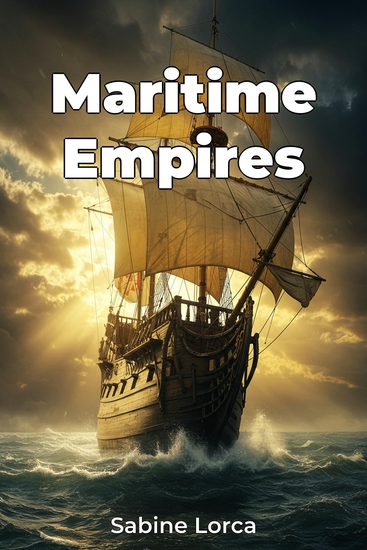
Maritime Empires - cover

Maritime Empires

Sabine Lorca

Translator A AI

Publisher: Publifye

  • 0
  • 0
  • 0

Summary

Maritime Empires explores how naval power has shaped world history, examining the rise and fall of empires through their control of the seas. From ancient civilizations to modern superpowers, the book investigates how nations leveraged maritime trade, naval warfare, and strategic locations to exert global influence. Intriguing insights include how naval technology evolved over centuries and how maritime empires affected both colonizers and colonized populations.

 
The book begins by introducing core concepts like naval technology and maritime trade networks. It then progresses through case studies of empires such as the Portuguese, Spanish, Dutch, and British, analyzing their strategies and outcomes. By drawing from diverse sources, Maritime Empires connects maritime history to economics, political science, and sociology, offering a comprehensive understanding of maritime power's enduring impact.
Available since: 03/21/2025.
Print length: 67 pages.

Other books that might interest you

  • Political wisdom - A future for Christian politics - cover

    Political wisdom - A future for...

    Rob Nijhoff, Tido J. Mooibroek

    • 0
    • 0
    • 0
    Does faith belong in politics? According to Rob Nijhof it most certainly does. Everyone has some deep convictions that shape the way in which one conducts politics. People can be inspired to political wisdom from different sources. That diversity presents a good reason to listen to each other. It remains useful to draw from the broad Christian tradition that gave the Netherlands and Europe a unique constitutional and democratic character. This tradition traces its roots back to before the Renaissance or the Reformation. This book argues for a politics where ones values are acknowledged and where all players in the 'field strive together for wisdom and the general good for society. Churches can be relevant in this. The Political efforts of Christians normally proceed via the diverse political parties. However, the current network society offers Christians the chance to engage in alliances to act as a broad movement. Christian parties can give this movement a political face. It would be good if Christians would also across the borders of political parties seek to cooperate in a network. At European level this is happening in the European Christian Political Movement (ECPM). This book originally was published (in Dutch) in 2016 by the Mr. G. Groen van Prinsterer Stichting, the scientiffic Institute of the ChristenUnie political party which affter the 2017 election again took part in a coalition government, together with VVD, CDA and D66.
    Show book
  • Ending Human Trafficking - A Handbook of Strategies for the Church Today - cover

    Ending Human Trafficking - A...

    Kimberly McOwen Yim, Sandra...

    • 0
    • 0
    • 0
    Human trafficking is one of the most pressing social justice issues of our time, and in recent years there has been renewed interest among Christians, as many have been stirred up to take their part in the ongoing battle. This is a wonderful thing—and yet misinformed and misguided efforts can do more harm than good. Ending Human Trafficking is a handbook designed to educate churches and parachurch organizations for truly effective work. 


    In collaboration with The Global Center for Women and Justice at Vanguard University, Ending Human Trafficking is an accessible and compelling resource for Christian leaders, written by seasoned leaders in the struggle against modern slavery. Grounded in a theological response to the issue and filled with stories, up-to-date data, and practical tools and tips, it promises to be an invaluable resource for years to come.
    Show book
  • Duct-tape Community - Hope for Neighborliness in an Unequal World - cover

    Duct-tape Community - Hope for...

    Jim Herbst

    • 0
    • 0
    • 0
    In a country of critics and where shouting and snarky tweets dominate public communication, neighborliness is in short supply.  Duct-tape Community - Hope for Neighborliness in an Unequal World finds it in the most unexpected places, from public housing janitors to farmers in overalls. Hope for better community can be found from the inspiring stories of the seemingly powerless and unknown. Duct-tape Community is a declaration that community takes two resolves: one to make the world a fairer place and a second to be neighborly in one that isn't.
    Show book
  • Escaping America in World War II: The History of Attempted Prison Escapes by Axis Prisoners in the United States - cover

    Escaping America in World War...

    Editors Charles River

    • 0
    • 0
    • 0
    Though it’s often overlooked today, during World War II, the United States held hundreds of thousands of enemy prisoners of war, and the country was unprepared for the influx, despite the fact that only weeks after the attack on Pearl Harbor, the government started detaining Japanese Americans and foreigners from Axis countries. Some camps, used for training Army recruits, were repurposed as prison camps, and the experience of building camps for the 120,000 Japanese and Japanese Americans was useful in building camps for the POWs. In addition to the Japanese, about 31,000 German, Japanese, and Italian residents were placed in camps.  
    	At first, there were few POWs because it took months for the American military to get ready to participate in campaigns. The first POW was a Japanese sailor who’d survived the sinking of his midget submarine at Pearl Harbor. The first German prisoners were survivors of U-boats sunk off the American coasts. There were also a few hundred German and Italian merchant sailors on ships seized in American ports (these sailors were interned as enemy aliens, not POWs). 
    	Soon, the prisoners came in waves. A sizable number came to the US at the request of Britain, which had too many prisoners and sent tens of thousands to Canada and the US. The first large number of enemy POWs captured by American forces came at the end of the North Africa campaign in May 1943, when the Allied forces trapped most of the vaunted Afrika Korps in Tunisia (then a French colony) and forced it to surrender. About 280,000 German and Italian troops surrendered. These were different from later prisoners; they tended to be volunteers, with many of them fervent Nazis (if German) and diehard Fascists (if Italian). They were generally confident of an ultimate German victory.
    Show book
  • Russia 2070 (Population): The Death of An Old Empire - cover

    Russia 2070 (Population): The...

    Andrew Kirby

    • 0
    • 0
    • 0
    Dive into the most comprehensive projection of Russia’s population and ethnic landscape by the year 2070. This meticulous analysis goes far beyond national totals, providing granular, region-by-region estimates for every Oblast, Okrug, and Autonomous Region. 
    Using a rigorous methodology that cross-references historic Census data, detailed Ethnologue sources, and current demographic trends, this report paints a striking portrait of the potential collapse and transformation of an old empire. Discover which regions face the most catastrophic population decline and how internal and external migration flows are set to reshape the ethnic map of the Russian Federation. 
    This is more than just a list of numbers. It’s a stark, data-driven look at the forces eroding Russian society. While based strictly on established demographic trends, the underlying context of this population crisis, including Russia's persistent Tier 3 ranking on the U.S. Department of State's human trafficking list—underscores the complex challenges threatening the nation’s stability. 
    Understand the future of Russia's people, one region at a time. The death of an empire starts with its population.
    Show book
  • Napoleon’s Great Escapes: The History of Napoleon’s Escapes from Egypt and Elba - cover

    Napoleon’s Great Escapes: The...

    Editors Charles River

    • 0
    • 0
    • 0
    In addition to being unable to be reinforced or supplied by sea, Napoleon's ambitions to establish a permanent presence in Egypt were further frustrated by a number of uprisings. Early in 1799, Napoleon advanced against France’s erstwhile enemy, the Ottoman Empire, invading modern Syria (then the province of Damascus) and conquering the cities of Gaza, Jaffa, Arish and Haifa. However, with the plague running rampant through his army and his lines of supply from Egypt stretched dangerously thin, Napoleon was unable to destroy the fortified city of Acre and was forced to retreat. The retreat cost him almost all of his wounded as, harassed by enemy forces, he was forced to abandon most of his casualties to the Ottomans’ mercy, or lack thereof. Most of the wounded were tortured and beheaded. Napoleon harbored all kinds of delusions about his time in Egypt that were not based in reality, but he definitely left a lasting legacy in the region, one he would never live to see or appreciate. By shifting the theater of operations to Africa and the Middle East, Napoleon inadvertently ensured the Europeans would fight there in the future. 
    	Of all the incredible military feats Napoleon accomplished, none were more impressive than his escape from Elba and his return to France, which was literally a bloodless revolution. On February 26, 1815, Napoleon escaped from Elba, and in a desperate gamble, he landed on the French mainland with less than a thousand men and marched on Paris. What happened next was truly remarkable. An infantry regiment was sent to intercept Napoleon and his men, but Napoleon rode up to them alone and shouted, "Here I am. Kill your Emperor, if you wish." Upon seeing their once invincible leader before them, the soldiers mutinied and went over to his side en masse. Other corps soon followed, and in no time at all Napoleon found himself at the head of an army marching on Paris.
    Show book