Unisciti a noi in un viaggio nel mondo dei libri!
Aggiungi questo libro allo scaffale
Grey
Scrivi un nuovo commento Default profile 50px
Grey
Iscriviti per leggere l'intero libro o leggi le prime pagine gratuitamente!
All characters reduced
Japanese Castles - cover

Japanese Castles

Sabine Lorca

Traduttore A AI

Casa editrice: Publifye

  • 0
  • 0
  • 0

Sinossi

Japanese Castles explores the evolution and significance of Japan's feudal fortifications, revealing their pivotal role in military strategy and societal structure. These imposing structures, far from being mere defensive strongholds, mirrored Japan's complex social hierarchy and technological advancements. For example, castle design evolved from simple earthenworks to elaborate, multi-tiered keeps, reflecting the changing dynamics of warfare and political power during the Warring States period and under the Tokugawa shogunate.

 
The book examines the architectural and strategic significance of Japanese castles, highlighting key elements like moats, baileys, keeps, and gatehouses. It traces their development through different eras, demonstrating how castles transformed from symbols of regional power to emblems of centralized authority. Each chapter builds upon the last, providing a comprehensive understanding of Japanese castles within their historical context, supported by illustrations, photographs, and maps.

 
Japanese Castles adopts a fact-based historical approach, making it accessible to a broad audience interested in military history, Japanese history, and architectural history. It emphasizes the enduring legacy of these structures, exploring their preservation, cultural significance, and continued relevance in modern Japan. This exploration offers a unique lens through which to understand Japanese history, moving beyond traditional narratives to reveal deeper insights into the nation's past.
Disponibile da: 20/03/2025.
Lunghezza di stampa: 65 pagine.

Altri libri che potrebbero interessarti

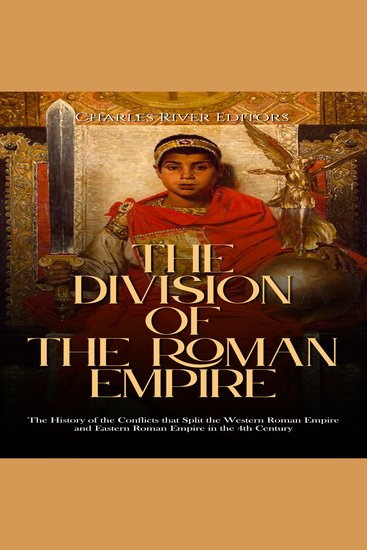
  • Division of the Roman Empire The: The History of the Conflicts that Split the Western Roman Empire and Eastern Roman Empire in the 4th Century - cover

    Division of the Roman Empire...

    Editors Charles River

    • 0
    • 0
    • 0
    Rome’s Imperial Crisis has been difficult for historians to summarize, which is why, despite being one of the most intriguing periods in Roman history, it is often overlooked by people who have chosen to focus on the more cohesive periods before and after it. Even though he is best remembered for his religious reforms and what his (mostly Christian) admirers described as his spiritual enlightenment, Constantine was also an able and effective ruler in his own right. Rising to power in a period of decline and confusion for the Roman Empire, he gave it a new and unexpected lease on life by repelling the repeated invasions of the Germanic tribes on the Northern and Eastern borders of the Roman domains, even going so far as to re-expand the frontier into parts of Trajan’s old conquest of Dacia (modern Romania), which had been abandoned as strategically untenable.  
    	However, it can be argued that despite his military successes – the most notable of which occurred fighting for supremacy against other Romans – Constantine may well have set the stage for the ultimate collapse of the Roman Empire as it had existed up until that point. It was Constantine who first decided that Rome, exposed and vulnerable near the gathering masses of barbarians moving into Germania and Gaul, was a strategically unsafe base for the empire, and thus he expanded the city of New Rome on the Dardanelles Straits, creating what eventually became Constantinople. By moving the political, administrative, and military capital of the empire from Rome to the East, as well as the imperial court with all its attendant followers, Constantine laid the groundwork for the eventual schism which saw the two parts of the Roman Empire become two entirely separate entities, go their own way, and eventually collapse piecemeal under repeated waves of invasion.
    Mostra libro
  • Moving House and other Poems from Hong Kong - cover

    Moving House and other Poems...

    Gillian Bickley

    • 0
    • 0
    • 0
    The old is contrasted with the new, fictional with actual life. Links are made between different cultures, different lives, different experiences. The expatriate life-style of constant movement runs parallel with the title of the book. 
     "Gillian Bickley writes as she responds to everyday events, always with the echo of 'time's winged chariot' in her ears. The fact of moving house sends her speeding back through the moves of a lifetime and forward to the last move, to the small room of the grave. The opening poem suggests the elusive presence of the author, and the deeper themes glimpsed through her deceptively simple poems. The variety of human life and the individual response to life, these are Gillian Bickley's central interests. The power that invigorates the poems in Moving House is the control of language. In this bare, tight poetry, no idle words are allowed. Its vocabulary draws on the base language of essences and epiphanies. The chosen spare language is the perfect partner for this poetry of mature experience." — Emeritus Professor I. F. Clarke and M. Clarke. 
    "The poetic observations of a sensitive writer responding to the reality of being alive." "Insightful probing into the darker issues of our lives . . . to make sense of human experience." — Paul Bench, Speech & Drama: Journal of the Society of Teachers of Speech and Drama. 
    "A privileged view into the emotional, intellectual and spiritual life of its writer." "The profound intimacy of the personal poems, reflecting universal truths about the human condition, renders the reader at once intruder and confidant." — Solveig Bang, Sunday Morning Post. 
    "Bickley's delicately-crafted poems are faithful word portraits of various aspects of Hong Kong at the turn of the millennium: its landscape, its people, its myths and spirits." —Tammy Ho, Asian Review of Books. 
    Mostra libro
  • How to Be Productive - cover

    How to Be Productive

    Olivia Werner

    • 0
    • 0
    • 0
    [How to Be Productive] illuminates the subtle art of meaningful achievement through an intimate exploration of our relationship with time, energy, and purpose. Written with raw honesty and keen psychological insight, this guide dismantles conventional productivity wisdom, revealing instead a deeply personal approach to getting things done. Through lyrical prose that reads like a conversation with a trusted friend, the book challenges our cultural obsession with optimization and efficiency, proposing instead that true productivity emerges from understanding our natural rhythms, embracing our peculiarities, and creating systems that work with our inherent patterns rather than against them. From the quiet spaces between thoughts to the dance of resistance, each chapter weaves together practical wisdom with philosophical reflection, offering a revolutionary perspective on how we can create space for what truly matters in our lives.
    Mostra libro
  • Stephen Decatur and Oliver Hazard Perry: The Lives and Careers of America’s Most Famous Naval Officers during the War of 1812 - cover

    Stephen Decatur and Oliver...

    Charles River Editors

    • 0
    • 0
    • 0
    Americans had few things to celebrate during the Barbary Wars or the War of 1812, but one of them was the growing prestige of the U.S. Navy, and among those who were instrumental in its development, few were as influential as Stephen Decatur Jr. Decatur had an impact on nearly every war America fought in between the 1780s until his death in 1820, and his stardom ensured that he was a fixture among Washington, D.C.’s elite in his own lifetime. As with John Paul Jones during the American Revolution, Decatur’s activities helped instantly associate his name with the fledgling country’s success at sea. 
    	One of the only major victories the Americans won throughout the War of 1812 came at the Battle of Lake Erie in September 1813, and that action made Oliver Hazard Perry, a veteran of the Barbary Wars and commander of the USS Lawrence, a legend whose name has endured for over 200 years. Perry was so instrumental in the victory that British historian C.S. Forester noted “it was as fortunate for the Americans that the Lawrence still possessed a boat that would float, as it was that Perry was not hit." As one of the biggest naval battles of the war, the results meant that America maintained control of Lake Erie, an important location from which they could recover Detroit and be better positioned to confront the British and Shawnee leader Tecumseh’s confederacy. For his part, Perry would forever be remembered as the “Hero of Lake Erie,” even as he and compatriot Captain Jesse Elliot would feud over their respective actions during the battle for the rest of Perry’s life. 
    	Perry received a Congressional Gold Medal and the Thanks of Congress for compelling the surrender of the entire British squadron, the first time that had ever happened, but he wouldn’t have much time to enjoy it. He fought in the Second Barbary War in 1815 but died of yellow fever while on a mission in Venezuela in 1819.
    Mostra libro
  • Fear in Consciousness - Malibu 1970 - Small Group Discussion 6 - cover

    Fear in Consciousness - Malibu...

    Jiddu Krishnamurti

    • 0
    • 0
    • 0
    "Fear in consciousness"—22 March 1970 
     
    How does it happen that the deep layers hidden in consciousness can be exposed?Comparison between what is with what has been and what will be, is the process of fear.Can the mind observe without comparison?
    Mostra libro
  • The Life of Demetrius - cover

    The Life of Demetrius

    Plutarch, Bernadotte Perrin

    • 0
    • 0
    • 0
    The Life of Demetrius is only one of the many biographies documented in Plutarch’s Parallel Lives. Young when he came to rule, Demetrius was only 22 when he was given defense of Syria by his father. After a series of military failures and wins, he moved to Athens and attempted to free the city a number of times. Eventually after a successful rule of Macedonia, things took a downward turn for Demetrius. 
    Mostra libro