Unisciti a noi in un viaggio nel mondo dei libri!
Aggiungi questo libro allo scaffale
Grey
Scrivi un nuovo commento Default profile 50px
Grey
Iscriviti per leggere l'intero libro o leggi le prime pagine gratuitamente!
All characters reduced
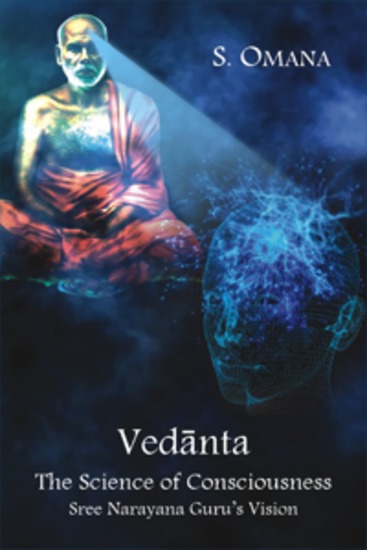
Vedanta - The Science of Consciousness - cover

Vedanta - The Science of Consciousness

S. Omana

Casa editrice: D.K. Printworld

  • 0
  • 0
  • 0

Sinossi

Sree Narayana Guru (1856–1928), an enlightened seer, represents VedÀnta as a Science of Consciousness or pure Epistemology. This book deals with Guru’s epistemology and shows how it can eliminate many of the problems in philosophy and life.The Guru conceives Consciousness or Arivu as the one all underlying Reality that assumes the form of everything in the world, both mind and matter.Epistemologists are usually either idealists or realists, but the Guru is neither. To him there is no need to place one above the other since they are two manifest forms of one Consciousness.Many eminent persons have tried to solve the problem of consciousness, but could not succeed because they were not ready to consider man as a pure being and the essence of the world as Consciousness.To the Guru, in every event of knowing there is the coming together of subject, object and also the function of knowing. These three are Consciousness in essence. What we really need is awareness of it. All kinds of divisiveness, conflicts and crises can be solved through an awakening of the inner consciousness of man which is non-different from the one all underlying Reality titled Brahman, °tman or Consciousness.
Disponibile da: 22/03/2025.
Lunghezza di stampa: 398 pagine.


Altri libri che potrebbero interessarti

  • The Puppet As An Educational Value Tool - Early Childhood Education and Care (ECEC) Services for Children between 0 and 7 Years - cover

    The Puppet As An Educational...

    Paula G. Eleta

    • 0
    • 0
    • 0
    In this short paper Paula Eleta explores the theme of the value of the puppet in the pedagogical field, mainly in early childhood (0-6 years), as an effective tool to improve the quality of the educational service through play. Under the direction of the educator, the puppet can become an excellent ”assistant” to build new educational contexts, able to offer all those who live in the services different accesses to a common and shared space. The puppet can help to found a more inclusive ”school”, giving voice and listening to the past, experiences, knowledge and skills of the various actors involved: children (first of all), families, educators, pedagogical coordinators and other subjects of their own territory. ”The puppet as an educational tool value” is a written text in an accessible and immediate form. Furthermore, the topics covered have been elaborated on the basis of the author`s long experience in the field. The content is therefore full of concrete and enlightening examples and, among the many proposed activities to be carried out, there is an easy and quick technique to build puppet characters: an activity that can be performed, at the various educational services, both together with families and children (with the support of adults).
    Mostra libro
  • Law The: Book Summary & Analysis - cover

    Law The: Book Summary & Analysis

    Briefly Summaries

    • 0
    • 0
    • 0
    This is a concise summary and analysis of The Law, by Frédéric Bastiat.
    It is not the original book and is not affiliated with or endorsed by Frédéric Bastiat.
    Ideal those seeking a quick and insightful overview.
     
    The Law is a thought-provoking treatise that delves into the principles of justice, liberty, and the role of government in society. Written during a time of political upheaval, this concise yet profound work critiques the misuse of law to infringe on individual freedoms and outlines the ideal relationship between the state and its citizens. Through sharp logic and moral clarity, it challenges readers to reconsider the purpose of law as a tool for safeguarding natural rights rather than an instrument of oppression. This classic text remains as relevant today as when it was first published, offering timeless insights into economics, governance, and human rights.
    Mostra libro
  • Raw Meaty Bones - cover

    Raw Meaty Bones

    Dr. Tom Lonsdale

    • 0
    • 0
    • 0
    Dr Tom Lonsdale’s original, pioneering work Raw Meaty Bones is the foremost book on the nutritional needs of pet dogs, cats and ferrets. First published in 2001—and of still greater importance today—the 14 chapters are packed with information vital for pet owners and pet professionals the world over.Lonsdale explains how industrial diets devastate the health of pets, how dirty tartar encrusted teeth, sore gums and stinky breath signal the downward spiral of ill-health, suffering and needless trips to the vet. By contrast he shows why dogs and cats crave the ripping, tearing and crunching on raw meaty bones—Nature’s miracle treatment and preventative. It’s the tough, chewy texture of the food that imparts the medicinal benefits. And providing your pet does enough ripping and tearing its teeth will be clean, gums healthy and breath sweet. The resultant benefits for the immune system, heart, liver, lungs and kidneys are enormous—one happy, contented pet.   Raw Meaty Bones makes no apology, it reveals a veterinary profession lost without a moral compass beholden to the multi-national pet food companies. It provides the foundations for a pet health revolution—with enormous cost savings for pet owners and benefits for the natural environment worth $billions.If you own a pet, or know someone who does, this book’s for you. Find out more at www.thepetfoodcon.com
    Mostra libro
  • Civic Gifts - Voluntarism and the Making of the American Nation-State - cover

    Civic Gifts - Voluntarism and...

    Elisabeth S. Clemens

    • 0
    • 0
    • 0
    In Civic Gifts, Elisabeth S. Clemens takes a singular approach to probing the puzzle that is the United States. How, she asks, did a powerful state develop within an anti-statist political culture? How did a sense of shared nationhood develop despite the linguistic, religious, and ethnic differences among settlers and, eventually, citizens? Clemens reveals that an important piece of the answer to these questions can be found in the unexpected political uses of benevolence and philanthropy, practices of gift-giving and reciprocity that coexisted uneasily with the self-sufficient independence expected of liberal citizens Civic Gifts focuses on the power of gifts not only to mobilize communities throughout US history, but also to create new forms of solidarity among strangers. Clemens makes clear how, from the early Republic through the Second World War, reciprocity was an important tool for eliciting both the commitments and the capacities needed to face natural disasters, economic crises, and unprecedented national challenges. Encompassing a range of endeavors from the mobilized voluntarism of the Civil War, through Community Chests and the Red Cross to the FDR-driven rise of the March of Dimes, Clemens shows how voluntary efforts were repeatedly articulated with government projects.  The legacy of these efforts is a state co-constituted with, as much as constrained by, civil society.
    Mostra libro
  • A Life in the Shadows - A Memoir - cover

    A Life in the Shadows - A Memoir

    A.S. Dulat

    • 0
    • 0
    • 0
    No Indian spymaster has, until now, written a memoir. A.S. Dulat is the first to do so, and in A Life in the Shadows he does it with considerable elan. 
    He is one of India's most successful spymasters, his name synonymous with the Kashmir issue. His methods of engagement and accommodation with all people and perspectives from India's most conflicted state are legendary. The author of two bestselling books, Kashmir: The Vajpayee Years (2014) and The Spy Chronicles: R&AW, ISI and the Illusion of Peace (2018), Dulat's views on India, Pakistan and Kashmir are well-known and sought after. 
    Yet very little is known about him, primarily because the former spymaster has been notoriously private about his personal life. In this unusual and unique memoir, Dulat breaks that silence for the first time. This is not a traditional, linear narrative as much as a selection of stories from across space and time. Still bound by the rules of secrecy of his trade, he tells a fascinating story of a life richly lived and insightfully observed. From a Partition-bloodied childhood in Lahore and New Delhi to his early years as a young intelligence officer; from meetings with international spymasters to travels around the world; from his observations on Kashmir-political and personal-post the abrogation of Article 370, to his encounters with world leaders, politicians and celebrities; moving from Bhopal to Nepal and from Kashmir to China, Dulat tells the story of his life with remarkable honesty, verve and wit.
    Mostra libro
  • Islamic Invasions of Europe The: The History of the Ottoman and Moorish Campaigns across the Continent - cover

    Islamic Invasions of Europe The:...

    Charles River Editors

    • 0
    • 0
    • 0
    The history of the Spanish Peninsula is closely bound to that of the Moors. The term “Spain” was not in wide use until the region was united by the monarchs of Aragon and Castile, and the Moors called the lands they ruled in the Iberian Peninsula Al-Andalus, traditionally thought to be an Arabic transliteration of Vandal, the Germanic tribe which briefly ruled the region in the early fifth century. The English name Andalusia derives from the Spanish Andalucia, which is still used by Spain to name its southern region. 
    	Not surprisingly, three religions attempting to coexist during medieval times resulted in nearly incessant conflicts, marked by high taxation, disparate societies, rigid cultural controls, and systemic violence. Despite the odds, these three religions managed to live in a state of quasi-acceptance and peace in most of the major cities in the Iberian Peninsula like Cordoba and Tolaydough, with sporadic warfare occurring on the borders between Al-Andalus and the Christian kingdoms near the Pyrenees Mountains. Muslims, Christians, and Jews would attempt to reorganize their societies several times over the centuries through warfare, always with Jews on the lower rungs and Christians and Muslims fighting it out above them.  
    	The end of the Byzantine Empire had a profound effect not only on the Middle East but Europe as well. Constantinople had played a crucial part in the Crusades, and the fall of the Byzantines meant that the Ottomans now shared a border with Europe. The Islamic empire was viewed as a threat by the predominantly Christian continent to their west, and it took little time for different European nations to start clashing with the powerful Turks. In fact, the Ottomans would clash with Russians, Austrians, Venetians, Polish, and more before collapsing as a result of World War I, when they were part of the Central Powers. 
    Mostra libro