Unisciti a noi in un viaggio nel mondo dei libri!
Aggiungi questo libro allo scaffale
Grey
Scrivi un nuovo commento Default profile 50px
Grey
Iscriviti per leggere l'intero libro o leggi le prime pagine gratuitamente!
All characters reduced
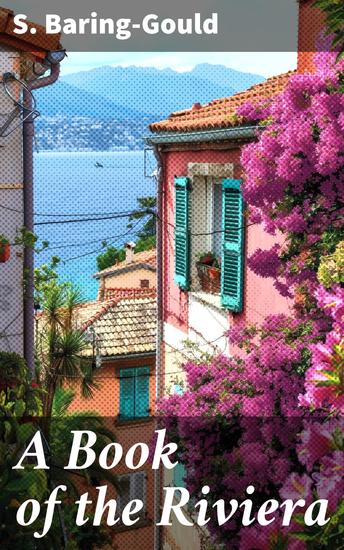
A Book of the Riviera - An Artist's Guide to Riviera Beacons: Meditative Voyages Through Coastal Landscapes and Literary Legacies - cover

A Book of the Riviera - An Artist's Guide to Riviera Beacons: Meditative Voyages Through Coastal Landscapes and Literary Legacies

S. Baring-Gould

Casa editrice: Good Press

  • 0
  • 0
  • 0

Sinossi

In "A Book of the Riviera," S. Baring-Gould crafts an evocative exploration of the picturesque Mediterranean coastline, deftly intertwining rich descriptions with cultural anecdotes. This work, steeped in the contextual tapestry of late 19th-century Europe, captures not only the physical beauty of the Riviera but also its cultural significance as a nexus of artistic and social life. Baring-Gould's prose is marked by an engaging narrative style that seamlessly blends travelogue with historical commentary, providing readers a panoramic view of the region's charm and allure, including its enchanting towns, landscapes, and artistic heritage. S. Baring-Gould was a multifaceted author, folklorist, and prolific writer known for his keen observations of both rural and coastal landscapes. His diverse interests in mythology, religion, and travel are evident in his richly textured writing. This volume emerges from his fascination with the Riviera, a region that attracted many luminaries in the arts. Baring-Gould'Äôs experiences and keen eye for detail lend an authentic voice to his portrayal of this captivating locale. For readers seeking a transportive literary journey, "A Book of the Riviera" offers a splendid guide to both the geography and the spirit of this iconic region. It is a must-read for travelers, historians, and lovers of fine prose, promising insight into the profound allure that continues to enchant visitors to the Riviera today.
Disponibile da: 27/10/2023.
Lunghezza di stampa: 251 pagine.
Altri libri che potrebbero interessarti

  • Inca Mythology - Sacred Legends of the Inca Empire - cover

    Inca Mythology - Sacred Legends...

    Matthew Fillard

    • 0
    • 0
    • 0
    The Inca Empire, at its zenith, spanned much of South America, including present-day Peru, Ecuador, Bolivia, and parts of Chile and Argentina. Known for its advanced architecture, agricultural systems, and administrative organization, the Inca civilization also possessed a deeply spiritual culture. Central to their worldview was a rich tapestry of mythology that explained the creation of the world, the origins of humankind, and the roles of the gods in the natural and spiritual realms. These sacred legends were not just stories; they were the very foundation upon which the Inca society was built, shaping everything from daily rituals to the governance of the empire.  
    Inca mythology was intricately connected to the natural world, with gods and deities representing various elements of the environment, such as the sun, the moon, the earth, and water. The Inca people believed that these deities were not distant, abstract beings but rather active forces that influenced their lives. The most important gods were thought to have a direct relationship with the ruler, often considered to be divine or descended from these gods. As such, the Inca king, or Sapa Inca, was revered as the son of the sun god, Inti, and his authority was considered sacred.  
    The role of mythology extended beyond the divine and into the social and political spheres. It was through myth that the Inca legitimized their rule, connected their empire to the divine order, and reinforced the unity of their vast territories. Legends of the first rulers, such as Manco Capac and Mama Ocllo, were tied to creation myths that depicted them as divine figures sent to bring civilization to the world. These stories were used to justify Inca conquests and to explain the hierarchical structure of society. 
    Mostra libro
  • The One-Bag Travel Minimalism Guide - Pack Light Move Freely and See the World with Just One Bag Skip Luggage Weight Limits Ditch Extra Fees and Experience Travelling without the clutter Like a True Minimalist - cover

    The One-Bag Travel Minimalism...

    Anonimo

    • 0
    • 0
    • 0
    The One-Bag Travel Minimalism Guide shows you how to pack less, move faster, and experience more. This isn’t about sacrifice — it’s about freedom. By stripping away the clutter and focusing on what truly matters, you’ll discover how lightness creates space for adventure, clarity, and connection. 
    Inside, you’ll learn:How to choose the right bag and build a reliable packing systemClothing strategies that keep you looking sharp without overpackingSmart toiletry and tech kits that pass every airport testDaily routines for laundry, health, and energy on the goSecurity habits that keep your documents, money, and essentials safeReal case studies for weekend escapes, two-week journeys, and long-term slow travel 
    Whether you’re planning your first carry-on trip or seeking a lifestyle of global freedom, this book will give you the mindset and methods to move through the world with confidence. 
    No more luggage fees. No more heavy suitcases. No more wasted time at baggage claim. Just one bag, endless experiences, and the freedom to go anywhere.
    Mostra libro
  • Tarascan Empire - The Fierce Rivals of the Aztecs and Masters of West Mexico - cover

    Tarascan Empire - The Fierce...

    Rolf Hedger

    • 0
    • 0
    • 0
    The Tarascan Empire flourished in the rugged and resource-rich region of western Mexico, primarily in what is now the state of Michoacán. Unlike the arid landscapes of central Mexico dominated by the Aztecs, the Tarascan homeland was defined by volcanic highlands, fertile valleys, and vast lakes, particularly Lake Pátzcuaro, which played a central role in their civilization. The geography of this region not only shaped their way of life but also provided a natural defense against external threats, including the expansionist ambitions of the Aztecs. 
    The varied landscape of Michoacán consisted of towering mountains, deep forests, and fertile plateaus. This diverse terrain allowed the Tarascans to develop a robust agricultural system, cultivating maize, beans, squash, and chili peppers, which formed the foundation of their diet. The presence of rivers and lakes further supported fishing and provided fresh water, making settlements around these water bodies highly strategic. Lake Pátzcuaro, in particular, was not only an economic and social hub but also held deep religious significance. It was believed to be the gateway to the underworld in Tarascan mythology, reinforcing its central role in spiritual life. 
    Natural resources played a crucial role in the rise of the Tarascan Empire. The region was rich in minerals, especially copper and obsidian, which were vital for both tools and weaponry. Unlike the Aztecs, whose military strength relied on wooden clubs and stone blades, the Tarascans developed advanced metalworking techniques, producing copper axes, bronze weapons, and intricate ornaments. This technological advantage gave them a distinct edge in warfare and trade, allowing them to maintain independence from their more dominant neighbors.
    Mostra libro
  • The Shocking Truth about Consumerism - cover

    The Shocking Truth about...

    Zoey Fraisers

    • 0
    • 0
    • 0
    Consumerism, as we know it today, is the result of centuries of societal, economic, and psychological evolution. Its roots can be traced back to the Industrial Revolution of the late 18th and early 19th centuries, a period that marked a profound transformation in the way goods were produced and consumed. Before this era, most economies were primarily agrarian, and consumption was limited to meeting basic needs. However, the advent of mechanized production brought about mass manufacturing, reducing costs and making goods more widely accessible. This shift laid the groundwork for the rise of consumer culture. 
    The Industrial Revolution not only increased the availability of products but also introduced the idea of consumer choice. As markets grew, competition among producers intensified, leading to innovations in marketing and branding. Businesses began to recognize the importance of distinguishing their products through unique features or emotional appeal, planting the seeds of modern advertising. By the late 19th century, print advertisements were appearing in newspapers and magazines, offering visions of a better, more glamorous life through the purchase of specific goods. 
    At its core, consumerism thrives on the tension between desire and need. Unlike basic survival needs, desires are shaped by cultural, social, and psychological factors. Early advertisers tapped into this distinction, framing products as solutions to problems or as pathways to happiness and status. This psychological shift was crucial in transforming consumption from a practical activity into an aspirational pursuit.
    Mostra libro
  • Egyptian Hieratic and Demotic Scripts - A Study of Ancient Writing Systems - cover

    Egyptian Hieratic and Demotic...

    Omar Khalil

    • 0
    • 0
    • 0
    The writing systems of ancient Egypt are among the most fascinating and intricate aspects of the civilization’s rich cultural heritage. These scripts not only served as practical tools for administration and communication but also held immense symbolic and ritual significance. The evolution of Egyptian scripts reflects the social, political, and religious transformations that took place throughout the millennia of Egyptian history. 
    Egyptian writing developed as a means of recording religious texts, administrative documents, literary works, and personal correspondence. Among the earliest and most iconic forms of writing is the hieroglyphic script, characterized by its detailed pictorial symbols. While hieroglyphs are often associated with monumental inscriptions and sacred texts, they were not the only writing system employed by the ancient Egyptians. As the civilization advanced, the need for more practical and expedient writing methods became apparent, giving rise to the development of cursive scripts. 
    Hieratic script emerged as a more fluid and practical adaptation of hieroglyphs, primarily used for religious texts, administrative records, and personal documents. Unlike the elaborate and artistic nature of hieroglyphs, hieratic writing was simplified, making it faster to write and more suited for daily use. Its cursive nature allowed scribes to quickly document information on papyrus, ostraca, and other media. Despite its practicality, hieratic remained closely tied to its hieroglyphic origins, preserving many of the same signs and structures.
    Mostra libro
  • Camino de la Luna - Compassion and Self Compassion - cover

    Camino de la Luna - Compassion...

    Pearl Howie

    • 0
    • 0
    • 0
    What is compassion? Something alive perhaps, that can only be understood in practice. So often confused with pity or the self-sacrificing impulse to take on another’s burden, to make things better, to fix. It takes strength and delicacy and it doesn’t mean giving away your life savings.Self compassion is sometimes the place between pushing through and giving up, the moment we can recognize our true needs, not our desires even if they’re for further suffering. Sometimes the moment we find self compassion is the moment we stop and walk away.  I had found forgiveness in Switzerland and now I was heading to friends in Rome before taking the leap to South East Asia, to Sri Lanka, to a new understanding of compassion and self compassion.The fourth in the Camino de la Luna series by Pearl Howie. From Genoa (or Genova), through Rome and on to Sicily, I finally make it back to London and from there continue falling forwards to South East Asia, hoping for a soft landing in Sri Lanka.It's in Sri Lanka that I open my heart and discover a new understanding of what compassion is…Perfect for those who enjoy an adventure travel story and want to know what it's really like to take off round the world with a rucksack.
    Mostra libro