Unisciti a noi in un viaggio nel mondo dei libri!
Aggiungi questo libro allo scaffale
Grey
Scrivi un nuovo commento Default profile 50px
Grey
Iscriviti per leggere l'intero libro o leggi le prime pagine gratuitamente!
All characters reduced
Training Strategies - cover

Training Strategies

Rosalind Kincaid

Traduttore A AI

Casa editrice: Publifye

  • 0
  • 0
  • 0

Sinossi

Training Strategies explores the critical role of employee training programs in today's business environment, emphasizing how well-designed initiatives can drive performance and boost employee retention. The book underscores the need for strategic alignment between training programs and organizational goals. It argues that a data-driven approach, incorporating needs assessment, instructional design, and evaluation metrics, is essential for maximizing the impact of training investments. For example, understanding adult learning theory is vital for creating engaging and effective learning experiences. 

 
The book progresses systematically, starting with core concepts like learning theories and training methodologies, then delving into needs assessment techniques, instructional design principles, and evaluation methods. Case studies and practical applications illustrate these concepts in diverse business settings. 

 
A key takeaway is the framework for continuous improvement, ensuring training programs remain relevant and effective. This approach helps transform training from a cost center to a strategic investment, improving both organizational growth and employee satisfaction.
Disponibile da: 28/02/2025.
Lunghezza di stampa: 133 pagine.
Altri libri che potrebbero interessarti

  • Womenomics - Work Less Achieve More Live Better - cover

    Womenomics - Work Less Achieve...

    Anonimo

    • 0
    • 0
    • 0
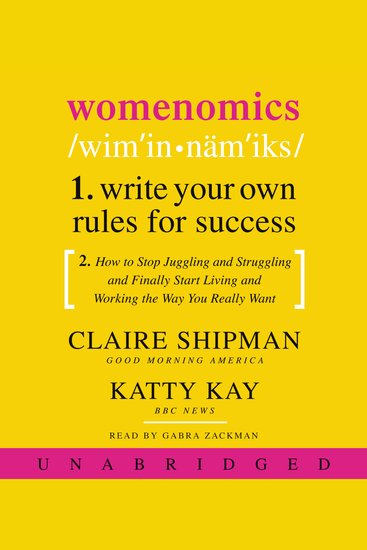
    “A personal, provocative, and challenging book for career women who want less guilt, more life.”—Diane Sawyer 
      
    Womenomics, the groundbreaking New York Times bestseller by Claire Shipman and Katty Kay, is an invaluable guide for this generation of professional women, provide knowledgeable advice on how to “Work Less, Achieve More, Live Better.” Shipman and Kay, two TV journalists well acquainted with the stress of the workplace, describe the new economic trends that offer today’s overworked working women more professional and personal choices than ever before. At last, you no longer have to do it all to have it all—Womenomics shows you how.
    Mostra libro
  • Principles of Economics - cover

    Principles of Economics

    Saifedean Ammous

    • 0
    • 0
    • 0
    In Principles of Economics, his most ambitious and elaborate work to date, Ammous offers readers a potent antidote to the modern economics textbook. After two decades of learning and teaching economics at university level, Ammous became aware that most economic textbooks confuse more than they illuminate and most university students tasked with reading them learn very little that is useful and actionable. The culmination of four years' work, this book uses the underappreciated approach of the Austrian school of economics to introduce the principles, methods, and concepts of economics in a readable, engaging, and informative manner. Rather than relying on mathematical analysis of aggregates and arcane theoretical models, the book uses the clear written word to effectively illustrate key economic concepts. 
    The book first presents the Austrian school method and the foundational concepts of value and time. With these foundations laid, the second part of the book explores how humans act individually to achieve their ends under scarcity—in other words, how humans economize. A chapter is dedicated to detailed overviews of labor, property, capital, technology, and energy, and each topic is accompanied by vivid examples explaining its relevance to the reader. The third part of the book examines economizing in the social context, with chapters examining trade, money, the market order, and capitalism—important concepts that are often shrouded by misconceptions in most modern treatments. The fourth part of the book presents the Austrian perspective on monetary economics, laying the groundwork through a detailed discussion of time preference, followed by a discussion of banking and credit, and the business cycle and its monetary origins. The final section of the book explains why respect for property rights in an extended market order is the basis for human civilization, how the market order protects against aggression, and the failures of monopoly provision of defense.
    Mostra libro
  • Make it Human - A vision for happier healthier more human workplaces - cover

    Make it Human - A vision for...

    Sarah McLellan

    • 0
    • 0
    • 0
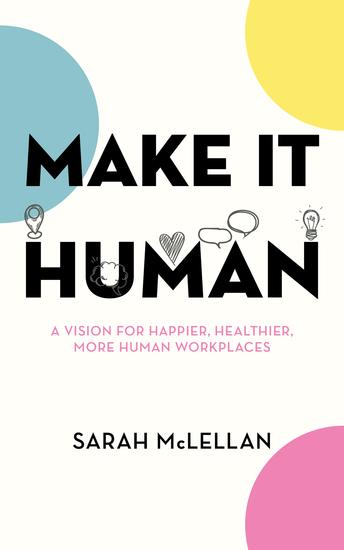
    Many people today feel drained and unfulfilled by their work. Workplace cultures are cracking and some have suffered catastrophic failures. Despite huge advances in technology, companies are struggling to find a way to improve engagement, sustain productivity and deliver business results. Feelings of loneliness, fear and exhaustion are flooding organisations, leaving individuals searching for something more meaningful – somewhere they can feel valued and able to flourish as humans.
    Drawing on her experience as a work psychologist and leader, Sarah McLellan outlines a vision for a human-led future of work, where businesses and people can thrive. Make It Human includes practical models, new insights and real-life stories, illustrating how we can nurture workplace cultures to invigorate human growth – both for us and for generations to come.
    
    Work doesn't have to be a nine-to-five, meaningless, lonely grind. Together, we can make it human.
    Mostra libro
  • Harmonies of Political Economy - cover

    Harmonies of Political Economy

    Frédéric Bastiat

    • 0
    • 0
    • 0
    "Harmonies of Political Economy" is a major work by the French economist Frederic Bastiat, who lived from 1801 to 1850. The book, which was first published in 1850, explores the principles of economic theory and argues that free markets are the most effective way to promote economic growth and prosperity. 
    Bastiat believed that government intervention in the economy, such as tariffs, subsidies, and regulations, were counterproductive and tended to distort markets and create inefficiencies. He argued that free trade, competition, and individual liberty were the key ingredients to a harmonious and prosperous society. 
    In "Harmonies of Political Economy," Bastiat also discussed the concept of economic harmony, which refers to the idea that individual self-interest and the pursuit of profit can lead to outcomes that benefit society as a whole. He argued that the market was a self-correcting mechanism that could adjust to changing conditions and ensure that resources were allocated efficiently. 
    Overall, Bastiat's work in "Harmonies of Political Economy" was influential in the development of classical liberal economic thought and remains relevant today in debates over the role of government in the economy.
    Mostra libro
  • The Opposite of Spoiled - Raising Kids Who Are Grounded Generous and Smart About Money - cover

    The Opposite of Spoiled -...

    Anonimo

    • 0
    • 0
    • 0
    New York Times Bestseller 
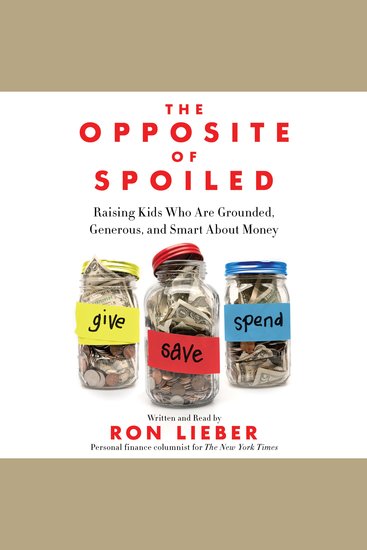
    “We all want to raise children with good values—children who are the opposite of spoiled—yet we often neglect to talk to our children about money. . . . From handling the tooth fairy, to tips on allowance, chores, charity, checking accounts, and part-time jobs, this engaging and important book is a must-read for parents.” — Gretchen Rubin, author of The Happiness Project 
    In the spirit of Wendy Mogel’s The Blessing of a Skinned Knee and Po Bronson and Ashley Merryman’s Nurture Shock, New York Times “Your Money” columnist Ron Lieber delivers a taboo-shattering manifesto that explains how talking openly to children about money can help parents raise modest, patient, grounded young adults who are financially wise beyond their years. 
    For Ron Lieber, a personal finance columnist and father, good parenting means talking about money with our kids. Children are hyper-aware of money, and they have scores of questions about its nuances. But when parents shy away from the topic, they lose a tremendous opportunity—not just to model the basic financial behaviors that are increasingly important for young adults but also to imprint lessons about what the family truly values. 
    Written in a warm, accessible voice, grounded in real-world experience and stories from families with a range of incomes, The Opposite of Spoiled is both a practical guidebook and a values-based philosophy. The foundation of the book is a detailed blueprint for the best ways to handle the basics: the tooth fairy, allowance, chores, charity, saving, birthdays, holidays, cell phones, checking accounts, clothing, cars, part-time jobs, and college tuition. It identifies a set of traits and virtues that embody the opposite of spoiled, and shares how to embrace the topic of money to help parents raise kids who are more generous and less materialistic. 
    But The Opposite of Spoiled is also a promise to our kids that we will make them better with money than we are. It is for all of the parents who know that honest conversations about money with their curious children can help them become more patient and prudent, but who don’t know how and when to start.
    Mostra libro
  • Eat That Frog! Fourth Edition - 21 Great Ways to Stop Procrastinating and Get More Done in Less Time - cover

    Eat That Frog! Fourth Edition -...

    Brian Tracy

    • 0
    • 0
    • 0
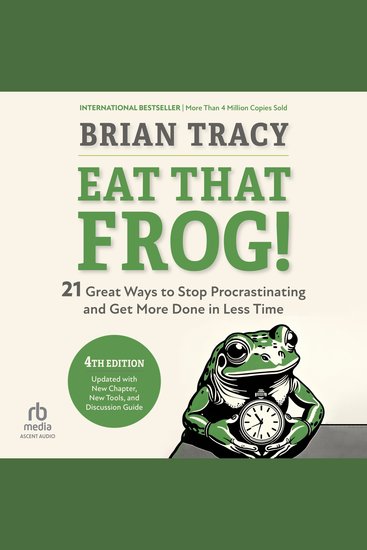
    Master the legendary personal productivity system that has transformed millions of lives worldwide.Tired of ending each day feeling like you accomplished nothing that truly mattered? Your biggest goals keep getting pushed aside by endless distractions?Legendary success and productivity coach Brian Tracy reveals the game-changing secret: eat your frogs first. Tackle your most challenging, most important task at the start of each day—everything else becomes easier.This isn't just another time management book. It's your blueprint for stopping procrastination and taking control. The fourth edition delivers brand-new tools: 
    New chapter: "Form New Habits, Become a New Person"—rewire your brain for automatic productivityFour "accelerators": calendar organization, productivity, self-discipline, and task completion systemsComplete discussion and action guide: turn insights into immediate results
    Mostra libro