Unisciti a noi in un viaggio nel mondo dei libri!
Aggiungi questo libro allo scaffale
Grey
Scrivi un nuovo commento Default profile 50px
Grey
Iscriviti per leggere l'intero libro o leggi le prime pagine gratuitamente!
All characters reduced
Back in the USSR - Heroic Adventures in Transnistria - cover

Back in the USSR - Heroic Adventures in Transnistria

Rory Maclean

Casa editrice: wander2wonder press

  • 0
  • 0
  • 0

Sinossi

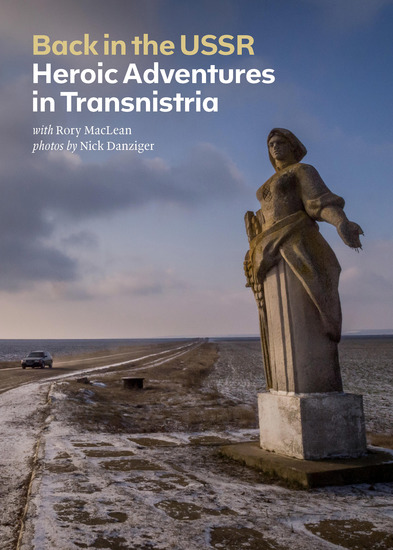
Transnistria is a nowhereland hugging a narrow valley near the Black Sea. No bigger than Cornwall or Rhode Island, the unrecognised country is a Soviet museum long occupied by Russian ‘peace-keepers’. Its oligarchs in Adidas track suits hunt wild boar with AK-47s. Its young people train for revolution at the Che Guevara High School of Political Leadership. Its secret factories have supplied arms to African insurgents and electrical generators for Iran’s nuclear power programme. Yet its isolation and sliver-size belie the real threat it poses to the West, above all since Russia's invasion of Ukraine. 	‘We know our people and how to treat them, ' bragged a local-boy-made-good oligarch. ‘And I tell you that the only way to get them to act or to change their ways is to point a gun at their heads, and threaten to shoot.’	‘And if they still don’t change?’ I asked, shocked by his arrogant candour.	‘Then one pulls the trigger.’	Re-issued with a new Introduction, Back in the USSR is a snapshot in time - presented in a social realist style - and a chilling reminder of the fate that awaits the conquered.
Disponibile da: 21/03/2025.
Altri libri che potrebbero interessarti

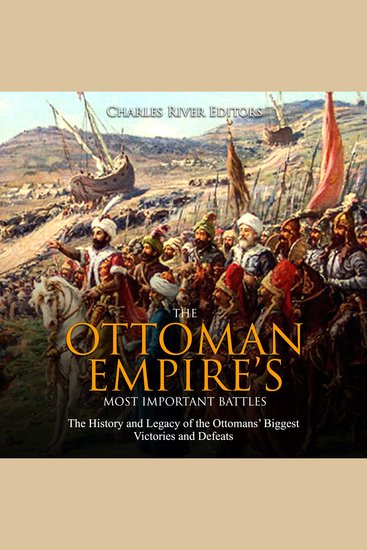
  • Ottoman Empire’s Most Important Battles The: The History and Legacy of the Ottomans’ Biggest Victories and Defeats - cover

    Ottoman Empire’s Most Important...

    Editors Charles River

    • 0
    • 0
    • 0
    In terms of geopolitics, perhaps the most seminal event of the Middle Ages was the successful Ottoman siege of Constantinople in 1453. The city had been an imperial capital as far back as the 4th century, when Constantine the Great shifted the power center of the Roman Empire there, effectively establishing two almost equally powerful halves of antiquity’s greatest empire. Constantinople would continue to serve as the capital of the Byzantine Empire even after the Western half of the Roman Empire collapsed in the late 5th century. Naturally, the Ottoman Empire would also use Constantinople as the capital of its empire after their conquest effectively ended the Byzantine Empire, and thanks to its strategic location, it has been a trading center for years and remains one today under the Turkish name of Istanbul.  
    The end of the Byzantine Empire had a profound effect not only on the Middle East but Europe as well. Constantinople had played a crucial part in the Crusades, and the fall of the Byzantines meant that the Ottomans now shared a border with Europe. Indeed, the Ottomans would clash with Russians, Austrians, Venetians, Polish, and more before collapsing as a result of World War I, when they were part of the Central powers.  
    In the wake of taking Constantinople, the Ottoman Empire would spend the next few centuries expanding its size, power, and influence, bumping up against Eastern Europe and becoming one of the world’s most important geopolitical players. It was a rise that would not truly start to wane until the 19th century. Preserving its mixed heritage, coming from both its geographic position rising above the ashes of the Byzantine Empire and the tradition inherited from the Muslim Conquests, the Ottoman Empire lasted more than six centuries.
    Mostra libro
  • George Eliot - A Very Short Introduction - cover

    George Eliot - A Very Short...

    Juliette Atkinson

    • 0
    • 0
    • 0
    George Eliot pushed the boundaries of fiction and of Victorian society. She was an extraordinary woman whose unconventional life meant that she was judged harshly by family, friends, and strangers. Eliot wanted to draw attention to the feelings and motivations of ordinary people, so that we might feel more generous towards each other. But human beings are complex, and to capture that complexity Eliot drew on an astonishing range of philosophical, psychological, and scientific ideas. She hoped her work might do good, yet she was clear-eyed about the limits of both human sympathy and the novel.In this Very Short Introduction, Juliette Atkinson explores the ideas feeding Eliot's fiction and looks at the literary techniques—such as narrative voice, genre, imagery, structure, and syntax—that she used to embody them. These shape her recurrent themes: the stifling nature of gossip, the hardships experienced by commonplace individuals, the duty of practicing fellow-feeling and the difficulty of doing so. Atkinson argues that George Eliot was a social outcast who became a sage, through the creation of some of the most influential novels ever written in English.
    Mostra libro
  • The Art of War - Classic Collector's Edition - cover

    The Art of War - Classic...

    Sun Tzu

    • 0
    • 0
    • 0
    A modern introduction, tracing the origins of The Art of War and its historical and cultural importance, firmly grounds the reader in the context with which the oldest book on military strategy has survived the ages, as well as contemporary examples of its continued use. 
    The first section of this collectible edition contains The Art of War in English, without notes or commentary. This allows the listener to understand the teachings of Sun Tzu, without the distraction of footnotes or excessive comments. 
    The second section contains the complete annotated translation by Lionel Giles, restored by Sian Kim, along with Giles' translation notes, definitive critical commentary, and supplemental information from a broad range of sources. Written during the Victorian era, Giles' 1910 "Introduction" has also been included, containing the legend of "Sun Tzu and The Army of Concubines". 
    Although written in the sixth century BC, the teachings of Sun Tzu are still found today in the martial arts, legal doctrine, military schools, management seminars and pervasively throughout popular culture.
    Mostra libro
  • Vijayanagara Empire - Hampi's Glorious Past and the Last Hindu Kingdom - cover

    Vijayanagara Empire - Hampi's...

    Rolf Hedger

    • 0
    • 0
    • 0
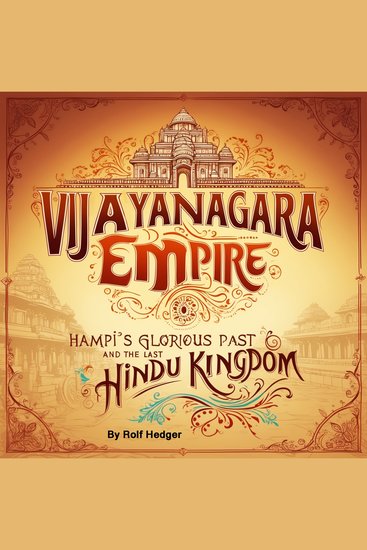
    The Vijayanagara Empire emerged as one of the most significant and powerful dynasties in Indian history, rising at a time when the Indian subcontinent was fragmented and facing threats from expanding Islamic sultanates. Its foundation in the 14th century was a turning point that not only established a strong Hindu kingdom in southern India but also laid the groundwork for a cultural and economic renaissance. 
    The origins of Vijayanagara trace back to the political instability of the Deccan region. The Delhi Sultanate had extended its influence into the south, leading to the weakening of older Hindu kingdoms such as the Kakatiyas, Hoysalas, and Pandyas. Amid this turmoil, two brothers, Harihara and Bukka, originally serving under the Kakatiya rulers, rose to prominence. After being captured and later released by the Delhi Sultanate, they sought guidance from the sage Vidyaranya, who inspired them to establish a strong Hindu kingdom to resist further invasions. In 1336, they founded the city of Vijayanagara on the banks of the Tungabhadra River, marking the birth of the empire. 
    From its inception, the Vijayanagara Empire was strategically positioned to thrive. The Tungabhadra River provided a natural defensive barrier, while the rocky terrain of Hampi served as a formidable protection against enemy invasions. The early rulers focused on consolidating power, expanding their territories, and strengthening their military capabilities. Under Harihara I, the empire extended its control over parts of Karnataka and Andhra Pradesh, securing key trade routes and fortifying its defenses.
    Mostra libro
  • The Appeasement of Nazi Germany - The History of the Western Allies’ Failed Attempts to Placate Hitler Before World War II - cover

    The Appeasement of Nazi Germany...

    Charles River Editors

    • 0
    • 0
    • 0
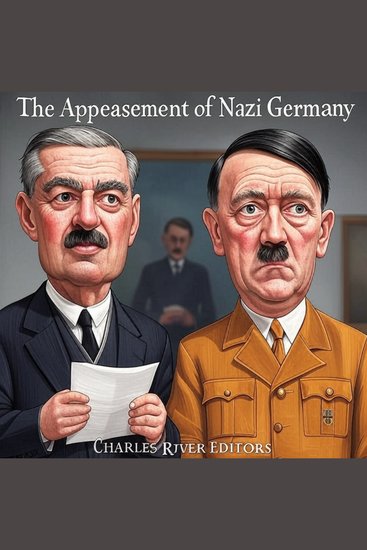
    A single act of arson against the famous Reichstag building proved to be the catalyst that propelled Adolf Hitler to victory in the elections of March 1933, which set the German nation irrevocably on the path towards World War II. That war would plunge much of the planet into an existential battle that ultimately cost an estimated 60 million lives. 
    Of course, the Western Europeans tried and failed in notorious fashion to prevent that war by appeasing Hitler, who only became more ambitious as France and Britain refused to push back on his growing aggression, especially in the wake of the Anschluss, which Hitler’s future enemies all but justified due to Austria’s large German population. The Munich Agreement is now notorious because its promise proved barren within a very short period of time. British Prime Minister Neville Chamberlain's actions either failed to avert or actually hastened the very cataclysm he wished to avoid at all costs. The agreement effectively signed away Czechoslovakia's independence to Hitler's hungry new Third Reich, and within two years, most of the world found itself plunged into a conflict anyway. 
    Initially, many people hailed Chamberlain's "success" at defusing Nazi aggression by handing over Czechoslovakia tamely to Hitler's control, but others remained dubious. Édouard Daladier, the French prime minister, "later told Amery that he turned up his coat collar to protect his face from rotten eggs when he arrived in Paris." A Foreign Office man, Orme Sargent, was disgusted, and he later said bitterly, "For all the fun and cheers, you might think they were celebrating a major victory over an enemy instead of merely the betrayal of a minor ally." Winston Churchill, the deal’s most famous critic, bitterly remarked, “England has been offered a choice between war and shame. She has chosen shame, and will get war.”
    Mostra libro
  • Discourse on the Method of Rightly Conducting One's Reason and of Seeking Truth in the Sciences - cover

    Discourse on the Method of...

    René Descartes

    • 0
    • 0
    • 0
    Unlock the Foundations of Modern Thought with Discourse on the Method by René Descartes 
    René Descartes’ Discourse on the Method is more than just a philosophical treatise; it's the bedrock of modern rational thought. Famous for introducing the statement "Cogito, ergo sum" ("I think, therefore I am"), this seminal work has shaped the fields of philosophy and science.  
    In it, Descartes breaks from centuries-old traditions to establish a new method based on doubt and reason. This accessible text is organized into six parts, where Descartes methodically questions everything to build a secure foundation for knowledge. From proving the existence of God to discussing the interplay between body and soul, Descartes invites readers to rethink their approach to knowledge and existence. 
    Ideal for thinkers, students, and anyone curious about the origins of modern philosophy, Discourse on the Method is a must-have. It not only challenges your perceptions but enhances your analytical skills, encouraging a deeper understanding of the world through rigorous, methodical inquiry. 
    Dive into this cornerstone of intellectual history with Descartes’ Discourse on the Method, and embark on a journey of understanding that promises to enlighten and transform your perspective on knowledge and existence. 
    This audiobook was narrated and produced by RAM Studios, where humans and artificial intelligence collaborate to create an excellent listening experience. (The reading is done primarily by AI)
    Mostra libro