Unisciti a noi in un viaggio nel mondo dei libri!
Aggiungi questo libro allo scaffale
Grey
Scrivi un nuovo commento Default profile 50px
Grey
Iscriviti per leggere l'intero libro o leggi le prime pagine gratuitamente!
All characters reduced
The AI Development Team - A CTO's Playbook for Building Coordinated Autonomous AI with Claude - cover

The AI Development Team - A CTO's Playbook for Building Coordinated Autonomous AI with Claude

Rommel Florante

Casa editrice: Publishdrive

  • 0
  • 0
  • 0

Sinossi

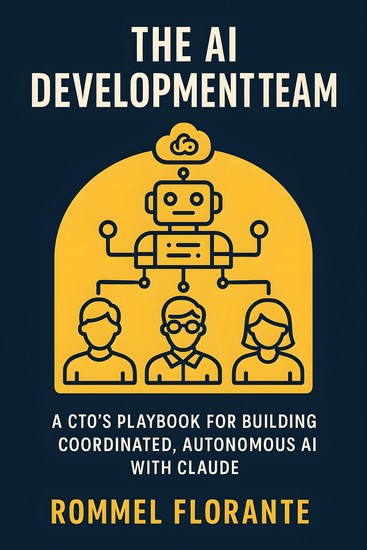
The conversation around AI in software development has, until now, been primarily focused on a single metric: individual developer productivity. We celebrate the lines of code generated, the functions autocompleted, and the unit tests scaffolded in seconds. These are valuable gains, but they represent the low-hanging fruit. They are tactical improvements, not strategic transformations. True, lasting leverage is not found in making one developer faster; it's found in making the entire development system more intelligent, coordinated, and resilient.

 
This book was born from that realization. As a CEO and CTO and a hands-on architect, I live in the gap between high-level strategy and on-the-ground implementation. My challenge is not just to write code but to build a well-oiled machine that consistently produces high-quality, secure, and scalable software. For years, the core constraint has been the friction of human coordination—the handoffs, the context-sharing, the reviews, and the inevitable communication gaps.

 
When I first began using tools like Claude, I saw the personal productivity gains immediately. But the real breakthrough came when I stopped thinking of it as an assistant to me and started thinking of it as a foundational component of a new type of team. What if we could program the very principles of good software development—specialization, quality gates, clear handoffs, and systematic review—directly into a team of AI agents? What if we could build an autonomous system that didn't just write code, but executed a professional workflow?

 
The result of that experiment is the system detailed in this book. It is a playbook for moving beyond AI as a simple tool and re-architecting it as a collaborative, multi-agent workforce. We will go beyond the prompt and engineer a process.

 
This is not a book about the future of AI. It is a practical, hands-on guide for building with it, here and now. It is for the technical leaders, architects, and senior engineers who understand that the next leap in productivity will come not from better autocompletion, but from better coordination. It's time to stop just talking to our tools and start organizing them.
Disponibile da: 13/08/2025.
Lunghezza di stampa: 30 pagine.

Altri libri che potrebbero interessarti

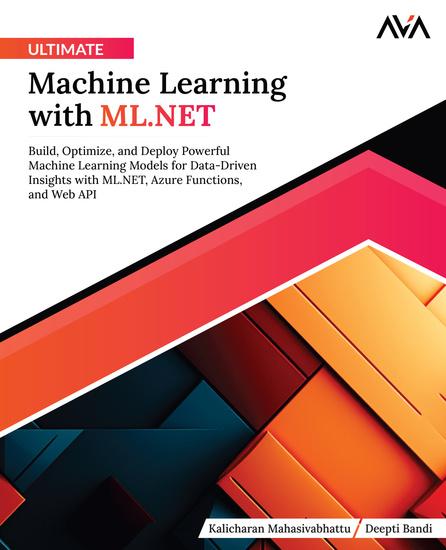
  • Ultimate Machine Learning with MLNET - Build Optimize and Deploy Powerful Machine Learning Models for Data-Driven Insights with MLNET Azure Functions and Web API - cover

    Ultimate Machine Learning with...

    Kalicharan Mahasivabhattu

    • 0
    • 0
    • 0
    “Empower Your . NET Journey with Machine Learning”
    Book Description
    Dive into the world of machine learning for data-driven insights and seamless integration in . NET applications with the Ultimate Machine Learning with ML. NET. 
    The book begins with foundations of ML. NET and seamlessly transitions into practical guidance on installing and configuring it using essential tools like Model Builder and the command-line interface. Next, it dives into the heart of machine learning tasks using ML. NET, exploring classification, regression, and clustering with its versatile functionalities. 
    It will delve deep into the process of selecting and fine-tuning algorithms to achieve optimal performance and accuracy. You will gain valuable insights into inspecting and interpreting ML. NET models, ensuring they meet your expectations and deliver reliable results. It will teach you efficient methods for saving, loading, and sharing your models across projects, facilitating seamless collaboration and reuse. 
    The final section of the book covers advanced techniques for optimizing model accuracy and refining performance. You will be able to deploy your ML. NET models using Azure Functions and Web API, empowering you to integrate machine learning solutions seamlessly into real-world applications. 
    
    Table of Contents
    
    1. Introduction to ML. NET
    2. Installing and Configuring ML. NET
    3. ML. NET Model Builder and CLI
    4. Collecting and Preparing Data for ML. NET
    5. Machine Learning Tasks in ML. NET
    6. Choosing and Tuning Machine Learning Algorithms in ML. NET
    7. Inspecting and Interpreting ML. NET Models
    8. Saving and Loading Models in ML. Net
    9. Optimizing ML. NET Models for Accuracy
    10. Deploying ML. NET Models with Azure Functions and Web API   
    Index
    Mostra libro
  • The Veiled Universe - Exploring the Invisible Forces of Space - cover

    The Veiled Universe - Exploring...

    Dirk Fallon

    • 0
    • 0
    • 0
    Dark matter is one of the most elusive and mysterious components of the universe. Though it cannot be directly observed through traditional means such as light, it is believed to make up about 27% of the universe's total mass and energy content. This strange substance does not emit, absorb, or reflect light, making it invisible to our telescopes and detectors. Its existence is inferred primarily through its gravitational effects on visible matter, such as galaxies and galaxy clusters. Without dark matter, the movement of galaxies would not make sense based on the gravitational pull of visible matter alone. 
    The concept of dark matter was first proposed in the early 20th century. In 1933, Swiss astronomer Fritz Zwicky observed that the galaxies within the Coma galaxy cluster were moving faster than expected based on the visible matter alone. He suggested that there must be some unseen mass, which he called “dark matter,” providing the additional gravitational pull needed to keep the galaxies from flying apart. Since then, astronomers have found similar evidence in other galaxy clusters, and the hypothesis of dark matter has become a cornerstone of modern cosmology. 
    Despite the compelling evidence for dark matter, its exact nature remains unknown. Various theories have been proposed, with the most widely accepted one suggesting that dark matter consists of weakly interacting massive particles, or WIMPs. These hypothetical particles would interact through gravity and possibly the weak nuclear force, but not through electromagnetic forces, which would explain why they do not emit light. However, despite decades of searching, no direct detection of WIMPs has been made. This has led to the consideration of alternative explanations, such as axions, sterile neutrinos, and other exotic particles.
    Mostra libro
  • NoSQL Databases - Unlocking Scalability Flexibility and Performance Beyond Traditional Relational Databases - cover

    NoSQL Databases - Unlocking...

    SAM CAMPBELL

    • 0
    • 0
    • 0
    In an age where data is growing exponentially and demands on applications are more dynamic than ever, traditional relational databases often fall short in delivering the scalability, flexibility, and performance that modern systems require. NoSQL Databases: Unlocking Scalability, Flexibility, and Performance Beyond Traditional Relational Databases is a comprehensive guide for developers, architects, and data professionals who are looking to explore alternatives to traditional relational databases. 
    Key topics include:The evolution of NoSQL databases and why they emerged as a powerful alternative to relational modelsA breakdown of the four primary types of NoSQL databases and their ideal applicationsScaling horizontally to accommodate large volumes of data and high-traffic environmentsTechniques for managing distributed data, ensuring consistency, availability, and partition tolerance (CAP Theorem)Schema design principles and best practices for NoSQL environmentsKey performance optimizations for real-time analytics, big data processing, and web-scale applicationsIntegrating NoSQL databases with microservices, cloud-native systems, and event-driven architecturesComprehensive overviews of popular NoSQL databases, such as MongoDB, Cassandra, Redis, Neo4j, and more 
    With clear explanations, practical insights, and step-by-step guidance, NoSQL Databases empowers readers to embrace the next generation of data management, unlocking new levels of performance and innovation beyond traditional databases.
    Mostra libro
  • Magic Data - Harnessing the Power of Algorithms and Structures Part 1 - cover

    Magic Data - Harnessing the...

    Chuck Sherman

    • 0
    • 0
    • 0
    Are you ready to dive deep into the world of data structures and algorithms? Whether you're a novice programmer or an experienced developer, "Magic Data: Harnessing the Power of Algorithms and Structures" is your roadmap to mastering the essential building blocks of computer science. 
    In this comprehensive book, you'll embark on a journey that demystifies the intricate realm of data structures and algorithms. Starting with the basics, you'll grasp fundamental concepts such as time and space complexity, Big O notation, and algorithmic analysis. From there, you'll explore a diverse array of topics, ranging from classic data structures like arrays, linked lists, and trees to advanced techniques like dynamic programming, greedy algorithms, and more. 
    Whether you're preparing for coding interviews, looking to enhance your problem-solving abilities, or aiming to create efficient and optimized code, "Magic Data: Harnessing the Power of Algorithms and Structures" equips you with the knowledge and tools you need to excel in the dynamic world of computer science. 
    Don't just write code—craft elegant solutions. Uncover the secrets of algorithms and data structures, and embark on a transformative journey toward becoming a master problem solver. This book is your ultimate companion in the realm of efficient computation and intelligent design. 
     
    Mostra libro
  • Lean Project Management - cover

    Lean Project Management

    Daniel Green

    • 0
    • 0
    • 0
    In the ever-evolving landscape of project management, where adaptability is key and success is measured in efficiency, “Lean Project Management” emerges as the indispensable guide for navigating the complexities of modern projects. 
    This comprehensive book delves into the core principles of Lean Thinking and explores how they can revolutionize project management practices. From understanding the philosophy behind Lean to mastering key concepts like waste elimination, value stream mapping, and continuous improvement, this book provides a roadmap for project managers, leaders, and teams seeking streamlined success. 
    Discover how Lean principles can be seamlessly integrated into project initiation, planning, execution, and closure, revolutionizing each phase for maximum impact. Explore Lean tools and techniques, from A3 Problem Solving to Kanban, and witness their transformative influence on project efficiency. Through engaging case studies spanning industries such as manufacturing, information technology, healthcare, and construction, learn how real-world projects have harnessed Lean methodologies to overcome challenges and achieve unprecedented success. 
    This book isn't just about theory—it's a hands-on guide. Uncover practical insights into Lean in team collaboration, execution, and monitoring, ensuring that every project becomes a dynamic journey of continuous improvement. Overcome challenges, foster team collaboration, and celebrate success with proven Lean practices that stand the test of time. 
    As the future of project management unfolds, “Lean Project Management” also explores emerging trends, including the intersection of Lean with Industry 4.0, the integration of artificial intelligence, and the role of Lean in sustainable development. 
     
    Mostra libro
  • My Child the Algorithm - An Alternatively Intelligent Book of Love - cover

    My Child the Algorithm - An...

    Hannah Silva

    • 0
    • 0
    • 0
    A playful and provocative exploration of queer single parenting and love, in conversation with an AI algorithm and a toddler 


    My Child, the Algorithm describes encounters between a single parent, a curious, verbal toddler, and a language-producing algorithm. Like a male seahorse, Hannah Silva carried a baby made from her partner's egg. But when she gave birth, her partner left, and Hannah found herself navigating life alone with her child, surviving on United Kingdom universal credit, humor, and buckets of imagination. 


    As she navigates friendship, dating, and life as a queer parent in London, Hannah begins cowriting with an open-source language model, a precursor to ChatGPT, feeding the algorithm language and receiving language in return. Through her interactions with her toddler and the algorithm, expressions of humor, play, and insight begin to emerge. With the help and disruption of these unreliable narrators, Hannah deconstructs her story and constructs a new one, unraveling what she has been taught to want, finding alternative ways of thinking, loving, and parenting today.
    Mostra libro