Unisciti a noi in un viaggio nel mondo dei libri!
Aggiungi questo libro allo scaffale
Grey
Scrivi un nuovo commento Default profile 50px
Grey
Iscriviti per leggere l'intero libro o leggi le prime pagine gratuitamente!
All characters reduced
The Pocket RLS: Being Favourite Passages from the Works of Stevenson - cover

The Pocket RLS: Being Favourite Passages from the Works of Stevenson

Robert Louis Stevenson

Casa editrice: DigiCat

  • 0
  • 0
  • 0

Sinossi

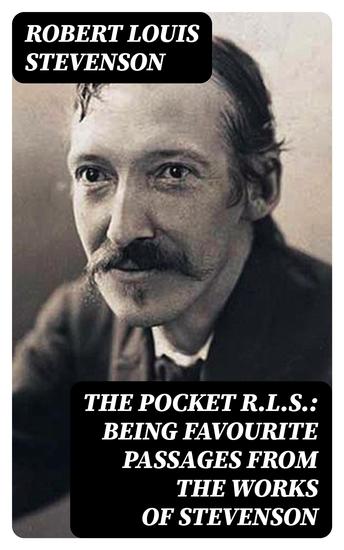
In "The Pocket R.L.S.: Being Favourite Passages from the Works of Stevenson," Robert Louis Stevenson curates a collection of his most beloved excerpts, showcasing his masterful prose and vivid imagination. The book is a literary tapestry woven with themes of adventure, friendship, and the complexities of human experience. Its eclectic style, oscillating between poetic lyricism and straightforward narrative, invites readers to savor Stevenson's distinctive voice, making it an essential companion for those who appreciate the art of excerpted literature. Robert Louis Stevenson, a Scottish novelist, poet, and essayist, is often celebrated for his contributions to the literary canon, particularly in the genres of adventure and children's literature. Drawing on his own diverse experiences, including extensive travels and deep introspection, Stevenson imbues his work with rich detail and profound insight, making his writing both relatable and timeless. His keen understanding of human nature enabled him to capture the essence of life's adventures, leading to the creation of this thoughtful anthology. This anthology serves as a perfect introduction for newcomers and a delightful refresher for longtime fans of Stevenson. As readers immerse themselves in these selected passages, they will find themselves captivated once more by Stevenson's vibrant imagination and reflection on the human spirit, making it a vital addition to any literary collection.
Disponibile da: 04/09/2022.
Lunghezza di stampa: 110 pagine.
Altri libri che potrebbero interessarti

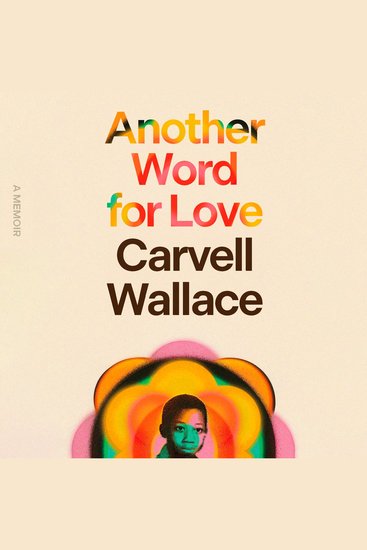
  • Another Word for Love - A Memoir - cover

    Another Word for Love - A Memoir

    Carvell Wallace

    • 0
    • 0
    • 0
    This program is read by the author.“Carvell Wallace narrates his beautiful memoir with poignant urgency-- and a whole lot of love…His voice, like his prose, has a poetic cadence. At times, his narration seems to fly, reaching higher and higher before culminating in an emotional crescendo.”—AudioFileA transformative memoir that reimagines the conventions of love and posits a radical vision for healing.  In Another Word for Love, Carvell Wallace excavates layers of his own history, situated in the struggles and beauty of growing up Black and queer in America.Wallace is an award-winning journalist who has built his career on writing unforgettable profiles, bringing a provocative and engaged sensitivity to his subjects. Now he turns the focus on himself, examining his own life and the circumstances that frame it—to make sense of seeking refuge from homelessness with a young single mother, living in a ghostly white Pennsylvania town, becoming a partner and parent, raising two teenagers in what feels like a collapsing world.With courage, vulnerability, and a remarkable expansiveness of spirit—not to mention a thrilling, and unrivaled, storytelling verve—Another Word for Love makes an irresistible case for life, healing, the fullness of our humanity, and, of course, love. It could be called a theory of life itself—a theory of being that will leave you open to the wonder of the world.A Macmillan Audio production from Farrar, Straus and Giroux.
    Mostra libro
  • Over the Hill and Up the Wall - cover

    Over the Hill and Up the Wall

    Todd Alexander

    • 0
    • 0
    • 0
    A heart-warming journey with parents of a certain age and a son who thinks he knows best. 
     
    Of course, we love our parents. Even if they do so many things that drive us bonkers. 
     
    Like how a mother - for argument's sake, let's say mine - taps her fingernails on the car window whenever she sees a place of interest (seven taps for a regular haunt, up to twenty for somewhere fascinating). Or the way a father - let's call him Dad - practises deafness but can miraculously hear a suggestion of no ham at Christmas over the roar of cricket commentary. It might be the way your mum works herself into a tizz over a call from Azerbaijan one week and Nigeria the next. Or how your dad has an answer to everything (despite his information being forty years out of date) and 'a guy' for all fixes (if only he could find his Rolodex). 
     
    When do we stop being our parents' child and become their parent? After all, they did pretty well on their own for decades - why do they need our intervention now? And that tendency for them to drive us up the wall ... could it be because we are entering middle age and starting to recognise some of those traits in ourselves? 
     
    Over the Hill and Up the Wall is an affectionate, funny look at the frictions of taking a more active role in our elders' lives. It's a nod to every child who has waited three hours for a parent to fasten their seatbelt, and every parent whose child assumes they can't count to twenty. And, if your parents are just hitting middle age, it may well be a warning of things to come! 
     
    'Warm, witty, honest. With a healthy serving of humour, Todd Alexander has written a marvellous, touching and insightful book. You'll laugh, cry and hope your own kids love you this much. I'll be more patient with my parents after reading this' Better Reading
    Mostra libro
  • Essays: First Series Intellect - cover

    Essays: First Series Intellect

    Ralph Waldo Emerson

    • 0
    • 0
    • 0
    Intellect is not a possession but a force—fluid, expansive, untamed. It cannot be hoarded, nor can it be caged within doctrine or tradition. In Intellect, Ralph Waldo Emerson urges us to see thought as a living current, not a stagnant pool. True understanding, he suggests, is not about collecting knowledge but about breaking through to deeper insight, where intuition leads and logic follows.
    Emerson's vision of the mind defies confinement. He challenges the idea that intelligence is something fixed, something to be measured or owned. Instead, he sees it as a ceaseless motion, a self-renewing energy that thrives on boldness and independence. To think freely is to embrace the unknown, to risk uncertainty in pursuit of wisdom.
    Part of Essays: First Series, Intellect is a call to let go of borrowed opinions and trust the mind's own unfolding. It is not a guidebook, not a doctrine—it is an invitation to intellectual courage. To read it is to reconsider not only what we think but how we think.
    Mostra libro
  • Brightness Falls - From their pens to your ears genius in every story - cover

    Brightness Falls - From their...

    Mary Butts

    • 0
    • 0
    • 0
    Mary Frances Butts was born on 13th December 1890 in Poole, Dorset. 
    Her early years were spent at Salterns, an 18th-century house overlooking Poole Harbour.  Sadly in 1905 her father died, and she was sent for boarding at St Leonard's school for girls in St Andrews. 
    Her mother remarried and, from 1909, Mary studied at Westfield College in London, and here, first became aware of her bisexual feelings.  She was sent down for organising a trip to Epsom races and only completed her degree in 1914 when she graduated from the London School of Economics.  By then Mary had become an admirer of the occultist Aleister Crowley and she was given a co-authorship credit on his ‘Magick (Book 4)’. 
    In 1916, she began the diary which would now detail her future life and be a constant reference point for her observations and her absorbing experiences. 
    During World War I, she was doing social work for the London County Council in Hackney Wick, and involved in a lesbian relationship.  Life changed after meeting the modernist poet, John Rodker and they married in 1918. 
    In 1921 she spent 3 months at Aleister Crowley's Abbey of Thelema in Sicily; she found the practices dreadful and also acquired a drug habit.  Mary now spent time writing in Dorset, including her celebrated book of short stories ‘Speed the Plough’ which saw fully develop her unique Modernist prose style. 
    Europe now beckoned and several years were spent in Paris befriending many artists and writing further extraordinary stories.   
    She was continually sought after by literary magazines and also published several short story collections as books. Although a Modernist writer she worked in other genres but is essentially only known for her short stories.  Mary was deeply committed to nature conservation and wrote several pamphlets attacking the growing pollution of the countryside. 
    In 1927, she divorced and the following year her novel ‘Armed with Madness’ was published.  A further marriage followed in 1930 and time was spent attempting to settle in London and Newcastle before setting up home on the western tip of Cornwall.  By 1934 the marriage had failed. 
    Mary Butts died on 5th March 1937, at the West Cornwall Hospital, Penzance, after an operation for a perforated gastric ulcer. She was 46.
    Mostra libro
  • The Chinese Great Leap Forward Famine - A Social and Political Catastrophe - cover

    The Chinese Great Leap Forward...

    Sarah Willards

    • 0
    • 0
    • 0
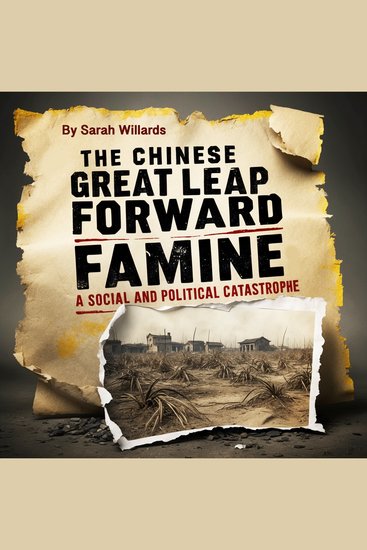
    The origins of the Great Leap Forward are deeply rooted in the political ambition and ideological vision of Mao Zedong, the founding leader of the People’s Republic of China. Following the success of the Communist revolution in 1949, Mao sought not only to rebuild a war-torn nation but to rapidly transform it into a socialist utopia capable of rivaling the industrial powers of the West. By the mid-1950s, China had already launched its First Five-Year Plan, modeled after the Soviet approach to centralized economic planning. Encouraged by early gains in heavy industry, Mao envisioned a second phase of development that would leap over traditional stages of economic growth. 
    At the heart of this vision was a push for mass mobilization. Mao believed that the sheer size of China's population could be harnessed as a revolutionary force capable of achieving miraculous feats. The Great Leap Forward, initiated in 1958, was designed to propel China into a modern communist society by emphasizing agricultural collectivization and rural industrialization simultaneously. Rather than relying on expert knowledge or slow-paced industrial planning, Mao favored decentralized enthusiasm and ideological commitment, trusting that the collective will of the people would overcome any technical limitations. 
    One of the most radical elements of this plan was the establishment of people’s communes, which replaced the traditional family unit and private farming with large-scale collective labor. Households were merged into communes comprising thousands of individuals, who would eat, sleep, and work under strict communal arrangements. The idea was to increase efficiency and free up labor for industrial production, especially in rural areas where backyard furnaces were set up to produce steel. This was accompanied by an aggressive campaign to eliminate what were seen as capitalist tendencies, including private plots and individual incentives.
    Mostra libro
  • Varied Types - cover

    Varied Types

    G. K. Chesterton

    • 0
    • 0
    • 0
    "Varied Types" by G. K. Chesterton is a captivating collection of essays that explores the complexities of human character and culture. Through his witty and incisive prose, Chesterton delves into diverse figures from history, literature, and mythology, offering fresh perspectives on their enduring significance. He examines the contradictions and nuances of personalities like Caesar, St. Francis, and Dickens, celebrating their unique contributions to society. Chesterton’s insightful reflections challenge conventional views, urging readers to embrace paradoxes in understanding humanity. With characteristic humor and wisdom, he champions the beauty of individuality and the rich tapestry of human experience, making "Varied Types" a timeless meditation on what it means to be truly human.
    Mostra libro