Unisciti a noi in un viaggio nel mondo dei libri!
Aggiungi questo libro allo scaffale
Grey
Scrivi un nuovo commento Default profile 50px
Grey
Iscriviti per leggere l'intero libro o leggi le prime pagine gratuitamente!
All characters reduced
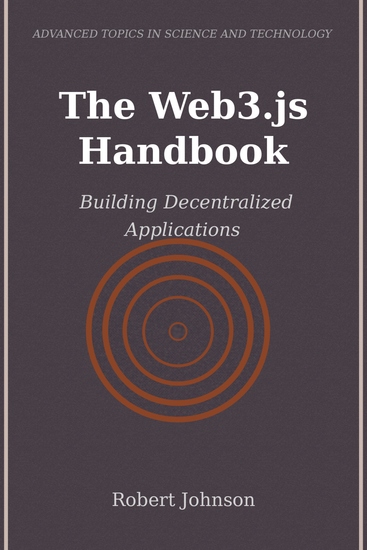
The Web3js Handbook - Building Decentralized Applications - cover

The Web3js Handbook - Building Decentralized Applications

Robert A. Johnson

Casa editrice: HiTeX Press

  • 0
  • 0
  • 0

Sinossi

Discover the cutting-edge world of Web3 and decentralized applications with "The Web3.js Handbook: Building Decentralized Applications." This comprehensive guide empowers developers, both novice and seasoned, with the knowledge and tools necessary to leverage the transformative potential of blockchain technology. Expertly crafted by a leading authority in computer science, this book unravels the complexities of Web3.js, offering a clear, structured pathway to understanding and implementing DApps across various sectors.Dive into a systematically organized exploration of essential topics, from blockchain fundamentals and smart contract development to advanced Web3.js features and security best practices. Each chapter builds upon the last, ensuring a seamless learning experience. Readers will find detailed guidance on setting up development environments, managing accounts and transactions, and integrating frontend and backend components. Furthermore, this handbook addresses the challenges and opportunities inherent in the evolving Web3 ecosystem, preparing developers for future advancements in decentralized technologies."The Web3.js Handbook" is more than just a technical manual—it is your gateway to the innovative world of decentralized applications. With this book, readers will not only gain a profound understanding of current technologies but also be inspired to create and innovate within the promising domain of Web3. Whether you're seeking to build secure, efficient DApps or explore the limitless opportunities emerging from blockchain technologies, this book is an essential resource for forging a path in the decentralized future of the digital world.
Disponibile da: 09/02/2025.
Lunghezza di stampa: 382 pagine.

Altri libri che potrebbero interessarti

  • Data Warehousing for Beginners - 2 in 1 Guide - cover

    Data Warehousing for Beginners -...

    Brian Paul

    • 0
    • 0
    • 0
    In the ever-evolving world of technology, data is the driving force behind informed decision-making. "Data Warehousing for Beginners" is your indispensable guide to understanding, designing, and managing data warehouses—an exploration that caters to both beginners and seasoned professionals. This comprehensive book unravels the complexities of data warehousing, offering insights into its historical evolution, architectural frameworks, and the pivotal role it plays in organizational intelligence. 
    "Data Warehousing for Beginners" is your compass in the dynamic world of organizational intelligence. Whether you're a novice seeking an introduction or a seasoned professional aiming to refine your skills, this book provides a roadmap for building, optimizing, and future-proofing your data-driven ecosystem. Embark on a journey that empowers you to navigate the complexities of data warehousing and unlock the full potential of organizational intelligence. 
     
    Mostra libro
  • A Hacker's Mind - How the Powerful Bend Society's Rules and How to Bend them Back - cover

    A Hacker's Mind - How the...

    Bruce Schneier

    • 0
    • 0
    • 0
    It’s not just computers—hacking is everywhere. 
     
    A hack is any means of subverting a system’s rules in unintended ways. The tax code isn’t computer code, but a series of complex formulas. It has vulnerabilities; we call them “loopholes.” We call exploits “tax avoidance strategies.” And there is an entire industry of “black hat” hackers  
    intent on finding exploitable loopholes in the tax code. We call them accountants and tax attorneys. 
     
    In A Hacker’s Mind, Bruce Schneier takes hacking out of the world of computing and uses it to analyze the systems that underpin our society: from tax laws to financial markets to politics. He reveals an array of powerful actors whose hacks bend our economic, political, and legal  
    systems to their advantage, at the expense of everyone else. 
     
    Once you learn how to notice hacks, you’ll start seeing them everywhere—and you’ll never look at the world the same way again. Almost all systems have loopholes, and this is by design. Because if you can take advantage of them, the rules no longer apply to you. 
     
    Unchecked, these hacks threaten to upend our financial markets, weaken our democracy, and even affect the way we think. And when artificial intelligence starts thinking like a hacker—at inhuman speed and scale—the results could be catastrophic. 
     
    But for those who would don the “white hat,” we can understand the hackingmindset and rebuild our economic, political, and legal systems to counter those who would exploit our society. And we can harness artificial intelligence to improve existing systems, predict and defend  
    against hacks, and realize a more equitable world.
    Mostra libro
  • Radiolab Greatest Hits Vol 1 - Memory - cover

    Radiolab Greatest Hits Vol 1 -...

    Lulu Miller, Latif Nasser

    • 0
    • 0
    • 0
    Radiolab is one of the most popular and longest-running shows produced by WNYC, with over 2 million weekly listeners across public radio and podcasting.  
    Radiolab is on a curiosity bender. We ask deep questions and use investigative journalism to get the answers. A given episode might whirl you through science, legal history, and into the home of someone halfway across the world. The show is known for innovative sound design, smashing information into music. It is hosted by Lulu Miller and Latif Nasser. 
    VOLUME 1: MEMORY 
    “A 4-Track Mind” - A neurologist issues a dare to a ragtime piano player and a famous conductor. When the two men face off in an fMRI machine, the challenge is so difficult that one man instantly gives up. But the other achieves a musical feat that ought to be impossible. 
    “Memory and Forgetting” - Remembering is an unstable and profoundly unreliable process. Oliver Sacks joins us to tell the story of an amnesiac whose love for his wife and music transcend his seven-second memory. 
    “Finding Emilie” - Susan Gossiaux describes her daughter Emilie and the terrible phone call she received from Emilie’s boyfriend, Alan Lundgard. Susan and Alan tell about the devastating fork in the road that left Emilie lost in a netherworld, and how Alan found her again. 
    “Right to Be Forgotten” - In online news, stories live forever. The tipsy photograph of you at the college football game? It’s there. A charge for driving under the influence? That’s there, too. But what if … it wasn’t?  
    “Vanishing Words” - Agatha Christie’s clever detective novels may reveal more about the inner workings of the human mind than she intended. In this podcast, we look at what scientists uncover when they treat words like data.
    Mostra libro
  • Human-Centered Security - How to Design Systems That Are Both Safe and Usable - cover

    Human-Centered Security - How to...

    Heidi Trost, Adam Shostack

    • 0
    • 0
    • 0
    In our interconnected world, we face a complex cybersecurity ecosystem where digital vulnerabilities can have far-reaching consequences. Threats to digital infrastructure often impact critical physical systems, potentially causing real-world harm. With AI agents set to handle extensive personal information, data security and privacy are more crucial than ever. 
     
    Human-Centered Security targets professionals designing digital products that handle sensitive data: UX designers, engineers, and product managers. It's also for those responsible for securing organizational data and systems: security engineers, CISOs, CIOs, and teams focused on risk management, legal, privacy, and compliance. 
     
    These professionals influence security-related behaviors and possess deep knowledge of threats to their products or organizations. This places a significant responsibility on them to design resilient systems that encourage safer outcomes. 
     
    This book will help you focus on areas of the user experience where security impacts users the most; understand the dynamics of the security ecosystem; find your security UX allies; ask better questions when talking to your cross-disciplinary team; and more.
    Mostra libro
  • Fifty Percent of Mountaineering is Uphill - The Life of Canadian Mountain Rescue Pioneer Willi Pfisterer - cover

    Fifty Percent of Mountaineering...

    Susanna Pfisterer

    • 0
    • 0
    • 0
    Winner of the Alberta Readers' Choice Award! 
     
    Fifty Percent of Mountaineering Is Uphill is the enthralling true story of Jasper's Willi Pfisterer, a legend in the field of mountaineering and safety in the Rocky Mountains. For more than thirty years, Willi was an integral part of Jasper's alpine landscape, guiding climbers up to the highest peaks, and rescuing them from perilous situations. 
     
    Originally from Austria, this mountain man came to Canada in the 1950s to assail the Rockies, and stayed to become an integral part of mountain safety in Western Canada and the Yukon. His daughter, Susanna Pfisterer, has shaped his stories and lectures as an engaging and educational adventure story. Accompanied by the humorous wisdom of the "Sidehillgouger," listeners will traverse an historical and spectacular terrain.
    Mostra libro
  • Senedd - cover

    Senedd

    Trevor Fishlock

    • 0
    • 0
    • 0
    This is the story of an astonishing transformation as Wales entered the twenty-first century embracing a new democratic direction. The Senedd, designed by architect Richard Rogers, rose as the country’s distinctive ultramodern forum, the expression of the people’s voices and diversity.  
     
    Senedd documents the rise of Cardiff as a city and place of government through to the concepts, challenges and final acheivements of the Senedd building itself, superbly photographed by Andrew Molyneux.  
     
    Trevor Fishlock’s rigorously researched account provides an extensive background, highlighting not only the unique design of the building and the process of its completion but also the even greater significance of what it continues to represent for Wales. The book also includes a conversation conducted by Fishlock with the late architect Richard Rogers and firm partner Ivan Harbour on their vision for the project and its execution.
    Mostra libro