Unisciti a noi in un viaggio nel mondo dei libri!
Aggiungi questo libro allo scaffale
Grey
Scrivi un nuovo commento Default profile 50px
Grey
Iscriviti per leggere l'intero libro o leggi le prime pagine gratuitamente!
All characters reduced
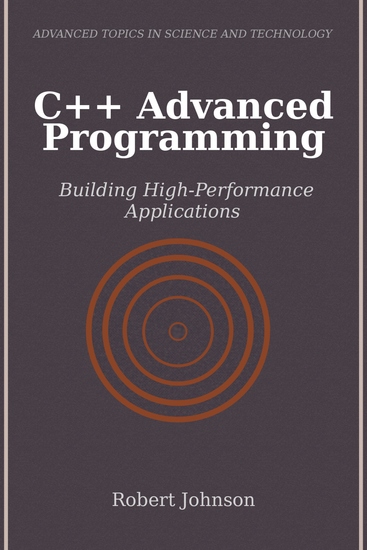
C++ Advanced Programming - Building High-Performance Applications - cover

C++ Advanced Programming - Building High-Performance Applications

Robert A. Johnson

Casa editrice: HiTeX Press

  • 0
  • 0
  • 0

Sinossi

"C++ Advanced Programming: Building High-Performance Applications" serves as an essential resource for developers seeking to explore the intricate realms of C++ programming. Designed for those who wish to push beyond the basics, this comprehensive guide delves into advanced concepts crucial for crafting efficient, scalable, and robust software systems. Each chapter is meticulously structured to provide insights into complex programming paradigms, such as templates, metaprogramming, and object-oriented design patterns, arming readers with the knowledge necessary to tackle sophisticated coding challenges.The book covers a broad spectrum of topics, from memory management and concurrency to graphics programming and network integration, ensuring readers gain a holistic understanding of C++ capabilities. It presents real-world applications and practical examples, guiding developers through performance tuning, debugging, and working with legacy code amid contemporary demands. With a focus on leveraging the C++ Standard Library and exploring cross-language interoperability, this work equips programmers with the skills to innovate and optimize their projects in diverse technological landscapes.Whether enhancing existing C++ expertise or stepping into the advanced programming domain, this meticulous guide promises to empower its readers, making it an invaluable asset on the journey to mastering high-performance C++ application development.
Disponibile da: 23/10/2024.
Lunghezza di stampa: 537 pagine.
Altri libri che potrebbero interessarti

  • The Green Funeral - Honoring the Environment While Beautifying Funeral Practices - cover

    The Green Funeral - Honoring the...

    Sequola Dawson, Dr. Jonathan C....

    • 0
    • 0
    • 0
    The care of creation is the responsibility of all Christians. 
      
    Join Sequola Dawson in her insightful exploration of death rituals as she examines funerals, memorials, and burial practices, urging us to take ownership and recognize the vital interdependence between humanity, the earth, and all living organisms, advocating for a more ecologically responsible approach to caring for creation. 
      
    The Green Funeral introduces readers to evolving attitudes toward death, the death care industry, and our faith. Dawson not only delves into burial traditions within the African American community but outlines innovative practices suited for a new generation of multicultural churchgoers and those who do not identify with any religious tradition. 
      
    Dawson sheds light on the often-ignored economics behind the funeral industry, challenging us to consider the implications of "putting money in the ground." Many of us are unprepared for the death of a loved one, leaving us to ponder who bears the burden of caring for the deceased. With thousands of dollars spent on burials, Dawson argues for a more responsible approach—one that acknowledges the environmental impact of traditional practices and seeks to honor our loved ones without compromising the land they leave behind. 
      
    Dawson's unique perspective on death stems from her experiences in academia, the military, family life, and engineering, as well as her journey as a cancer survivor. She artfully weaves together the languages of all these worlds collectively raising a voice for better creation care—even in death. 
      
    "In The Green Funeral: Honoring the Environment While Beautifying Funeral Practices, Rev. Sequola Dawson speaks to the black church, but invites us all to contemplate our last impact on God's good earth. Let us all prayerfully consider returning to the dust from which we came as nourishment to the sacred land."—Rev. Carol L. Devine, Director of Blessed Tomorrow
    Mostra libro
  • When the Ice is Gone - What a Greenland Ice Core Reveals About Earth's Tumultuous History and Perilous Future - cover

    When the Ice is Gone - What a...

    Paul Bierman

    • 0
    • 0
    • 0
    In 2018, lumps of frozen soil, collected from the bottom of the world's first deep ice core and lost for decades, reappeared in Denmark. When geologist Paul Bierman and his team first melted a piece of this unique material, they were shocked to find perfectly preserved leaves, twigs, and moss. That observation led them to a startling discovery: Greenland's ice sheet had melted naturally before, about 400,000 years ago. 


    In When the Ice Is Gone, Bierman traces the story of this extraordinary finding, revealing how it radically changes our understanding of the Earth and its climate. A longtime researcher in Greenland, he begins with a brief history of the island, both human and geological. For the origins of ice coring, Bierman brings us to Camp Century, a US military base built inside Greenland's ice sheet, where engineers first drilled through mile-thick ice and into the frozen soil beneath. Decades later, a few feet of that long-frozen earth would reveal its secrets—ancient warmth and melted ice. 


    Changes in Greenland reverberate around the world, with ice melting high in the arctic affecting people everywhere. Bierman explores how losing Greenland's ice will catalyze devastating events if we don't change course and address climate change now.
    Mostra libro
  • Ultimate Figma for UI UX Design - Transform Your UI UX Design Craft User-Centric Interfaces and Create Stunning Experiences with Ease - cover

    Ultimate Figma for UI UX Design...

    Aditi Sharma

    • 0
    • 0
    • 0
    Crack the Code to Solving Customer Problems with Exceptional User Experience Designs Powered by Figma.
    Book Description
    Figma is a powerful, collaborative design tool that has transformed the UI/UX design process. With its intuitive interface and advanced features, it enables seamless collaboration and the creation of exceptional user experiences, making it the go-to choice for designers.
    Ultimate Figma for UX/UI Design guides you through Figma’s capabilities, covering everything from the basics to advanced features, collaboration, and real-world applications. Each chapter includes hands-on exercises and examples to reinforce learning, covering topics such as Figma’s interface, design principles (shapes, colors, typography), UI element design, interactive prototypes, real-time collaboration, plugin integration, responsive design, and more.
    This book offers a structured approach for professionals at all design skill levels. Readers will gain tips, tricks, and best practices to enhance their efficiency, collaboration, and design skills, opening doors to success in UX design. Through practical exercises and real-world examples, this guide equips you to excel with Figma and become a proficient UX designer.
    Unlock your full design potential—dive into Ultimate Figma for UX/UI Design and start crafting exceptional user experiences today!
    Table of Contents
    1. Introduction to Figma
    2. Understanding Design Principles in Figma
    3. Mastering the Figma Interface
    4. Designing UI in Figma
    5. Prototyping and Iterating User Interface Design
    6. Advanced Design Techniques in Figma
    7. Collaboration and Team Workflows
    8. Integrating Plugins and External Tools
    9. Designing Responsively for Multiple Devices
    10. Real-World Projects and Case Studies      
    
    Index
    Mostra libro
  • The Buck that Buries its Poo - And 101 Other Fascinating Facts About SA's Wildlife - cover

    The Buck that Buries its Poo -...

    Quinton Coetzee

    • 0
    • 0
    • 0
    Is a zebra black with white stripes or white with black stripes? And why do flamingos stand on one leg while bats hang upside down? Did you know that a chameleon’s tongue can shoot out at five times the acceleration of a fighter jet? 
    In The Buck That Buries its Poo, naturalist Quinton Coetzee answers these and many other intriguing wildlife questions. He also dispels countless myths and elucidates some of the legends that surround 
    creatures in the South African bush we thought we knew all about. For example, bats do not get tangled in people’s hair (because they are far too adept at flying) and elephants are not afraid of mice (but they do fear bees!). 
    Other tall tales you might hear around the campfire are that lions roll in animal dung, entrails or carcasses to disguise their scent, and that rhinos have a predilection for stamping out fires. What is true, though, is that hyenas are more closely related to cats than to dogs. This handy guide is based on Coetzee’s own research and that of others, and his experience gleaned over decades living close to nature and wildlife. It seeks to unravel the mysteries of nature in Africa – from mammals and birds to arthropods and plants – with fascinating information and fun trivia. It is a book that will enlighten and entertain. 
    PS: Zebras are black with white stripes!
    Mostra libro
  • Toxicology - Poison and Its Power - The Science of Toxins - cover

    Toxicology - Poison and Its...

    Mike Crawford

    • 0
    • 0
    • 0
    Toxicology, the study of poisons and their effects on living organisms, has deep historical roots dating back thousands of years. The earliest civilizations recognized the dangers of certain substances and documented their effects, often intertwining them with myths, medicine, and warfare. The origins of toxicology can be traced to ancient Egypt, Mesopotamia, Greece, and Rome, where early scholars and physicians laid the groundwork for what would eventually become a scientific discipline. 
    Ancient Egyptian texts, such as the Ebers Papyrus (circa 1550 BCE), contain some of the earliest references to poisons, including plant-based toxins and venomous animal bites. Egyptian priests and physicians were aware of toxic substances, both as medicinal agents and as potential means of assassination. Similarly, Mesopotamian records describe the use of poisons in both healing practices and criminal activities. 
    In ancient Greece, the philosopher and physician Hippocrates (circa 460–370 BCE) discussed the effects of poisons and the importance of dosage in determining whether a substance was harmful or beneficial. His work influenced later Greek and Roman physicians, including Dioscorides, a first-century CE pharmacologist who compiled De Materia Medica, an extensive guide to medicinal and poisonous substances derived from plants, animals, and minerals. The Greek philosopher Theophrastus (circa 371–287 BCE) also contributed to early toxicology by documenting the properties of various poisonous plants.
    Mostra libro
  • After Apollo: The History of NASA’s Missions Since Landing on the Moon - cover

    After Apollo: The History of...

    Charles River Editors

    • 0
    • 0
    • 0
    Today the Space Race is widely viewed poignantly and fondly as a race to the Moon that culminated with Apollo 11 “winning” the Race for the United States. In fact, it encompassed a much broader range of competition between the Soviet Union and the United States that affected everything from military technology to successfully launching satellites that could land on Mars or orbit other planets in the Solar System. Moreover, the notion that America “won” the Space Race at the end of the 1960s overlooks just how competitive the Space Race actually was in launching people into orbit, as well as the major contributions the Space Race influenced in leading to today’s International Space Station and continued space exploration.  
    Space exploration was always an expensive business, and throughout NASA’s history, the agency has had to justify to Congress its need for every dollar it intended to spend. This problem has helped NASA to be more careful and more creative with the money they did receive, and scientists had to justify the equipment they wanted to include on each space probe. They had to justify the size and the power demand, too. If they wanted too much, the entire mission might be scrubbed, and all their work would have been for naught. This made planning and designs leaner and more efficient, as scientists and engineers were more careful with their recommendations. 
    Although Apollo 11’s successful mission to the Moon is seen as the culmination of the Space Race, and the Apollo program remains NASA’s most famous, one of the space agency’s most successful endeavors came a few years later. In fact, the Pioneer program was the most diversified sequence of any of NASA’s programs, and though they’re now remembered for being among the first probes in history to reach the Outer Solar System, the elaborate planning changed goals several times over several years before resulting in historic successes. 
    Mostra libro