Unisciti a noi in un viaggio nel mondo dei libri!
Aggiungi questo libro allo scaffale
Grey
Scrivi un nuovo commento Default profile 50px
Grey
Iscriviti per leggere l'intero libro o leggi le prime pagine gratuitamente!
All characters reduced
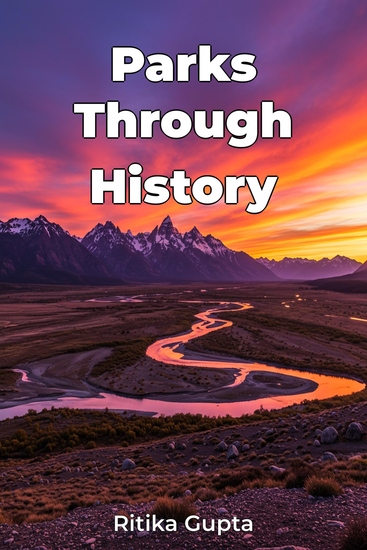
Parks Through History - cover

Parks Through History

Ritika Gupta

Traduttore A AI

Casa editrice: Publifye

  • 0
  • 0
  • 0

Sinossi

Parks Through History explores the multifaceted story of national parks, revealing how these spaces are not just natural wonders, but also reflections of evolving societal values and political agendas. The book challenges the notion of pristine wilderness, highlighting that national parks are carefully constructed landscapes shaped by historical events, cultural influences, and the complex interplay between conservation and social justice. For instance, the early conservation movement, driven by figures like John Muir and Gifford Pinchot, championed the creation of iconic parks like Yellowstone and Yosemite, but often overlooked the impact on indigenous populations. 

 
The book delves into the history of conservation, from early preservationist ideals to modern approaches emphasizing ecological balance and sustainable tourism. It also sheds light on the social justice dimensions of park creation, offering a nuanced perspective on the impact on indigenous populations and local communities.

 
 Structured across three sections, the book begins with the initial conceptions of national parks, progresses through the mid-20th century expansion, and concludes with contemporary challenges like climate change and reconciliation with indigenous communities. By drawing upon archival documents, personal papers, and scientific research, Parks Through History provides a comprehensive understanding of the challenges and opportunities facing these vital landscapes. This exploration offers valuable insights for anyone interested in environmental history, conservation, and the future of national park management.
Disponibile da: 21/02/2025.
Lunghezza di stampa: 72 pagine.

Altri libri che potrebbero interessarti

  • Being Victorian - How it felt then Why it matters now - cover

    Being Victorian - How it felt...

    Jamie Camplin

    • 0
    • 0
    • 0
    Writers and poets, academics and art critics, mathematicians and experimental scientists, churchmen and politicians, women of strong opinions gather for a summer weekend in the 1870s. Is it real, or is it a fantasy? One thing's sure: their debates – about life's aims, rural and urban living, love and money, civilization and belief, the social framework, the past, the present and the future take us to the heart of the Victorian dream and its reality: the idea that their society exemplified 'Progress'. What did 'Progress' mean? Were things (and which things) getting better? What did 'better' mean? And for whom? The history of the world before the Victorians, from Aberdeen to Africa, showed a particular form of equality for almost everyone: an equality of poverty and no prospects, with kindness often in short supply. Victorians wanted to change that world, thought they were changing it, did change it. They did it in a human way: a melange of muddle, vision, certainty, doubt, too slow for many, too fast for some. Yet their changes were decisive both for creating the modern world, but also for revealing the dilemmas attached to mass living in urban, technological societies, as well as the moral flaws in imposing one civilization's or one person's beliefs on another. Most remarkably of all, the upheaval in making major transitions in every area of life, which produced revolutions and violence across Europe, in the Americas and in Asia, was carried out – at least in Britain itself – almost entirely peacefully. The past will always be a foreign country for those unwilling to engage with its people. Whether viewing the lives of rulers or the ruled, 'Being Victorian' corrects innumerable preconceptions.
    Mostra libro
  • Thai History - Facts and Background of the Siamese and the Khmer Empire (2 in 1) - cover

    Thai History - Facts and...

    Kelly Mass

    • 0
    • 0
    • 0
    Learn more about the history of those countries. The topics addressed will be the following: 
    The Khmer Empire--Historians describe Cambodia as the Khmer State or the Angkorian Empire (Khmer:) from the 9th century to the 15th century, when it was a Hindu/Buddhist empire in Southeast Asia. The empire, which developed from the old societies of Funan and Chenla, governed and/or "vassalized" the majority of mainland Southeast Asia and parts of Southern China, covering from the suggestion of the Indochinese Peninsula northward to modern-day Yunnan province in China, and from Vietnam westward to Myanmar. The Khmer Empire was greater at its peak than the Byzantine Empire (Eastern Roman Empire) that existed at the exact same period. 
    The Siamese-- Siam was just a much different name for what's now referred to as Thailand. The Siamese are the people who live there, though they're never ever called as such any longer. 
    Thailand is a fascinating country, with its own culinary arts, culture, history, royalty, infrastructure, and influence on the world. To learn more about these “Thai” people before they were called Thai, when they were Siamese, is to learn about those people’s roots.
    Mostra libro
  • Vic and Pat’s Erotic Adventures “Housewives Made Lesbian!” Housewife Lesbian!” - cover

    Vic and Pat’s Erotic Adventures...

    Pat Simone, VIC VITALE

    • 0
    • 0
    • 0
    Tracy and Lori Jean's Story of Sister's Forced Intimacy 
    The day started with three attractive women from Long Island going clothes shopping at a mall in New Jersey.  
    One of those women was Mila, the sixty-five year old adoptive mother of the other two women.  The two married housewives were Mila's adopted daughters, Forty-two year old Tracy and forty-year old Lori Jean. 
    On the way home later, Mom Mila said she had a desperate need to pee. 
    Since the first bat they came to was a gay bar, stopping there would prove to be a fatal mistake for three straight women. 
      
     
    Mostra libro
  • Loch Ness Monster The: The History and Legacy of the World’s Most Famous Cryptid - cover

    Loch Ness Monster The: The...

    Editors Charles River

    • 0
    • 0
    • 0
    Although cryptozoology is often scoffed at and widely considered a pseudoscience, one of the reasons it made men like Barnum rich and continues to fascinate people today is the fact that people realize they’ve only scratched the surface when it comes to identifying all the different forms of life on Earth. As Martin DelRio pointed out in The Loch Ness Monster, “Animals previously unknown to science have been found more than once in the past hundred years. For instance, there's the megamouth shark (megachasma pelagios), a fifteen-foot-long creature weighing nearly a ton. The first specimen was discovered on November 15, 1976, when it was found entangled in the drag anchor of a U.S. Navy ship. The new creature wasn't described scientifically until 1983…The megamouth remains the only species in its genus, and the only genus in its order.”  
    	While cryptids like Bigfoot and the Yeti have become popular in recent decades, none of them can touch the notoriety of the Loch Ness Monster, a large, unknown creature allegedly living in a loch in the Highlands of Scotland. Was it a relic dinosaur or perhaps an entirely new species? New photographs and new eyewitness sightings fueled a growing debate and transformed the Loch Ness Monster, also known as Nessie, into an instantly recognizable staple of pop culture, to the extent that hundreds of thousands of visitors came to Loch Ness every year in hopes of catching a glimpse of the loch’s famous inhabitant.  
    	The Loch Ness Monster remains an international brand and the best-known cryptid in the world, but after almost 100 years of fame and media attention, what do people really know about this cryptid, and is there any proof that there really is something large and unknown living in a remote Scottish loch? 
    Mostra libro
  • Lost to Time - Unforgettable Stories That History Forgot - cover

    Lost to Time - Unforgettable...

    Martin W. Sandler

    • 0
    • 0
    • 0
    Stories that history forgot . . . but readers will remember 


    "The only thing new in the world," said Harry S. Truman, "is the history you don't know." In this fresh and fascinating collection of historical vignettes, Martin W. Sandler (author of Resolute and Atlantic Ocean) restores to memory important events, people, and developments that have been lost to time. 


    Though barely known today, these are major historical stories, from Ziryab, an eighth-century black slave whose influence on music, cuisine, fashion, and manners still reverberates, to Cahokia, a twelfth century city north of the Rio Grande, which at its zenith contained a population estimated to have been as high as 40,000 (more than any contemporary European city), to the worst peacetime maritime disaster ever, the explosion and sinking of the Sultana on the Mississippi in 1865. 


    These tales are far from trivia; they illuminate little-known American and foreign achievements, ingenuity, heroics, blunders, and tragedies that changed the course of history and resonate today.
    Mostra libro
  • Another Man's War - The True Story of One Man's Battle to Save Children in the Sudan - cover

    Another Man's War - The True...

    Sam Childers

    • 0
    • 0
    • 0
    A gun-toting preacher, a rebel army led by a madman, and entire villages slaughtered just because they were in the way. 
    In Another Man's War, follow Sam Childer's remarkable transformation from violent thug to a man of faith, and his ongoing battle to save children in one of the world's most lawless areas. 
    Photos are included in the audiobook companion PDF download. 
    “Another Man’s War is about true terrorism . . . against more than 200,000 children in northern Uganda and Southern Sudan. Sam Childers—a fighter and a preacher (some call him a mercenary)—tirelessly leads a small militia into the jungle, daring to fight against a vicious army outnumbering him one thousand to one. One man can make a huge difference. Sam Childers certainly does.” ?Peter Fonda, actor/filmmaker, best known as star of Easy Rider 
    “The Reverend Sam Childers has been a very close friend to the government of South Sudan for many years and is a trusted friend.” ?President Salva Kiir Mayardit of South Sudan 
    “The Reverend Sam Childers is a long time devoted friend to our government and his courageous work is supported by us.” ?President Yoweri Museveni of Uganda 
    “Sam Childers is one of those rare men [who is] willing to do literally whatever it takes to promote the message of Jesus Christ and save children from the tyranny of evil men.” ?John Rich, lead singer and songwriter, Big & Rich
    Mostra libro