Unisciti a noi in un viaggio nel mondo dei libri!
Aggiungi questo libro allo scaffale
Grey
Scrivi un nuovo commento Default profile 50px
Grey
Iscriviti per leggere l'intero libro o leggi le prime pagine gratuitamente!
All characters reduced
The Pilgrimage to Al-Madinah & Meccah - cover

The Pilgrimage to Al-Madinah & Meccah

Richard Francis Burton

Casa editrice: DigiCat

  • 0
  • 0
  • 0

Sinossi

In "The Pilgrimage to Al-Madinah & Meccah," Richard Francis Burton presents a richly detailed account of his 1853 pilgrimage to the Islamic holy cities of Medina and Mecca. Written in a vivid, immersive style, the book blends travel narrative with ethnographic observations, offering readers an intimate glimpse into the rituals of Hajj and the cultural tapestry of 19th-century Arabia. Burton's prose reflects a deep respect for the Islamic faith, tempered by his own Western perspective, making it a critical work for understanding both the complexities of Islamic pilgrimage and the cross-cultural encounters of the Victorian era. Richard Francis Burton was a prominent British explorer, linguist, and scholar renowned for his adventurous spirit and deep curiosity about Eastern cultures. His extensive travels throughout Africa, the Middle East, and India, combined with his fluency in multiple languages, informed his approach to writing this book. Burton's ambition to uncover and share the realities of the Muslim world, often obscured by Western misconceptions, inspired him to undertake the perilous journey that would culminate in this seminal work. This book is highly recommended for readers interested in anthropology, religious studies, or the historical interplay between East and West. Burton's unique insights and firsthand experiences render this text an indispensable resource for understanding pilgrimage practices and the broader socio-political context of the time.
Disponibile da: 17/05/2022.
Lunghezza di stampa: 2546 pagine.

Altri libri che potrebbero interessarti

  • Egyptian Mythology - History of Egypt and Egyptian Religion - cover

    Egyptian Mythology - History of...

    History Retold

    • 0
    • 0
    • 0
    Are you looking to learn about the mysterious and captivating history of ancient Egypt? 
    Look no further! This book is the perfect introduction to this fascinating civilization.  
      
    From the construction of the Great Pyramids to their unique religious beliefs, our book will take you through it all. We'll explore everything from Tutankhamun's tomb to how the Nile River shaped life in ancient Egypt. Our book dives into the rich culture, customs, and traditions that have been passed down for thousands of years. 
      
    This comprehensive book takes a deep dive into all aspects of ancient Egyptian history. With detailed descriptions and historical accounts, you'll gain an in-depth understanding of this powerful civilization. 
      
    So don't wait any longer - get your copy today and immerse yourself in ancient Egyptian culture!
    Mostra libro
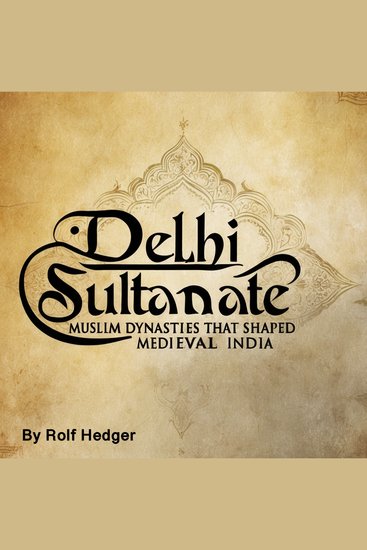
  • Delhi Sultanate - Muslim Dynasties That Shaped Medieval India - cover

    Delhi Sultanate - Muslim...

    Rolf Hedger

    • 0
    • 0
    • 0
    The Delhi Sultanate was a defining era in Indian history, marking the establishment of Muslim rule in northern India. Its rise was shaped by a series of invasions, strategic conquests, and the formation of a centralized administration. The foundation of the Sultanate can be traced back to the late 12th century when Muslim forces, primarily from Central Asia, began making inroads into the Indian subcontinent. These incursions set the stage for a new political order that would influence the region for centuries. 
    One of the earliest significant Muslim invasions was led by Mahmud of Ghazni in the 11th century. Although he did not establish permanent rule, his raids weakened Indian kingdoms and demonstrated the vulnerability of the region. However, it was Muhammad Ghori in the late 12th century who laid the groundwork for the Delhi Sultanate. Unlike Mahmud, Ghori aimed for long-term control rather than mere plundering. His victory over Prithviraj Chauhan at the Second Battle of Tarain in 1192 was a turning point, allowing Muslim forces to establish a foothold in northern India. 
    Following Ghori’s assassination in 1206, his general, Qutb al-Din Aibak, took control of his Indian territories and proclaimed himself the first Sultan of Delhi. Aibak, originally a slave who rose through the ranks, became the founder of the Mamluk or Slave Dynasty. He consolidated his rule by strengthening administrative structures and commissioning architectural marvels like the Qutb Minar, which symbolized the establishment of Muslim rule. However, his reign was short-lived, and his successor, Iltutmish, played a more crucial role in shaping the Delhi Sultanate into a powerful and stable empire.
    Mostra libro
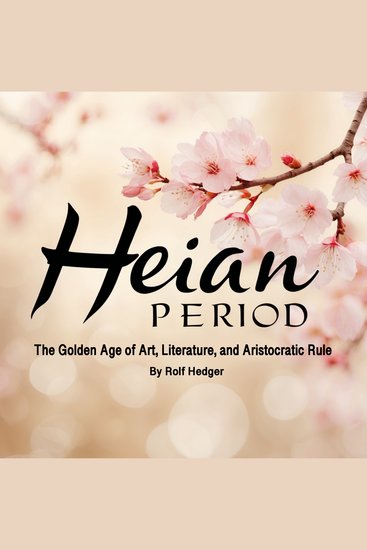
  • Heian Period - The Golden Age of Art Literature and Aristocratic Rule - cover

    Heian Period - The Golden Age of...

    Rolf Hedger

    • 0
    • 0
    • 0
    The Heian Period, spanning from 794 to 1185 CE, marks one of the most culturally rich and politically significant eras in Japanese history. This chapter lays the groundwork for understanding the historical context, political dynamics, and societal structure that defined the early stages of the Heian era. The period officially began when Emperor Kanmu moved the imperial capital from Nara to Heian-kyō, present-day Kyoto. This relocation was intended to establish a new seat of power free from the influence of powerful Buddhist monasteries that had grown too entwined with politics in Nara. 
    The move to Heian-kyō signified more than a change in geography—it was the beginning of a new political and cultural identity. The city was meticulously planned, modeled after the Chinese capital of Chang’an, with a grid-like structure that reflected a vision of order and centralized authority. However, over time, the influence of the emperor waned as powerful aristocratic families, particularly the Fujiwara clan, rose to prominence. By marrying their daughters into the imperial family and acting as regents, the Fujiwara effectively controlled the court, shaping policy and governance from behind the scenes. 
    The political landscape of early Heian Japan was one of ceremonial grandeur and subtle manipulation. Real power resided in the hands of a few elite families, and the imperial court became increasingly detached from the provinces. This created a division between the cultured, refined life of the capital and the often turbulent realities of rural Japan, where local warrior clans began to assert their own authority.
    Mostra libro
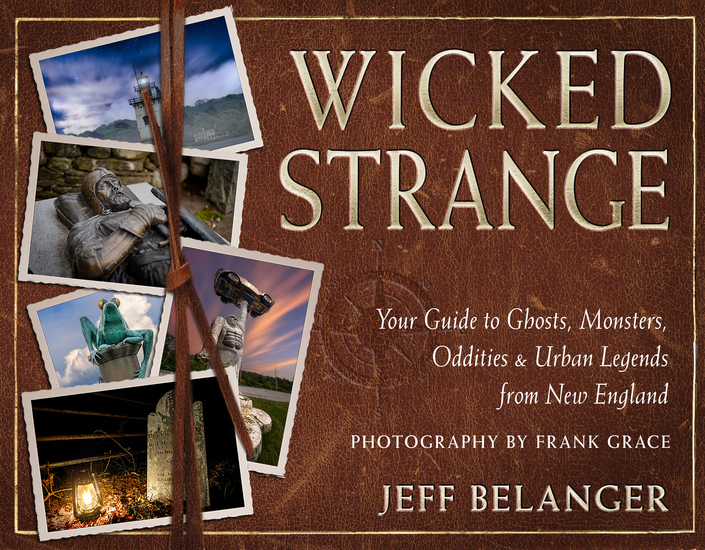
  • Wicked Strange - Your Guide to Ghosts Monsters Oddities and Urban Legends from New England - cover

    Wicked Strange - Your Guide to...

    Jeff Belanger

    • 0
    • 0
    • 0
    Go legend hunting with explorer of the unexplained Jeff Belanger, visiting haunted places, where monsters lurk, and other roadside oddities. “Legends have always run deep in New England—thankfully, Jeff Belanger is here to uncover them and bring them to life. This collection of mysteries, secrets, and folklore from America’s birthplace is as illuminating as it is fascinating.” —Josh Gates, explorer, host of Discovery’s Expedition Unknown  Wicked Strange is a journey and a celebration of all the things that make New England like no other place on earth. In a time when so much of the world is becoming homogenized—as big-box stores and chain restaurants move in and so many communities lose their identity—we still have these legends. They belong to specific towns and streets. These are stories locals will share with you . . . if they trust you.   This travel guide takes readers on a journey to the strange and frequently unseen world that is often right under their noses. Covering numerous haunted places, environs where mysterious creatures have been spotted, areas where unusual events have happened, eccentric locals, and roadside oddities to explore, noted expert of the strange Jeff Belanger is your guide to all that’s local and strange. Haunted locations from all over New England are covered:  The Haunting of Conimicut Lighthouse—Warwick, Rhode Island  Maine’s Sistine Chapel—South Solon, Maine  Edith Wharton’s Haunted Mansion, The Mount—Lenox, Massachusetts  Emily’s Haunted Bridge—Stowe, Vermont  The Sleeping Giant—Hamden, Connecticut  The Haunted Mt. Washington Hotel—Bretton Woods, New Hampshire  New England is also full of monsters and devils that lurk in the woods, lakes, and seas. Explored are some of the best known and most obscure, including Lake Champlain’s Champ; the Cumberland Vampire of Rhode Island; Gloucester’s Sea Serpent; the Black Dog of West Peak in Meriden, Connecticut; and the Flying Moose of Maine.   Also covered are unusual events, such as UFO sightings (Connecticut’s UFO crash at Bantam Lake / Betty and Barney Hill’s UFO experience), and roadside oddities, such as the World’s Tallest Filing Cabinet (Burlington, VT), Boston’s Big Steaming Tea Kettle, and the literal Fork in the Road of Westport, MA. Wicked Strange takes you off the beaten path, revealing a hidden world right under your nose. Come journey through the towns, hamlets, and hills that hide the strangest of history. Uncover the wickedly strange.
    Mostra libro
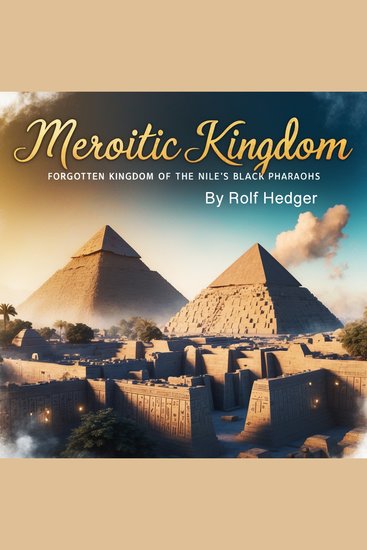
  • Meroitic Kingdom - Forgotten Kingdom of the Nile's Black Pharaohs - cover

    Meroitic Kingdom - Forgotten...

    Rolf Hedger

    • 0
    • 0
    • 0
    The Land of Kush, an ancient and powerful civilization, thrived along the banks of the Nile in what is now Sudan. Situated south of Egypt, Kush was a land of vast deserts, fertile floodplains, and rich natural resources. This region played a crucial role in shaping the history of northeastern Africa, serving as a bridge between central Africa and the Mediterranean world. The rise of the Kingdom of Kush was deeply influenced by its geography, trade networks, and interactions with neighboring civilizations. 
    The Nile River was the lifeline of Kush, providing water for agriculture, transportation, and trade. The river's annual flooding deposited nutrient-rich silt, allowing the Kushites to cultivate crops such as barley, wheat, and sorghum. This agricultural abundance supported growing populations and enabled the kingdom to expand its influence. The vast deserts surrounding Kush acted as natural barriers, protecting the civilization from invasions while also encouraging the development of trade routes that connected Kush to Egypt, the Red Sea, and beyond. 
    Kush's wealth was largely derived from its abundant natural resources, particularly gold, iron, and precious stones. Gold mines in Nubia were among the richest in the ancient world, making Kush a major supplier of gold to Egypt and other civilizations. Ironworking became another defining feature of Kushite industry, allowing the kingdom to produce advanced tools and weapons that strengthened its economy and military. The Kushites also controlled trade routes that transported luxury goods such as ivory, ebony, and incense, further enriching their civilization.
    Mostra libro
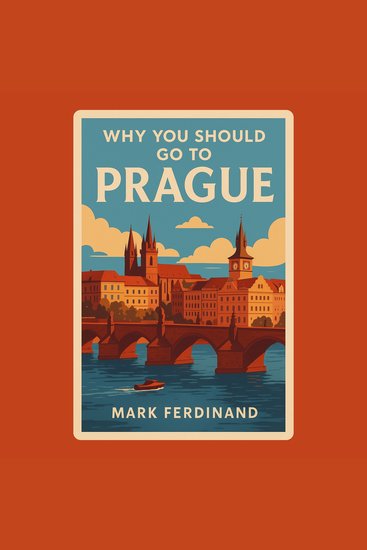
  • Why You Should Go to Prague - cover

    Why You Should Go to Prague

    Mark Ferdinand

    • 0
    • 0
    • 0
    Prague is a city straight out of a fairytale, where Gothic spires, Baroque palaces, and medieval bridges reflect in the gentle waters of the Vltava. Known as the “City of a Hundred Spires,” it’s a place of breathtaking beauty and captivating history, where every cobblestone street whispers a story. 
    Mark Ferdinand guides you through Prague’s most enchanting experiences: strolling across the iconic Charles Bridge at dawn, exploring the winding lanes of the Old Town, marveling at the grandeur of Prague Castle, and soaking in the charm of cafés and beer halls where tradition meets modern vibrancy. Whether you’re drawn by architecture, culture, or the romance of a city that feels timeless, Prague is a destination that will capture your heart.
    Mostra libro