Unisciti a noi in un viaggio nel mondo dei libri!
Aggiungi questo libro allo scaffale
Grey
Scrivi un nuovo commento Default profile 50px
Grey
Iscriviti per leggere l'intero libro o leggi le prime pagine gratuitamente!
All characters reduced
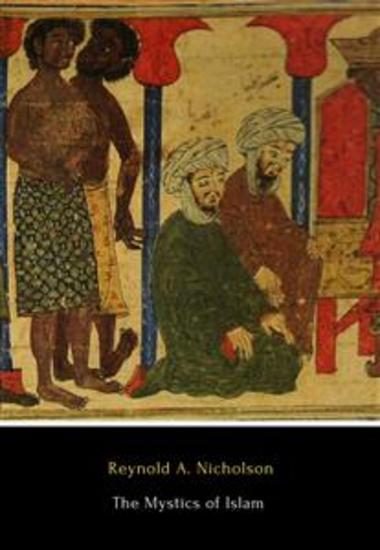
The Mystics of Islam - cover

The Mystics of Islam

Reynold A. Nicholson

Casa editrice: Logos Books

  • 0
  • 0
  • 0

Sinossi

Mystics of Islam is one of the earliest works to treat upon the subject of magic and practices within the Sufi context. From whirling dervishes to the concept of fana and far more, this spiritual work delves deep into the Islamic mystic tradition, examining the meaning of mystical knowledge and illumination and the path to ultimate union with God.Reynold Alleyne Nicholson was an eminent English orientalist, scholar of both Islamic literature and Islamic mysticism, and widely regarded as one of the greatest Rumi scholars and translators in the English language.
Disponibile da: 06/09/2024.

Altri libri che potrebbero interessarti

  • Observing Conflict Escalation in World Society - Ukraine's Maidan and Mali's Breakup - cover

    Observing Conflict Escalation in...

    Richard Bösch

    • 0
    • 0
    • 0
    How do conflicts escalate? This is one of the major questions in conflict research. To offer further answers, Richard Bösch follows a tripartite agenda: First, he develops a constructivist methodology for the study of conflict escalation embedded in a Luhmannian systems theoretical world society perspective. Bösch argues that conflicts can be observed as social systems and he looks at the process of conflict escalation by analysing communication. Second, this analysis offers two case studies: the Maidan protests in Ukraine 2013-2014 and Mali's crisis 2010-2012. Third, it gives insights on how systems theoretical research can be beneficial for Peace and Conflict Studies.
    Mostra libro
  • Carthage - Its Carnage Its History and Its Resistance to the Romans - cover

    Carthage - Its Carnage Its...

    Kelly Mass

    • 0
    • 0
    • 0
    Carthage was an ancient city-state located in what is now modern-day Tunisia. Founded by Phoenician settlers in the ninth century BC, Carthage would rise to become one of the most influential and powerful empires of the ancient Mediterranean world, only to be destroyed by the Romans in 146 BC. Despite its destruction, the Romans later lavishly rebuilt it, cementing its place in history. During its peak in the fourth century BC, Carthage was the capital of the Carthaginian Empire, a force that dominated the western Mediterranean with unmatched power and influence. 
    The origins of Carthage can be traced back to around 814 BC, when settlers from Tyre, a prosperous Phoenician city-state in modern Lebanon, arrived on the northern coast of Africa. Following the fall of Phoenicia to the Neo-Assyrian Empire in the seventh century BC, Carthage emerged as an independent entity. Over time, it expanded its influence, securing political and economic control over vast territories across the western Mediterranean. By 300 BC, Carthage controlled a sprawling empire that included the coastal regions of northwest Africa, southern Iberia (modern-day Spain, Portugal, and Gibraltar), and a series of key islands such as Sicily, Sardinia, Corsica, Malta, and the Balearic Islands. This expansion was achieved through a complex network of colonies, vassal states, and satellite territories. 
    Carthage’s strategic location played a significant role in its success. Its access to fertile agricultural lands and critical maritime trade routes allowed the city to thrive economically and become one of the wealthiest and most powerful centers of commerce in the ancient world. Carthage’s trade network extended across the Mediterranean and beyond, reaching as far as West Asia, West Africa, and northern Europe.
    Mostra libro
  • Consciousness - How Our Brains Turn Matter Into Meaning - cover

    Consciousness - How Our Brains...

    John Parrington

    • 0
    • 0
    • 0
    What is the material basis of the thoughts that occur inside our heads? 
     
    Where do imaginative, creative, or spiritual thoughts come from - can these really be the product of nerve impulses in the brain? And is the human mind radically different from that of other species, or is our uniqueness more superficial than real? 
     
    In this audiobook, Oxford biologist John Parrington proposes a radical new theory of human consciousness, arguing that a qualitative leap in consciousness occurred during human evolution as language and tool use transformed our brains. Rejecting outdated views of the brain as a hard-wired circuit diagram, he draws on the latest insights from neuroscience to show that meaning is created within our heads through a dynamic interaction of oscillating brain waves. 
     
    This new model of consciousness not only provides a material basis of our innermost thoughts but also explains why the mind can sometimes go wrong, causing deep mental distress.
    Mostra libro
  • The Way of Peace - cover

    The Way of Peace

    James Allen

    • 0
    • 0
    • 0
    Journey into the tranquil realms of "The Way of Peace" by James Allen, where timeless wisdom meets the soothing voice of narrator Dennis Logan. Immerse yourself in a meditative audiobook experience as Logan delicately unravels Allen's profound teachings on finding serenity and harmony in the midst of life's challenges. 
    In this transformative audiobook, Dennis Logan lends his melodic voice to articulate James Allen's eloquent prose, guiding listeners through the corridors of inner peace. Allen, a pioneer of the self-help genre, explores the transformative power of inner tranquility and the art of living a balanced and purposeful life. 
    Dennis Logan's narration adds a new dimension to Allen's work, creating an auditory sanctuary where every word is a stepping stone towards a more serene existence. Logan's measured delivery, coupled with the timeless wisdom of "The Way of Peace," invites listeners to reflect, rejuvenate, and embark on a journey of self-discovery.
    Mostra libro
  • Phonics & Spellings For Kids (Age 3-6) - Count and Spell Numbers (1-50) - cover

    Phonics & Spellings For Kids...

    Sophie Davis

    • 0
    • 0
    • 0
    This book is to help teach kids how to count and spell numbers in a fun way. 
    Do you want to Introduce your child to numbers and spellings? 
    Then scroll down and click the buy button now.
    Mostra libro
  • Chorology - Geographical Distributions: How Organisms Spread Across the Planet - cover

    Chorology - Geographical...

    Mike Crawford

    • 0
    • 0
    • 0
    Chorology, the study of the geographical distribution of organisms, offers crucial insights into how life is spread across the planet. This scientific discipline examines the patterns, processes, and factors that determine where species occur and why they are found in particular regions. From dense tropical rainforests to arid deserts and remote island ecosystems, chorology helps explain the complex relationships between organisms and their environments. Understanding these distributions is essential not only for ecological research but also for conservation efforts, climate change studies, and predicting future biodiversity trends. 
    The origins of chorology date back to early explorations and observations of naturalists who noted how plants and animals varied across regions. Over time, with advancements in biology, geography, and technology, chorology has developed into a distinct field of study. It now integrates concepts from ecology, evolution, geology, and climatology to provide a comprehensive understanding of how species disperse, adapt, and thrive in diverse environments. By identifying distribution patterns, chorologists can trace the historical movements of species, understand their evolutionary relationships, and predict how current and future environmental changes might alter these patterns. 
    One of the fundamental aspects of chorology is recognizing that species distributions are influenced by a combination of environmental, biological, and historical factors. Climate, topography, soil composition, and availability of resources play significant roles in determining where species can survive and reproduce. Additionally, interactions such as competition, predation, and symbiosis shape the presence or absence of species in particular areas.
    Mostra libro