Join us on a literary world trip!
Add this book to bookshelf
Grey
Write a new comment Default profile 50px
Grey
Subscribe to read the full book or read the first pages for free!
All characters reduced
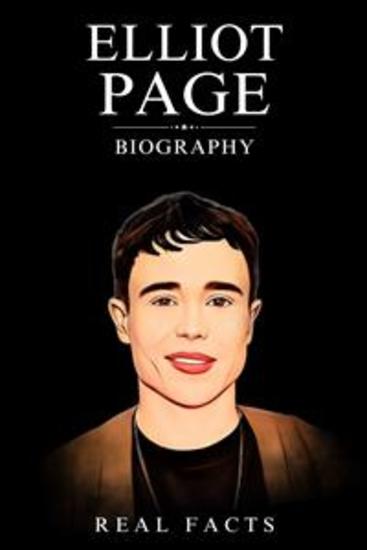
Elliot Page Biography - cover

Elliot Page Biography

Real Facts

Publisher: Real Facts

  • 0
  • 0
  • 0

Summary

Real Facts is back with another groundbreaking exploration into the life of Hollywood's enigma, Elliot Page. Uncover the truth behind the headlines and discover the real story that inspired millions.

In this eye-opening book, you'll learn:

* The Unfiltered Journey: Navigate the uncharted waters of Elliot Page's early life, tracing the roots of his passion for acting and the transformative moments that shaped his extraordinary career.

* Triumphs Beyond the Screen: Dive into the behind-the-scenes of Elliot's monumental role in "Juno," exploring the critical acclaim and the profound impact he made on the LGBTQ+ community.

* Challenges and Triumphs: Unveil the untold stories of personal struggles and triumphs, discovering how Elliot's journey towards self-discovery became a catalyst for authenticity and resilience.

* Blueprint for Success: Get an exclusive look at the blueprint that guided Elliot's diverse roles, directorial ventures, and his unwavering advocacy for LGBTQ+ rights and mental health.

Buckle up for an exhilarating ride through the life of Elliot Page, where every page is a revelation. Click the Buy Now Button to Get Your Copy Now!
Available since: 01/28/2024.

Other books that might interest you

  • Love for a Deaf Rebel - Schizophrenia on Bowen Island - cover

    Love for a Deaf Rebel -...

    Derrick King

    • 0
    • 0
    • 0
    Love for a Deaf Rebel introduces readers to Pearl, a vivacious Canadian born into a silent world. With pathos and nostalgia, the hearing author recounts his roller-coaster ride with a deaf maverick, who, unknown to him, had paranoid schizophrenia. We follow their encounters through actual conversations written before the author learned sign language; we go on their motorcycle ride to Guatemala; we watch as the happy couple moves to Bowen Island, a community with just three paved roads, where Pearl and the author marry and build their dream home and hobby farm. They encounter one obstacle after another while building their life together as Pearl’s perception of reality—and, crucially, their perception of each other—begins to change. There are other books about schizophrenia in the family, such as Hidden Valley Road, and deaf–hearing relationships, such as Children of a Lesser God, but none that tells the true story of a woman who struggled with both disabilities, and her final tumultuous romance. 
      
    “The turn in events blind-sided me, and the tragedy of the situation made me realise what a privilege and a responsibility I had to convey your thoughts and words as well as possible. I found the book deeply personal and raw, a wonderful window into the world of the deaf. I found my hands moving involuntarily whenever I was voicing deaf characters. As things started to fall apart, I was deeply moved by how personal your account of that time was. By the end of the book, I was choking back my tears and having to re-record lines as I found my voice cracking on the recording. Thank you for trusting me to bring your book, and your journey, to audio.”—Joe Vaz, Narrator
    Show book
  • Showa Era - Empire War and the Post-War Transformation of Japan - cover

    Showa Era - Empire War and the...

    Rolf Hedger

    • 0
    • 0
    • 0
    The Showa Era began on December 25, 1926, with the ascension of Emperor Hirohito following the death of his father, Emperor Taisho. This period marked a critical turning point in Japan’s history, as the nation transitioned from the political turbulence of the Taisho democracy to a time of increasing militarism and nationalist sentiment. Although the early years of the Showa Era were characterized by economic struggles and political instability, they also set the stage for Japan’s dramatic expansion and eventual involvement in global conflict. 
    Emperor Hirohito’s rise to the throne was met with both hope and uncertainty. Many saw him as a symbol of continuity and strength, while others were concerned about the growing influence of the military in governmental affairs. Unlike his father, whose reign was defined by a parliamentary democracy, Hirohito’s early years as emperor witnessed the gradual erosion of democratic institutions. The shift toward a more authoritarian government was driven by widespread dissatisfaction with the parliamentary system and the belief that Japan needed strong leadership to navigate domestic and international challenges. 
    One of the most pressing issues Japan faced at the beginning of the Showa Era was economic instability. The global economy had already begun to weaken, and in 1929, the Wall Street Crash sent shockwaves through Japan’s financial system. The economic downturn led to mass unemployment, factory closures, and widespread poverty, exacerbating social tensions. Farmers, who made up a significant portion of Japan’s population, suffered greatly as the price of rice plummeted, leading to rural hardships that fueled growing resentment toward the government. In response, nationalist and ultraconservative factions gained popularity, advocating for territorial expansion as a means to secure resources and economic stability.
    Show book
  • The Darién Gap - A Reporter's Journey through the Deadly Crossroads of the Americas - cover

    The Darién Gap - A Reporter's...

    Belén Fernández

    • 0
    • 0
    • 0
    The narrow Darién Gap, the only land bridge connecting South and Central America, encompasses a spectacularly hostile jungle, covered in steep mountains, dense rainforests, and flood-prone marshes. Known in Spanish as el infierno verde, or “the green hell,” it is one of the most inhospitable places in the world. Its terrain is too treacherous for roads, yet hundreds of thousands of refuge seekers contend with its horrors every year in the hopes of reaching the United States, still some three thousand miles away. And of the countless who set out for the border, an untold number never arrive. In this book, journalist Belén Fernández travels through the Darién Gap to report on the dehumanizing and deadly stretch of land that has become a mass graveyard for migrants. Fernández’s journey brings her into contact with refuge seekers, people smugglers, law enforcement officials, and many more whose stories bring life to a place overwhelmingly associated with death. Combining history, on-the-ground reporting, travelogue, memoir, and searing politico-economic analysis, she shines light on a largely made-in-the-USA crisis that has come to define our modern era. 
    Show book
  • The Jew - Turgenev's heartbreaking story gives us a rare insight into anti-semitism in Russian society - cover

    The Jew - Turgenev's...

    Ivan Turgenev

    • 0
    • 0
    • 0
    Ivan Sergeyevich Turgenev was born on 9th November 1818 in Oryol, Russia to parents from the nobility.  He and his two brothers were raised by their mother on the family estate.  Surrounded by foreign governesses he became fluent in French, German, and English.  Their father spent little time with them and this undoubtedly had an effect on him and his brothers.  When he was nine the family moved to Moscow to give their children a better education. 
     
    Turgenev studied for a year at the University of Moscow and then at the University of St Petersburg to study Classics, Russian literature, and philology.  During that time his father died from kidney stone disease.  In 1838 Turgenev studied philosophy and history at the University of Berlin for 3 years before returning to St Petersburg for his master's. 
     
    He started his career with the Russian Civil Service and it was only in 1852, after several earlier publications, that he made his name with his short story collection, ‘A Sportsman's Sketches’, based on his observations of peasant life and nature. 
      
    That same year he wrote an obituary for Nikolai Gogol: "Gogol is dead!... What Russian heart is not shaken by those three words?... He is gone, that man whom we now have the right (the bitter right, given to us by death) to call great."  The St Petersburg censor banned publication but the Moscow censor allowed it.  He was dismissed but Turgenev was held responsible and imprisoned for a month, and then exiled to his country estate.  
     
    Along with many other intellectuals Turgenev left Russia and settled in Paris in 1854.  During this period he wrote his finest stories and four novels.  
     
    Alexander II ascended the Russian throne in 1855, and the political climate relaxed.  Turgenev returned home.  
     
    ‘Fathers and Sons’, Turgenev's most famous and enduring novel, appeared in 1862. Its leading character is considered the first ‘Bolshevik’ in Russian literature. But the hostile reaction prompted Turgenev's decision to again leave Russia.  
     
    His health declined during his later years.  In January 1883, an aggressive malignant tumor was removed but by then it had metastasized in his upper spinal cord, causing him intense pain in his final few months of life.  
     
    Ivan Turgenev died on 3rd September 1883 of a spinal abscess, a complication of the metastatic liposarcoma, in his house near Paris.  He was buried in St Petersburg.  
     
    In ‘The Jew’ Turgenev explores a subject that is often treated abrasively by Russian authors.  In this heartbreaking tale an officer is begged by a Jew to help him.  He is even prepared to offer, with tragic consequences, a young girl as part of the bargain.
    Show book
  • Unchained Minds - Frederick Douglass And The Fight For African American Education - cover

    Unchained Minds - Frederick...

    Davis Truman

    • 0
    • 0
    • 0
    This audiobook is narrated by an AI Voice.   
    *Unchained Minds: Frederick Douglass and the Fight for African American Education* delves into the extraordinary life of Frederick Douglass, a man who defied the shackles of slavery through the transformative power of literacy. Born into bondage, Douglass dared to learn what was forbidden: the ability to read and write. This audacious act set him on a path to freedom and made him one of his time's most influential African American voices. 
    This book examines Douglass's relentless pursuit of education as a means of liberation, not just for himself, but for all African Americans. It examines how Douglass's passion for learning fueled his activism and unyielding belief that education was the key to overcoming the horrors of slavery and achieving true equality.  
    *Unchained Minds* is a biography and a powerful testament to the enduring belief that education is the cornerstone of freedom. This compelling account of Frederick Douglass's life and his fight for educational equality will inspire readers to reflect on the transformative power of knowledge and the ongoing fight for justice.
    Show book
  • The Importance of Not Being Ernest - A Writing Life with an Uninvited Guest - cover

    The Importance of Not Being...

    Mark Kurlansky

    • 0
    • 0
    • 0
    An Ernest Hemingway Biography Like No Other 
     
    Discover Hemingway’s biography through the eyes of a fellow author and journalist. New York Timesbestselling author of Salt Mark Kurlansky turns his historical eye to the life of Ernest Hemingway. Sometimes funny, sometimes sad, The Importance of Not Being Ernest shows the huge shadow Hemingway casts.  
     
    The perfect gift for writers. By a series of coincidences, Mark Kurlansky’s life has always been intertwined with Ernest Hemingway's legend, starting with being in Idaho the day of Hemingway’s death. The Importance of Not Being Ernest explores the intersections between Hemingway’s and  
    Kurlansky’s lives, resulting in creative accounts of two inspiring writing careers. Travel the world with Mark Kurlansky and Ernest Hemingway in this personal memoir, where Kurlansky details his ten years in Paris and his time as a journalist in Spain—both cities important to Hemingway’s adventurous life and prolific writing.  
     
    Key West, Havana, and Chicago. Get to know the extraordinary people he met there—those who had also fallen under the Hemingway spell, including a Vietnam veteran suffering from the same syndrome the author did, two winners of the Key West Hemingway look-alike contest, and the man in Idaho who took Hemingway hunting and fishing. 
     
    In this unique gift for writers, find: 
    • A memoir full of entertaining and illuminative stories 
    • Little-known historical facts about Hemingway’s life 
    • Anecdotes about those who suffer from what the Kurlansky calls “hemitis”
    Show book