Unisciti a noi in un viaggio nel mondo dei libri!
Aggiungi questo libro allo scaffale
Grey
Scrivi un nuovo commento Default profile 50px
Grey
Iscriviti per leggere l'intero libro o leggi le prime pagine gratuitamente!
All characters reduced
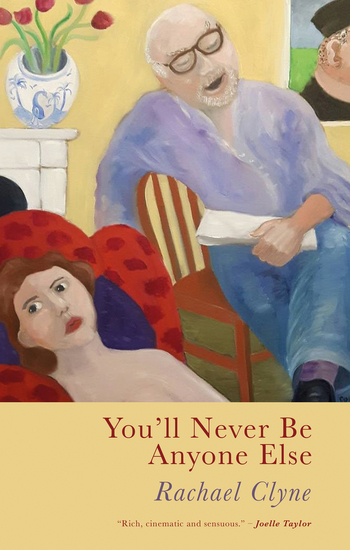
You'll Never Be Anyone Else - cover

You'll Never Be Anyone Else

Rachael Clyne

Casa editrice: Seren

  • 0
  • 0
  • 0

Sinossi

Rachael Clyne's You'll Never Be Anyone Else presents a direct and assured voice, demanding that we think carefully about what it takes to reconcile being different. She advises the reader to 'Stop drinking the poison / labelled "Hate me." / It's that simple. I didn't say easy.' Clyne also has an alter-ego "Girl Golem" reminiscent of a superhero but based on the mythical man made from clay and spells to protect Jewish people from persecution. Through this empowering persona, Clyne opens up an exploration of Jewish and lesbian identity. Surveying attitudes in the present day and in the past, these poems explore migrant heritage, sexual identity, domestic violence and ageing.
The stories of this collection are often poignant, like the retired tailor in 'Mr Shopping Trolley', who takes to shearing newspapers, so that his scissor fingers remain busy. Or in 'Leaving Odesa', the speaker revisits the prison where – under Tsarist law – her grandmother (even as an infant) had to serve out the remainder of her father's sentence after he died.Clyne's imagery is razor sharp in its precision, as she deftly weaves different poetic forms and wildly versatile subject matter, even interspersing Yiddish phrases, as part of her own unique poetic idiolect. Take the hilarious poem, 'Jew-a-lingo (Code-switching for Jews 1970 edition)' which emphasizes Jewish humour as a staple survival strategy. You'll Never Be Anyone Else offers a unique story of survival and empowerment told in spite of experiences of violence and prejudice – this from a poet who has spent a lifetime learning self-acceptance and as a psychotherapist helping others to do similar.  Treating even dark subjects with playful wit and colourful imagery, Clyne is a distinctive new voice with a powerful message about self-acceptance.
"Rich, cinematic and sensuous." – Joelle Taylor
'With its impressive scope, ranging from the Holocaust, nuclear fallout, and immigration to domestic life and childhood, Rachael Clyne's Girl Golem thoughtfully explores our tactics for survival: in resistance, in the imagination, in mutual care. In these evocative, spirited poems, Clyne implicitly argues for faith in our own humanity and for the richness of difference.' - Carrie Etter
'Rachael Clyne's poetry, full of physicality and dramatic openness, accumulates a series of tensions within her Sixties free spirited identity and Jewish heritage. Attentive to narrative angle and migrant experience, she allows characters to emerge over generations showing how they mould into a new cultural identity. In its quiet and carefully crafted ways, Girl Golem shows the sweep of history and the importance of a tolerant county that offers salvation to those persecuted abroad.' - David Caddy
'Clyne's poems inhabit a shadowy and uncomfortable space where all is not as it seems – people become pieces of furniture and rooms have sinister personalities. A complex work of many layers – these thought provoking and deftly crafted poems are a playful and powerful examination of identity, sexuality, heritage and family dynamic. Clyne skilfully conveys a sense of disquiet and alienation, a sense of being other, both within the dysfunctions of the family, but also within the context of the wider world.' - Julia Webb
Rachael Clyne is a psychotherapist from Glastonbury. Her prizewinning collection Singing at the Bone Tree (Indigo Dreams) concerns human beings' relationship with nature, and she is a climate activist. Her pamphlet Girl Golem (4word) concerns her migrant background and sense of otherness. A frequent reader at poetry events and festivals, she has been published in magazines like Shearsman, The Rialto, and The Interpreter's House. 
Disponibile da: 24/04/2023.
Lunghezza di stampa: 72 pagine.
Altri libri che potrebbero interessarti

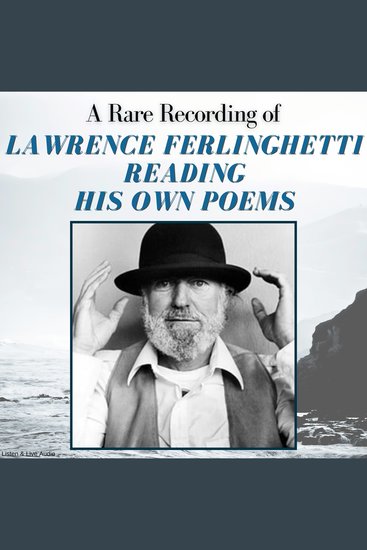
  • A Rare Recording of Lawrence Ferlinghetti Reading His Own Poems - cover

    A Rare Recording of Lawrence...

    Lawrence Ferlinghetti

    • 0
    • 0
    • 0
    Lawrence Monsanto Ferlinghetti (March 24, 1919 - February 22, 2021), born in Yonkers, NY, was an American poet, painter, social activist, and co-founder of City Lights Booksellers & Publishers. An author of poetry, translations, fiction, theatre, art criticism, and film narration, Ferlinghetti was best known for his second collection of poems, A Coney Island of the Mind (1958), which has been translated into nine languages and sold over a million copies. The following recording includes Ferlinghetti reading the poems, Baseball Canto, Travels in America Deserta, See It Was Like This When, and Underwear.
    Mostra libro
  • The Snail House (NHB Modern Plays) - cover

    The Snail House (NHB Modern Plays)

    Richard Eyre

    • 0
    • 0
    • 0
    Sir Neil Marriot had a 'good pandemic', becoming familiar to millions from his TV appearances as a government medical advisor. His service even earned him a knighthood, and he is now rewarding himself with a lavish birthday party.
    But, amidst the oak panelling, the champagne and the silver service, his family are at one another's throats again, and he thinks there's something familiar – and somehow unsettling – about one of the catering staff...
    The Snail House is a play about how the past impacts on the present, and how overconfidence can have disastrous consequences. Written and directed by Richard Eyre, it premiered at Hampstead Theatre, London, in September 2022.
    Mostra libro
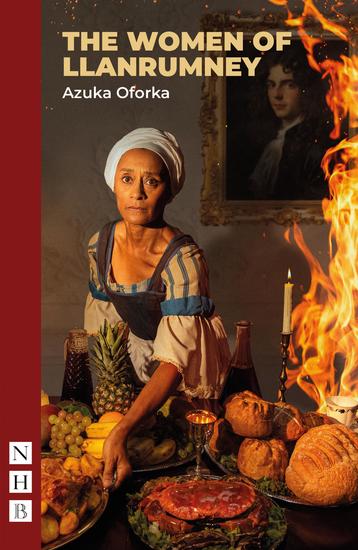
  • The Women of Llanrumney - cover

    The Women of Llanrumney

    Azuka Oforka

    • 0
    • 0
    • 0
    Llanrumney plantation. Saint Mary Parish, Jamaica. 1765.
    Annie and Cerys are enslaved by the Morgan family from Wales. When Elizabeth Morgan is faced with the loss of her plantation, the slaves' future hangs in the balance.
    With a storm of rebellion brewing, Annie does everything she can to secure her future. But sooner or later she will have to face up to the horror and trauma all around her, including her own.
    Azuka Oforka's play The Women of Llanrumney is a powerful, searing drama that explores the impact of slavery and the lives of women who experienced it – those who benefitted from it, those who were brutalised by it and those who fought to destroy it. It premiered at Sherman Theatre, Cardiff, in 2024, directed by Patricia Logue.
    Azuka Oforka was the joint winner of the Best Writer award at The Stage Debut Awards 2024.
    Mostra libro
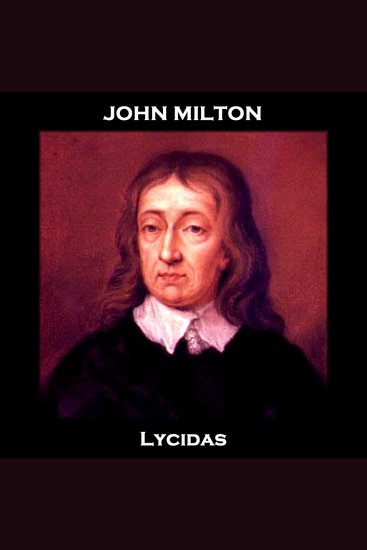
  • Lycidas - Much shorter poem from the famed author of Paradise Lost - cover

    Lycidas - Much shorter poem from...

    John Milton

    • 0
    • 0
    • 0
    John Milton was born in Bread Street, London, on December 9th, 1608.  His early years were privately tutored before gaining a place at St Paul’s School and in 1625 he matriculated at Christ's College, Cambridge, earning a BA in 1629 and an MA in 1632. At Cambridge he had developed a reputation for poetic skill but also experienced alienation from his peers and university life as a whole.  
    The next 6 years were spent in private study. He read both ancient and modern works of theology, philosophy, history, politics, literature and science, in preparation for a poetical career.  Milton mastered Latin, Greek, Hebrew, French, Spanish, and Italian. To these he would add Old English (whilst researching his History of Britain) and also acquired more than a passing acquaintance in Dutch.  
    Although he was studying, some of his poetry from this time is remarkable; L’Allegro and Il Penseroso in 1631 and Lycidias in 1638. 
    In May 1638, Milton embarked upon a 15 month tour of France and Italy. These travels added a new and direct experience of artistic and religious traditions, especially Roman Catholicism.  He cut the journey short to return home during the summer of 1639 because of what he claimed were "sad tidings of civil war in England."  
    Once home, Milton wrote prose tracts against episcopacy, in the service of the Puritan and Parliamentary cause.  
    He married 16-year-old Mary Powell in June 1643 but she left him after only a few months during which he wrote and published several writings on divorce. Mary did return after 3 years and their life thereafter seemed harmonious.  Milton received a hostile response to the divorce tracts and drove him to write Areopagitica, his celebrated attack on pre-printing censorship.  
    With the parliamentary victory in the Civil War, Milton wrote The Tenure of Kings and Magistrates (1649) which defended popular government and implicitly sanctioned the regicide which led to his appointment as Secretary for Foreign Tongues by the Council of State.  
    On 24 February 1652 Milton published his Latin defense of the English People, Defensio Pro Populo Anglicano, also known as the First Defense. Milton's Latin prose and intellectual sweep, quickly gained him a European reputation.  
    Tragically his first wife, Mary, died on May 5th, 1652 following the birth of their fourth child.   The following year Milton had become totally blind, probably due to glaucoma.  He then had to dictate his verse and prose to helpers, one of whom was the poet Andrew Marvell.  
    He married again to Katherine Woodcock but she died in February 1658, less than four months after giving birth to a daughter, who also tragically died.  
    Though Cromwell’s death in 1658 caused the English Republic to collapse Milton stubbornly clung to his beliefs and in 1659 he published A Treatise of Civil Power, attacking the concept of a state-dominated church. Upon the Restoration in May 1660, Milton went into hiding for his life. An arrest warrant was issued and his writings burnt. He re-emerged after a general pardon was issued, but was nevertheless arrested and briefly imprisoned before influential friends, such as Marvell, now an MP, intervened 
    His third marriage was to Elizabeth Mynshull. Despite a 31-year age gap, the marriage seemed happy and Milton spent the remaining decade of his life living quietly in London, apart from a short spell in Chalfont St. Giles, during the Great Plague of London.  
    Milton was to now publish his greatest works, which had been gestating for many years.  Paradise Lost, perhaps the classic English Epic poem was originally published in 10 books in 1667.  This was followed by Paradise Regained and Samson Agonistes in 1671.  Because of his anti-monarchy views their reception was muted but over the centuries since Milton has established himself as second only to Shakespeare.  He died of kidney failure on November 8th, 1674 and was buried in the church of St Giles Cripplegate.
    Mostra libro
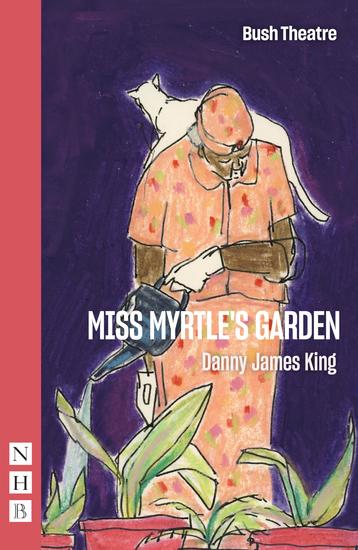
  • Miss Myrtle's Garden - cover

    Miss Myrtle's Garden

    Danny James King

    • 0
    • 0
    • 0
    'I don't visit the past. The past visits me.'
    The sharp-tongued Miss Myrtle is trying to manage her unkempt garden in a rapidly changing neighbourhood. Her grandson Rudy and his 'close friend' Jason need a place to stay, and local drunk Eddie keeps relieving himself against her garden wall.
    When Rudy starts delving into the past, Myrtle resists – all she wants is some peace and quiet. But as her brain begins to play up, far more complicated questions about grief, love and understanding demand her attention, and she's running out of time.
    Miss Myrtle's Garden is a wonderfully warm and witty exploration of how acknowledging the past helps us live life in the present. It was written by Danny James King and first performed at the Bush Theatre, London, in 2025, directed by Taio Lawson.
    Mostra libro
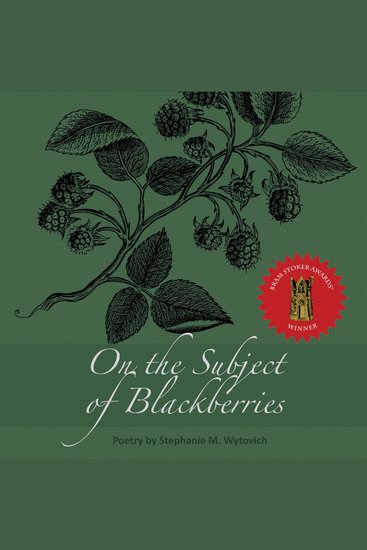
  • On the Subject of Blackberries - cover

    On the Subject of Blackberries

    Stephanie M. Wytovich

    • 0
    • 0
    • 0
    Winner of the Bram Stoker Award for Superior Achievement in Poetry 
    Welcome to the garden. Here we poison our fruits, pierce ourselves with thorns, and transform under the light of the full moon. Mad and unhinged, we fall through rabbit holes, walk willingly into fairy rings, and dance in the song of witchcraft, two snakes around our ankles, the juice of berries on our tongues. 
    Inspired by Shirley Jackson’s We Have Always Lived in the Castle, these poems are meditations on female rage, postpartum depression, compulsion, and intrusive thoughts. They pull from periods of sleep deprivation, soul exhaustion, and nightmarish delusions, and each is left untitled, a nod to the stream-of-conscious mind of a new mother. 
    Using found poetry and under the influence of bibliomancy, Wytovich harnesses the occult power of her imagery and words and aligns it with a new, more vulnerable, darkness. These pieces are not only visions of the madwoman in the attic, but ghostly visitations that explore the raw mental torture women sometimes experience after giving birth. 
    This collection heals as much as it scars, and is an honest look at how trauma seeps into the soil of our bodies. Her poems are imagined horrors, fictional fears, and all the unspoken murmurs of a mind lost between reality and dream. What she leaves in her wake is nothing short of horror—the children lost, the garden dead, the women feral, ready to pounce.
    Mostra libro