Unisciti a noi in un viaggio nel mondo dei libri!
Aggiungi questo libro allo scaffale
Grey
Scrivi un nuovo commento Default profile 50px
Grey
Iscriviti per leggere l'intero libro o leggi le prime pagine gratuitamente!
All characters reduced
Creative Unity - cover

Creative Unity

Rabindranath Tagore

Casa editrice: Delhi Open Book

  • 0
  • 0
  • 0

Sinossi

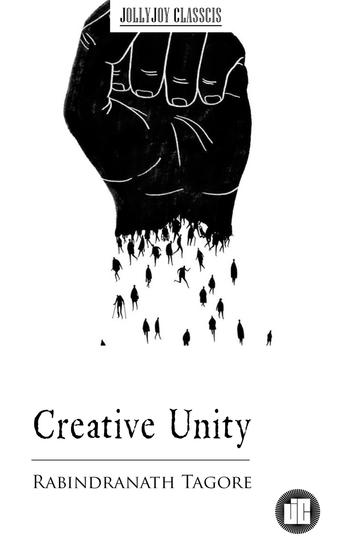
Creative Unity Rabindranath Tagore - Creative Unity by Rabindranath Tagore consists of ten lectures that the author gave in 1922Rabindranath Tagore (1861-1941) who was a gifted Bengali Renaissance man, distinguishing himself as a philosopher, social and political reformer and a popular author in all literary genres. He was instrumental in an increased freedom for the press and influenced Gandhi and the founders of modern India. He composed hundreds of songs which are still sung today as they include the Indian and Bangladeshs national anthems. His prolific literary life has left a legacy of quality novels, essays and in this volume his shorter works. Gitanjali, one of his most famous works, earned him the distinction of being the first Asian writer to receive the Nobel Prize in Literature in 1913
Disponibile da: 28/05/2024.
Lunghezza di stampa: 131 pagine.
Altri libri che potrebbero interessarti

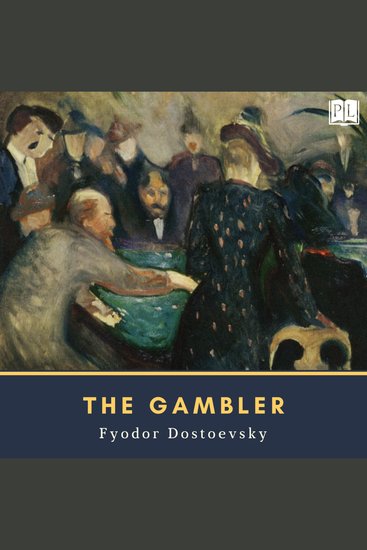
  • The Gambler - cover

    The Gambler

    Fyodor Dostoevsky

    • 0
    • 0
    • 0
    In the fictional town of Roulettenberg, Germany, a Russian tutor to the children of a seemingly wealthy general is enticed to play roulette at the local casino. First playing for others (including his beloved Polina Alexandrovna), he soon gets a taste for the experience himself, which can lead in only one direction.
    Dostoevsky wrote this story based at least partially on personal experience. After his second marriage (and the successful publication of Crime and Punishment) he and his wife took a honeymoon in Baden-Baden, where Dostoevsky lost large quantities of money at the roulette table. To get his financial situation back to normal he then set up a wager with his publisher: they'd have the right to publish his work for free for nine years if he couldn't deliver this novel by November 1866. He succeeded in this, and was able to move on to writing The Idiot.
    The Gambler has been translated to screen and radio, and was even turned into an opera by Prokofiev. This edition is the 1915 translation by C. J. Hogarth.
    Mostra libro
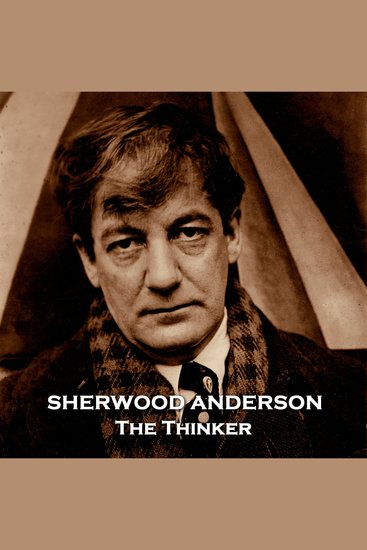
  • The Thinker - From their pens to your ears genius in every story - cover

    The Thinker - From their pens to...

    Sherwood Anderson

    • 0
    • 0
    • 0
    Sherwood Anderson was born on 13th September 1876 in Camden, Ohio. 
    When his father’s business failed the family was forced to move on a regular basis before finally settling in Clyde, Ohio.   
    Anderson, one of 7 children, left school at 14 to take a number of jobs to help with the family finances. These were difficult years. 
    He moved to Chicago in search of opportunities before joining the Army for the US-Spanish War of 1898.  He then entered Wittenberg Academy in Springfield, Ohio to complete his education before moving back to Chicago to take up a writing job. 
    In 1904 he married Cornelia Lane, her family had resources and Anderson was keen, with this family backing, to run a business. 
    The early years of their marriage produced 3 children but a nervous breakdown in 1907 and another in 1912, despite his success as a business entrepreneur, resulted in him abandoning his family and deciding that a literary career would be best for him.   
    A move back to Chicago resulted in a job in advertising, a divorce from Cornelia and marriage to Tennessee Mitchell.  
    That same year his first book ‘Windy McPherson’s Son’ was released and in 1919, his most famous book, ‘Winesburg, Ohio’, a collection of short stories about life in an Ohio town was released. 
    Anderson continued to write short stories, novels and non-fiction but his only true bestseller came with ‘Dark Laughter’.  His influence on writers that followed, from Faulkner to Hemingway, was immense. He also married a further two times.   
    Sherwood Anderson died in in Colón, Panama, on the 8th March, 1941. He was 64. An autopsy revealed that a swallowed toothpick had resulted in peritonitis. 
    His headstone epitaph reads ‘Life, Not Death is the Great Adventure.’
    Mostra libro
  • Rooms - From their pens to your ears genius in every story - cover

    Rooms - From their pens to your...

    Gertrude Stein

    • 0
    • 0
    • 0
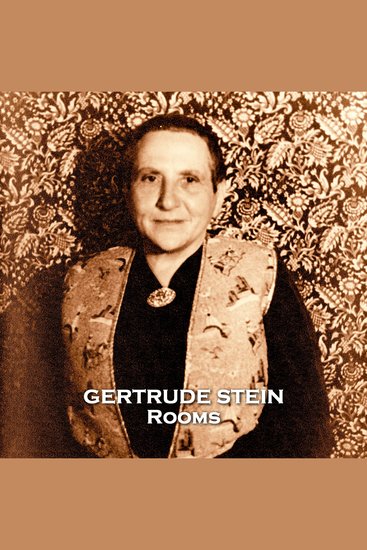
    The bookshelves of American literature are incredible collections that have gathered together centuries of very talented authors.  From this continent their fame spread and whilst among their number many are now forgotten or neglected their talents endure.  Among them is the seminal, often lauded yet equally divisive figure and talents of Gertrude Stein.
    Mostra libro
  • Thérèse Raquin - A Novel of the Paris Passages - cover

    Thérèse Raquin - A Novel of the...

    Émile Zola

    • 0
    • 0
    • 0
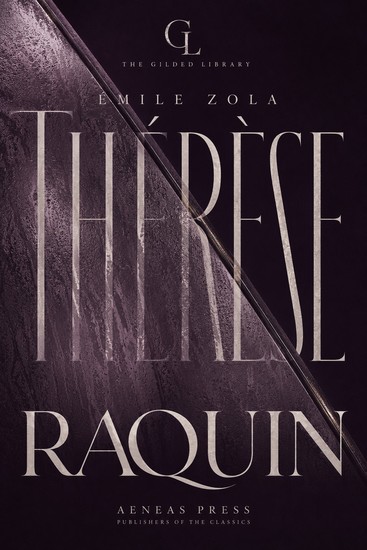
    A young wife, her ailing husband and his friend fall into an affair in a dark shop off a Paris passage. What they do next binds them together far more tightly than the affair did, and the rest of the novel is the two of them unable to leave the room. Zola called it a study of temperaments and refused his characters any comfort. Gaslit passages, riverside mornings and shuttered interiors fill the paintings of this Gilded Library volume, whose decoration is shop counter, cat, skiff and looking glass; Edward Vizetelly's 1901 preface and afterword are included.
    Mostra libro
  • Four Beasts in One - The Homo-Cameleopard - cover

    Four Beasts in One - The...

    SAMPI Books, Edgar Allan Poe

    • 0
    • 0
    • 0
    Edgar Allan Poe's short story "Four Beasts in One - The Homo-Cameloopard" tells the story of Antiochus Epiphanes, an extravagant monarch who parades a bizarre being through the streets of Antioch, reflecting on the nature of humanity and monstrosity.
    Mostra libro
  • Superiority - cover

    Superiority

    Arthur C. Clarke

    • 0
    • 0
    • 0
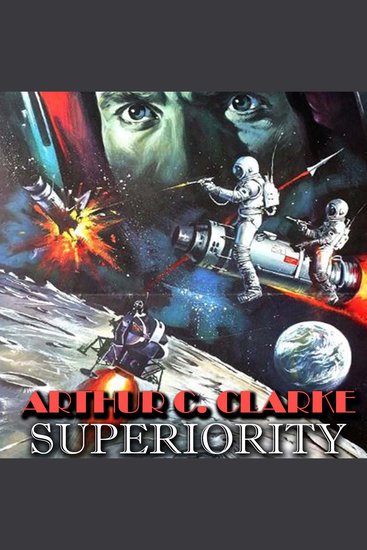
    "Superiority" is a science fiction short story by Arthur C. Clarke, first published in 1951. It depicts an arms race, and shows how the side which is more technologically advanced can be defeated, despite its apparent superiority, because of its own organizational flaws and its willingness to discard old technology without having fully perfected the new.
    Mostra libro