Unisciti a noi in un viaggio nel mondo dei libri!
Aggiungi questo libro allo scaffale
Grey
Scrivi un nuovo commento Default profile 50px
Grey
Iscriviti per leggere l'intero libro o leggi le prime pagine gratuitamente!
All characters reduced
Shanghai Gone - Domicide and Defiance in a Chinese Megacity - cover

Shanghai Gone - Domicide and Defiance in a Chinese Megacity

Qin Shao

Casa editrice: Stackpole Books

  • 0
  • 0
  • 0

Sinossi

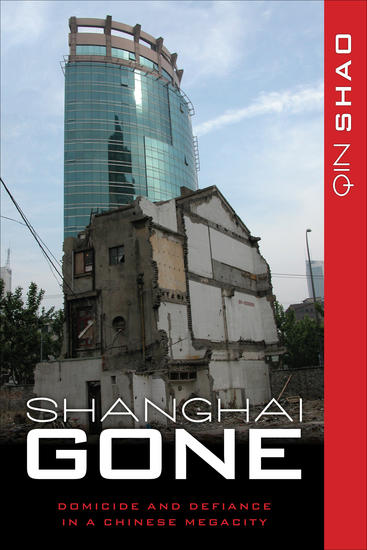
“One of the best accounts of the reality of gentrification and urban development in China . . . grounded with solid historical, ethnographic and legal evidence” (Urban Studies). In recent decades, the centuries-old city of Shanghai has been demolished and rebuilt into a gleaming megacity. With its world famous skyscrapers, it now ranks with New York and London as a hub of global finance. But that transformation has come at a grave human cost. In Shanghai Gone, Qin Shao applies the concept of domicide—the eradication of a home against the will of its dwellers—to the sweeping destruction of neighborhoods, families, and life patterns that made way for the new Shanghai.   Shao gives voice to the holdouts and protesters who resisted domicide and demanded justice. She follows, among others, a reticent kindergarten teacher turned diehard petitioner; a descendant of gangsters and squatters who has become an amateur lawyer for evictees; and a Chinese Muslim who has struggled to recover his ancestral home in Xintiandi, an infamous site of gentrification dominated by a well-connected Hong Kong real estate tycoon.   Highlighting the wrenching changes spawned by China’s reform era, Shao vividly portrays the corrupt and rapacious pursuit of growth and profit, the personal wreckage it has left behind, and the enduring human spirit it has unleashed.
Disponibile da: 14/06/2023.
Lunghezza di stampa: 421 pagine.

Altri libri che potrebbero interessarti

  • Confessions of a Former Ivy League Rebel - Discover 'Confessions of a Former Ivy League Rebel' with immersive audio designed for maximum impact Listen and transform! - cover

    Confessions of a Former Ivy...

    Thane Whitaker

    • 0
    • 0
    • 0
    Confessions of a Former Ivy League Rebel 
    ⭐⭐ Simplified Guide & Explanations Included ⭐⭐ 
    Are you looking to progress in your career and solidify your knowledge by embracing authenticity and discovering untold truths? 
    Seeking a comprehensive guide that provides all necessary elements to challenge norms and embrace authenticity? 
    Your search ends here! 
    This guide serves as your definitive companion for deepening your understanding, applying your skills, and engaging in hands-on exercises. With this, you're geared for success. 
    Updated for the Challenge Norms 2024-2025 Structure. 
    Key features of this enriched guide: 
    - Profound insights about challenging norms and embracing authenticity 
    - Detailed explanation of discovering untold truths 
    - Fruitful strategies for preparation and tackling exam challenges 
    Our guide distinguishes itself through comprehensive coverage, which is essential for your success. Concepts aren't merely skimmed; they are delved into with precision. 
    Please note that this guide is not affiliated with any official entity and is purely an independent resource for your benefit. 
    Designed with a clear structure and easy-to-understand language, our guide ensures smooth transitions between topics. Say goodbye to dense jargon and welcome clear, precise, and technically accurate content. 
    So, why wait? Click the BUY NOW button, secure your guide, and begin your journey to success with challenging norms and embracing authenticity!
    Mostra libro
  • Classic Literary Myths - Sacred and Legendary Texts (3 in 1) - cover

    Classic Literary Myths - Sacred...

    Odessa Nightshade

    • 0
    • 0
    • 0
    Enter a realm where ancient visions meet literary brilliance. Classic Literary Myths brings together three profound works that shaped humanity’s understanding of the divine, the afterlife, and the beginning of all things. These tales are not just myths—they are sacred echoes of how past civilizations viewed heaven, hell, and the birth of existence. 
    Explore The Book of Enoch, a mysterious text once lost to time, revealing celestial beings, heavenly secrets, and divine judgments. Then walk alongside Dante in The Divine Comedy, a powerful descent into Hell, climb through Purgatory, and rise into the realms of Paradise in one of literature’s most breathtaking spiritual journeys. Finally, discover The Myths of Creation, where diverse global traditions grapple with how the world began—from chaos, gods, or a spark of light.
    Mostra libro
  • Brain Healing and Trauma - cover

    Brain Healing and Trauma

    Brittany Forrester

    • 0
    • 0
    • 0
    Approximately 50 percent of the population will experience a traumatic event at some point. While reactions to trauma can vary widely, and not everyone will develop Post-Traumatic Stress Disorder(PTSD), trauma can change the brain in some predictable ways. With increased awareness, you can seek treatment to address your symptoms and learn skills that could rewire your brain for recovery. Knowing what’s going on can be immensely helpful because it may help you realize that you’re not crazy, irreversibly damaged, or the wrong person. Instead, you can think of a traumatized brain as one that functions differently due to traumatic events. And just as your brain changes in response to your past experiences with the world, it can also change in response to your future experiences. In other words, the brain is “plastic,” and you can change it.Depth or imaginal psychotherapy is highly effective in treating and assessing adult survivors of childhood abuse. Specifically, interventions that use dreams, symbols, metaphor, and expressive art techniques are deemed especially valuable as they address dissociatively based changes (affect regulation, sense of self, and diminished imagination).Specifically, this book proposes that prominent symptoms of Posttraumatic Stress Disorder (which will be further referred to as PTSD), such as changes in affect regulation, sense of self, and use of imagination, are better neurologically matched to therapeutic interventions that foster right-brain processes. By assessing specific depth psychological aspects of the individual’s shattered sense of self, a more focused and efficient treatment plan can be created sooner in the course of therapy.
    Mostra libro
  • Shiloh: The History of the First Major Battle in the Western Theater during the Civil War - cover

    Shiloh: The History of the First...

    Jonathan Gianos-Steinberg

    • 0
    • 0
    • 0
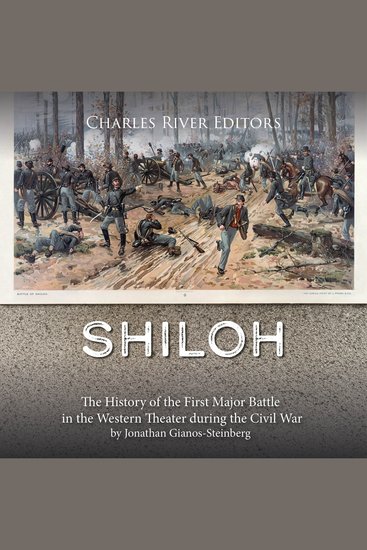
    After Union General Ulysses S. Grant captured Fort Henry and Fort Donelson in early 1862, Confederate General Albert Sidney Johnston, widely considered the Confederacy’s best general, concentrated his forces in northern Georgia and prepared for a major offensive that culminated with the biggest battle of the war to that point, the Battle of Shiloh. On the morning of April 6, Johnston directed an all out attack on Grant’s army around Shiloh Church, and though Grant’s men had been encamped there, they had failed to create defensive fortifications or earthworks. They were also badly caught by surprise. With nearly 45,000 Confederates attacking, Johnston’s army began to steadily push Grant’s men back toward the river. 
    The Battle of Shiloh lasted two days, but the battle over the battle had just begun. Grant’s army had just won the biggest battle in the history of North America, with nearly 24,000 combined casualties among the Union and Confederate forces. Usually the winner of a major battle is hailed as a hero, but Grant was hardly a winner at Shiloh. The Battle of Shiloh took place before costlier battles at places like Antietam and Gettysburg, so the extent of the casualties at Shiloh shocked the nation. Moreover, at Shiloh the casualties were viewed as needless; Grant was pilloried for allowing the Confederates to take his forces by surprise, as well as the failure to build defensive earthworks and fortifications, which nearly resulted in a rout of his army. Speculation again arose that Grant had a drinking problem, and some even assumed he was drunk during the battle. Though the Union won, it was largely viewed that their success owed to the heroics of General Sherman in rallying the men and Don Carlos Buell arriving with his army, and General Buell was happy to receive the credit at Grant’s expense.
    Mostra libro
  • The Fish That Ate the Whale - The Life and Times of America's Banana King - cover

    The Fish That Ate the Whale -...

    Rich Cohen

    • 0
    • 0
    • 0
    Named a Best Book of the Year by the San Francisco Chronicle and The Times-Picayune The fascinating untold tale of Samuel Zemurray, the self-made banana mogul who went from penniless roadside banana peddler to kingmaker and capitalist revolutionary  When Samuel Zemurray arrived in America in 1891, he was tall, gangly, and penniless. When he died in the grandest house in New Orleans sixty-nine years later, he was among the richest, most powerful men in the world. Working his way up from a roadside fruit peddler to conquering the United Fruit Company, Zemurray became a symbol of the best and worst of the United States: proof that America is the land of opportunity, but also a classic example of the corporate pirate who treats foreign nations as the backdrop for his adventures. Zemurray lived one of the great untold stories of the last hundred years. Starting with nothing but a cart of freckled bananas, he built a sprawling empire of banana cowboys, mercenary soldiers, Honduran  peasants, CIA agents, and American statesmen. From hustling on the docks of New Orleans to overthrowing Central American governments and precipitating the bloody thirty-six-year Guatemalan civil war, the Banana Man lived a monumental and sometimes dastardly life. Rich Cohen's brilliant historical profile The Fish That Ate the Whale unveils Zemurray as a hidden power broker, driven by an indomitable will to succeed.
    Mostra libro
  • Emile or On Education - cover

    Emile or On Education

    Jean-Jacques Rousseau

    • 0
    • 0
    • 0
    "Emile, or On Education" is a novel written by Jean-Jacques Rousseau and published in 1762. The book is a treatise on education and focuses on the development of a single individual, Emile, from infancy to adulthood. 
    Rousseau's novel is notable for its emphasis on natural education, or the idea that children should be allowed to learn through their own experiences and interactions with the world around them. The book is divided into five sections, each of which focuses on a different stage of Emile's life and the corresponding education he should receive. 
    In the first section, Rousseau argues that children should be allowed to develop naturally and that their education should be based on their own interests and abilities. He also emphasizes the importance of physical education and the need for children to learn through play. 
    In the second section, Rousseau discusses the importance of developing Emile's sense of morality and character, emphasizing the need for him to learn to be honest, courageous, and independent. 
    The third section focuses on Emile's intellectual education, including the importance of developing his reasoning abilities and critical thinking skills. 
    In the fourth section, Rousseau discusses Emile's social education, including his interactions with other people and the importance of developing his empathy and understanding of others. 
    Finally, in the fifth section, Rousseau discusses the importance of Emile's religious education and the role that religion should play in his life. 
    Overall, "Emile, or On Education" is a significant work in the history of educational philosophy, and it continues to be studied and debated by scholars and educators today.
    Mostra libro