Unisciti a noi in un viaggio nel mondo dei libri!
Aggiungi questo libro allo scaffale
Grey
Scrivi un nuovo commento Default profile 50px
Grey
Iscriviti per leggere l'intero libro o leggi le prime pagine gratuitamente!
All characters reduced
Poppyland - cover

Poppyland

D. J. Taylor

Casa editrice: Salt

  • 0
  • 0
  • 0

Sinossi

On Stewkey Blues: 'In his solid, grounded, entertaining collection of stories, DJ Taylor draws out the mythical qualities of East Anglia's terrain, urban or rural or somewhere marginal in between.' —Hilary Mantel
Most of the people in Poppyland are watching their lives begin to blur at the margins. From small-hours taxi offices, out-of-season holiday estates and flyblown market stalls, they sit observing an environment that seems to be moving steadily out of kilter, struggling to find agency, making compromises with a world that threatens to undermine them, and sometimes – but only sometimes – taking a decisive step that will change their destinies.
Disponibile da: 02/06/2025.
Lunghezza di stampa: 208 pagine.


Altri libri che potrebbero interessarti

  • The Stalled Ox - cover

    The Stalled Ox

    Saki Saki

    • 0
    • 0
    • 0
    The story revolves around Theophil Eshley, a painter known for his idyllic depictions of cattle, who finds himself unexpectedly embroiled in a comical crisis. Living in a picturesque neighborhood, Eshley's tranquil life is disrupted when his neighbor, Adela Pingsford, bursts into his studio seeking help to remove an ox that has wandered into her meticulously arranged garden.
    Mostra libro
  • Twenty-Six Men and a Girl - From their pens to your ears genius in every story - cover

    Twenty-Six Men and a Girl - From...

    Maxim Gorky

    • 0
    • 0
    • 0
    Alexei Maximovich Peshkov was born on 28th March 1868, in Nizhny Novgorod, Russia. 
    Better known as Maxim Gorky he was orphaned at 11 and ran away from home at 12.  At 19 he had already attempted suicide and thereafter travelled, by foot, across the Russian Empire for 5 years. 
    His first book ‘Essays & Stories’ in 1898 was a sensation and so began a long career as an author of short stories, novels and plays.  Gorky saw writing as a moral and political act that would help to change the unjust world around him.  He was an ardent early advocate of the emerging Marxist movement and publicly opposed the Tsarist regime leading several times to his arrest.  
    In 1904 he began his own theatre but the censor banned every play and Gorky was forced to abandon the project. 
    But Gorky was a financially successful author, editor, and playwright and gave monies to political parties as well as for civil rights and social reform.  The brutal shooting of workers, which set in motion the Revolution of 1905, pushed Gorky more decisively toward radical solutions.  
    In 1906 he went to the United States to raise funds for the Bolsheviks. Those experiences including a scandal over travelling with his lover and not his wife deepened his contempt for the ‘bourgeois soul.’ 
    Gorky now moved to Capri in Italy, both for health reasons and to escape the increasingly repressive times in Russia.  
    An amnesty for the 300th anniversary of the Romanov dynasty saw him return to Russia in 1914. His politics remained close to the Bolshevik cause.  But soon, after the 1918 revolution, his essays referred to Lenin as a tyrant for his senseless arrests and repression.  He was soon appealing to the outside world for food aid after the catastrophic crop failure. 
    In October 1921 Gorky returned to Italy, now in Fascist hands, and settled in Sorrento until 1932.  His health worsened with the onset of tuberculosis. 
    He wrote several successful books there but now decided to find an understanding with the communist regime. Stalin invited him home and his return was hailed as a major propaganda victory.  He was decorated with the Order of Lenin, and a province, a park, and various streets re-named in his honour. 
    But he had his faults too.  In 1933, Gorky co-edited a book on the White Sea-Baltic Canal and denied even a single prisoner died during its construction, but thousands had. As well, knowing that some Nazis were homosexual, a phrase was attributed to him that said ‘exterminate all homosexuals and fascism will vanish’.  Although he was himself was quoting another he was decidedly homophobic. 
    With the increase of Stalinist repression in 1935 Gorky was placed under unannounced house arrest. 
    Maxim Gorky died on the 18th June 1936 from pneumonia.  He was 68. 
    Stalin and Molotov were among those who carried Gorky's urn of ashes at his funeral.
    Mostra libro
  • A Resurrection - From their pens to your ears genius in every story - cover

    A Resurrection - From their pens...

    H B Marriott Watson

    • 0
    • 0
    • 0
    The bookshelves of British literature are incredible collections that have gathered together centuries of very talented authors.  From these Isles their fame spread and whilst among their number many are now forgotten or neglected their talents endure.  Among them is H B Marriott Watson.
    Mostra libro
  • Listening to Poetry 2 - cover

    Listening to Poetry 2

    Various

    • 0
    • 0
    • 0
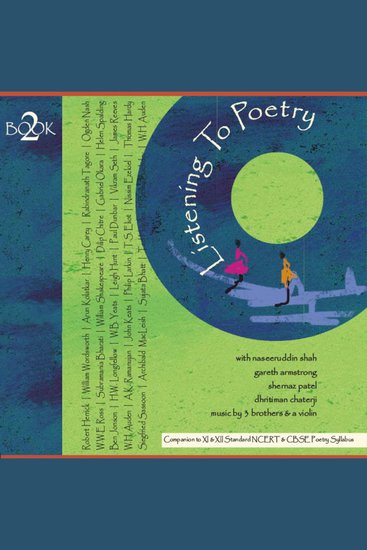
    "Listening to Poetry not only introduces the finest work from some of the greatest poets
    who ever lived, it also resurrects the power of spoken poetry, bringing back to life
    the sheer pleasure of listening to verse. Textured with music by 3 Brothers & A Violin,
    this collection of 28 poems in two volumes, performed with panache by international
    stage actors Naseeruddin Shah, Gareth Armstrong, Shernaz Patel, and Dhritiman Chaterji,
    moves and inspires with its timeless quality."
    Mostra libro
  • Alice Dunbar Nelson - A Short Story Collection - Pioneering African American woman who helped usher in the Harlem Renaissance - cover

    Alice Dunbar Nelson - A Short...

    Alice Dunbar-Nelson

    • 0
    • 0
    • 0
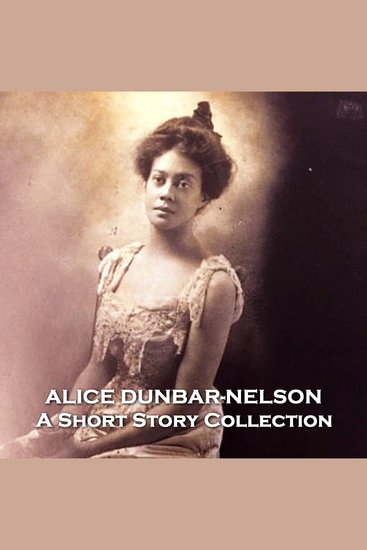
    Alice Ruth Moore was born on 19th July 1875 in New Orleans where she was part of the multi-racial Creole community.  She was the first generation seemingly born free after the Civil War and unusually for the times, obtained a university education which led to her becoming a teacher at a public school in New Orleans.   
    In 1895, when she was 20, she published her first collection of short stories and poems, ‘Violets and Other Tales’, and moved to New York City where she co-founded and taught at the White Rose Mission, a Home for Girls.   
    Alice was always politically active and sought to advance the position of black women.  She began work as a journalist at the Woman’s Era newspaper where her work was seen by the established poet and journalist Paul Laurence Dunbar.  After corresponding for two years she joined him in Washington DC and they married in 1898.   
    It was a difficult relationship, due mainly to Dunbar’s fragile health, alcoholism and depression.  After a severe beating she left him and moved to Delaware to teach for a decade though took time out to enroll at Cornell University. 
    A short-lived marriage to Henry A. Callis, a physician and professor at Howard University ended in divorce and she became co-editor and writer for an influential publication of the African Methodist Episcopal Church.  A third marriage to civil rights activist Robert J. Nelson came about, as did affairs with several women, notably the activist Fay Jackie Robinson.   
    In Wilmington Delaware she and her husband devoted their time and writings to working for equality for African Americans and women’s suffrage.   
    Alice Dunbar Nelson was a natural and gifted writer across many genres, from novels, essays, plays to diaries, criticism, poetry and of course short stories, of which ‘Stones in the Village’ is a fine example.  The protagonist, like herself, is light skinned from New Orleans, which allows for a social mobility and a unique position in American society that Dunbar Nelson captures with an imagination and insight to explores another divisive perspective on race.  It is unsurprising that Alice was a prominent part of the early Harlem Renaissance and influenced many others including Langston Hughes and Countee Cullen. 
    Alice and her husband moved to Philadelphia in 1932 and it was here that she died on 18th September 1935, at the age of 60, from a heart ailment.
    Mostra libro
  • Ship Fever - Stories - cover

    Ship Fever - Stories

    Andrea Barrett

    • 0
    • 0
    • 0
    The 1996 National Book Award Winner for Fiction from "genius-enchantress" (Karen Russell) Andrea Barrett that introduces the characters of Barrett's vividly imagined world.  
     
    The elegant short fictions gathered hereabout the love of science and the science of love are often set against the backdrop of the nineteenth century. Interweaving historical and fictional characters, they encompass both past and present as they  
    negotiate the complex territory of ambition, failure, achievement, and shattered dreams. In "Ship Fever," the title novella, a young Canadian doctor finds himself at the center of one of history's most tragic epidemics. In "The English Pupil,"  
    Linnaeus, in old age, watches as the world he organized within his head slowly drifts beyond his reach. And in "The Littoral Zone," two marine biologists wonder whether their life-altering affair finally was worth it. In the tradition of Alice  
    Munro and William Trevor, these exquisitely rendered fictions encompass whole lives in a brief space. As they move between interior and exterior journeys, "science is transformed from hard and known fact into malleable, strange and thrilling fictional material" (Boston Globe).
    Mostra libro