Join us on a literary world trip!
Add this book to bookshelf
Grey
Write a new comment Default profile 50px
Grey
Subscribe to read the full book or read the first pages for free!
All characters reduced
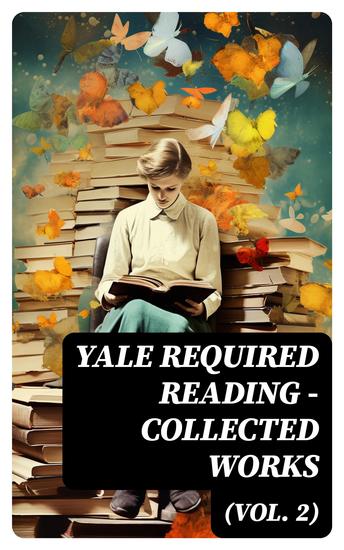
Yale Required Reading - Collected Works (Vol 2) - The Rise and Fall of Rome: The Greatest Works of the Roman Classical Literature - cover

Yale Required Reading - Collected Works (Vol 2) - The Rise and Fall of Rome: The Greatest Works of the Roman Classical Literature

Lucius Annaeus Seneca, Julius Caesar, Boethius, Horace, Plutarch Plutarch, Apuleius, Virgil Virgil, Persius, Terence, Ammianus Marcellinus, Sallust, Juvenal, Lucan, Suetonius, Tibullus Tibullus, Tacitus Tacitus, Petronius, Cornelius Nepos, Lucretius Lucretius, Martial, Catullus, Cicero Cicero, Claudian, Pliny the Younger, Saint Augustine of Hippo, Plautus, Ennius, Propertius, The Metamorphoses, Augustus, Quintilian

Translator Alfred John Church, Paul Nixon, J. S. J.S.Watson, Christopher Smart, William Rose, James Rhodes, Lewis Evans, John William Mackail, William Jackson Brodribb, W. A. McDevitte, W. S. Bohn, Henry Thomas Riley, William Ellery Leonard, Frederick Charles Tindal Bosanquet, E. Jones, Robinson Ellis, Harold Edgeworth Butler, Theodore Chickering Williams, John Selby Watson, Frederick W. Shipley, William Charles Firebaugh, Maurice Platnauer

Publisher: DigiCat

  • 0
  • 0
  • 0

Summary

Yale Required Reading - Collected Works (Vol. 2) presents a rich tapestry of classical literature that illuminates the diversity and depth within the Roman literary canon. This anthology encompasses a wide array of themes, from the political discourse of Julius Caesar and Suetonius to the philosophical musings of Seneca and Saint Augustine. Readers will find themselves immersed in the poetic eloquence of Virgil and Horace, as well as the satirical sharpness of Juvenal and Martial. Through its curated selection of historical, philosophical, and satirical works, this volume provides a comprehensive overview of Roman literary traditions and their lasting impact on Western thought. The anthology draws together voices from an impressive array of backgrounds, each contributing uniquely to the collection's thematic richness. Figures like Cicero and Tacitus reflect the influence of Roman rhetoric and historiography, while writers such as Pliny the Younger and Quintilian exemplify the philosophical and educational ideals of the time. These works collectively speak to cultural and historical movements that shaped their era, including Stoicism, the dynamics of the Roman Empire, and the Christianization of Late Antiquity. This diversity not only highlights individual authors' contributions but also sheds light on the evolution of Roman society. Yale Required Reading - Collected Works (Vol. 2) is an essential resource for anyone wishing to explore the multifaceted perspectives of Roman literature. It invites readers not only to engage with seminal texts that have shaped literary and philosophical traditions but also to appreciate the complexity and nuance within each work. Whether for educational purposes or personal enrichment, this anthology offers a gateway to the profound dialogue between these enduring classics, making it a truly enlightening addition to any reader's library.
Available since: 11/27/2023.
Print length: 7732 pages.

Other books that might interest you

  • Lessons from Literature - Short Stories About the Effects of Bad Parents - Learn from the oldest form of communication and education - storytelling - cover

    Lessons from Literature - Short...

    Katherine Mansfield, Kate...

    • 0
    • 0
    • 0
    Bringing new souls into the world is both a great responsibility but can ensure receiving a never-ending gift of love and laughter. But for some people raising and nurturing their young is not where’re they’re at.  For these parents the responsibility and needed sacrifices are beyond what they can give, what they can manage.  Going forward life for both parent and child is going to be difficult, perhaps too difficult.   
    In this volume our classic authors begin to unravel the complexities of this most pivotal of relationships.   
     
    1 - Short Stories About the Effects of Bad Parents - An Introduction 
    2 - The Doll's House by Katherine Mansfield 
    3 - A Pair of Silk Stockings by Kate Chopin 
    4 - Why Herbert Killed His Mother by Winifred Holtby 
    5 - An Angel in Disguise by T S Arthur 
    6 - Ben Pitcher's Elly by Mary E Mann
    Show book
  • God of Sperm - Cappy Rothman's Life in Conception - cover

    God of Sperm - Cappy Rothman's...

    Joe Donnelly

    • 0
    • 0
    • 0
    God of Sperm tells the remarkable story of Dr. Cappy Miles Rothman, the son of notorious gangster Norman "Roughhouse" Rothman,  who went on to become a trailblazer in the field of reproductive medicine. 


    Rothman started the California Cryobank, one of the world's largest repositories of reproductive genetic material and cord-blood stem cells. Among other achievements, Rothman also pioneered the use of microsurgery in urological procedures, postmortem sperm retrieval techniques, and was one of the first practitioners of andrology, a specialty dealing with male reproductive biology and medicine. 


    How Cappy Rothman went from Mafia scion and man-about-town during the postwar Miami Beach–Havana era of gangster chic to one of the most consequential figures in modern medicine is an epic, only-in-America tale and also a fine reminder of the broad horizons and wild possibilities life in the US can offer.
    Show book
  • Don't Count Me Out - A Baltimore Dope Fiend's Miraculous Recovery - cover

    Don't Count Me Out - A Baltimore...

    Rafael Alvarez

    • 0
    • 0
    • 0
    Don't Count Me Out chronicles the life of Bruce White from the beginning of his drug use in elementary school through criminal acts fueled by his need for drugs, to his miraculous recovery three decades later and involvement in the treatment of addicts, where he is now a leader in the rehabilitation field. 


    Rafael Alvarez's recounting of White's journey should inspire those dealing with the fallout of addiction. Alvarez, a journalist and screenwriter, allows the listener to get inside the head of an addict who was stealing alcohol from his parents at the age of nine, selling drugs and tripping on LSD and PCP by the time he hit seventh grade, and hooked on morphine before he turned fifteen. "Bruce White? I thought he was dead?" is a response encountered in many of the interviews Alvarez conducted. 


    Don't Count Me Out shines a spotlight on an improbable and stunning miracle. Though this is just one person's story, the contributing factors of early sexual assault, the role of permissive preoccupied parents, and the need for peer approval, among others, will resonate with many as the opioid crisis continues to haunt us.
    Show book
  • Love is Blind - cover

    Love is Blind

    Ruth Vallis

    • 0
    • 0
    • 0
    Excited and full of the confidence of youth, totally blind Ruth arrived in London, England, to study Physiotherapy. She spoke the same language, was domestically independent, and had good mobility skills: how hard could this be? 
    As it turns out, far more difficult than she could have ever imagined, but Ruth was determined to succeed. People who are blind face many challenges, but perhaps the biggest obstacle is the low expectations of others. You can let those who don’t understand you define who you are, or you can ignore them and follow your dreams—as Ruth did. 
    “Love is Blind” is the memoir of Ruth Vallis. Blind before the age of 3, Ruth was the youngest pioneer of integration in the public school system in Canada, blazing a trail for many to follow. At every stage of her extraordinary life, Ruth defied the low expectations of others, and took on such challenges as biking from Ottawa to Toronto, completing a Master’s of Science degree online before technology accessibility was legislated, and more. Through it all there was her tender, tough-loving mother, Peach, offering encouragement, support and humour to overcome enormous challenges. 
    Discover the power of women working together for good. See how obstacles can become stepping stones. Laugh, cry and be inspired!
    Show book
  • Discover the Man Who Changed the World and Found God - "Experience an epic story! Audio lessons of the man who reshaped the world and discovered God" - cover

    Discover the Man Who Changed the...

    Noah Caden

    • 0
    • 0
    • 0
    "Discover the Man Who Changed the World and Found God" 
    Are you aiming for personal growth and a deeper understanding of the transformative journey that merges the power of science and spirituality? 
    Searching for a comprehensive guide containing all the necessary elements to enhance your knowledge and spiritual journey? 
    Look no further! 
    This guide is your ultimate companion for deepening your understanding, applying your insights, and engaging in practical exercises. With this, you're set for success. 
    Updated for the latest insights and discoveries. 
    Key features of this enriched guide: 
    - Profound insights into the transformative journey that blends science and spirituality. 
    - Detailed explanations of the intersection of scientific principles and spiritual beliefs. 
    - Effective strategies for preparing for and embracing this transformative journey. 
    Our guide stands out through its thorough coverage, which is essential for your journey. Concepts aren't just glossed over; they are explored with depth and accuracy. 
    Please note that this guide is not affiliated with any official entity but is an independent resource for your benefit. 
    Designed with a clear structure and easy-to-understand language, our transformative journey guide ensures smooth transitions between topics. Say goodbye to confusing jargon and welcome clear, precise, and technically accurate content. 
    So, why wait? Click the BUY NOW button, secure your guide, and begin your journey of transformation today! 
    Secure your guide now and embark on your journey to a transformative understanding of the world and beyond!
    Show book
  • John Mortonson's Funeral by Ambrose Bierce - From their pens to your ears genius in every story - cover

    John Mortonson's Funeral by...

    Ambrose Bierce

    • 0
    • 0
    • 0
    Ambrose Gwinnett Bierce was born on 24th June 1842 at Horse Cave Creek in Meigs County, Ohio. His parents were poor but they introduced him to literature at an early age, instilling in him a deep appreciation of books, the written word and the elegance of language.  
    Growing up in Koscuisko County, Indiana poverty and religion were defining features of his childhood, and he would later describe his parents as “unwashed savages” and fanatically religious, showing him little affection but always quick to punish. He came to resent religion, and his introduction to literature appears to be their only positive effect. 
    At age 15 Bierce left home to become a printer’s devil, mixing ink and fetching type at The Northern Indian, a small Ohio paper. Falsely accused of theft he returned to his farm and spent time sending out work in the hopes of being published. 
    His Uncle Lucius advised he be sent to the Kentucky Military Institute. A year later he was commissioned as an Officer.  As the Civil War started Bierce enlisted in the 9th Indiana Infantry Regiment.  
    In April 1862 Bierce fought at the Battle of Shiloh, an experience which, though terrifying, became the source of several short stories. Two years later he sustained a serious head wound and was off duty for several months. He was discharged in early 1865.  
    A later expedition to inspect military outposts across the Great Plains took him all the way to San Francisco. He remained there to become involved with publishing and editing and to marry, Mary Ellen on Christmas Day 1871.  They had a child, Day, the following year.  
    In 1872 the family moved to England for 3 years where he wrote for Fun magazine. His son, Leigh, was born, and first book, ‘The Fiend’s Delight’, was published.  
    They returned to San Francisco and to work for a number of papers where he gained admiration for his crime reporting. In 1887 he began a column at the William Randolph Hearst’s San Francisco Examiner.  
    Bierce’s marriage fell apart when he discovered compromising letters to his wife from a secret admirer. The following year, 1889 his son Day committed suicide, depressed by romantic rejection. 
    In 1891 Bierce wrote and published the collection of 26 short stories which included ‘An Occurrence at Owl Creek Bridge’.  Success and further works including poetry followed.  
    Bierce with Hearst’s resources helped uncover a financial plot by a railroad to turn 130 million dollars of loans into a handout. Confronted by the railroad and asked to name his price Bierce answered “my price is $130 million dollars. If, when you are ready to pay, I happen to be out of town, you may hand it over to my friend, the Treasurer of the United States”.  
    He now began his first foray as a fabulist, publishing ‘Fantastic Fables’ in 1899.  But tragedy again struck two years later when his second son Leigh died of pneumonia relating to his alcoholism.  
    He continued to write short stories and poetry and also published ‘The Devil’s Dictionary’.  
    At the age of 71, in 1913 Bierce departed from Washington, D.C., for a tour of the battlefields where he had fought during the civil war. At the city of Chihuahua he wrote his last known communication, a letter to a friend. It’s closing words were “as to me, I leave here tomorrow for an unknown destination,” Ambrose Bierce then vanished without trace.
    Show book