Unisciti a noi in un viaggio nel mondo dei libri!
Aggiungi questo libro allo scaffale
Grey
Scrivi un nuovo commento Default profile 50px
Grey
Iscriviti per leggere l'intero libro o leggi le prime pagine gratuitamente!
All characters reduced
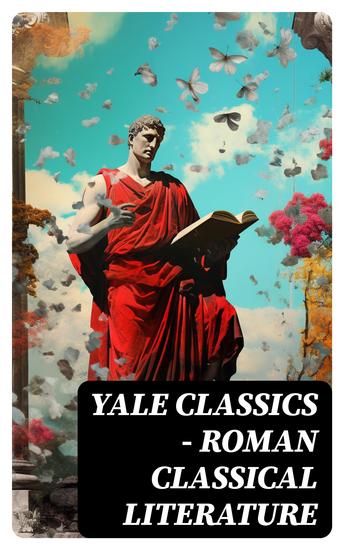
Yale Classics - Roman Classical Literature - cover

Yale Classics - Roman Classical Literature

Lucius Annaeus Seneca, Julius Caesar, Boethius, Horace, Plutarch Plutarch, Apuleius, Virgil Virgil, Persius, Terence, Ammianus Marcellinus, Sallust, Juvenal, Lucan, Suetonius, Tibullus Tibullus, Tacitus Tacitus, Petronius, Cornelius Nepos, Lucretius Lucretius, Martial, Catullus, Cicero Cicero, Claudian, Pliny the Younger, Saint Augustine of Hippo, Plautus, Ennius, The Metamorphoses, Augustus, Quintilian

Traduttore Alfred John Church, Paul Nixon, J. S. J.S.Watson, Christopher Smart, William Rose, James Rhodes, Lewis Evans, John William Mackail, William Jackson Brodribb, W. A. McDevitte, W. S. Bohn, Richard Mott Gummere, Henry Thomas Riley, William Ellery Leonard, Frederick Charles Tindal Bosanquet, E. Jones, Robinson Ellis, Harold Edgeworth Butler, Theodore Chickering Williams, John Selby Watson, Frederick W. Shipley, Edward Ridley, William Charles Firebaugh, Maurice Platnauer

Casa editrice: DigiCat

  • 0
  • 0
  • 0

Sinossi

Yale Classics - Roman Classical Literature invites readers on an intellectual journey through the epochs of ancient Rome, featuring works that span a vast array of themes from philosophy and politics to satire and epic poetry. This anthology is a vibrant tapestry of Roman literary tradition, showcasing the dynamism and complexity of the era. From philosophical meditations to incisive political commentaries, the collection reveals the multifaceted nature of Roman thought and its enduring impact on Western literature. The insightful interrogations of human nature and governance are powerfully echoed throughout, with standout pieces that elucidate the Roman world's intricate cultural and moral landscape. The anthology presents an impressive assembly of literary figures, from esteemed philosophers like Seneca and Saint Augustine to epic poets such as Virgil and Lucan. Each author provides a unique lens through which the reader can explore the vast field of Roman literary and cultural influence. The collection aligns with significant historical currents, offering insights into the philosophical, rhetorical, and societal transformations that defined Roman antiquity. As these diverse voices converge, they craft a dialogue enriched by their varied perspectives, underscoring the value of literary and historical diversity in understanding this seminal era. This anthology serves as a vital resource for readers seeking a comprehensive understanding of Roman thought and literature's historical continuity. It offers a remarkable opportunity to delve into a carefully curated selection of classical texts within a single volume, providing a rich educational experience. By engaging with these varied perspectives, styles, and themes, readers are invited to explore the dialogues that transcend time, making it an indispensable addition to the library of any enthusiast of classical literature.
Disponibile da: 27/11/2023.
Lunghezza di stampa: 7732 pagine.
Altri libri che potrebbero interessarti

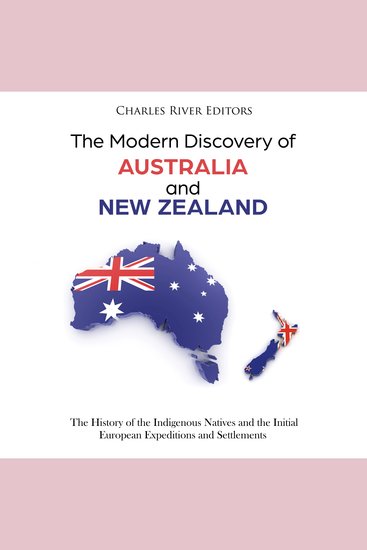
  • Modern Discovery of Australia and New Zealand The: The History of the Indigenous Natives and the Initial European Expeditions and Settlements - cover

    Modern Discovery of Australia...

    Editors Charles River

    • 0
    • 0
    • 0
    A land of almost 3 million square miles has lain since time immemorial on the southern flank of the planet, so isolated that it remained entirely outside of European knowledge until 1770. However, the first human footprints on this vast territory were felt 70,000 years earlier, as people began to cross the periodic land bridges and the short sea crossings from Southeast Asia. 
    By the mid-17th century, the existence of a land in the south referred to as Terra Australis was generally known and understood by the Europeans, and incrementally, its shores were observed and mapped. Van Diemen’s Land, an island off the south coast of Australia now called Tasmania, was identified in 1642 by Dutch mariner Abel Tasman, and a few months later, the intrepid Dutchman would add New Zealand to the map of the known world. 
    At the time, the English were the greatest naval power in Europe, but they arrived on the scene rather later. The first to appear was William Dampier, captain of the HMS Roebuck, in 1699, after he had been granted a Royal Commission by King William III to explore the east coast of New Holland. By then, the general global balance of power was shifting, and with the English gaining a solid foothold in India, their supremacy in the Indian Ocean trade zone began. The Dutch, once predominant in the region, began slowly to lose ground, slipping out of contention as a major global trading power. So too were the Portuguese, also once dominant in the region. It was now just the French and the English who were facing one another down in a quest to dominate the world, but their imperial interests were focused mainly in India and the East Indies, as well as the Caribbean and the Americas. As a result, the potential of a vast, practically uninhabited great southern continent did not yet hold much interest. By then the world was largely mapped, with just regions such as the Arctic Archipelago and the two poles remaining terra incognita.
    Mostra libro
  • What God Would Have Known - How Human Intellectual and Moral Development Undermines Christian Doctrine - cover

    What God Would Have Known - How...

    J. L. Schellenberg

    • 0
    • 0
    • 0
    Classical Christian ideas loom large in philosophy of religion today. But arguments against Christian doctrine have been neglected. J. L. Schellenberg's new book remedies this neglect. 


    The tide of human development, which the early Christians might have expected to corroborate their teaching, has in fact brought many results that run contrary to that teaching. Or at least it will be seen to have done so, says Schellenberg, when we think about the consequences of any God existent then being fully cognizant, when Christian doctrine was first formed, of all that we have laboriously learned since then. Newly discovered facts, not just about such things as evolution and the formation of the New Testament but also about mental illness, violent punishment, the relations between women and men, and the status of same-sex intimacy, suggest new arguments against the content of the Christian revelation when the prior understanding of the purported revealer is taken into account. 


    What God Would Have Known offers a thorough and incisive treatment of its subject that remains respectful and fair-minded throughout. It is not concerned with the overworked question of whether classical Christians believe irrationally, but with what overlooked arguments about human development show in relation to the truth or falsity of Christian claims about reality.
    Mostra libro
  • Ecclesiastes - The World English Bible Book 21 (Unabridged) - cover

    Ecclesiastes - The World English...

    Various Authors

    • 0
    • 0
    • 0
    Ecclesiastes is one of the Ketuvim ("Writings") of the Hebrew Bible and one of the "Wisdom" books of the Christian Old Testament. The title commonly used in English is a Latin transliteration of the Greek translation of the Hebrew word קֹהֶלֶת (Kohelet, Koheleth, Qoheleth or Qohelet). An unnamed author introduces "The words of Kohelet, son of David, king in Jerusalem" (1:1) and does not use his own voice again until the final verses (12:9-14), where he gives his own thoughts and summarises the statements of Kohelet; the main body of the text is ascribed to Kohelet himself.
    Mostra libro
  • High Self Esteem Confidence - Brain training technology for higher self esteem and confidence - cover

    High Self Esteem Confidence -...

    Steve Cosmic

    • 0
    • 0
    • 0
    Your self esteem and confidence can be increased, using technology to train your brain. 
    With mental entrainment sounds, voice, waves and alternating stereo effects, this program trains your brain with self hypnosis. You will have more self esteem and confidence after using this program. You will notice results after using it only a few times. Use it daily for 30 days for maximum results, and then occasionally after that. It can change your life. 
    This is hi tech meditation with built in brain training. For best results, you just lie back and listen with headphones. It really works!
    Mostra libro
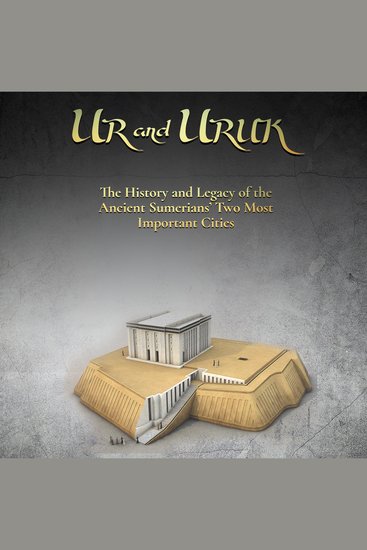
  • Ur and Uruk: The History and Legacy of the Ancient Sumerians’ Two Most Important Cities - cover

    Ur and Uruk: The History and...

    Editors Charles River

    • 0
    • 0
    • 0
    In southern Iraq, a crushing silence hangs over the dunes. For nearly 5,000 years, the sands of the Iraqi desert have held the remains of the oldest known civilization: the Sumerians. When American archaeologists discovered a collection of cuneiform tablets in Iraq in the late 19th century, they were confronted with a language and a people who were at the time only scarcely known to even the most knowledgeable scholars of ancient Mesopotamia. The exploits and achievements of other Mesopotamian peoples, such as the Assyrians and Babylonians, were already known to a large segment of the population through the Old Testament and the nascent field of Near Eastern studies had unraveled the enigma of the Akkadian language that was widely used throughout the region in ancient times, but the discovery of the Sumerian tablets brought to light the existence of the Sumerian culture, which was the oldest of all the Mesopotamian cultures.  
    	Although the Sumerians continue to get second or even third billing compared to the Babylonians and Assyrians, perhaps because they never built an empire as great as the Assyrians or established a city as enduring and great as Babylon, they were the people who provided the template of civilization that all later Mesopotamians built upon. The Sumerians are credited with being the first people to invent writing, libraries, cities, and schools in Mesopotamia, and many would argue that they were the first people to create and do those things anywhere in world. Indeed, a close examination of Sumerian culture and chronology reveals that the Sumerians set the cultural tone in Mesopotamia for several centuries in the realms of politics/governments, arts, literature, and religion. The Sumerians were truly a great people whose legacy continued long after they were gone.
    Mostra libro
  • Digital Feedback Methods - cover

    Digital Feedback Methods

    Jennifer Schluer

    • 0
    • 0
    • 0
    Feedback spielt eine entscheidende Rolle im Lernprozess. Doch welche Möglichkeiten gibt es, Lernprozesse durch digitales Feedback zu unterstützen? Dieses Buch bietet Lehrenden und Studierenden ein wissenschaftlich fundiertes Orientierungs- und Anwendungswissen zu digitalen Feedbackmethoden. Diese können nicht nur im Online- oder Hybridunterricht eingesetzt werden, sondern auch den Präsenzunterricht bereichern. Die Vorzüge und Grenzen der jeweiligen digitalen Feedbackmethoden werden diskutiert und Umsetzungsempfehlungen abgeleitet. Dies umfasst u.a. schriftliches Feedback im Texteditor, in Cloud-Dokumenten, in Chats, Diskussionsforen, Wikis, Umfragen und E-Mails sowie multimodales Feedback in Videokonferenzen und per Audio-, Video- und Bildschirmaufnahme. Darüber hinaus werden Vorschläge gegeben, um verschiedene Methoden sinnhaft miteinander zu kombinieren und Lerndialoge anzuregen.
    Mostra libro