Unisciti a noi in un viaggio nel mondo dei libri!
Aggiungi questo libro allo scaffale
Grey
Scrivi un nuovo commento Default profile 50px
Grey
Iscriviti per leggere l'intero libro o leggi le prime pagine gratuitamente!
All characters reduced
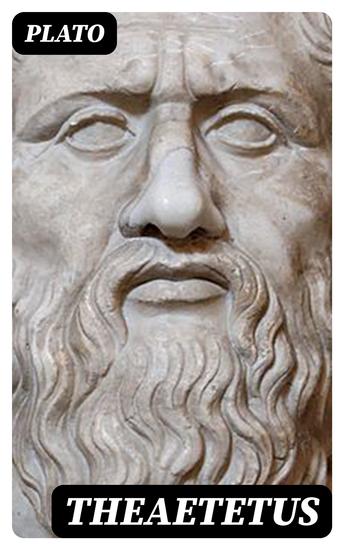
Theaetetus - cover

Theaetetus

Plato

Traduttore Benjamin Jowett

Casa editrice: DigiCat

  • 0
  • 0
  • 0

Sinossi

Plato's "Theaetetus" is a profound dialogue that delves into the nature of knowledge, probing the question, "What is knowledge?" Through an engaging conversation between Socrates and the young mathematician Theaetetus, Plato presents a captivating exploration of epistemology, offering three notable definitions of knowledge: perception, true belief, and justified true belief. The narrative is marked by its Socratic method, characterized by dialectical reasoning and critical interrogation, which invites readers into the philosophical inquiry that remains relevant in contemporary discussions of knowledge and belief. Plato, a pivotal figure in Western philosophy, deeply influenced by Socratic dialogues and the intellectual currents of Ancient Greece, penned "Theaetetus" during a period of rich philosophical discourse in Athens. His background as a student of Socrates and his engagement with mathematics and metaphysics shaped his exploration of knowledge, revealing the tensions between perception and reality. Plato's philosophical ambitions aimed not only to define knowledge but also to encourage readers to critically examine their own epistemic foundations. "Theaetetus" is an essential read for anyone intrigued by the philosophical pursuits of understanding knowledge in its multifaceted dimensions. Scholars, students, and casual readers alike will find value in Plato's rigorous examination of epistemology, which resonates across millennia, bridging ancient philosophy with modern thought. This dialogue is not merely a historical artifact; it is a vital text that continues to challenge and inspire philosophical inquiry.
Disponibile da: 15/09/2022.
Lunghezza di stampa: 162 pagine.
Altri libri che potrebbero interessarti

  • The Portland Vase - The Extraordinary Odyssey of a Mysterious Roman Treasure - cover

    The Portland Vase - The...

    Robin Brooks

    • 0
    • 0
    • 0
    For thousands of years an enigmatic and astonishingly beautiful piece of Roman art has captivated those who have come in contact with it.Made before the birth of Christ, the Portland Vase, as it is called, is renowned for both its beauty and its mystery.In The Portland Vase, Robin Brooks takes us on a vivid journey across Europe and through the centuries, as this delicate piece of glass, less than ten inches in height, passes through the hands of a stunning cast of characters, including the first Roman emperor, Augustus; a notorious tomb raider; a reckless cardinal; a princess with a nasty gambling habit; the ceramics genius Josiah Wedgwood; the secretive Duchess of Portland; and a host of politicians, dilettantes, and scam artists.Rich with passion, inspiration, jealousy, and endless speculation, the story of The Portland Vase spans more than two thousand years and remains one of the art world's greatest enigmas.
    Mostra libro
  • Man In My Head Has Lost His Mind The (What Makes Us Conscious?) - A thought experiment exploring consciousness and free will identity and the moral self - cover

    Man In My Head Has Lost His Mind...

    Carter Blakelaw

    • 0
    • 0
    • 0
    The howl of the bedside clock-radio carves through your dreams like a buzz-saw through butter, and you are awake. In another place. 
    Never mind the bright yellow sunlight that flecks your pillow and warms your face; you are rudely awake, and resent it. Gah! 
    You roll onto your side, cantilever your legs over the side of the bed and plant your feet squarely on the carpet. You rub your face. Massage your neck. Oh, what it is to be alive!--and conscious--oh oh oh, indeed. 
    But what is it to be alive, and conscious? 
    Alive, we have some inkling of; you eat, you sleep, you exercise. You stay healthy and keep your body going as best you can. But conscious? What even is that? 
    A good question is what that is, and a question for which this book has an answer. 
    So in this text, first I set the scene:Did our consciousness evolve?Does consciousness give us free will?Which animals do we think are conscious?Where does consciousness go when we sleep?How does consciousness deliver meaning?What might a theory of consciousness look like? 
    Then I propose:A model for consciousness at the macro scaleA mechanism for consciousness at the micro scale 
    Finally, I suggest some real world tests that science will one day be able to perform which will either corroborate or invalidate the theory I present here. This is a workable, testable theory. Science and philosophy demand nothing less. 
    A must-listen for the curious-minded, which you are, are you not? So listen on...
    Mostra libro
  • The Orations of Cicero Volume 2 - cover

    The Orations of Cicero Volume 2

    Cicero

    • 0
    • 0
    • 0
    A collection of the most influential speeches by Marcus Tullius Cicero, Rome’s greatest orator and statesman, The Orations of Cicero showcases his rhetorical brilliance, political principles, and defense of the Roman Republic. Spanning legal arguments, public denunciations, and philosophical reflections, these speeches reveal Cicero’s efforts to uphold justice, combat corruption, and resist the rise of autocracy—most notably in his fierce opposition to Mark Antony in the Philippics . Written with eloquence and moral conviction, Cicero’s orations remain foundational texts in the study of rhetoric, law, and classical political thought. They offer invaluable insight into the turbulent final years of the Roman Republic and the mind of a man who believed deeply in the power of words to shape history, preserve liberty, and defend the rule of law.
    Mostra libro
  • Jesus of Nazareth: A short biography - 5 Minutes: Short on time – long on info! - cover

    Jesus of Nazareth: A short...

    5 Minutes, 5 Minute Biographies,...

    • 0
    • 0
    • 0
    Jesus of Nazareth, the historical man in his time: Life and work in a short biography! Everything you need to know, brief and concise. Infotainment, education and entertainment at its best!
    Mostra libro
  • The Human Psychology - The Secret Laws of the Mind: Why We think Feel and Act the Way We Do - cover

    The Human Psychology - The...

    Michael Smith

    • 0
    • 0
    • 0
    This audiobook is narrated by an AI Voice.   
    This Audiobook, The Human Psychology- The Secret Laws of the Mind: Why We think, Feel, and Act the Way We Do. Offers a Practical and Dynamic Exploration into the Hidden Mechanisms Governing Human Decision, Emotion, and Action, Moving Beyond the Typical Academic Approach to Serve as an Essential Guide for Self-Mastery. It Aims to Decode the Mind's Internal Operating System by Revealing The Blueprint of Behavior, Which Covers Fundamental Psychological Laws Dictating Everything from Motivation and Habit Formation to High-Pressure Decision-Making. Furthermore, the Guide Provides Keys to Mastering Your Emotional Landscape by Teaching Listeners How to Process Complex Emotions, Move Past Anxiety and Resistance, and Achieve Genuine Psychological Well-Being. A Critical Component Is Uncovering The Power of Hidden Narratives, Allowing One to Understand and Rewrite the Subconscious Stories That Shape Self-Perception and Goal Achievement, While Instant Social Insight Equips Listeners with the Ability to Read Non-Verbal Cues to Grasp True Intentions in Relationships. By Illuminating These Secret Laws, the Audiobook Promises to Hand the Listener the Keys to Intentional, Powerful, and Lasting Self-Mastery, Transforming Them from Living Life on Autopilot into the Architect of Their Own Mind.
    Mostra libro
  • Island Hopping across the Pacific Theater in World War II: The History of America’s Victorious Leapfrogging Strategy against Imperial Japan - cover

    Island Hopping across the...

    Editors Charles River

    • 0
    • 0
    • 0
    The waters of the Pacific Ocean – stretching deep blue under the tropical sun, or scourged by typhoons – provided World War II's most far-flung battlefield. Two of the world's premier mid 20th century maritime powers, the United States of American and the Empire of Japan, grappled for supremacy across that vast expanse. 
    By the time the Battle of Midway was over in June 1942, the defeat was so devastating for Japan that it was actually kept secret from all but the highest echelons of the Japanese government. Along with the loss of hundreds of aircraft and over 3,000 men killed, the four Japanese aircraft carriers lost, when compared to America’s one lost carrier, was critical considering America’s huge shipbuilding superiority.  
    By the spring of 1943, American military planners had begun to create a plan to dislodge Japan from east and southeast Asia. To do so, parts of the Philippines were considered main strategic points in the potential Allied attack in the Pacific. The end goal of the Allied plan was an invasion of the Japanese home islands, in which heavy aerial bombardment would precede a ground assault. In order for this to occur, Allied forces would have to occupy areas surrounding Japan, with China adding to Luzon (the largest island in the Philippines) and Formosa (a large island off the coast of China) to create a triangle from which they could launch their bombers. 
    The Allied advance across the Pacific was based on this 1943 plan, with General MacArthur and his forces moving to the north through New Guinea, then Morotai Island, and then to Mindanao, which was the southernmost major island in the Philippines chain. At the same time, Admiral Chester Nimitz sent his fleet through the central Pacific, where they engaged Japanese forces at the Gilbert, Marshall, Marianas and Palau Islands en route to Mindanao.
    Mostra libro