Unisciti a noi in un viaggio nel mondo dei libri!
Aggiungi questo libro allo scaffale
Grey
Scrivi un nuovo commento Default profile 50px
Grey
Iscriviti per leggere l'intero libro o leggi le prime pagine gratuitamente!
All characters reduced
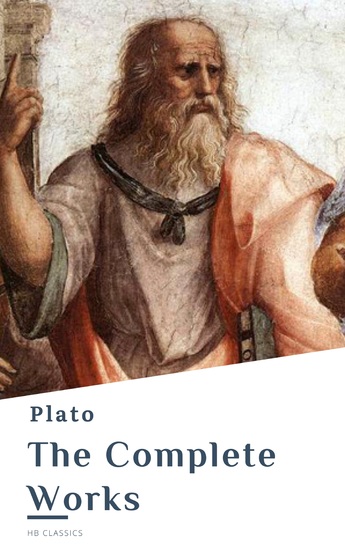
Plato: The Complete Works (31 Books) - cover

Plato: The Complete Works (31 Books)

Plato Plato, HB Classics

Traduttore Benjamin Jowett

Casa editrice: HB Classics

  • 0
  • 0
  • 0

Sinossi

Plato was a philosopher in Ancient Greece. He was an essential figure in the development of philosophy, especially the Western tradition, and he founded the Academy in Athens, the first institution of higher learning in the Western world.

Plato's dialogues have been used (and are still used) to teach a range of subjects, including philosophy, logic, ethics, rhetoric, religion and mathematics. His lasting themes include Platonic love, the theory of forms, the five regimes, innate knowledge, among others. His theory of forms launched a unique perspective on abstract objects, and led to a school of thought called Platonism.

This collection contains the following works by Plato:

Early Works
•Apology
•Charmides, or Temperance
•Crito
•Euthyphro
•Gorgias
•Hippias, Lesser
•Hippias, Greater
•Ion
•Laches
•Lysis
•Protagoras

Transitional Works
•Cratylus
•Euthydemus
•Meno
•Parmenides
•Phaedo
•Phaedrus
•Symposium
•The Republic

Middle Works
•Theaetetus

Late Works
•Critias
•Laws
•Philebus
•Sophist
•Statesman
•Timaeus

Works of Disputed Authorship
•Alcibiades I & II
•Eryxias
•Menexenus
•Theages
Disponibile da: 21/11/2022.
Lunghezza di stampa: 3000 pagine.

Altri libri che potrebbero interessarti

  • The Pax Romana - Peace and Prosperity in the Roman Empire - cover

    The Pax Romana - Peace and...

    Rogan Fish

    • 0
    • 0
    • 0
    The Pax Romana, meaning "Roman Peace," was a remarkable period of stability and prosperity that lasted for over two centuries. It began with the rise of Augustus, Rome’s first emperor, following the chaotic years of civil war that had plagued the late Republic. This era saw the establishment of a strong centralized government, economic growth, and the expansion of Rome’s influence across the Mediterranean and beyond. The foundations of this peace were carefully laid through political reforms, military strength, and a redefined vision of Roman leadership. 
    The aftermath of the civil wars that marked the late Republic left Rome in a state of disarray. The assassination of Julius Caesar in 44 BCE triggered a power struggle, culminating in the final confrontation between Octavian—Caesar’s adopted heir—and Mark Antony. With his victory at the Battle of Actium in 31 BCE, Octavian secured his position as the dominant ruler of Rome. In 27 BCE, he formally accepted the title of Augustus from the Senate, marking the beginning of the imperial system. This transition ended the Republic but ushered in an era of stability that would define the next two centuries. 
    Augustus carefully crafted a government that appeared to preserve Republican traditions while consolidating power in his hands. By maintaining the illusion of senatorial authority, he avoided the fate of his great-uncle, Julius Caesar. However, his rule was firmly grounded in the principles of autocracy. He reorganized the military, ensuring its loyalty through direct financial incentives, and established a standing army with permanent stations along the empire’s borders. This professionalization of the military reduced internal conflicts and safeguarded the empire from external threats.
    Mostra libro
  • Manipulation - Influencing Others Covertly for Personal Gain - cover

    Manipulation - Influencing...

    Cito Harder

    • 0
    • 0
    • 0
    Manipulation is a form of covert influence where an individual or group uses deceptive tactics to control or alter the behaviors, beliefs, or decisions of others, often without their awareness. This subtle, often underhanded form of influence aims to achieve personal gain or power, typically at the expense of the manipulated party. Understanding the nature of manipulation requires delving into the methods and psychological mechanisms that make it so effective and insidious. 
    At its core, manipulation is about exerting influence in a way that is not immediately obvious to the target. Unlike more overt forms of control, manipulation operates in the shadows, using psychological tactics to induce desired behaviors or responses. It thrives on exploiting vulnerabilities, uncertainties, and emotional triggers in individuals, often capitalizing on their desires, fears, or insecurities. Manipulators may use a variety of techniques, such as flattery, guilt-tripping, emotional blackmail, and gaslighting, to sway decisions or actions in their favor. 
    One of the defining characteristics of manipulation is its covert nature. The manipulator often works behind the scenes, creating situations or presenting information in a way that influences the target’s perception of reality. This can lead the victim to make decisions they would not otherwise have made, under the false belief that they are acting independently or in their own best interest. For instance, a manipulative partner may use guilt to convince their significant other to compromise on something they would normally resist. Over time, these manipulative tactics can erode the target's sense of agency and self-worth, making them more susceptible to future manipulation.
    Mostra libro
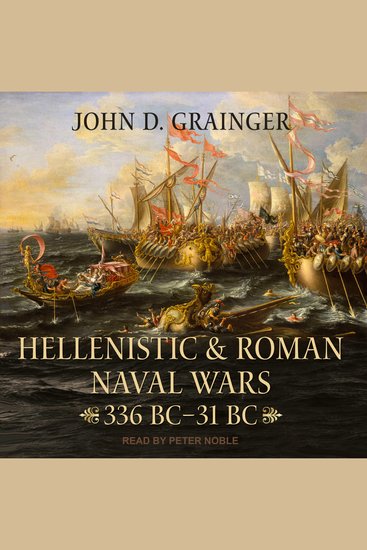
  • Hellenistic and Roman Naval Wars - 336 BC-31 BC - cover

    Hellenistic and Roman Naval Wars...

    John D. Grainger

    • 0
    • 0
    • 0
    A technological, strategic, and tactical history of ancient naval ships from Alexander to the battle of Actium. 


    The period covered in this book is well known for its epic battles and grand campaigns of territorial conquest, but Hellenistic monarchies, Carthaginians, and the rapacious Roman Republic were scarcely less active at sea. Huge resources were poured into maintaining fleets not only as symbols of prestige but as means of projecting real military power across the Mediterranean arena. 


    Taking the period between Alexander the Great's conquests and the Battle of Actium, John Grainger analyzes the developments in naval technology and tactics, the uses and limitations of sea power and the differing strategies of the various powers. He shows, for example, how the Rhodians and the Romans eschewed the ever-larger monster galleys favored by most Hellenistic monarchs in favor of smaller vessels. This is a fascinating study of a neglected aspect of ancient warfare.
    Mostra libro
  • Living with Integrity: A Philosophical Approach to Ethical Living - cover

    Living with Integrity: A...

    Henry J. Howes

    • 0
    • 0
    • 0
    Description: This topic explores the profound idea of living a life guided by integrity and ethical principles. It delves into how philosophical frameworks shape our understanding of morality and the choices we make. By addressing themes such as authenticity, consistency, and the alignment of actions with values, it emphasizes the importance of maintaining a strong moral compass in personal and professional settings. 
    The discussion includes an examination of classical and modern philosophical perspectives on ethics, offering practical strategies for applying these insights in everyday life. It also highlights the challenges of navigating ethical dilemmas in a world of competing values and pressures, providing tools to stay steadfast in the pursuit of what is right and just. Ultimately, this approach seeks to inspire individuals to embrace a life of integrity as a foundation for personal fulfillment and societal harmony.
    Mostra libro
  • The Messianic Character of American Education - cover

    The Messianic Character of...

    R. J. Rushdoony

    • 0
    • 0
    • 0
    Rushdoony's study tells us an important part of American history: exactly what has public education been trying to accomplish? Before the 1830s and Horace Mann, no schools in the U.S. were state supported or state controlled. They were local, parent-teacher enterprises, supported without taxes, and taking care of all children. They were remarkably high in standard and were Christian. From Mann to the present, the state has used education to socialize the child. The school's basic purpose, according to its own philosophers, is not education in the traditional sense of the 3 R's. Instead, it is to promote "democracy" and "equality," not in their legal or civic sense, but in terms of the engineering of a socialized citizenry. Public education became the means of creating a social order of the educators design. Such men saw themselves and the school in messianic terms. This book was instrumental in launching the Christian school and homeschool movements.
    Mostra libro
  • After Savagery - Gaza Genocide and the Illusion of Western Civilization - cover

    After Savagery - Gaza Genocide...

    Hamid Dabashi

    • 0
    • 0
    • 0
    Written during a genocide, After Savagery reveals the ethical bankruptcy of "Western philosophy" and how it undergirds the erasure of the colonized. 
    The death toll in Gaza continues to rise―a cold, lifeless number representing entire communities crushed under the weight of settler colonialism.What remains of the theories we use to understand our world? With lyrical and lucid fury, Hamid Dabashi exposes the racist roots of Western philosophy, demanding that listeners overcome its pernicious phantom of relevance. Rather than perceiving "the West" as giving carte blanche to Israel, Dabashi insists that Israel must be understood as its quintessence.If Israel is the West and the West is Israel, then Palestine is the world and the world is Palestine. Holding to glimmers from revolutionary works of literature and film, Dabashi argues, in grief and love, that the wretched of the earth need poetry after barbarism—and that Palestine is the site of a liberated imagination.
    Mostra libro