Junte-se a nós em uma viagem ao mundo dos livros!
Adicionar este livro à prateleira
Grey
Deixe um novo comentário Default profile 50px
Grey
Assine para ler o livro completo ou leia as primeiras páginas de graça!
All characters reduced
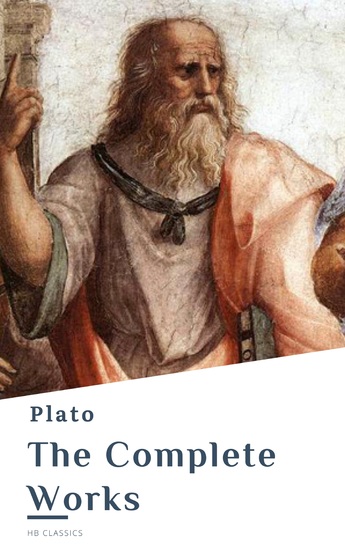
Plato: The Complete Works (31 Books) - cover
LER

Plato: The Complete Works (31 Books)

Plato Plato, HB Classics

Tradutor Benjamin Jowett

Editora: HB Classics

  • 0
  • 0
  • 0

Sinopse

Plato was a philosopher in Ancient Greece. He was an essential figure in the development of philosophy, especially the Western tradition, and he founded the Academy in Athens, the first institution of higher learning in the Western world.

Plato's dialogues have been used (and are still used) to teach a range of subjects, including philosophy, logic, ethics, rhetoric, religion and mathematics. His lasting themes include Platonic love, the theory of forms, the five regimes, innate knowledge, among others. His theory of forms launched a unique perspective on abstract objects, and led to a school of thought called Platonism.

This collection contains the following works by Plato:

Early Works
•Apology
•Charmides, or Temperance
•Crito
•Euthyphro
•Gorgias
•Hippias, Lesser
•Hippias, Greater
•Ion
•Laches
•Lysis
•Protagoras

Transitional Works
•Cratylus
•Euthydemus
•Meno
•Parmenides
•Phaedo
•Phaedrus
•Symposium
•The Republic

Middle Works
•Theaetetus

Late Works
•Critias
•Laws
•Philebus
•Sophist
•Statesman
•Timaeus

Works of Disputed Authorship
•Alcibiades I & II
•Eryxias
•Menexenus
•Theages
Disponível desde: 21/11/2022.
Comprimento de impressão: 3000 páginas.

Outros livros que poderiam interessá-lo

  • Ancient Egyptian Astronomy - The Stars and Their Influence - cover

    Ancient Egyptian Astronomy - The...

    Omar Khalil

    • 0
    • 0
    • 0
    Ancient Egyptian astronomy was deeply intertwined with the culture’s religious beliefs, daily life, and architectural marvels. Long before modern telescopes and advanced instruments, the Egyptians observed the night sky with precision, using it to navigate their world, mark the passing of time, and guide their spiritual practices. Astronomy was not merely a scientific endeavor but a fundamental aspect of their understanding of the cosmos and its connection to the gods. 
    The Egyptians viewed the stars, planets, and other celestial bodies as manifestations of divine power. Central to their astronomical system was the Sun, which they associated with the god Ra. Ra's journey across the sky each day symbolized the cycle of life, death, and rebirth. The Sun’s movement was used to structure the day and marked important moments in the agricultural calendar, such as the flooding of the Nile. The Egyptians also closely tracked the movements of the Moon and stars, which helped them define the months and seasons. 
    The study of the stars held profound religious significance for the ancient Egyptians. They believed that the stars were the eyes of the gods, observing and guiding humanity. Certain constellations, such as Orion, were particularly important, representing Osiris, the god of the afterlife. The Egyptians’ knowledge of the stars was so advanced that it influenced the alignment of their monumental architecture. The Great Pyramid of Giza, for instance, is aligned with remarkable precision to the stars, showcasing their ability to map the heavens and incorporate that knowledge into their constructions.
    Ver livro
  • Ten Secrets to Healing Power - "Elevate your healing experience! Discover dynamic audio lessons crafted to enhance your inner power" - cover

    Ten Secrets to Healing Power -...

    Callan Strathmore

    • 0
    • 0
    • 0
    Ten Secrets to Healing Power 
    ⭐⭐ A Simplified Guide with Insights ⭐⭐ 
    Are you eager to advance in your career and deepen your understanding of holistic healing? 
    Looking for an all-encompassing resource that covers everything you need to harness the power of nature for your healing journey? 
    Your quest ends here! 
    This guide is your ultimate companion for expanding your knowledge, applying your skills, and engaging in practical exercises that lead to success. 
    Updated to reflect the latest structures and insights in holistic medicine. 
    Key Features of This Enhanced Guide: 
    - In-depth insights into the healing power of nature 
    - Comprehensive explanations of the evolution of medicine 
    - Effective strategies for preparing and navigating your healing journey 
    Our guide stands out by providing thorough coverage, which is crucial for your understanding and success. Concepts are explored in depth rather than superficially treated. 
    Please note, this guide is an independent resource and is not affiliated with any official medical organizations. 
    Crafted with clarity and accessible language, our Healing Power Guide ensures a seamless flow between topics. Say goodbye to complex jargon and embrace clear, precise, and technically accurate content. 
    So, why hesitate? Click the BUY NOW button, secure your guide, and embark on your journey to unlocking the healing power of nature! 
    Start your healing journey today!
    Ver livro
  • Producing the Acceptable Sex Worker - An Analysis of Media Representations - cover

    Producing the Acceptable Sex...

    Gwyn Easterbrook-Smith

    • 0
    • 0
    • 0
    Producing the Acceptable Sex Worker considers how sex work is produced in news media narratives, a site where much of the general public draws its understanding of the industry in the absence of lived interaction with it. Taking New Zealand as a case study, this book considers an emerging discourse of acceptability for some sex workers, primarily those who do low-volume indoor work. Their acceptability is established in comparison with other kinds of sex workers, resulting in a redistribution but not a reduction of stigma. The conditions attached to acceptability reflect persistent anxieties about sex work: workers who are acceptable must give the impression that the sexual labour of the job is enjoyable and virtually indistinguishable from their personal life, eliding the work involved. Unacceptable workers have existing marginalisations magnified by their association with the industry, with migrant sex workers produced as devious or exploited, and transgender women’s involvement with the industry used to deny them the right to public space. The conditions attached to acceptability reveal how neoliberal discourses of choice, desire, authenticity, and personal responsibility inform the formation of sex work in the public eye.
    Ver livro
  • Trail of Tears - The Cruel Forced Displacement of 60000 American Natives - cover

    Trail of Tears - The Cruel...

    Kelly Mass

    • 0
    • 0
    • 0
    The Trail of Tears was a harrowing series of forced relocations that took place between 1830 and 1850, impacting approximately 60,000 American Indians from the so-called "Five Civilized Tribes." These tribes, which included the Cherokee, Muscogee (Creek), Seminole, Chickasaw, and Choctaw nations, were driven from their ancestral lands in the Southeastern United States to designated areas west of the Mississippi River, an event orchestrated by the United States government. The forced removal was the culmination of a decades-long process of ethnic cleansing that occurred gradually, as tribes were stripped of their homelands, cultural identities, and livelihoods. Alongside them, thousands of African American slaves owned by these tribes were also relocated, compounding the tragedy. 
    The Indian Removal Act, passed in 1830, paved the way for the systematic relocation of these tribes. It was during this period that the Cherokee removal in 1838—often considered the most infamous and final forced relocation east of the Mississippi—occurred. This event was largely triggered by the discovery of gold in Dahlonega, Georgia, in 1828, which sparked the Georgia Gold Rush. The prospect of wealth led state officials and settlers to covet Cherokee land, ultimately resulting in the forced march to the newly designated "Indian Territory" in what is now Oklahoma.
    Ver livro
  • Catholic Stories of Faith and Hope - How God Brings Good Things Out of Suffering - cover

    Catholic Stories of Faith and...

    Steven R. Hemler

    • 0
    • 0
    • 0
    If God loves us and is so powerful, why does God allow disease and natural disasters, as well as terrorism and other human atrocities?What are some true stories of Catholics today who faced significant suffering and now see the good that God brought from it? 
    Catholic Stories of Faith and Hope provides a Catholic response to the big question, “Why would a loving God allow evil, pain, and suffering?” This includes exploring why God would allow disease and natural disasters (natural evil) and evil human behavior (moral evil), as well as how suffering can help us find a deeper meaning and purpose in life. This book contains several poignant and inspiring personal testimonies of Catholics who have dealt positively with significant suffering in their own lives. These stories provide contemporary accounts of how suffering can lead to personal and spiritual growth and bring us closer to God, others, and the Church. Catholic Stories of Faith and Hope helps us see suffering and hardship as an opportunity to experience God’s grace and love by focusing on Jesus Christ, who experienced profound pain and suffering himself and who cares deeply about our own suffering. 
    Catholic Stories of Faith and Hope helps readers undertake the Spiritual Works of Mercy to “comfort the afflicted,” “counsel the doubtful,” and “educate the uninformed.” Understanding the purpose of suffering and the greater good that can come from it will help us and those we love become better, instead of bitter, when facing life’s inevitable hardships and difficulties.
    Ver livro
  • Dark Ages - cover

    Dark Ages

    Henry David Thoreau

    • 0
    • 0
    • 0
    In this luminous essay, Thoreau calls us to reconsider how we view the past: not as a rigid ledger of facts, but as a shifting landscape of light and shadow. He asks us to read history “as little critically as we consider the landscape, and be more interested by the atmospheric tints … than by its groundwork and composition.” 
    From the twilight of ages to the dawn of our own perception, this work invites you to sit on the mound of time, gaze through the mist of memory, and recognise that the true monument is not the stone carved in antiquity, but the living moment we inhabit now. Listen as Fiona Spreadborough gives voice to this meditation on existence, memory and the eternal laws of light. 
    Ideal for listeners drawn to thoughtful reflection, transcendental inquiry, and the subtle beauty of ideas.
    Ver livro