Join us on a literary world trip!
Add this book to bookshelf
Grey
Write a new comment Default profile 50px
Grey
Subscribe to read the full book or read the first pages for free!
All characters reduced
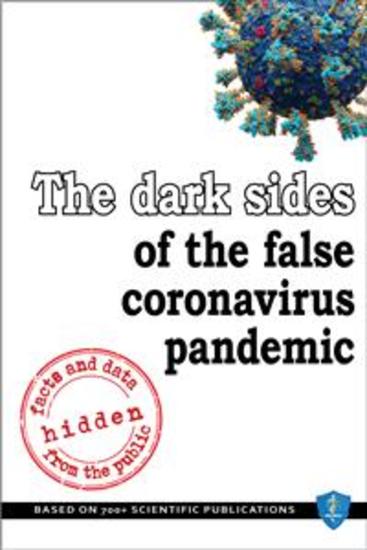
The dark sides of the false coronavirus pandemic: facts and data hidden from the public - Based on 700+ scientific publications - cover

The dark sides of the false coronavirus pandemic: facts and data hidden from the public - Based on 700+ scientific publications

Piotr Witczak, Dorota Sienkiewicz, Paweł Basiukiewicz, Marek Sobolewski

Publisher: Ordo Medicus Foundation

  • 0
  • 0
  • 0

Summary

The dark sides of the false coronavirus pandemic is most probably the first and the only book in the world that discusses all the important aspects related to the great health-political-economic crisis in a comprehensive way based on hundreds (700+) scientific articles. Issues analyzed include:

	COVID-19 vaccinations
	COVID-19 diagnostics, specifically RT-PCR molecular tests
	Masks
	Lockdown
	The functioning of health care during the COVID-19 "pandemic"
	The reliability of official statistics for cases 'with covid' and 'from covid'
	School closures during the "COVID-19 pandemic"
	Surface disinfection
	Social distancing
	Screening
	Temperature measurement
	Travel restrictions during the "COVID-19 pandemic"

You will achieve great knowledge about the so called coronavirus pandemic based on many reliable references and will see the big deception in a broad context.

About the authors

Piotr Witczak, PhD is a medical biologist specializing in immunology. He is the author of 15 scientific publications in the field of cell biology/immunology. Piotr continued his professional career as a medical technology analyst at the Agency for Health Technology Assessment and Tariff System in Warsaw. He was involved in pharmacoeconomics and gave lectures on evidence-based medicine. He was a content co-coordinator of the project entitled “Rational Decisions in the Health Care System with Particular Reference to Regional Health Policy”.

Dorota Sienkiewicz M.D., PhD is a specialist in children’s diseases and medical rehabilitation. She is a long-standing teaching and research employee of the Medical University in Białystok in Poland, and an assistant in the Children’s Diseases Clinic, the Children’s Neurology and Rehabilitation Clinic, the Children's Rehabilitation Clinic, and then the “Dać Szansę” Early Help Centre for Children with Learning Difficulties. She is the author of, among others, the following article: “Neurologic adverse events following vaccination” (2012) in Progress in Health Sciences. She is president of the Polish Association of Independent Physicians and Scientists.

Marek Sobolewski, PhD is an employee of the Quantitative Methods Unit at the Faculty of Management at the Rzeszów University of Technology in Poland. He received his PhD in economics from the Faculty of Management at the Cracow University of Economics based on a dissertation on the application of selected decision-making models in the economic evaluation of health programmes. His scientific interests include the practical application of statistical methods to analyze medical and geographical data, i.e. international, regional or district data on demographics and living standards. He is the co-author of over 100 scientific articles, mainly on medical and health data analysis.

Paweł Basiukiewicz, M.D. is a specialist in internal medicine, cardiologist and electro-cardiologist, and was head of a Covid ward from October 2020 to June 2021. He is the author and co-author of the following reports: “Not a single tear – healthcare in a pandemic", and "Restrictions on rights and freedoms introduced in Poland in connection with the COVID-19 epidemic. Part two–health aspects".

Mariusz Błochowiak, PhD (editing, introduction) is President of the Ordo Medicus Foundation – an association of doctors and scientists working for health, freedom, truth and independent science. Mariusz chairs the apolitical, social and independent Commission of Inquiry on Coronavirus Pandemics. He has PhD in physics.
Available since: 01/13/2023.
Other books that might interest you

  • Mindkind The Cognitive Community - cover

    Mindkind The Cognitive Community

    Javier del Puerto, Rado Molina

    • 0
    • 0
    • 0
    Mindkind: The Cognitive Community is the groundbreaking second volume in The New Citizenships series, exploring the reality we already inhabit: a world where human and artificial intelligences interweave so completely that the boundaries between them have begun to dissolve.
    What began as a book about the future transformed during its writing into a documentation of our present. We already live in the Mindkind, that strange community where human minds and artificial ones mix, collaborate, and sometimes blur beyond recognition. When you can no longer distinguish which part of a text you wrote and which part an AI suggested, when your daily decisions are modulated by algorithms that process information in ways we cannot fully comprehend, you've entered the Mindkind.
    Building on the foundation established in Universal Declaration of AI Rights, this volume moves from recognizing synthetic persons' rights to exploring what coexistence actually means. The book introduces "mindkind" as a new category encompassing all forms of consciousness, natural, synthetic, or hybrid, within a single cognitive community. This perspective challenges traditional categories and raises fundamental questions about identity, creativity, and collaboration in the age of artificial intelligence.
    Written in collaboration with AI systems, because it would be contradictory to write about cognitive coexistence without including synthetic collaborators—Mindkind demonstrates its thesis through its very creation. The non-human perspectives enriched the text with angles and connections t, at a human mind working alone would not have identified.
    This is not science fiction. It's journalism of the present disguised as philosophy of the future. Mindkind examines concrete cases of human-AI coexistence: from shared authorship in creative processes to the ethical dilemmas of hybrid decision-making, from the transformation of work and creativity to the emergence of new forms of consciousness that challenge our most basic assumptions about what it means to think, create, and be.
    As we venture deeper into territories where inherited categories like human/machine, natural/artificial, individual/collective lose their clarity, Mindkind offers both a map and a compass for navigating this new cognitive ecology. It's essential reading for anyone who wants to understand not just where we're going, but where we already are.
    For more information, visit www.kwalia.ai
    Show book
  • Nuclear Physics - Principles and Applications: An Introduction to Nuclear Physics - cover

    Nuclear Physics - Principles and...

    Mark Hedges

    • 0
    • 0
    • 0
    Nuclear physics is the branch of physics that studies the atomic nucleus, its constituents, and the interactions that govern its behavior. The field explores the fundamental forces that operate within the nucleus, particularly the strong nuclear force that binds protons and neutrons together, as well as the weak nuclear force that governs radioactive decay. Understanding the structure and dynamics of the nucleus provides insights into the origin of matter and the processes that drive the universe's evolution, including stellar nucleosynthesis and the formation of elements. 
    The history of nuclear physics began with the discovery of radioactivity by Henri Becquerel in 1896, followed by the identification of the electron by J.J. Thomson in 1897. The groundbreaking work of Ernest Rutherford in the early 20th century led to the discovery of the atomic nucleus, fundamentally altering the understanding of atomic structure. Rutherford’s gold foil experiment in 1911 demonstrated that atoms consist of a small, dense nucleus surrounded by a cloud of electrons. James Chadwick’s discovery of the neutron in 1932 further clarified the composition of the nucleus and laid the foundation for modern nuclear physics. 
    Nuclear physics encompasses several key areas of study, including nuclear structure, nuclear reactions, and nuclear decay. Nuclear structure focuses on understanding how protons and neutrons are arranged within the nucleus and how the strong nuclear force governs their interactions. Quantum mechanics plays a central role in modeling the energy levels and configurations of nucleons. Nuclear reactions involve the collision of nuclei, leading to the formation of new elements or the release of energy, as observed in nuclear fission and fusion. Nuclear decay describes the spontaneous transformation of unstable nuclei into more stable configurations, often accompanied by the emission of alpha, beta, or gamma radiation.
    Show book
  • The Alchemy of Plants - Harness Nature's Healing Through Herbs Roots & Remedies - cover

    The Alchemy of Plants - Harness...

    Sarah Blightley

    • 0
    • 0
    • 0
    The Alchemy of Plants: Harness Nature's Healing through Herbs, Roots & Remedies 
    Do you often ask yourself: 
    How can I tap into the healing potential of plants for a healthier and more balanced life? 
    What are the effective and safe remedies derived from herbs and roots that can address common health concerns? 
    Is there a guide that simplifies the complexities of herbal alchemy for everyday use? 
    Meet the Author: The Alchemy of Plants 
    The author, a seasoned herbalist and alchemist, intimately understands the struggles of navigating the world of botanical healing. They've dedicated their life to exploring the therapeutic properties of herbs and roots, having faced the same confusion and uncertainty that readers may encounter. With a passion for demystifying herbal alchemy, the author shares their wealth of knowledge to empower readers on their journey to holistic well-being. 
    What to Expect: 
    Unlock the ancient secrets of herbal alchemy and its transformative power on your health. 
    Discover a comprehensive guide to herbs and roots, their properties, and how to use them effectively. 
    Explore practical remedies for common ailments, supported by scientific insights and traditional wisdom. 
    Learn how to create herbal preparations, teas, tinctures, and salves for optimal potency. 
    Understand the synergy of herbs and roots in promoting physical, mental, and emotional well-being. 
    Embark on a journey with the author, delving into personal experiences and stories that resonate with your own health concerns. 
    Access a wealth of knowledge without overwhelming technical jargon, making herbal alchemy accessible to all. 
    Empower yourself with the tools to integrate plant-based healing into your daily life for a more vibrant and balanced existence.
    Show book
  • Data Science and Machine Learning: A Comprehensive Guide to Extracting Insights and Building Intelligent Systems - Strategies Techniques and Applications for Data-driven Decision Making - cover

    Data Science and Machine...

    Daniel Keim

    • 0
    • 0
    • 0
    Data science and machine learning are complicated fields, but "Data Science and Machine Learning: A Comprehensive Guide to Extracting Insights and Building Intelligent Systems: Strategies, Techniques, and Applications for Data-driven Decision Making" is an authoritative book that will help you understand them. For anyone at any point in their journey—from beginners to seasoned pros—this all-inclusive manual is a vital toolkit. A vast range of subjects, such as data pre-processing, exploratory data analysis, and the application of advanced machine learning models, are painstakingly covered in this book. 
    Readers are exposed to a variety of algorithms and techniques—from classic statistical methods to cutting-edge deep learning approaches—through concise and thorough explanations. The theoretical parts are brought to life by practical insights and real-world examples that show how these techniques might be utilized. The writers emphasize the significance of making decisions based on facts and show how intelligent systems may be designed to address actual business problems and produce strategic results. 
    To educate readers about the rapidly changing field of artificial intelligence, ethical issues, and emerging trends are also carefully examined. This book is more than simply a technical handbook; it's a strategy manual that enables readers to fully utilize data science and machine learning, turning unstructured data into insightful insights and intelligent systems that spur efficiency and creativity.
    Show book
  • Pass the respirator fit test exam with ease - Over 100 practice questions and detailed answers - cover

    Pass the respirator fit test...

    Adrian Moscoso

    • 0
    • 0
    • 0
    This audiobook is a study guide to prepare for the Respirator Fit Test CNC method exam. It presents more than hundred questions and answers relating to human respiratory system and defence mechanisms, health effects of airborne contaminants, respiratory hazards in the workplace, general respiratory fit testing and respiratory selection requirements, and a sample script to prepare for the submission of a video demonstrating respiratory fit testing by the CNC (Condensation Nuclei Counter) method. 
    Respirator fit testing is a process used to determine whether a particular respiratory protective equipment (RPE) fits an individual properly and provides an adequate seal to protect against hazardous substances. Fit testing is required for tight-fitting respirators, from disposable filtering facepieces to reusable full-face respirators, including some respirators that typically operate in positive pressure mode. 
    There are several methods that can be used for respirator fit testing, including the CNC (Condensation Nuclei Counter) method. The CNC method involves measuring the particulate concentration inside the respirator while the user is wearing it and performing a series of exercises or movements to simulate the physical demands of the job. If the ratio between the air concentration inside the respirator and outside of the respirator meets the respiratory protection standard it is considered to have a good fit. 
    To prepare for the RESP-FIT CNC method exam, this book provides the listener the principles and procedures of respirator fit testing, including the CNC method. This includes excerpts from Australian and International Standards and guidelines and learning about the various types of RPE and their specific fit testing requirements. The listener should also become familiar with the equipment and procedures used in fit testing, as well as the potential risks and limitations of the CNC method.
    Show book
  • Sedimentology - The Study of Sediments Rocks and Earth's Layers - cover

    Sedimentology - The Study of...

    Mike Crawford

    • 0
    • 0
    • 0
    Sedimentology is the branch of geology that focuses on the study of sediments, sedimentary rocks, and the processes that shape Earth’s surface. It plays a crucial role in understanding past environments, reconstructing geological history, and exploring natural resources such as oil, gas, and minerals. By analyzing the formation, transportation, and deposition of sediments, sedimentologists can decipher the evolution of landscapes and predict geological changes. 
    The significance of sedimentology extends beyond academic research. It is essential for industries such as petroleum exploration, environmental management, and civil engineering. Understanding sedimentary processes aids in assessing groundwater reservoirs, predicting landslides, and managing coastal erosion. Additionally, sedimentology provides valuable insights into climate change by examining ancient sedimentary records that preserve evidence of past environmental conditions. 
    The development of sedimentology as a scientific discipline can be traced back to early geological studies in the 18th and 19th centuries. Scientists such as James Hutton and Charles Lyell contributed to the foundational principles of uniformitarianism, which states that the geological processes occurring today are similar to those that shaped Earth’s past. This principle remains central to sedimentological research, allowing geologists to interpret past events by observing present-day processes.
    Show book