Unisciti a noi in un viaggio nel mondo dei libri!
Aggiungi questo libro allo scaffale
Grey
Scrivi un nuovo commento Default profile 50px
Grey
Iscriviti per leggere l'intero libro o leggi le prime pagine gratuitamente!
All characters reduced
The rasp - cover

The rasp

Phillip MacDonald

Casa editrice: Good Press

  • 0
  • 0
  • 0

Sinossi

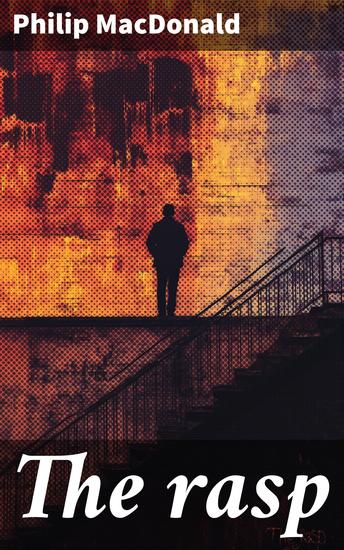
In Philip MacDonald's suspenseful novel "The Rasp," the author masterfully weaves a gripping narrative that delves into the psychological complexities of fear and identity. Set against a backdrop of urban decay, the novel employs a sharp, modernist style, infusing elements of crime fiction with a keen observation of human nature. MacDonald's intricate plotting and vivid characterization invite readers into a labyrinth of moral ambiguity, effectively capturing the zeitgeist of the early 20th century, when societal norms were increasingly challenged and redefined. Philip MacDonald, a prominent author and screenwriter of the early 1900s, had a keen understanding of human psychology and social tensions, which profoundly influenced his literary output. His diverse background in playwriting and cinema provided him with unique insights into narrative structure and character development. Drawing from his own experiences and the complexities of contemporary life, MacDonald was able to craft a tale that not only entertains but also provokes thought about the darker aspects of human existence. "The Rasp" is a compelling read for those who appreciate psychologically incisive literature that does not shy away from exploring uncomfortable truths. MacDonald's skillful storytelling and nuanced characters make this work not only an engrossing thriller but also a profound psychological exploration that resonates with contemporary readers.
Disponibile da: 02/03/2025.
Lunghezza di stampa: 150 pagine.
Altri libri che potrebbero interessarti

  • Lord of the Dynamos - Classic Tales Edition - cover

    Lord of the Dynamos - Classic...

    H. G. Wells

    • 0
    • 0
    • 0
    Technology worship is brought to a head when Azuma-zi’s head spins at the wonder of a humming, whirling and buzzing electric dynamo. He prays for the dynamo to deliver him from his troubles, and make his life easier to bear. Apparently the dynamo demands a sacrifice...
    Mostra libro
  • A Painful case - From their pens to your ears genius in every story - cover

    A Painful case - From their pens...

    James Joyce

    • 0
    • 0
    • 0
    James Augustine Aloysius Joyce was born on the 2nd February 1882 in Dublin into a middle-class family, and the eldest of ten surviving siblings 
    Admired as a brilliant student he briefly attended the Christian Brothers-run O'Connell School before excelling at the Jesuit schools of Clongowes and Belvedere.  From there he went on to attend University College Dublin from 1898, studying English, French and Italian 
    In 1902, Joyce was now in his early twenties, and went to Paris to study Medicine but soon abandoned his teachings.  Back in Dublin to attend to his dying Mother he met Nora Barnacle. They bonded immediately into a life-long match. Together they decided to emigrate to Europe.  The couple lived in Trieste, Rome, Paris, and finally Zürich where Joyce pursued a variety of jobs and ventures to supplement his literary pursuits but none of these paid off.  
    After publishing a poetry volume, ‘Chamber Music’, in 1907, his short story collection ‘The Dubliners’, in 1914, helped establish his talent in the rapidly changing world.  
    Although far from home Joyce’s literary heart and works were set in his recollections of Dublin.  Characters are close resemblances of family and friends and indeed enemies.  His landmark work ‘Ulysses’, published in 1922, is set in the streets and alleyways of the city as it parallels Homer’s Odyssey in a variety of styles including its famed stream of consciousness. 
    His pen continued to produce classics of the order of ‘A Portrait of the Artist as A Young Man’ and ‘Finnegan’s Wake’ together with several volumes of poetry and a play ‘The Exiles, in 1918.   
    On the 11th January 1941, Joyce underwent surgery in Zürich for a perforated duodenal ulcer. The next day he fell into a coma. On the 13th after a brief period of lucidity in which he called for his wife and son he passed.  He was 58.
    Mostra libro
  • Frankenstein - or The Modern Prometheus - cover

    Frankenstein - or The Modern...

    Mary Shelley

    • 0
    • 0
    • 0
    Frankenstein tells the story of Victor Frankenstein, a young scientist who creates a sapient creature in an unorthodox scientific experiment.
    Mostra libro
  • Brothers Karamazov The (Part IV) - The Trial and the Triumph of the Spirit - cover

    Brothers Karamazov The (Part IV)...

    Fyodor Dostoevsky

    • 0
    • 0
    • 0
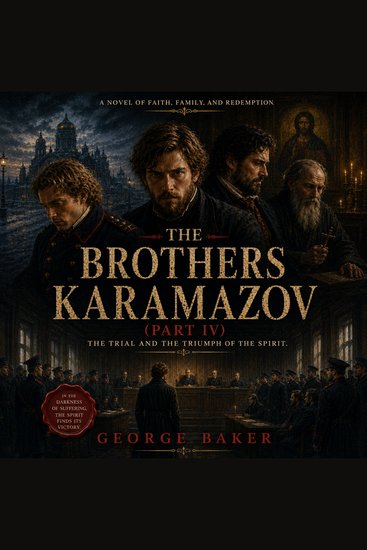
    The concluding part of Dostoevsky's final masterpiece. Part IV brings together the intricate threads of the Karamazov family saga, focusing on the education of the young boys, the dramatic trial of Dmitri Karamazov, and the spiritual resolution of Alyosha. A profound exploration of justice, mercy, and the hope of humanity. Narrated with mastery by George Baker.
    Mostra libro
  • Candide - cover

    Candide

    Voltaire

    • 0
    • 0
    • 0
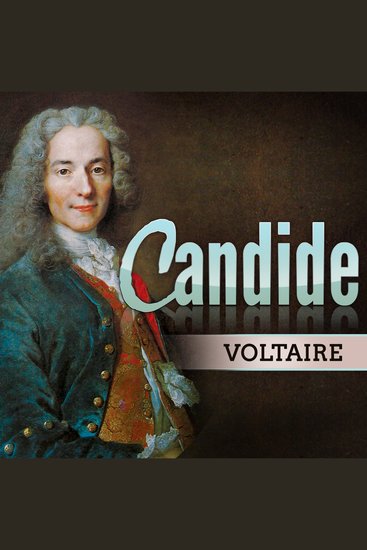
    Candide is a French satire first published in 1759 by Voltaire, a philosopher of the Age of Enlightenment. It begins with a young man, Candide, who is living a sheltered life in an Edenic paradise and being indoctrinated with Leibnizian optimism by his mentor, Professor Pangloss. The work describes the abrupt cessation of this lifestyle, followed by Candide's slow and painful disillusionment as he witnesses and experiences great hardships in the world. Voltaire concludes Candide with, if not rejecting Leibnizian optimism outright, advocating a deeply practical precept, "we must cultivate our garden", in lieu of the Leibnizian mantra of Pangloss, "all is for the best" in the "best of all possible worlds". 
    Candide is characterized by its tone as well as by its erratic, fantastical, and fast-moving plot. A picaresque novel with a story similar to that of a more serious coming-of-age narrative (Bildungsroman), it parodies many adventure and romance clichés, the struggles of which are caricatured in a tone that is bitter and matter-of-fact. Still, the events discussed are often based on historical happenings, such as the Seven Years' War and the 1755 Lisbon earthquake. As philosophers of Voltaire's day contended with the problem of evil, so does Candide in this short theological novel, albeit more directly and humorously. Voltaire ridicules religion, theologians, governments, armies, philosophies, and philosophers. Through Candide, he assaults Leibniz and his optimism. 
    Candide has enjoyed both great success and great scandal. Immediately after its secretive publication, the book was widely banned to the public because it contained religious blasphemy, political sedition, and intellectual hostility hidden under a thin veil of naïveté. Today, Candide is recognized as Voltaire's magnum opus and is often listed as part of the Western canon. It is among the most frequently taught works of French literature.
    Mostra libro
  • The Complete Works of H P Lovecraft - cover

    The Complete Works of H P Lovecraft

    H. P. Lovecraft

    • 0
    • 0
    • 0
    "The Oldest and Strongest Emotion of Mankind is Fear, and the Oldest and Strongest Kind of Fear is Fear of the Unknown."
    
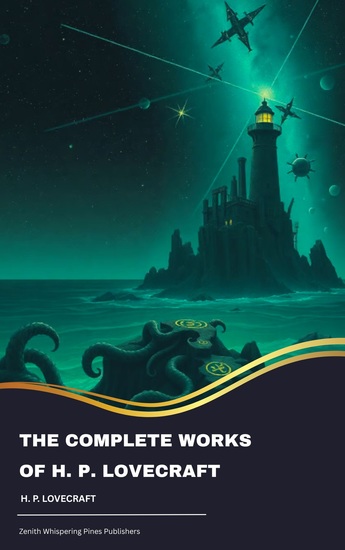
    H.P. Lovecraft did not just write horror; he created an entire universe of ancient gods and forbidden knowledge that has haunted the human imagination for a century. Moving beyond traditional ghosts and vampires, Lovecraft pioneered "Cosmic Horror"—the terrifying realization that humanity is an insignificant speck in a vast, uncaring cosmos. This comprehensive collection brings together every tale of madness, every forbidden tome, and every shadow-shrouded town from the master of the weird.
    
    Inside this monumental collection, you will explore:
    
    The Architecture of the Mythos: Experience the interconnected cycle of stories involving ancient, slumbering deities and the secret cults that seek to wake them.
    
    The Descent into Madness: Witness the "Lovecraftian Protagonist"—scholars and explorers whose pursuit of truth leads them to sights that the human mind was never meant to behold.
    
    Atmospheric World-Building: Immerse yourself in the decaying seaports and shunned hill-country of "Lovecraft Country," where the geometry is wrong and the shadows have teeth.
    
    The Philosophy of the Unknown: Delve into the "Cosmic Indifferentism" that makes Lovecraft's work uniquely chilling—the idea that the universe is not hostile, but simply doesn't care that we exist.
    
    Lovecraft's influence is the foundation of modern horror, inspiring everything from blockbuster films to dark tabletop gaming. Whether you are a seeker of the "Necronomicon" or a fan of psychological dread, this volume is an essential cornerstone for any library of supernatural literature and modern myth-making.
    
    Dare to look beyond the veil. Buy "The Complete Works of H.P. Lovecraft" today and discover what hides in the dark.
    Mostra libro