Unisciti a noi in un viaggio nel mondo dei libri!
Aggiungi questo libro allo scaffale
Grey
Scrivi un nuovo commento Default profile 50px
Grey
Iscriviti per leggere l'intero libro o leggi le prime pagine gratuitamente!
All characters reduced
Proof: Does God Exist? - cover

Proof: Does God Exist?

Philip Gardiner

Casa editrice: One Media iP Group

  • 0
  • 0
  • 0

Sinossi

"What with all the fuss over Jesus and Mary because of Dan Brown and the growing numbers who are suddenly taking religion seriously again it is good timing to see a balanced viewpoint arrive on the scene. Gardiner recently threw me off balance with The Serpent Grail and I have just finished Gnosis too, but this was just what I was looking for.

It's simple, but concise and leads you through a process that you would go through yourself if you had time. I really enjoyed his light humour and easy-to-read style so yes, I recommend it. The Rosicrucian."
Disponibile da: 21/02/2023.
Lunghezza di stampa: 170 pagine.

Altri libri che potrebbero interessarti

  • After Stoicism - Last Words of the Last Roman Philosopher - cover

    After Stoicism - Last Words of...

    Thomas Ward

    • 0
    • 0
    • 0
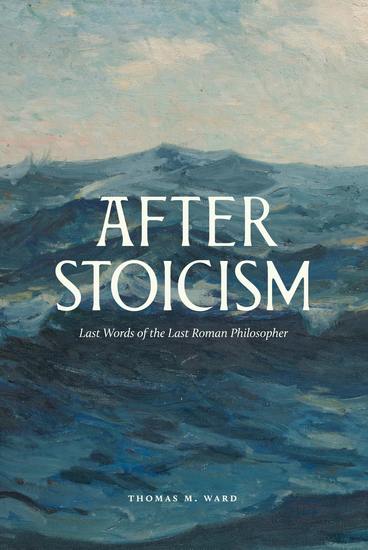
    The Stoic philosophers of antiquity recognized something we often forget. Good fortune does not guarantee happiness, and bad fortune does not guarantee misery. Boethius was the last philosopher of ancient Rome and a Christian theologian. He was also an illustrious senator who suffered a spectacular reversal of fortune. Falsely accused of treason and sentenced to death, he spent several months in prison awaiting his execution. For consolation he turned to the Stoics he had spent his life studying. They helped him to remember that the good things he once enjoyed—wealth, power, fame—could not make him truly happy. Also, that the injustice he suffered need not make him miserable. But the Stoics were not the only philosophers Boethius sought for consolation. The Stoics had taught that the highest happiness we can hope for is tranquility—serene indifference despite all the trials of life. But for Boethius, tranquility was not enough. He reached for something beyond Stoicism. Something that promised true happiness, come what may. This book is a guide through Boethius’s The Consolation of Philosophy. It shows how Boethius, in his darkest hour, took everything noble from Stoicism and fused it with a rational and religious conviction that there is a hope for happiness through and beyond the suffering of this life.  
    Mostra libro
  • Twilight's Last Gleaming - Can America Be Saved? - cover

    Twilight's Last Gleaming - Can...

    Todd Starnes

    • 0
    • 0
    • 0
    "Todd Starnes is a fierce defender of freedom and a great patriot. He has seen, and understands, what is happening to our country like few others—his book is absolutely terrific, a must read!" —President Trump 


    President Biden ushered in a dark winter of malaise across our great nation. He snuffed out Lady Liberty's bright beacon of hope and brought despair to the land. And now we stand at a time of great choosing. Do we choose the path that leads to freedom or the path that leads to tyranny? 


    We face difficult days, but not hopeless days. Together, we can restore the Republic and reclaim our standing in the world. But first, we must remember our roots and return to the values that made our nation great. A deep and abiding desire for freedom and liberty, girded by faith in God, is the essence of who we are. Those are the precepts that must be reaffirmed if America is to be saved.
    Mostra libro
  • Steel Drivin' Man: John Henry the Untold Story of an American Legend - cover

    Steel Drivin' Man: John Henry...

    Scott Reynolds Nelson

    • 0
    • 0
    • 0
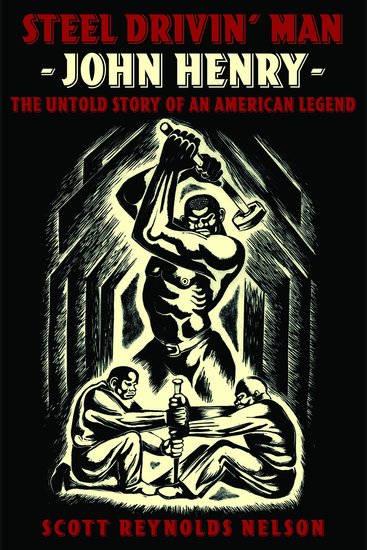
    The ballad "John Henry" is the most recorded folk song in American history and John Henry--the mighty railroad man who could blast through rock faster than a steam drill--is a towering figure in our culture. 
    In Steel Drivin' Man, Scott Reynolds Nelson recounts the true story of the man behind the iconic American hero, telling the poignant tale of a young Virginia convict who died working on one of the most dangerous enterprises of the time, the first rail route through the Appalachian Mountains. Using census data, penitentiary reports, and railroad company reports, Nelson reveals how John Henry, victimized by Virginia's notorious Black Codes, was shipped to the infamous Richmond Penitentiary to become prisoner number 497, and was forced to labor on the mile-long Lewis Tunnel for the C&O railroad. Equally important, Nelson masterfully captures the life of the ballad of John Henry, tracing the song's evolution from the first printed score by blues legend W. C. Handy, to Carl Sandburg's use of the ballad to become the first "folk singer," to the upbeat version by Tennessee Ernie Ford. 
    Attractively illustrated with numerous images, Steel Drivin' Man offers a marvelous portrait of a beloved folk song--and a true American legend.
    Mostra libro
  • Cromwell Against the Scots - Last Anglo-Scottish War 1650-52 - cover

    Cromwell Against the Scots -...

    John D. Grainger

    • 0
    • 0
    • 0
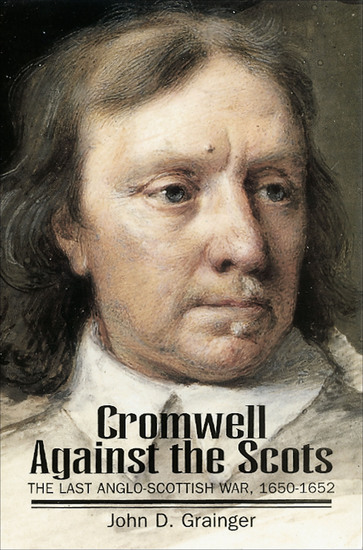
    After an introduction establishing Cromwell's war against the Scots from July 1650 to May 1652, this book discusses Charles' landing and Fairfax's resignation as commander-in-chief of the English Republican Army, both events occurred on the same day. It then addresses the causes of the war, Charles II's landing in Northern Scotland from the Continent. The story continues chronologically, from Cromwell's invasion of Scotland, through the Battle of Dunbar, and the slow establishment of the king's power over the Scottish government. The end came with the fall of the last of the Scottish castles, Dunnottar, to English conquest. The Scots enjoyed a distinct military recovery after the Dunbar defeat, but their aims and those of the king were always at cross purposes: the king was intent on the invasion of England, the Scots on resistance to English conquest. Finally, Cromwell's manoeuvres in the summer of 1651, and the English victory at Inverkeithing, allowed the king to invade England. This ended in another Scots defeat at Worcester. The removal of the Scots Army to England meanwhile allowed the English under Monck to complete their conquest of Scotland. Throughout, the political dimension, particularly in Scotland, is kept in view. At the end, the author comments on the relevance of these events to the present Scottish situation.
    Mostra libro
  • How We Disappear - A Personal History of Information - cover

    How We Disappear - A Personal...

    Thomas S. Mullaney

    • 0
    • 0
    • 0
    A brilliant foray into the nature of information, of history, and of making meaning in the face of death and decay. 
     
    Our lives are collections of information—from mundane official documents, poignant family photos, and random artifacts to the cues embodied in our genes. Never is this more evident than in the wake of a parent's death. Yet from all these elusive, even evanescent, data points, history is written and a future is made. 
     
    This information is stored on clay tablets and wood pulp; in vinyl grooves, compact discs, and magnetic patterns; and relayed over undersea cables and satellite cell networks. But all information decays. Everything that we put "in formation" eventually collapses into randomness. 
     
    In this wide–ranging examination of the micro and macro, world–renowned scholar Thomas S. Mullaney reflects on the deaths of his parents, and on how human lives "disappear." Lyrical and poignant, his erudite, inspiring meditation offers eye–opening insight on the miracle of existence, and on what it means to forge meaning from a chaotic universe.
    Mostra libro
  • The Mind of Primitive Man - cover

    The Mind of Primitive Man

    Franz Boas

    • 0
    • 0
    • 0
    In "The Mind of Primitive Man," Boas delves into the diversity of human cultures, examining their languages, customs, beliefs, and social organizations. He emphasizes the fundamental equality of human capacities across all cultures, debunking theories of racial hierarchy prevalent in the early 20th century. Boas argues that cultural differences arise from environmental factors and historical contingencies rather than innate racial characteristics. His work laid the foundation for modern cultural anthropology, emphasizing the importance of fieldwork, empirical observation, and cultural relativism.
    Mostra libro