Junte-se a nós em uma viagem ao mundo dos livros!
Adicionar este livro à prateleira
Grey
Deixe um novo comentário Default profile 50px
Grey
Assine para ler o livro completo ou leia as primeiras páginas de graça!
All characters reduced
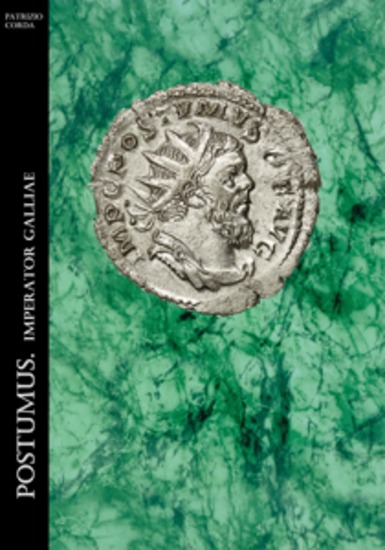
Postumus Imperator Galliae - cover
LER

Postumus Imperator Galliae

Patrizio Corda

Editora: Patrizio Corda

  • 0
  • 0
  • 0

Sinopse

260 AD. - After a long and luminous military career, which led him from a simple recruit to becoming governor of Germania Inferior, Marcus Cassianus Latinus Postumus finds himself at a crossroads. Fraternally bound to the legionnaires but bound to obey the orders of the august Gallienus and his despotic son Saloninus, he is forced to make a choice from which he has long fled: listen to his heart and dare
leveraging the support of the troops, or continue to live as a servant.
His decision will radically change the Roman empire of the third century. In an era marked by barbarian invasions, infighting, and especially secessionist uprisings, Postumus will emerge imposing himself as the best alternative to the legitimate emperor, giving rise to a kingdom that will hold Rome in check for years.
And which, like the latter, will experience harsh battles, betrayals, and fatal conspiracies.
Disponível desde: 10/11/2024.

Outros livros que poderiam interessá-lo

  • Warfare in Ancient Greece: The History of the Greeks’ Wars on Land and Sea in Antiquity - cover

    Warfare in Ancient Greece: The...

    Editors Charles River

    • 0
    • 0
    • 0
    Although the armies of the ancient Greek, or “Hellenic”, city-states (poleis, singular polis) included both cavalry (hippeis) and light infantry (psiloi, peltastes, gymnetes), their mainstay was undoubtedly the heavy infantry known today as hoplites. Armed to the teeth with their distinctive round shield (aspis or hoplon), high-crested helmet (corys) and long spear (dory), the hoplites were some of the most efficient soldiers of their time. They fought in the tight phalanx formation, and beyond the confines of their small poleis, Greek hoplites were also prized as mercenaries throughout the ancient world.  
    	Most historians believe that the hoplite became the dominant infantry soldier in nearly all the Greek city-states around the 8th century BCE. Hoplites were responsible for acquiring their own equipment, so not every hoplite might have been equally armed, but considering the style of warfare, they needed as much uniformity as possible. Like most infantry outside of Greece, the hoplites also carried spears, but while the Persian weapons were short and light for example, the Greek spears were thick shafts anywhere between seven and nine feet long. These spears were topped by a 9-inch spearhead, with a “lizard-sticker” buttspike at the bottom which could be used as a secondary spearhead if the main weapon was snapped off, or to plant the spear upright when at rest. Each hoplite also carried a shortsword, designed specifically for thrusting in the close confines of a melee (the Spartan weapon, the xiphos, was so short as to be virtually a dagger, its blade barely over a foot long).  
    It was only with the advent of the more mobile Roman legion, and the defeat of phalanxes in battles like Cynoscephalae (197 BCE) and Pydna (168 BCE), that the hoplite phalanx was finally outclassed
    Ver livro
  • White Poverty - How Exposing Myths about Race and Class Can Reconstruct American Democracy - cover

    White Poverty - How Exposing...

    Reverend Dr. William Barber II,...

    • 0
    • 0
    • 0
    A generational work with far-ranging social and political implications, White Poverty promises to be one of the most influential books in recent years. 


    One of the most pernicious and persistent myths in the United States is the association of Black skin with poverty. Though there are forty million more poor white people than Black people, most Americans, both Republicans and Democrats, continue to think of poverty—along with issues like welfare, unemployment, and food stamps—as solely a Black problem. Why is this so? What are the historical causes? And what are the political consequences that result? 


    These are among the questions that the Reverend Dr. William J. Barber II, a leading advocate for the rights of the poor and the "closest person we have to Dr. King" (Cornel West), addresses in White Poverty, a groundbreaking work that exposes a legacy of historical myths that continue to define both white and Black people, creating in the process what might seem like an insuperable divide. Analyzing what has changed since the 1930s, when the face of American poverty was white, Barber, along with Jonathan Wilson-Hartgrove, addresses white poverty as a hugely neglected subject that just might provide the key to mitigating racism and bringing together tens of millions of working class and impoverished Americans.
    Ver livro
  • Data Driven - Truckers Technology and the New Workplace Surveillance - cover

    Data Driven - Truckers...

    Karen Levy

    • 0
    • 0
    • 0
    A behind-the-scenes look at how digital surveillance is affecting the trucking way of life. 


    Long-haul truckers are the backbone of the American economy, transporting goods under grueling conditions and immense economic pressure. Truckers have long valued the independence of their work, sharing a strong occupational identity rooted in a tradition of autonomy. Yet these workers increasingly find themselves under many watchful eyes. Data Driven examines how digital surveillance is upending life and work on the open road, and raises crucial questions about the role of data collection in broader systems of social control. 


    Karen Levy takes listeners inside a world few ever see, painting a bracing portrait of one of the last great American frontiers. Federal regulations now require truckers to buy and install digital monitors that capture data about their locations and behaviors. Intended to address the pervasive problem of trucker fatigue by regulating the number of hours driven each day, these devices support additional surveillance by trucking firms and other companies. Traveling from industry trade shows to law offices and truck-stop bars, Levy reveals how these invasive technologies are reconfiguring industry relationships and providing new tools for managerial and legal control—and how truckers are challenging and resisting them.
    Ver livro
  • How to Lose Yourself - An Ancient Guide to Letting Go - cover

    How to Lose Yourself - An...

    The Buddha and His Followers

    • 0
    • 0
    • 0
    Inviting new translations of classical Buddhist texts about why the self is an illusion—and why giving it up can free us from suffering 


    From self-realization and self-promotion to self-help and the selfie, the modern world encourages us to be self-obsessed. We are even told that finding ourselves is the key to happiness. Better to lose yourself! More than 2,500 years ago, the Buddha argued that the self is an illusion—and that our belief in it is the cause of most, if not all, of our suffering. How to Lose Yourself presents lively, accessible, and expert new translations of ancient Buddhist writings about the central, unique, and powerful Buddhist teaching of "no-self." 


    Drawn from three important Buddhist traditions, these essential Indian, Tibetan, and Chinese writings provide a rich sampling of the ways Buddhist philosophers have understood the idea that we are selfless persons—and why this insight is so therapeutic. When we let go of the self, we are awakened to the presence of all things as they truly are, and we let go of the anxiety, fear, greed, and hatred that are the source of all suffering.
    Ver livro
  • A Rare Recording of the 1965 "Phantom Punch" Title Fight Between Muhammad Ali and Sonny Liston - cover

    A Rare Recording of the 1965...

    Muhammad Ali, Sonny Liston

    • 0
    • 0
    • 0
    This is the audio recording of the "Phantom Punch" title fight--the second championship bout between Muhammad Ali and Sonny Liston--held on May 25, 1965, at St. Dominic’s Hall in Lewiston, Maine. It also includes a follow-up analysis by boxing experts. This rematch is infamous for the controversial "phantom punch" that led to Liston's quick defeat in the first round. Ali knocked Liston down, but the punch was not clearly seen by many observers, leading to speculation about a fix. The fight was marred by confusion, as the referee failed to administer a proper count, and the atmosphere surrounding the event was tense, contributing to its notoriety.
    Ver livro
  • Too Good to Be Altogether Lost - Rediscovering Laura Ingalls Wilder's Little House Books - cover

    Too Good to Be Altogether Lost -...

    Pamela Smith Hill

    • 0
    • 0
    • 0
    Laura Ingalls Wilder, author of the well-known Little House series, wrote stories from her childhood because they were "too good to be altogether lost." With the release of NBC's Little House on the Prairie series in 1974, Wilder was well on her way to becoming an international literary superstar. Simultaneously, however, the novels themselves began to slip from view, replaced by an onslaught of assumptions and questions about Wilder's values and politics and even about the books' authenticity. From the 1980s, a slow but steady critical crescendo began to erode Wilder's literary reputation. 


    In Too Good to Be Altogether Lost, Wilder expert Pamela Smith Hill dives back into the Little House books, closely examining Wilder's text, her characters, and their stories. Hill reveals that these gritty, emotionally complex novels depict a realistic coming of age for a girl in the American West. This realism in Wilder's novels, once perceived as a fatal flaw, can lead to essential discussions not only about the past but about the present—and the underlying racism young people encounter when reading today. Hill's fresh approach to Wilder's books shows how this author forever changed the literary landscape of children's and young adult literature in ways that remain vital and relevant today.
    Ver livro