Rejoignez-nous pour un voyage dans le monde des livres!
Ajouter ce livre à l'électronique
Grey
Ecrivez un nouveau commentaire Default profile 50px
Grey
Abonnez-vous pour lire le livre complet ou lisez les premières pages gratuitement!
All characters reduced
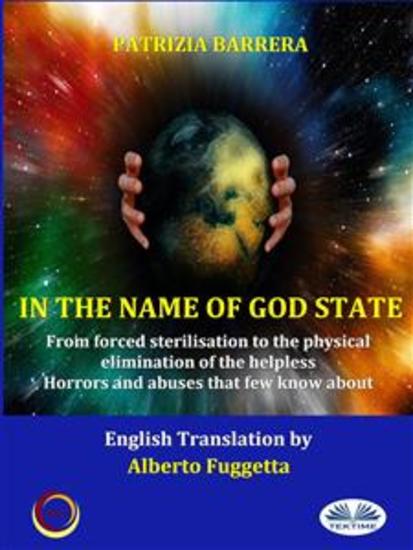
In The Name Of God State - From Coercive Sterilisation To The Physical Elimination Of Helplessness - cover

In The Name Of God State - From Coercive Sterilisation To The Physical Elimination Of Helplessness

Patrizia Barrera

Maison d'édition: Tektime

  • 0
  • 0
  • 0

Synopsis

Allowing a ruler to decide unilaterally on an individual's health and reproductive capacity is tantamount to putting his life in his hands. It means authorising him to determine the length and quality of the existence of individuals, groups, social classes, ethnic groups, entire peoples. And to let him style, on the basis of personal and arbitrary convictions, categories of more or less deserving individuals to be allowed to work, express themselves and live, according to fixed rules of behaviour and thought. In short, it means helping him to play the part of God.How does one carry out a massacre? How does one eliminate an entire ethnic group? How do you affect the individual's basic freedoms? And how do you annul their rights? Well, the most obvious way is persecution, war, martyrdom. On closer inspection, extremely effective but also very unpopular methods, capable of generating violent reactions. Especially when, as has already happened in the not too distant past, one oversteps the mark. Since the dawn of time, human beings have used war to achieve such results. In more cunning eras, religious power (of any religion) has done even worse. Then, the modern era arrived, and these crude and bloody methods became obsolete. A certain, evil section of humanity devised more devious and effective expedients to achieve the same ends of destruction: preventing those peoples, individuals, ethnic groups deemed undesirable, from reproducing. This allowed them not only to eliminate the problem at its root, but also to break down the door of human rights, arrogate to themselves indiscriminate powers of control over individual freedoms, and finally act undisturbed over the management of human life. With the approval of the very masses who abhor wars and massacres. Forced sterilisation was and is a formidable and inexpensive method of achieving all this. Allowing a ruler to decide unilaterally on an individual's health and reproductive capacity is tantamount to putting his life in his hands. It means authorising him to determine the length and quality of the existence of individuals, groups, social classes, ethnic groups, entire peoples. And to let him style, on the basis of personal and arbitrary convictions, categories of more or less deserving individuals to be allowed to work, express themselves and live, according to fixed rules of behaviour and thought. In short, it means helping him to play the part of God, hoping never to fall into the category of undesirables that he will one day think of annihilating, in order to correct an inherent error of nature and for the very good of society. Forced sterilisation is only the beginning of this. It is the first step in the destruction of our sense of humanity, of our ability to penetrate into the misery of others without judging them but accepting them for what they are: an enrichment of our existence. If life is formed in the womb, it is in the womb that it must be destroyed. And this is not just a symbolism.PUBLISHER: TEKTIME
Disponible depuis: 25/08/2023.

D'autres livres qui pourraient vous intéresser

  • UDL Now! - A Teacher’s Guide to Applying Universal Design for Learning - cover

    UDL Now! - A Teacher’s Guide to...

    Kate Novak

    • 0
    • 0
    • 0
    In the third edition of UDL Now!, Katie Novak provides practical insights and savvy strategies for helping all learners succeed in a post-pandemic world using the principles of Universal Design for Learning (UDL). 
    This powerful guide for educators covers timely topics including:Supporting UDL within multi-tiered systems of support (MTSS)UDL in the service of equityRecruiting and engaging learners as UDL partnersHow UDL and Differentiated Instruction (DI) work togetherThe role of student choice and voiceWhat learning expertise really meansPreparing for standardized assessments the UDL way 
    Novak presents examples throughout the book to make the content relevant and digestible. She concludes each chapter with reflection questions to help teachers apply key concepts to their work.
    Voir livre
  • A Rare Recording of Winston Churchill's We Shall Fight On The Beaches Speech - cover

    A Rare Recording of Winston...

    Winston Churchill

    • 0
    • 0
    • 0
    Sir Winston Leonard Spencer Churchill (November 30, 1874 - January 24, 1965) was born in Oxfordshire, England, of mixed English and American parentage. He would become a statesman, soldier, and writer who served as Prime Minister of the United Kingdom from 1940 to 1945, during the Second World War, and again from 1951 to 1955. Apart from two years between 1922 and 1924, he was a Member of Parliament from 1900 to 1964 as both a member of the Liberal Party and, later, as member and leader of the Conservative Party. Widely considered one of the 20th century's most significant figures, Churchill is seen as a victorious wartime leader who played an important role in defending Europe's liberal democracy against the spread of fascism. "We Shall Fight On The Beaches" was a speech delivered by the Churchill as Prime Minister to the House of Commons of the Parliament of the United Kingdom on June 4th 1940.
    Voir livre
  • Essays On Transcendence - cover

    Essays On Transcendence

    Ralph Waldo Emerson

    • 0
    • 0
    • 0
    Ralph Waldo Emerson was an American essayist, lecturer, philosopher, abolitionist, and poet who led the transcendentalist movement of the mid-19th century. He was seen as a champion of individualism and a prescient critic of the countervailing pressures of society, and his ideology was disseminated through dozens of published essays and more than 1,500 public lectures across the United States.Emerson gradually moved away from the religious and social beliefs of his contemporaries, formulating and expressing the philosophy of transcendentalism in his 1836 essay "Nature". Following this work, he gave a speech entitled "The American Scholar" in 1837, which Oliver Wendell Holmes Sr. considered to be America's "intellectual Declaration of Independence."Emerson wrote most of his important essays as lectures first and then revised them for print. His first two collections of essays, Essays: First Series and Essays: Second Series, represent the core of his thinking. They include the well-known essays "Self-Reliance", "The Over-Soul", "Circles", "The Poet", and "Experience." Together with "Nature", these essays made the decade from the mid-1830s to the mid-1840s Emerson's most fertile period. Emerson wrote on a number of subjects, never espousing fixed philosophical tenets, but developing certain ideas such as individuality, freedom, the ability for mankind to realize almost anything, and the relationship between the soul and the surrounding world. Emerson's "nature" was more philosophical than naturalistic: "Philosophically considered, the universe is composed of Nature and the Soul." Emerson is one of several figures who "took a more pantheist or pandeist approach by rejecting views of God as separate from the world."
    Voir livre
  • The Capital Dilemma - Balancing Growth and Fairness in the Free Market - cover

    The Capital Dilemma - Balancing...

    Arlo Holders

    • 0
    • 0
    • 0
    The free market and capitalism have long been foundational principles of economic systems around the world. At their core, they represent the idea that economic decisions, such as production, investment, and distribution, should be guided by the forces of supply and demand with minimal government intervention. In a truly free market, goods and services are exchanged in a competitive environment where prices are determined by the collective actions of consumers and producers rather than by central planning or state control. 
    Capitalism, as an economic system, emerged during the early stages of the Industrial Revolution in the 18th and 19th centuries. Its roots trace back even further to mercantilist policies that prioritized trade and accumulation of wealth through colonial ventures. Over time, capitalism has evolved from simple trade systems to complex global markets, driven by the desire for profit and the expansion of economic activities. The central tenet of capitalism is the pursuit of self-interest, where individuals or organizations are motivated to create wealth by competing in open markets. 
    This system offers several advantages, such as fostering innovation, encouraging efficiency, and enabling individuals to accumulate wealth. By allowing businesses and entrepreneurs to operate freely, capitalism encourages the creation of new products, services, and technologies, which in turn leads to economic growth and increased standards of living. Moreover, the competitive nature of free markets ensures that resources are allocated efficiently, as businesses strive to meet consumer demands at the lowest cost.
    Voir livre
  • Stop Overthinking: 35 Simple & Effective Practices & Techniques To Declutter Your Mind Break Free From Chronic Stress Develop Healthy Habits & Live Your Happiest Life - cover

    Stop Overthinking: 35 Simple &...

    Chris M. Brooks

    • 0
    • 0
    • 0
    If you've always wanted to live a stress-free, joyful life but struggle with constant overthinking and mental clutter, then keep reading… 
    Are you sick and tired of feeling overwhelmed by your own thoughts? 
    Have you tried endless solutions like meditation apps, journaling, or self-help books, but nothing seems to work for more than a few weeks? 
    Do you finally want to say goodbye to sleepless nights, chronic stress, and that constant feeling of being "stuck" and discover something that truly works for you? 
    If so, then you've come to the right place. 
    You see, clearing your mind and breaking free from the chains of overthinking doesn't have to be difficult. 
    Even if you've tried various techniques that didn't bring lasting relief, Stop Overthinking can help you achieve the peace and happiness you've been searching for. 
    In fact, it's easier than you think. 
    Here's just a tiny fraction of what you'll discover in Stop Overthinking:The 7 simple practices to quiet your mind and regain control over your thoughtsWhy forcing yourself to "just think positive" is actually counterproductive – and what to do insteadHow to break free from chronic stress without relying on expensive therapies or medicationsA cool technique used by successful entrepreneurs to maintain clarity and focus, even under pressureThe 3 best tools to help you maintain a clear and focused mind in any situation 
    …and much, much more! 
    Take a second to imagine how you'll feel once you've finally silenced the noise in your mind, and how your loved ones will notice the new, calm, and confident you. 
    So even if you're someone who's been labeled as a "chronic overthinker" or has struggled with anxiety for years, you can achieve mental clarity and happiness with the guidance in this book.
    Voir livre
  • Ancient Empires - The Rise and Fall of the Akkadian Byzantine Mongolian and Ottoman Empire - cover

    Ancient Empires - The Rise and...

    Kelly Mass

    • 0
    • 0
    • 0
    You are in luck, because you are getting extra material out of this combo. The following topics are going to be addressed: 
    Part 1: The Akkadian Empire is one of the oldest civilizations we know of. Dating back to a few thousand years B.C., it presents itself with some archaeological finds, as well as long-forgotten mysteries and unanswered questions that will probably remain that way. 
    However, despite of the many secrets this advanced, vast empire holds, it could definitely be worth our time to explore some of the things we do know. 
    Part 2: The Byzantine Empire has often been overlooked. Yet, this vast empire last for hundreds of years and has had a major impact on the world religions and politics even into the past century. 
    The Byzantine Empire was heavily influenced by the Romans and the Christian culture. Several centuries A.D. It was marked by conquests, emperors, rules, orthodoxy, and the giant capital of Constantinople (which is now Istanbul). 
    Part 3: The Mongolian Empire was not to be trifled with! Genghis Khan and his followers conquered a vast part of Asia, Europe, and beyond. There aren’t many people who haven’t heard of these conquerors and their achievement. Honor them or despise them, but at least acknowledge their existence. 
    How did the Mongol Empire grow so big? 
    What was it like before the expansion? 
    And how come Mongolia is an area with such a small population now? 
    These questions and many others will be answered in this historical guide. 
    Part 4: The Ottoman Empire was so big and lasted for so long, yet it is one of those empires that many common people have forgotten about. The people who lived in what is now Turkey, and in surrounding areas, were mostly devout Muslims who were defending their beliefs and trying to expand the realm to conquer more territory. Shockingly, the empire was slowly falling apart by the time the 20th century came around the corner.
    Voir livre