Unisciti a noi in un viaggio nel mondo dei libri!
Aggiungi questo libro allo scaffale
Grey
Scrivi un nuovo commento Default profile 50px
Grey
Iscriviti per leggere l'intero libro o leggi le prime pagine gratuitamente!
All characters reduced
Winds That Carry - cover

Winds That Carry

Pasquale De Marco

Casa editrice: Publishdrive

  • 0
  • 0
  • 0

Sinossi

In the heart of the Pacific Northwest, where towering mountains meet pristine rivers and lush forests, lies a land of unparalleled beauty and intrigue. This is the setting for **Winds That Carry**, a captivating journey through the history, culture, and natural wonders of this extraordinary region.

From the earliest Native American settlements to the arrival of European explorers and settlers, the Pacific Northwest has been a land of opportunity and challenge. In this book, we will meet the people who have shaped the region, from the pioneers who braved the unknown to the immigrants who came seeking a better life.

We will explore the region's rich history, from the fur trade and the gold rush to the rise of the timber industry and the modern era. We will learn about the challenges facing the Pacific Northwest, from climate change and economic decline to the ongoing struggle for social justice.

But above all, we will celebrate the beauty and resilience of the Pacific Northwest. We will journey through its stunning landscapes, from the snow-capped peaks of the Cascade Range to the rugged coastline of the Pacific Ocean. We will meet the people who call this region home, and we will learn about their lives, their traditions, and their hopes for the future.

**Winds That Carry** is a must-read for anyone who loves the Pacific Northwest, or for anyone who is interested in the history, culture, and natural beauty of this unique and unforgettable region.


If you like this book, write a review!
Disponibile da: 02/06/2025.
Lunghezza di stampa: 167 pagine.


Altri libri che potrebbero interessarti

  • Frat Trap - College time story - cover

    Frat Trap - College time story

    Finn Meller

    • 0
    • 0
    • 0
    An 18-year-old college freshman navigating the wild world of fraternity life. With a reputation for being the world's deepest sleeper, Jason finds himself at the center of outrageous pranks, late-night antics, and the unpredictable chaos of living with 20 rowdy frat brothers. Jason tricks them into thinking he is asleep, and unexpectedly a lot of the guys tend to like that and fall in the trap. Discover what they're up to and how exactly Jason does that with such ease.
    Mostra libro
  • Greek Dark Ages and Greek Renaissance The: The History and Legacy of the Bronze Age Transition to Archaic Greece - cover

    Greek Dark Ages and Greek...

    Editors Charles River

    • 0
    • 0
    • 0
    The Greek Dark Ages, sometimes referred to as the Homeric Age or the Geometric Period, spans the era of Greek history from the end of the Mycenaean civilization around 1100 BCE and the emergence of the Greek poleis in the 9th century BCE. It is an era that has provided little in terms of extant archaeological evidence, which in part explains the name “Dark Ages,” but this lack of evidence has led some archaeologists and historians to make the very great assumption that little of any real significance occurred during these 200 years. Instead, they view it as a sort of hiatus between the collapse of the Mycenaean culture and the emergence of Archaic Greece. As with other so-called “Dark Ages,” this assessment is simplified, and an absence of evidence should never be assumed as evidence of absence. 
    If anything, the collapse of the Mycenaeans was a drawn-out affair, and while the early centuries of the Dark Ages might beseen as a continuation of this trend, even in the worst years, there was a degree of continuity and even some innovations. These changes including the beginnings of the use of iron as an alternative to bronze and some religious practices that continued to be observed. Furthermore, enough remained to form the basis of a recovery in economic, cultural, and artistic aspects of life in the later stage of the era, and in the political sphere, changes necessitated by the collapse in the economic system certainly paved the way for the rise of the polis, which would prove so fundamental in Greece in the centuries that followed.  
    This laid the groundwork for the Greek Renaissance of the 8th century. During that time, the Greek alphabet developed and the earliest surviving Greek literature was composed, while in terms of art and architecture, sculptures and red-figure pottery began. Warfare changed significantly as well when the hoplite became the core infantry.
    Mostra libro
  • Applied Psychology for Nurses - cover

    Applied Psychology for Nurses

    Mary Porter

    • 0
    • 0
    • 0
    "Applied Psychology for Nurses" by Mary Porter provides essential insights into the practical application of psychological principles in nursing. Addressing the mental and emotional aspects of patient care, Porter guides nurses in understanding and responding to patients' psychological needs. This comprehensive resource aids in fostering effective communication, enhancing patient relationships, and promoting holistic healthcare practices within a nursing context. Through real-world examples and evidence-based approaches, the book equips nurses with valuable tools to integrate psychological considerations into their daily caregiving roles, ultimately improving patient outcomes and overall nursing practice. Read in English, unabridged.
    Mostra libro
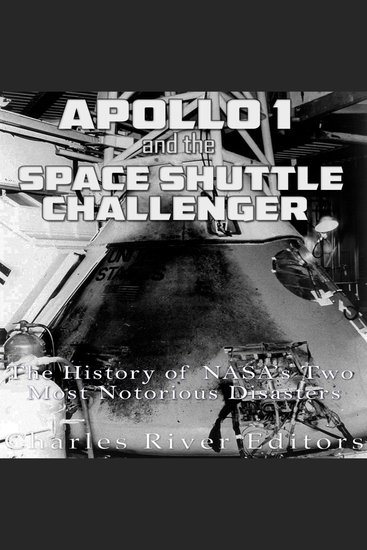
  • Apollo 1 and the Space Shuttle Challenger: The History of NASA’s Two Most Notorious Disasters - cover

    Apollo 1 and the Space Shuttle...

    Editors Charles River

    • 0
    • 0
    • 0
    As Apollo 11’s name suggests, there were actually a number of Apollo missions that came before, many of which included testing the rockets and different orbital and lunar modules in orbit. In fact, it wasn’t until Apollo 8 that a manned vehicle was sent towards the Moon and back, and before that mission, the most famous Apollo mission was Apollo 1, albeit for all the wrong reasons.  
    There were no delusions regarding the dangers of manned space travel, but they were brought home on January 27, 1967, when all three astronauts were killed by a fire that ignited in the cabin during a launch rehearsal. To this day, there is still debate over what ignited the fire, but the disaster made clear that the modules being used by NASA had a series of fatal flaws. After the Apollo 1 tragedy, NASA changed its plans by first running a series of unmanned missions to test the Saturn rockets and the different modules throughout 1967 and early 1968. and it would not be until Apollo 7 launched about 20 months after the disaster that NASA dared to conduct another manned mission.  
    	On the morning of January 28, 1986, the Space Shuttle Challenger launched for the 10th time, beginning mission STS-51-L. Space shuttles had already successfully completed 24 missions, and no American spacecraft had ever failed to reach orbit during an official mission. On this mission, the Challenger was carrying a satellite for the Tracking and Data Relay Satellites system, which was to be deployed in orbit. The crew included Ronald McNair, who had already been the second African-American in space, and Ellison Onizuka, who had already been the first Asian-American astronaut in space. But the highlight of the mission was to be the “NASA Teacher in Space Project,” in which a civilian teacher would give teaching lessons to his or her class while onboard the space shuttle.
    Mostra libro
  • The Impact of Technology on Society - Opportunities and Challenges - cover

    The Impact of Technology on...

    Craig Dames

    • 0
    • 0
    • 0
    Technology has been a driving force behind human progress, shaping societies and transforming the way people live, work, and communicate. From the earliest tools created by prehistoric humans to the advanced artificial intelligence of today, technological advancements have continuously redefined the boundaries of possibility. Understanding this evolution provides insight into how innovations have shaped civilization and what the future may hold. 
    The historical development of technology dates back to the invention of simple tools made from stone, wood, and metal. Early human civilizations relied on these tools for survival, gradually advancing to more sophisticated techniques in agriculture, construction, and warfare. The discovery of fire, the wheel, and the development of writing systems marked significant milestones that laid the foundation for future progress. The Industrial Revolution of the 18th and 19th centuries ushered in a period of rapid technological growth, introducing mechanized production, steam power, and transportation systems that reshaped economies and societies. 
    Key innovations have played a crucial role in shaping modern civilization. The invention of electricity revolutionized industries and led to the creation of household appliances, lighting, and communication systems. The 20th century saw remarkable advancements, including the telephone, radio, television, and, eventually, computers. These inventions not only improved the quality of life but also connected people across vast distances, fostering global communication and collaboration. The internet, developed in the late 20th century, became one of the most transformative innovations, changing the way individuals access information, conduct business, and interact socially.
    Mostra libro
  • Communist Manifesto The - Karl Marx - cover

    Communist Manifesto The - Karl Marx

    Karl Marx

    • 0
    • 0
    • 0
    The Communist Manifesto (German: Kommunistisches Manifest), originally the Manifesto of the Communist Party (German: Manifest der Kommunistischen Partei), is a political pamphlet written by German philosophers Karl Marx and Friedrich Engels. Commissioned by the Communist League and originally published in London in 1848, the Manifesto remains one of the world's most influential political documents. It presents an analytical approach to class struggle and criticizes capitalism and the capitalist mode of production, without attempting to predict communism's potential future forms. 
    The Communist Manifesto summarises Marx and Engels' theories concerning the nature of society and politics, namely that, in their own words, "[t]he history of all hitherto existing society is the history of class struggles". It also briefly features their ideas for how the capitalist society of the time would eventually be replaced by socialism. In the last paragraph of the Manifesto, the authors call for a "forcible overthrow of all existing social conditions", which served as a call for communist revolutions around the world. 
    In 2013, The Communist Manifesto was registered to UNESCO's Memory of the World Programme along with Marx's Capital.
    Mostra libro