Join us on a literary world trip!
Add this book to bookshelf
Grey
Write a new comment Default profile 50px
Grey
Subscribe to read the full book or read the first pages for free!
All characters reduced
The Veil of Shadows - cover

The Veil of Shadows

Pasquale De Marco

Publisher: Publishdrive

  • 0
  • 0
  • 0

Summary

In the tapestry of life, where joy and sorrow intertwine, there exists a realm of shadows, a hidden world of mental anguish and despair. It is here that we embark on a poignant journey with a young woman whose life is forever altered by the devastating effects of schizophrenia.

Once a vibrant and radiant spirit, her mother's mind becomes ensnared by the insidious tendrils of this cruel illness. As a silent storm rages within her, the woman's laughter fades, her words shatter into fragments, and her eyes lose their spark, leaving behind a hollow shell of her former self.

The narrator, a young girl witnessing the steady erosion of her mother's mind, is left grappling with a profound sense of loss and isolation. The mother-daughter bond, once unbreakable, now hangs by a thread, fraying with each passing day.

Driven by unwavering love and a desperate search for answers, the narrator embarks on a quest to understand the complexities of schizophrenia. She delves into the labyrinth of medical treatments, navigating the healthcare system's challenges while seeking solace and support from others who have been touched by this devastating illness.

Through her journey, she uncovers the hidden depths of resilience and strength that lie within her own heart. She learns to accept the reality of her mother's condition, finding moments of beauty and connection amidst the darkness.

This is a story of love, loss, and the unyielding power of the human spirit. It is a testament to the enduring strength of familial bonds, even in the face of unimaginable adversity. With raw honesty and profound insight, this book sheds light on the hidden world of mental illness, offering hope and inspiration to those who have been touched by its devastating effects.


If you like this book, write a review!
Available since: 06/02/2025.
Print length: 160 pages.

Other books that might interest you

  • Freeing David McCallum - The Last Miracle of Rubin “Hurricane” Carter - cover

    Freeing David McCallum - The...

    Ken Klonsky

    • 0
    • 0
    • 0
    In April 2014, Rubin “Hurricane” Carter died after a long battle with cancer. David McCallum was exonerated and freed two months later, after serving twenty-nine years in prison. 
    This is the story of how Carter and his friend and coauthor Ken Klonsky worked for ten years to help free the wrongfully convicted McCallum, along with a group of committed friends and professionals. It details their struggles from founding an innocence project to take on the case, to finding lawyers willing to work pro bono, to hiring a private detective to sift through old evidence and locate original witnesses, and the most difficult part, convincing members of a deeply flawed criminal justice system to reopen a case that would expose their own mistakes when all they wanted to do was ignore the conflicting evidence. Finally it took a new district attorney, a documentary film, and an op-ed piece written by Carter on his death bed published in the New York Daily News that made a plea for McCallum’s release and turned the tide of justice. Freeing David McCallum tells a tale of frustration, agony, and undying hope, and the miracle that resulted in David’s release.
    Show book
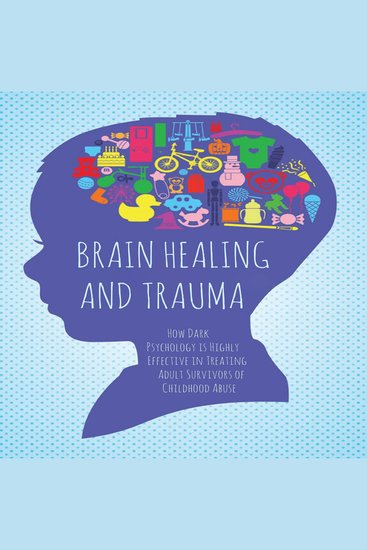
  • Brain Healing and Trauma - cover

    Brain Healing and Trauma

    Brittany Forrester

    • 0
    • 0
    • 0
    Approximately 50 percent of the population will experience a traumatic event at some point. While reactions to trauma can vary widely, and not everyone will develop Post-Traumatic Stress Disorder(PTSD), trauma can change the brain in some predictable ways. With increased awareness, you can seek treatment to address your symptoms and learn skills that could rewire your brain for recovery. Knowing what’s going on can be immensely helpful because it may help you realize that you’re not crazy, irreversibly damaged, or the wrong person. Instead, you can think of a traumatized brain as one that functions differently due to traumatic events. And just as your brain changes in response to your past experiences with the world, it can also change in response to your future experiences. In other words, the brain is “plastic,” and you can change it.Depth or imaginal psychotherapy is highly effective in treating and assessing adult survivors of childhood abuse. Specifically, interventions that use dreams, symbols, metaphor, and expressive art techniques are deemed especially valuable as they address dissociatively based changes (affect regulation, sense of self, and diminished imagination).Specifically, this book proposes that prominent symptoms of Posttraumatic Stress Disorder (which will be further referred to as PTSD), such as changes in affect regulation, sense of self, and use of imagination, are better neurologically matched to therapeutic interventions that foster right-brain processes. By assessing specific depth psychological aspects of the individual’s shattered sense of self, a more focused and efficient treatment plan can be created sooner in the course of therapy.
    Show book
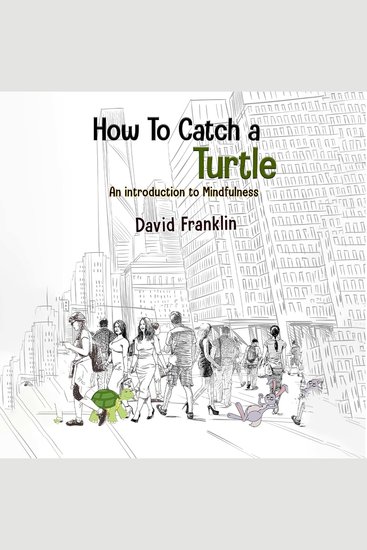
  • How to Catch a Turtle - An Introduction to Mindfulness - cover

    How to Catch a Turtle - An...

    David S Franklin

    • 0
    • 0
    • 0
    Drawing on lessons from renowned teachers such as Dr. Rick Hanson, Jack Kornfield, Tara Brach, and Eckhart Tolle, David Franklin shares his personal evolution from a hare-like, fast-paced mentality to a more mindful, turtle-like approach to life. 
    Through anecdotes, reflections, and modern interpretations of timeless fables like "The Tortoise and the Hare," Franklin explores the importance of balance in our hectic lives. He emphasizes the power of slowing down, cultivating resilience, and finding harmony between action and stillness. By blending Eastern wisdom with Western psychology, he offers practical insights and strategies for readers to integrate mindfulness, presence, and purpose into their daily routines. "How to Catch a Turtle" is more than just a self-help book; it's a call to awaken the conscious mind and reclaim agency over one's life. 
    With warmth, humor, and sincerity, Franklin encourages readers to embrace the rabbit's energetic pace and the turtle's steady perseverance, finding fulfillment and joy in the delicate dance between the two. Ultimately, "How to Catch a Turtle" guides discovering inner peace, fostering resilience, and achieving balance in an increasingly chaotic world. It invites readers to embark on their journey of self-discovery, learning how to slow down, savor life's moments, and catch their own metaphorical turtle.
    Show book
  • NPR American Chronicles: The Civil War - cover

    NPR American Chronicles: The...

    NPR

    • 0
    • 0
    • 0
    NPR captures the battlefield action, the personal struggles, and the moral dilemmas of the war that pitted brother against brother (and sometimes sister) and friend against friend. This revealing collection of Civil War stories features gripping history, expert commentary, and unforgettable voices:Shelby Foote reflects on the southern perspectiveE.L. Doctorow discusses Sherman and The MarchSam Waterston performs the Gettysburg AddressHal Holbrook honors Iowa in the Civil WarSusan Stamberg reports from Lincoln’s summer retreatJames McPherson tours Gettysburg’s hallowed groundTony Horwitz explores the world of Civil War reenactorsPlus visits to battlefields at Manassas, Antietam, Gettysburg, and much more.The NPR American Chronicles series explores the historical events that continue to resonate in our lives. Expert commentary and unforgettable stories create vivid sound portraits of history’s greatest people and events, examined in multi-faceted and moving detail.
    Show book
  • Why White Liberals Fail - Race and Southern Politics from FDR to Trump - cover

    Why White Liberals Fail - Race...

    Anthony J. Badger

    • 0
    • 0
    • 0
    From FDR to Clinton, Democratic leaders have promised a New South—a model of social equality and economic opportunity. So how did the region become the stronghold of conservative Republicans in thrall to Donald Trump? After a lifetime studying Southern politics, Anthony Badger has come to a provocative conclusion: white liberals failed because they put their faith in policy solutions as an engine for social change and were reluctant to confront directly the explosive racial politics dividing their constituents. 


    After World War II, many Americans believed that if the edifice of racial segregation, white supremacy, and voter disfranchisement could be dismantled across the South, the forces of liberalism would prevail. Hopeful that economic modernization and education would bring about gradual racial change, Southern moderates were rattled when civil rights protest and federal intervention forced their hand. Most were fatalistic in the face of massive resistance. When the end of segregation became inevitable, it was largely driven by activists and mediated by Republican businessmen. 


    Badger considers the dilemmas liberals faced across the South, arguing that their failure cannot be blamed simply on entrenched racism. Conservative triumph was not inevitable, he argues, before pointing to specific false steps and missed opportunities.
    Show book
  • American Notes for General Circulation - cover

    American Notes for General...

    Charles Dickens

    • 0
    • 0
    • 0
    'But the time will come; and when, in their changed ashes, the growth of centuries unborn has struck its roots, the restless men of distant ages will repair to these again unpeopled solitudes…'
    
    Based on a trip taken just short of his thirtieth birthday, American Notes for General Circulation is a dazzling travelogue of Charles Dickens's adventures in North America in 1842.
    
    Travelling from Boston, New York, Philadelphia, Richmond, St. Louis, Quebec and more, Dickens writes candidly about his time in America. Impressed by the optimism of American society and captivated by its democratic ideals, Dickens was also critical of the rapid growth of industrialism, America's focus on materialism and its participation in slavery. A compelling artefact of nineteenth century America, American Notes for General Circulation is a fascinating snapshot in time from the perspective of a foreign observer. This audiobook is skilfully read by Matt Addis.
    Charles Dickens (1812 – 1870) was an English writer and social critic. He is regarded by many as the greatest novelist of the Victorian era. His works enjoyed unprecedented popularity during his lifetime and, by the twentieth century, critics and scholars had recognized him as a literary genius. His novels and short stories are widely read, performed and adapted today.
    Show book