Rejoignez-nous pour un voyage dans le monde des livres!
Ajouter ce livre à l'électronique
Grey
Ecrivez un nouveau commentaire Default profile 50px
Grey
Abonnez-vous pour lire le livre complet ou lisez les premières pages gratuitement!
All characters reduced
The Limits of the Language - cover

The Limits of the Language

Pasquale De Marco

Maison d'édition: Publishdrive

  • 0
  • 0
  • 0

Synopsis

In "The Limits of Language," we embark on an intellectual journey that delves into the depths of Wittgenstein's philosophy, venturing beyond the confines of the Tractatus Logico-Philosophicus to unravel the complexities of his thought. We explore the intricacies of language, meaning, and reality, questioning the very foundations of our understanding and challenging the limits of human knowledge.

With meticulous precision, Wittgenstein's philosophy probes the boundaries of what can be said and what can only be shown, blurring the lines between logic, language, and the world we experience. This book invites readers to confront the limits of their own understanding, to grapple with the ineffable, and to question the nature of reality itself.

This is not a mere exposition of Wittgenstein's philosophy; it is an exploration, an investigation, and an invitation to engage with one of the most profound and influential thinkers of the 20th century. We traverse the terrain of his thought, encountering paradoxes, puzzles, and moments of profound insight, all the while seeking to illuminate the path towards a deeper understanding of the human condition.

Throughout this intellectual odyssey, we encounter a Wittgenstein who is at once rigorous and poetic, a philosopher who wields language with surgical precision yet also revels in its nuances and ambiguities. We encounter a thinker who is deeply skeptical of the limits of language yet also recognizes its transformative power.

As we journey through the labyrinth of Wittgenstein's thought, we uncover a profound and unsettling vision of the world, a vision that challenges our most basic assumptions about reality, knowledge, and the very nature of human existence. His philosophy is a mirror held up to the human condition, reflecting both our brilliance and our limitations, our capacity for understanding and our propensity for self-deception.

"The Limits of Language" is an essential guide for anyone seeking to grapple with the profound questions that have perplexed philosophers for centuries. It is a book that will challenge your assumptions, expand your horizons, and leave you with a deeper understanding of the world and your place within it.


If you like this book, write a review!
Disponible depuis: 02/06/2025.
Longueur d'impression: 162 pages.

D'autres livres qui pourraient vous intéresser

  • Euthyphro - cover

    Euthyphro

    Plato

    • 0
    • 0
    • 0
    Awaiting his trial on charges of impiety and heresy, Socrates encounters Euthyphro, a self-proclaimed authority on matters of piety and the will of the gods. Socrates, desiring instruction in these matters, converses with Euthyphro, but as usual, the man who professes to know nothing fares better than the man who claims to be an expert. One of Plato’s well-known Socratic Dialogues, Euthyphro probes the nature of piety, and notably poses the so-called Euthyphro Dilemma: Do the gods love a thing because it is holy, or is a thing holy because it is loved by the gods?  
    (Summary by LauraFox)
    Voir livre
  • The History and Legacy of Germany’s Most Controversial Events Between World War I and World War II - cover

    The History and Legacy of...

    Charles River Editors

    • 0
    • 0
    • 0
    The early 1930s were a tumultuous period for German politics, even in comparison to the ongoing transition to the modern era that caused various forms of chaos throughout the rest of the world. In the United States, reliance on the outdated gold standard and an absurdly parsimonious monetary policy helped bring about the Great Depression. Meanwhile, the Empire of Japan began its ultimately fatal adventurism with the invasion of Manchuria, alienating the rest of the world with the atrocities it committed. Around the same time, Gandhi began his drive for the peaceful independence of India through nonviolent protests against the British. 
    	It was in Germany, however, that the strongest seeds of future tragedy were sown. The struggling Weimar Republic had become a breeding ground for extremist politics, including two opposed and powerful authoritarian entities: the right-wing National Socialists and the left-wing KPD Communist Party. As the 1930s dawned, these two totalitarian groups held one another in a temporary stalemate, enabling the fragile ghost of democracy to continue a largely illusory survival for a few more years.  
    	That stalemate was broken in dramatic fashion on a bitterly cold night in late February 1933, and it was the Nazis who emerged decisively as the victors. A single act of arson against the famous Reichstag building proved to be the catalyst that propelled Adolf Hitler to victory in the elections of March 1933, which set the German nation irrevocably on the path towards World War II. That war would plunge much of the planet into an existential battle that ultimately cost an estimated 60 million lives. 
    Voir livre
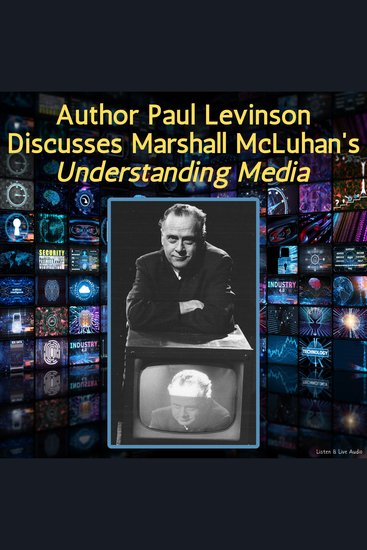
  • Author Paul Levinson Discusses Marshall McLuhan's Understanding Media - cover

    Author Paul Levinson Discusses...

    Paul Levinson

    • 0
    • 0
    • 0
    In the following keynote address given at Baylor University, author Paul Levinson discusses Canadian philosopher and academic Marshall McLuhan's seminal book, "Understanding Media: The Extensions of Man," which proposed that the media--not the content that they carry-- affects the society in which it plays a role and, thus, should be the focus of study. Levinson, a colleague of McLuhan’s, lays out, how in the decades since its 1964 publication, McLuhan’s study of media theory and the concept that "the medium is the message," still holds true. 
     
    Paul Levinson, PhD, is Professor at Fordham University. His science fiction novels include The Silk Code (winner of the Locus Award for Best First Science Fiction Novel of 1999), The Consciousness Plague (winner of the 2003 Mary Shelley Award for outstanding fictional work), The Pixel Eye, Borrowed Tides, The Plot to Save Socrates, Unburning Alexandria, Chronica, and It's Real Life. His novelette “The Chronology Protection Case” was made into a short film and is on Amazon Prime Video. His novelette, “Robinson Calculator,” was published in the Robots Through the Ages anthology in July 2023. He was President of the Science Fiction Writers of America (SFWA) 1998-2001. His nonfiction books, including The Soft Edge, Digital McLuhan, and New New Media, have been translated into 15 languages. His 1972 album, Twice Upon A Rhyme, was re-issued in Japan and Korea in 2008, and in the U. K. in 2010. His first new album since 1972, Welcome Up: Songs of Space and Time, was released by Old Bear Records and Light in the Attic Records in 2020.
    Voir livre
  • The Wife Who Didn't Eat - cover

    The Wife Who Didn't Eat

    Thersa Matsuura

    • 0
    • 0
    • 0
    A farmer in old Japan prays to the gods for a wife, someone who is kind, beautiful, and hardworking. What would be even better is if she didn’t eat at all, saving him both money and food. Imagine his surprise when just such a woman shows up at his house one night. But all is not perfect. The gods have quite the sense of humor, and the farmer soon learns what kind of monster he is living with. But is it too late?“The Wife Who Didn’t Eat” is author Thersa Matsuura’s retelling of a classic horror-tinged Japanese folktale, “Kwazu Nyobo”. Here she reads her version of the story followed by a short commentary with some of her research notes and thoughts on the tale. Both the short story and commentary come in at just under one hour. Thersa Matsuura is a published author of two short story collections, one nominated for a Bram Stoker Award. You can also find her on her podcast, Uncanny Japan, where she talks more about the more obscure parts of Japanese culture. Reviews: “Very soothing, educational and entertaining. Love this deep dive into Japanese culture. Not to mention just the right amount of Spooky.”            By Spooks76“High production value and haunting storytelling helps shed light onto Japanese folklore. Teresa is clear, concise and highlights stories that might otherwise never be heard by Western ears. Highly recommend!”         By Jameswhojamesyu
    Voir livre
  • The Confessions of St Augustine - cover

    The Confessions of St Augustine

    Bishop of Hippo St. Augustine,...

    • 0
    • 0
    • 0
    Embark on a profound journey through the struggles and revelations of one of Christianity's most influential figures with Confessions by Augustine of Hippo. This masterful autobiography transcends the mere recounting of Augustine's early life of sin and his pivotal conversion to Christianity, offering readers a timeless meditation on the human condition, the power of faith, and the quest for understanding and truth.  
    Confessions stands as a cornerstone in Western literature and theological thought, profoundly impacting not just Christian theology but also philosophy and the broader human search for meaning. Written with unparalleled eloquence, Augustine's introspective exploration of his own life serves as a mirror reflecting universal truths about the trials and transformations that define the human experience.  
    Through his candid narrative, Augustine embarks on a philosophical inquiry into memory, time, and the nature of God, making Confessions not just a tale of personal redemption but also a compelling discourse on the essence of existence itself. This book invites readers into a deep contemplation of their own spiritual journey, encouraging a reflective exploration of faith, the complexities of the human psyche, and the pursuit of inner peace. 
    Discover why luminaries across centuries have drawn inspiration from Augustine's insights. Confessions promises not just a story of conversion but a profound engagement with the mysteries of life—a literary and spiritual odyssey that continues to resonate with readers seeking wisdom and solace in their own lives. 
    This audiobook was narrated and produced by RAM Studios, where humans and artificial intelligence collaborate to create an excellent listening experience. (The reading is done primarily by AI)
    Voir livre
  • The Spy in the Archive - How One Man Tried to Kill the KGB - cover

    The Spy in the Archive - How One...

    Gordon Corera

    • 0
    • 0
    • 0
    How do you steal a library? Not just any library but the most secret, heavily guarded archive in the world. The answer is to be a librarian. The work goes on for decades but remains so low key, that even after your escape, no one even notices you are gone.The Spy in the Archive tells the remarkable story of how Vasili Mitrokhin—an introverted archivist—ended up changing the world. As the in-house archivist for the KGB, the secrets he was exposed to turned him into a dissident and then a spy; a traitor to his country but a man determined to expose the truth about the dark forces that had subverted Russia, forces still at work in the country today.Historian and journalist Gordon Corera tells of the operation to extract this prized asset from Russia for the first time. It is an edge-of-the-seat thriller with vivid flashbacks. It is the story of what it was like to live in the Soviet Union, to raise a family there, and then of one man's journey from the heart of the Soviet state to disillusion, betrayal, and defection.At its heart is Mitrokhin's determination to take on the most powerful institution in the world by revealing its darkest secrets. This is narrative nonfiction at its best.
    Voir livre