Unisciti a noi in un viaggio nel mondo dei libri!
Aggiungi questo libro allo scaffale
Grey
Scrivi un nuovo commento Default profile 50px
Grey
Iscriviti per leggere l'intero libro o leggi le prime pagine gratuitamente!
All characters reduced
Tales from the Legacy of Colonialism - cover

Tales from the Legacy of Colonialism

Pasquale De Marco

Casa editrice: Publishdrive

  • 0
  • 0
  • 0

Sinossi

"Tales from the Legacy of Colonialism" is a profound and thought-provoking exploration of the enduring impact of colonialism on cultures, identities, and societies worldwide. This comprehensive book delves into the intricate narratives of power, resistance, and transformation that have shaped the postcolonial world.

With rigorous analysis and insightful perspectives, the book uncovers the hidden histories and lingering shadows of imperial rule, revealing the ways in which colonialism has left an indelible mark on contemporary societies. It examines the dynamics of colonial power structures, the strategies of resistance and subversion employed by colonized peoples, and the complex interplay of identity formation and colonial contexts.

Furthermore, the book investigates the economic exploitation and development that often accompanied colonialism, shedding light on the extraction of resources and labor, the imposition of economic systems, and the devastating impact these actions had on indigenous communities. It explores the ongoing struggle for economic justice in postcolonial societies, highlighting the challenges and complexities of achieving equitable development.

Cultural encounters and exchanges are also central to the book's exploration. It delves into the intermingling of cultures, the spread of Western culture and values, and the emergence of hybrid and syncretic cultural forms. The role of culture in postcolonial identity formation is a key focus, as the book examines the ways in which cultural practices and expressions shape individual and collective identities in the aftermath of colonialism.

The book also delves into the politics of representation, examining the colonial gaze and the construction of the Other, as well as the power of representation in colonial literature and media. The representation of indigenous peoples in colonial and postcolonial contexts is a crucial aspect of this exploration, as the book seeks to understand the challenges of decolonizing representation and the rise of counter-narratives and indigenous storytelling.

Ultimately, "Tales from the Legacy of Colonialism" is a powerful and necessary contribution to our understanding of the complexities of colonialism and its lasting effects. With its rigorous scholarship and thought-provoking insights, this book is essential reading for anyone seeking to grapple with the legacies of colonialism and envision a more just and equitable future.


If you like this book, write a review!
Disponibile da: 02/06/2025.
Lunghezza di stampa: 161 pagine.


Altri libri che potrebbero interessarti

  • Nihilism - The Philosophy of Embracing the Void - cover

    Nihilism - The Philosophy of...

    Hector Davidson

    • 0
    • 0
    • 0
    Nihilism is often misunderstood as mere pessimism or despair, yet it is far more complex than a simple rejection of hope. At its core, nihilism is the philosophical stance that life lacks inherent meaning, purpose, or intrinsic value. This perspective challenges the foundations of morality, knowledge, and existence itself, questioning whether anything possesses objective significance. While nihilism can evoke feelings of emptiness and disillusionment, it can also serve as a liberating force, stripping away illusions and compelling individuals to forge their own meaning. 
    The term "nihilism" originates from the Latin word "nihil," meaning "nothing." Though traces of nihilistic thought can be found in ancient skepticism, it was in the 19th century that the philosophy gained prominence. Friedrich Nietzsche famously declared the "death of God," arguing that traditional religious and moral values had lost their authority. He warned that without these guiding structures, society risked falling into despair and meaninglessness. However, Nietzsche did not advocate surrendering to nihilism but instead sought a way to overcome it through the creation of new values. Russian nihilists of the same era took a different approach, rejecting societal norms and advocating for radical change, often through extreme means. Their interpretation of nihilism fueled revolutionary movements, demonstrating its potential to inspire both destruction and transformation.  
    Nihilism manifests in various forms, from existential and moral nihilism to epistemological and political nihilism. Existential nihilism is perhaps the most well-known, asserting that life has no ultimate purpose or inherent meaning. This idea has been explored by thinkers such as Jean-Paul Sartre and Albert Camus, who wrestled with the absurdity of existence.
    Mostra libro
  • Cary Grant: A short biography - 5 Minutes: Short on time – long on info! - cover

    Cary Grant: A short biography -...

    5 Minutes, 5 Minute Biographies,...

    • 0
    • 0
    • 0
    Cary Grant, screen legend: Life and work in a short biography! Everything you need to know, brief and concise. Infotainment, education and entertainment at its best!
    Mostra libro
  • New Jersey and the Medal of Honor - A History - cover

    New Jersey and the Medal of...

    Peter Zablocki

    • 0
    • 0
    • 0
    Awarded by the President of the United States in the name of Congress, the Medal of Honor commemorates those who have shaped our nation's history and continue to inspire its future with their acts of valor, humanity, patriotism, and sacrifice. New Jersey has been credited with ninety-three honors in the state's military history. Robert Augustus Sweeney was the recipient of two non-combatant medals when he jumped into stormy waters to save a fellow sailor twice becoming one of only nineteen double Medal of Honor recipients of all time and the only African American to do so. On the infamous day of December 7, 1941, Peter Tomich, serving on the USS Utah, sprung to action when it became evident his ship would capsize from the two Japanese torpedoes, staying behind to man the fireroom to ensure the boilers were secured to prevent an internal fire and saving countless additional deaths.Author Peter Zablocki reveals the harrowing stories of New Jersey's most valorous moments in the defense of our nation and freedom around the world.
    Mostra libro
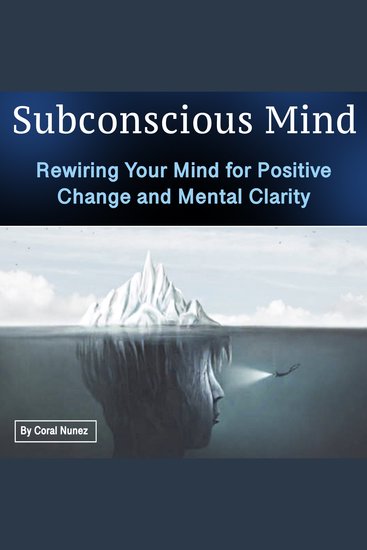
  • Subconscious Mind - Rewiring Your Mind for Positive Change and Mental Clarity - cover

    Subconscious Mind - Rewiring...

    Coral Nunez

    • 0
    • 0
    • 0
    The subconscious mind is a powerful and often misunderstood component of our overall mental framework. It operates beneath the surface of our conscious awareness, influencing our emotions, behaviors, and perceptions in ways we rarely notice. This hidden realm of thought is not merely a repository of forgotten memories or repressed emotions, but rather a dynamic and active process that continuously shapes our daily experiences. From habits formed during childhood to deeply ingrained belief systems, the subconscious mind acts as an archive that stores our past experiences and serves as the engine behind our reactions and decision-making. Understanding its workings can unlock profound insights into why we behave the way we do, providing the keys to personal growth and transformation. 
    In exploring the subconscious mind, it is essential to consider both historical and modern scientific perspectives. Ancient philosophies and spiritual traditions have long acknowledged the power of the inner self, emphasizing techniques such as meditation, dream analysis, and ritual practices to access deeper layers of consciousness. In contrast, modern neuroscience and psychology have begun to uncover the biological underpinnings of subconscious processes, such as neural plasticity and the complex interplay between various brain regions. These scientific advancements have validated many traditional practices, demonstrating that our subconscious is not a mysterious, mystical force, but a tangible and influential part of our neurobiology. The integration of these views has fostered a comprehensive understanding of mental processes, blending empirical evidence with time-tested wisdom.
    Mostra libro
  • The Return of the Light - Twelve Tales from Around the World for the Winter Solstice 5th Anniversary Edition - cover

    The Return of the Light - Twelve...

    Carolyn McVickar Edwards

    • 0
    • 0
    • 0
    A collection of twelve traditional tales from around the world that honor the "return of the light" that takes place on the winter solstice 


    The winter solstice, the day the "sun stands still," marks the longest night and the shortest day of the year, and it comes either on December 20th or 21st. Celebrations honoring the winter solstice as a moment of transition and renewal date back thousands of years and occur among many peoples on every continent. The Return of the Light makes an ideal companion for everyone who carries on this tradition, no matter what their faith. Storyteller Carolyn McVickar Edwards retells twelve traditional tales-from North America, China, Scandinavia, India, Africa, South America, Europe, and Polynesia-that honor this magical moment. These are stories that will renew our wonder of the miracle of rebirth and the power of transition from darkness into light.
    Mostra libro
  • Pontiac's War - The 1763 Native American Rebellion against the British - cover

    Pontiac's War - The 1763 Native...

    Kelly Mass

    • 0
    • 0
    • 0
    Pontiac's War, also referred to as Pontiac's Conspiracy or Pontiac's Rebellion, was a significant conflict that emerged in the aftermath of the French and Indian War (1754–1763). In 1763, a coalition of Native American tribes, disillusioned with the increasing British presence and control in the Great Lakes region, united under the leadership of the Odawa chieftain Pontiac. These Native American forces launched an offensive aimed at driving British soldiers and settlers from the region. 
    The war began in May 1763 when Native American warriors, fearful of British General Jeffrey Amherst’s harsh policies, launched a series of attacks on British forts and settlements. These assaults led to the destruction of eight forts, the death or capture of hundreds of colonists, and the forced evacuation of many others. The intensity of the conflict shocked the British, as the attacks, though widespread, were coordinated across many tribes, reflecting a united front among the Indigenous people. Despite their efforts, the Native Americans were unable to expel the British from the region. The war finally began to subside in 1764 after British military actions prompted peace talks, which continued into 1766.
    Mostra libro