Unisciti a noi in un viaggio nel mondo dei libri!
Aggiungi questo libro allo scaffale
Grey
Scrivi un nuovo commento Default profile 50px
Grey
Iscriviti per leggere l'intero libro o leggi le prime pagine gratuitamente!
All characters reduced
Liberty Fraternity and Fairness - A New Vision of Egalitarianism - cover

Liberty Fraternity and Fairness - A New Vision of Egalitarianism

Pasquale De Marco

Casa editrice: Publishdrive

  • 0
  • 0
  • 0

Sinossi

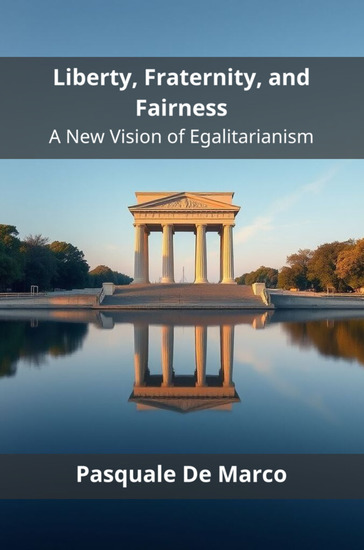
In a world grappling with persistent inequality, "Liberty, Fraternity, and Fairness: A New Vision of Egalitarianism" emerges as a clarion call for a more just and equitable society. This thought-provoking book delves into the complexities of egalitarian thought and practice, offering a fresh perspective on the challenges and opportunities of creating a society where all individuals are treated with dignity and respect.

Egalitarianism, at its core, is the belief that all people are of equal worth and should have equal opportunities to flourish. This principle has inspired social and political movements throughout history, yet inequality continues to cast a shadow over our societies. This book seeks to illuminate the path toward a truly egalitarian future, exploring the historical roots, philosophical foundations, and practical applications of egalitarianism.

Through a comprehensive examination of past and present egalitarian movements, we uncover the lessons learned and the obstacles that still hinder progress. We investigate the intricate relationship between liberty, equality, and fraternity, examining how these concepts are intertwined and mutually reinforcing. We explore the challenges of balancing individual liberty with the need for social cohesion and collective action, and the role of fraternity in fostering solidarity and cooperation among individuals.

Furthermore, we delve into the economic dimension of egalitarianism, examining the causes and consequences of economic inequality and exploring different approaches to achieving a fairer distribution of resources. We discuss the role of government in regulating the market economy, the importance of social welfare programs, and the challenges of creating a more equitable tax system.

This book is not merely an academic treatise; it is a call to action. We examine how egalitarian principles can be applied to address the pressing issues of our time, such as poverty, discrimination, and climate change. We explore how we can build a more just and sustainable society for generations to come, where every individual has the opportunity to reach their full potential and live a life of meaning and purpose.

"Liberty, Fraternity, and Fairness" is a timely and essential contribution to the ongoing struggle for a more egalitarian world. It is a book that will challenge your assumptions, inspire your thinking, and empower you to make a difference. Join us on this journey toward a more just and equitable future for all.


If you like this book, write a review!
Disponibile da: 02/06/2025.
Lunghezza di stampa: 166 pagine.

Altri libri che potrebbero interessarti

  • American Presidents in Diplomacy and War - Statecraft Foreign Policy and Leadership - cover

    American Presidents in Diplomacy...

    Thomas R. Parker

    • 0
    • 0
    • 0
    American Presidents in Diplomacy and War chronicles the major foreign policy crises faced by twelve American presidents in order to uncover the reoccurring patterns of successful and less successful uses of diplomatic, economic, and military power. In this book, Thomas R. Parker reveals how America's most successful leaders manage events instead of allowing events to control them. 


    Parker explores how the U.S. presidency, from the days of the early Republic to the present, shaped the world. Ranging from George Washington to George H. W. Bush, Parker shows how successful statecraft requires the understanding of complex situations, the prudent evaluation of various courses of action, the ability to adapt and to anticipate, and personal determination. Parker compares each of these leaders to their contemporaries—reasonable political leaders who nonetheless made serious mistakes, such as Thomas Jefferson and Barack Obama—to examine the dangers of being unable to strike the right balance of aggressiveness and caution and to examine the costs of inexperience and ambivalence toward military power. The book concludes by discussing the increasingly complex international situation of today, particularly the manifold challenges posed by China and Russia to U.S. foreign policy, and the continued necessity of effective statecraft.
    Mostra libro
  • Socialized Medicine - cover

    Socialized Medicine

    Ronald Reagan

    • 0
    • 0
    • 0
    In 1961 Reagan spoke out against socialized medicine. Since 1965 when Medicare and Medicaid were enacted, the federal government controls payment for most U.S. healthcare: hospitals, drugs, doctors, nurses, and so on. Has this been a blessing or a curse? 
    Milton Friedman, the small, talkative, smiling genius, perhaps the best economist ever, argued that governments should give the deserving needy money to buy education, housing, and healthcare, but should never give goods or services such as govenment schools, government housing, or medical services. 
    Would this small change make a big difference? Prior to 1965, U.S. health insurance was medically underwritten. When a person applied for insurance, they were weighed and tested to see how healthy they were. If they were unhealthy, premiums were high, and coverage limited. 
    The result was that people had powerful financial incentives to adopt a healthy diet and lifestyle. Under Medicare, Medicaid, and Obamacare, medical underwriting is illegal and the financial incentive for a healthy diet is eliminated. Epidemics of obesity, type 2 diabetes, and chronic disease since 1965 are the result. And the cost of medical services without market competition has exploded. 
    If the elderly and needy were paid in cash rather than medical services, and purchased medical services in competitive, risk-based markets, people would have strong incentive to adopt fiber-based diets of vegetables, fruit, nuts, seeds, and whole grains, and avoid animal foods and low-fiber processed foods that promote chronic disease. 
    The left blames the food industry for our poor diet, but the federal government’s control of medical services and abolition of medical underwriting are the true causes of the obesity and diabetes crisis that afflicts America, and the reason healthcare is so amazingly expensive. Competitive markets would benefit the elderly, the needy, and the country. 
    AspenLeafMedia.com
    Mostra libro
  • The Future of Xi's China - Scenarios and Implications for Europe - cover

    The Future of Xi's China -...

    Alessia Amighini

    • 0
    • 0
    • 0
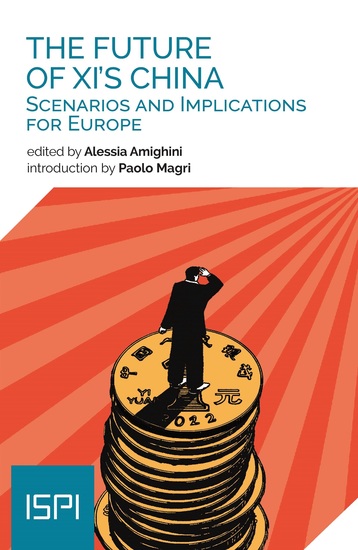
    At the upcoming 20th Party Congress, which opens Sunday in China, Xi Jinping is expected to be confirmed as the country's Secretary General for an unprecedented third term. At a time of international instability caused by the Covid pandemic and the war in Ukraine, as well as rising competition between international superpowers, the Chinese leadership is called to increase the country's international standing, while ensuring economic growth at the domestic level. However, achieving these goals will not be without challenges.
    This Report analyses China's hard road to international prestige and development. Which prospects for China's economic growth? Which obstacles to its rise at the global level? To which extent can the Party steer the country's direction?
    Mostra libro
  • American Educational Excellence - The Foundation of Our Values Democracy and Market Capitalism - cover

    American Educational Excellence...

    Kenan E. Sahin

    • 0
    • 0
    • 0
    American education is often attacked by critics citing test scores and pundits claiming systemic failure. Yet American Educational Excellence reveals a different story: one of resilience, innovation, and unmatched global impact.
    Mostra libro
  • Summary of Jason Stanley’s How Fascism Works - cover

    Summary of Jason Stanley’s How...

    Falcon Press

    • 0
    • 0
    • 0
    Buy now to get the main key ideas from Jason Stanley’s How Fascism Works 
      
    In How Fascism Works (2018), Jason Stanley explores how fascist politicians reach power, the conditions they thrive in, and the beliefs that most fascist movements are built upon. Stanley examines how fascism distorts nationalism, employs propaganda and lies, demeans education, and preys on minorities. Fascist movements may take different nationalist forms, but they share the same goal: to turn a liberty-focused nation into one where they make all the rules.
    Mostra libro
  • The Lyceum Address - The Perpetuation of Our Political Institutions - cover

    The Lyceum Address - The...

    Abraham Lincoln

    • 0
    • 0
    • 0
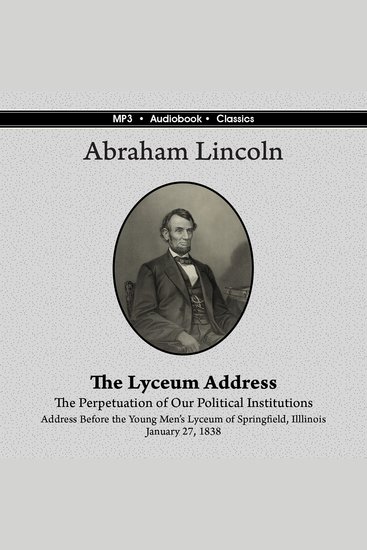
    Abraham Lincoln's Lyceum Address, delivered in 1838, reflects on the fragility of American democracy and the potential dangers of lawlessness and mob rule. Lincoln begins by honoring the Founding Fathers and their sacrifices, emphasizing the importance of preserving their legacy. He warns against the threat posed by individuals who seek to undermine the rule of law and exploit public discontent for personal gain. Lincoln argues that the true danger to the nation comes not from external enemies but from internal strife and moral decay. 
    Central to Lincoln's message is the idea that respect for laws and institutions is essential for maintaining a stable and just society. He calls for citizens to uphold the principles of justice and equality, stressing the need for education and moral guidance to foster responsible citizenship. Lincoln uses historical examples, including the rise and fall of ancient republics, to illustrate the consequences of unchecked lawlessness and civic indifference. 
    Throughout the address, Lincoln's eloquence and deep concern for the future of democracy in America are evident. He urges his audience to cherish and protect the nation's democratic ideals, emphasizing that the strength of the United States lies in the unity and moral character of its people. Lincoln's Lyceum Address remains a timeless reminder of the enduring values that underpin a free and democratic society.
    Mostra libro