Junte-se a nós em uma viagem ao mundo dos livros!
Adicionar este livro à prateleira
Grey
Deixe um novo comentário Default profile 50px
Grey
Assine para ler o livro completo ou leia as primeiras páginas de graça!
All characters reduced
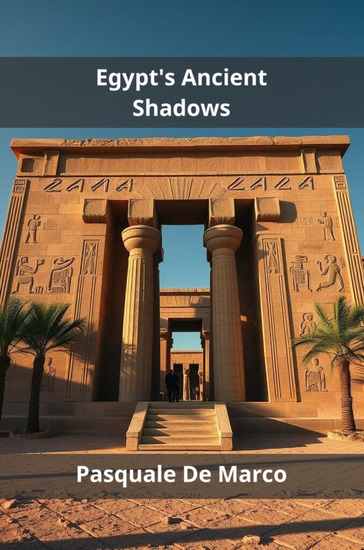
Egypt's Ancient Shadows - cover
LER

Egypt's Ancient Shadows

Pasquale De Marco

Editora: Publishdrive

  • 0
  • 0
  • 0

Sinopse

Journey through the sands of time and uncover the secrets of ancient Egypt in this captivating exploration of one of the world's most enduring civilizations. From the towering pyramids of Giza to the hidden tombs of the Valley of the Kings, Egypt's ancient legacy continues to captivate and inspire.

In this comprehensive and engaging book, we embark on a journey to unravel the enigmas of ancient Egypt. We delve into the lives of the pharaohs, the enigmatic rulers who governed Egypt with both power and grace. We uncover the secrets of the Nile, the life-giving river that nurtured the growth and prosperity of this extraordinary civilization. And we explore the intricate belief systems and religious practices that shaped the daily lives and funerary rituals of the ancient Egyptians.

Through the lens of archaeological discoveries and historical accounts, we piece together the intricate tapestry of ancient Egyptian society. We witness the construction of colossal monuments, marvel at the artistry of hieroglyphic inscriptions, and gain insights into the daily lives of ordinary people, from farmers and artisans to priests and scribes.

Egypt's ancient legacy extends far beyond its physical remains. Its influence can be seen in art, literature, and philosophy, shaping civilizations across the Mediterranean and beyond. From the Greeks and Romans to the Arabs and Europeans, Egypt's cultural heritage has left an indelible mark on the world.

As we delve into the depths of ancient Egypt's history, we not only uncover the secrets of a bygone era but also gain a deeper understanding of our own humanity. The lessons learned from this ancient civilization continue to resonate with us today, offering insights into the nature of power, the pursuit of knowledge, and the enduring legacy of human achievement.

Join us on this captivating journey through ancient Egypt, where the sands whisper tales of a glorious past and the echoes of forgotten voices guide us towards a deeper understanding of our shared human history.


If you like this book, write a review!
Disponível desde: 02/06/2025.
Comprimento de impressão: 162 páginas.

Outros livros que poderiam interessá-lo

  • The Shocking Truth about Cultural Appropriation - cover

    The Shocking Truth about...

    Zoey Fraisers

    • 0
    • 0
    • 0
    Cultural appropriation is the act of taking or borrowing elements of one culture by members of another culture, typically without permission or proper understanding. This often occurs when a dominant culture adopts aspects of a marginalized or minority culture, without recognizing the significance or history behind these cultural symbols, practices, or traditions. While some might argue that cultural exchange is a natural part of globalization, cultural appropriation is controversial because it is frequently associated with power imbalances, exploitation, and the erasure of the identities of those whose culture is being borrowed. 
    At its core, cultural appropriation is not about borrowing something for appreciation or respect, but rather taking something from another culture in a way that is exploitative or disrespectful. For example, wearing traditional garments like a kimono or a Native American headdress as fashion statements, without understanding their cultural importance or context, is often cited as an example of cultural appropriation. These items are not just clothes or accessories; they carry deep meanings and are often tied to spiritual, ceremonial, or political significance. 
    One of the key aspects that distinguishes cultural appropriation from cultural appreciation is power dynamics. The group that appropriates tends to have more social, political, or economic power, while the culture being appropriated is often marginalized. This power imbalance is evident in many cases where elements of minority cultures are commodified and turned into trends or products, while the people from those cultures continue to face oppression, discrimination, and lack of recognition.
    Ver livro
  • Fall of Rome and Constantinople The: The History of the Attacks that Destroyed the Western Roman Empire and Byzantine Empire - cover

    Fall of Rome and Constantinople...

    Charles River Editors

    • 0
    • 0
    • 0
    For the people of the ancient Mediterranean and beyond, the city of Rome had been a symbol of power for centuries, and entering the early 5th century CE, the Eternal City hadn’t been taken by an enemy force since the Gauls had done it about 800 years earlier, an unheard of period of tranquility in a world wracked with almost constant warfare. 
    	Thus, when the Visigoths, whom the Romans considered uncultured and inferior, took the city of Rome and sacked it in 410, the world was stunned. It made theologians of the newly Christianized empire question God’s plan on Earth, and it encouraged many leading Romans to look east to Constantinople for their future. Indeed, the Western Roman Empire would completely collapse in the late 5th century, less than 70 years after the Visigoths sacked Rome, and just how it went from being a superpower to a poorly led, weak, and vulnerable shadow of its former self has preoccupied historians for centuries.  
    To this day, it remains difficult to trace just when the decline began, but it’s fair to say that the sack of Rome was the result of a number of factors that had been coalescing for many years. 	In the end, the fall of the Roman Empire was not a tale of cataclysmic events that shattered the sprawling power, but the culmination of centuries of internal dissent and decay, combined with growing external threats that led to gradual decline and eventually to the empire’s final destruction.  
    	In terms of geopolitics, perhaps the most seminal event of the Middle Ages was the successful Ottoman siege of Constantinople in 1453. The city had been an imperial capital as far back as the 4th century, when Constantine the Great shifted the power center of the Roman Empire there, effectively establishing two almost equally powerful halves of antiquity’s greatest empire. Constantinople would continue to serve as the capital of the Byzantine Empire even after the Western half of the Roman Empire collapsed.
    Ver livro
  • If I Could" Imaginative Adventures for Kids - cover

    If I Could" Imaginative...

    David Tobin

    • 0
    • 0
    • 0
    Welcome, parents and teachers! 
    Get ready to spark imagination and inspire creativity with this unique and interactive audiobook experience, specially crafted for young children. 
    "If I Could..." — Imaginative Adventures for Kids is more than just a collection of stories. It’s a journey where children don’t just listen — they join in. Each chapter invites kids to become part of the adventure, imagining themselves as soaring birds, deep-sea divers, forest explorers, and more. 
    Through gentle guided prompts, children are encouraged to: 
    Move their bodies 
    Use their imaginations 
    Express their thoughts and emotions 
    Whether at home or in the classroom, this audiobook brings stories to life in a way that engages the whole child — mind, body, and heart. 
    Perfect for creative play, quiet time, or educational fun, this is a joyful way to build confidence, language skills, and a love for storytelling.
    Ver livro
  • The Madness Pill - One Doctor's Quest to Understand Schizophrenia - cover

    The Madness Pill - One Doctor's...

    Justin Garson

    • 0
    • 0
    • 0
    A rollicking history of the life and work of an unheralded genius: Dr. Solomon Snyder, whose experiments with mind-altering drugs helped change the way we think about the causes and treatments of schizophrenia.In the 1950s, the field of psychiatry had nothing to show for itself. While polio was being cured, antibiotics were being discovered, and cancer research was developing, the mental health world had no wins. Asylums were full and nobody had figured out how to fix insanity—specifically schizophrenia, the severest mental illness. Scientists became convinced that if they could engineer a pill to create madness, then they could cure it.Centered around Solomon Snyder, the psychiatrist who ultimately did identify the madness pill, and the community of doctors and researchers he worked with, THE MADNESS PILL recounts the drug-fueled quest to cure schizophrenia. A wunderkind who started medical school at 19, Snyder worked steadily for decades to replicate the illness, ultimately finding in 1970 that amphetamines could trigger a schizophrenia-like state by flooding the brain with dopamine. Five years later, he went on to discover the dopamine receptor and proved that antipsychotic drugs work by disabling dopamine neurons. Snyder’s dopamine hypothesis inspired a generation of researchers to part ways with psychoanalysis and look for the biological basis of schizophrenia and other mental disorders.Using first-hand research and interviews, THE MADNESS PILL is at once a raucous history and insightful portrait of a remarkable scientist who turned psychiatry into a respected science by transforming how mental illness is treated.
    Ver livro
  • The Planning Fallacy - Underestimating the Time and Costs Required for Tasks - cover

    The Planning Fallacy -...

    William Rands

    • 0
    • 0
    • 0
    The allure of optimism has been a driving force behind humanity’s greatest achievements. It propels innovation, inspires ambition, and fosters resilience in the face of adversity. Yet, this same optimism can lead us astray, particularly when it comes to planning and executing tasks. The belief that everything will unfold as envisioned, without significant setbacks or challenges, is an enticing illusion. This overconfidence, while comforting, often masks the reality of time and resource constraints, resulting in a phenomenon known as the planning fallacy. 
    At its core, the planning fallacy arises from our tendency to underestimate the time, effort, and costs required to complete tasks, regardless of past experiences. Even seasoned professionals and experienced teams are not immune to this bias, often succumbing to unrealistic timelines and budgets. The hidden costs of this fallacy ripple through personal lives, businesses, and large-scale projects, leaving behind missed deadlines, financial overruns, and unmet expectations. 
    On an individual level, the planning fallacy can manifest in simple daily scenarios. People frequently underestimate how long it will take to commute, complete errands, or prepare for events. This miscalculation leads to stress, frustration, and a constant feeling of being behind. In professional settings, it becomes even more pronounced, as teams juggle complex projects with high stakes. Unrealistic deadlines can push employees to their limits, fostering burnout and reducing overall productivity.
    Ver livro
  • Bound by the Flight Attendants (Gay Group Erotica) - cover

    Bound by the Flight Attendants...

    Archer Vale

    • 0
    • 0
    • 0
    Something’s wrong with this airplane. What’s happening to me…? 
    I’ve always been targeted by bullies, but I’m finally starting to understand why. They can see through me. They can smell weakness. 
    I own the airline, but my newest flight attendants are giving me an education in employee management. They’ve made me commit unspeakable acts in the onboard restroom. They’ve made me wear a skirt and serve them drinks. 
    But now that I’m naked and bound in the cockpit, I finally understand my place. 
    I work for them now. 
    Pleasure is my salary. Pain is my bonus. 
    --- 
    CONTAINS EXPLICIT GAY SEXUAL CONTENT. 
    For exclusive stories, visit www.ArcherVale.com.
    Ver livro