Unisciti a noi in un viaggio nel mondo dei libri!
Aggiungi questo libro allo scaffale
Grey
Scrivi un nuovo commento Default profile 50px
Grey
Iscriviti per leggere l'intero libro o leggi le prime pagine gratuitamente!
All characters reduced
Courts and Social Work - A New Perspective - cover

Courts and Social Work - A New Perspective

Pasquale De Marco

Casa editrice: Publishdrive

  • 0
  • 0
  • 0

Sinossi

In a world where law and social welfare intersect, Courts and Social Work: A New Perspective offers a comprehensive exploration of the intricate relationship between these two disciplines. This book delves into the legal frameworks, ethical considerations, and practical challenges faced by social workers as they navigate the complex landscape of legal systems. Through insightful chapters, readers gain a deeper understanding of the role social workers play in advocating for vulnerable populations, promoting social justice, and improving the lives of individuals, families, and communities.

Courts and Social Work: A New Perspective provides an in-depth examination of social work's involvement in various legal arenas, including child welfare, family law, mental health law, disability law, elder law, immigration law, and criminal justice. Each chapter explores the legal frameworks, social work roles, ethical considerations, and case studies relevant to the specific legal domain. This comprehensive analysis equips social workers with the knowledge and skills necessary to effectively navigate complex legal systems and advocate for the rights of their clients.

Beyond the courtroom, this book emphasizes the crucial role of social workers as advocates for social justice. It examines how social workers can influence policy development, engage in community organizing, and promote systemic change to address the root causes of social problems. The book highlights the importance of collaboration between social workers, legal professionals, and policymakers in creating a more just and equitable society.

With its comprehensive analysis, practical insights, and case studies, Courts and Social Work: A New Perspective serves as an invaluable resource for social workers, students, legal professionals, and policymakers seeking a deeper understanding of the intersection between law and social work. This book is a roadmap for social workers to effectively navigate the legal system, advocate for their clients, and promote positive change in society.

Readers will gain a deeper understanding of the legal frameworks that govern social work practice, the ethical dilemmas faced by social workers, and the practical challenges they encounter in their work. They will also explore the ways in which social workers can influence legal developments and advocate for policy changes that promote social justice.

Courts and Social Work: A New Perspective is an essential resource for anyone seeking a comprehensive understanding of the complex relationship between law and social work. With its insightful analysis and practical guidance, this book empowers social workers to effectively navigate the legal system, advocate for their clients, and make a positive impact on society.


If you like this book, write a review!
Disponibile da: 02/06/2025.
Lunghezza di stampa: 168 pagine.

Altri libri che potrebbero interessarti

  • Empire of Laws An - Legal Pluralism in British Colonial Policy - cover

    Empire of Laws An - Legal...

    Christian R. Burset

    • 0
    • 0
    • 0
    For many years, Britain tried to impose its own laws on the peoples it conquered, and English common law usually followed the Union Jack. But the common law became less common after Britain emerged from the Seven Years' War as the world's most powerful empire. At that point, imperial policymakers adopted a strategy of legal pluralism: some colonies remained under English law, while others retained much of their previous legal regimes. 


    As legal historian Christian R. Burset argues, determining how much English law a colony received depended on what kind of colony Britain wanted to create. Policymakers thought English law could turn any territory into an anglicized, commercial colony; legal pluralism, in contrast, would ensure a colony's economic and political subordination. Britain's turn to legal pluralism thus reflected the victory of a new vision of empire—authoritarian, extractive, and tolerant—over more assimilationist and egalitarian alternatives. Among other implications, this helps explain American colonists' reverence for the common law: it expressed and preserved their equal status in the empire. This book, the first empire-wide overview of law as an instrument of policy in the eighteenth-century British Empire, offers an imaginative rethinking of the relationship between tolerance and empire.
    Mostra libro
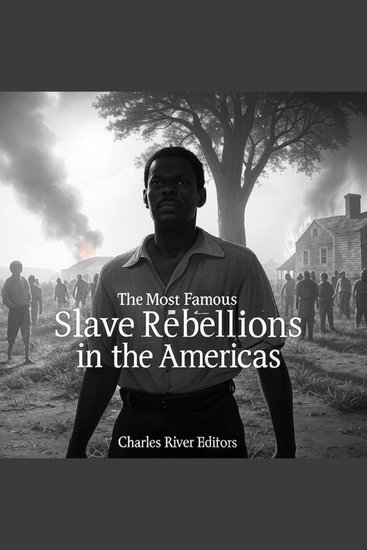
  • The Most Famous Slave Rebellions in the Americas - The History of Important Uprisings across the Western Hemisphere - cover

    The Most Famous Slave Rebellions...

    Editors Charles River

    • 0
    • 0
    • 0
    By the 16th century, slaves were being imported to Hispaniola, and over the next few centuries, the population of African slaves came to represent a sizable majority of the population there. This would set the stage for one of history’s most unique revolutions in Haiti.  
    As the issue of slavery roiled the U.S., few people became as controversial or consequential as Nat Turner, who was one of millions of slaves in the South before the Civil War but ultimately led the nation’s most notorious slave uprising. In August 1831, Turner led a rebellion that terrorized Virginia for several days, killing dozens of whites and freeing slaves as his band moved from plantation to plantation. The Richmond Enquirer reported, “A fanatic preacher by the name of Nat Turner (Gen. Nat Turner) who had been taught to read and write, and permitted to go about preaching in the country, was at the bottom of this infernal brigandage. He was artful, impudent and vindicative, without any cause or provocation, that could be assigned.” Even after the uprising was put down, Turner evaded capture for a few months, and after he was captured, his “confessions” were taken down and published before he was executed. Virginia would put a total of 56 slaves to death for the uprising. 
    	While Turner’s rebellion remains famous today, a far larger uprising took place a generation earlier. In January 1811, hundreds of slaves in Louisiana attempted to make a new beginning for themselves or die trying. Armed with muskets, cane knives, and axes, and wearing stolen United States militia uniforms, they set out to conquer the city of New Orleans. The goal was to establish a free republic where slavery was outlawed and blacks had control over their own lives. Understandably discontented with their status and no longer willing to accept it, they were ready to engage in extreme violence to win their freedom, fully aware that death would be the only alternative. 
    Mostra libro
  • The False Promise of Superiority - The United States and Nuclear Deterrence after the Cold War - cover

    The False Promise of Superiority...

    James H. Lebovic

    • 0
    • 0
    • 0
    This political analysis exposes the fanciful logic that the United States can use nuclear weapons to vanquish nuclear adversaries or influence them when employing various coercive tactics. 


    During the Cold War, American policymakers sought nuclear advantages to offset an alleged Soviet edge. Policymakers hoped that US nuclear capabilities would safeguard deterrence, when backed perhaps by a set of coercive tactics. But policymakers also hedged their bets with plans to fight a nuclear war to their advantage should deterrence fail. In The False Promise of Superiority, James H. Lebovic argues that the US approach was fraught with peril and remains so today. He contends that the United States can neither simply impose its will on nuclear adversaries nor safeguard deterrence using these same coercive tactics without risking severe, counterproductive effects. As Lebovic shows, the current faith in US nuclear superiority could produce the disastrous consequences that US weapons and tactics are meant to avoid. This book concludes that US interests are best served when policymakers resist the temptation to use, or prepare to use, nuclear weapons first or to brandish nuclear weapons for coercive effect.
    Mostra libro
  • Down These Green Streets - Irish Crime Writing in the 21st Century - cover

    Down These Green Streets - Irish...

    Declan Burke

    • 0
    • 1
    • 0
    This book suggests crime fiction is now the most relevant and valid form of writing which can deal with modern Ireland in terms of the post-'Troubles' landscape and post-Celtic Tiger economic boom. The book takes a chapter by chapter approach with each chapter and author discussing a different facet of Irish crime writing for example, Declan Hughes discusses the influence of American culture on Irish crime writing and Tana French reflects on crime fiction and the post-Celtic Tiger Irish identity. This publication is aimed at both the academic and general reader.
    Mostra libro
  • Classic Movie Radio Commercials - Volume 2 - cover

    Classic Movie Radio Commercials...

    Various Various

    • 0
    • 0
    • 0
    This fascinating audio program includes actual radio commercials from the 1960s and 1970s for the following classic movies: Barbarella (1968), directed by Roger Vadim, featuring Jane Fonda, John Phillip Law, Anita Pallenberg; Bunny Lake Is Missing (1965), directed by Otto Preminger, featuring Laurence Olivier, Carol Lynley, Keir Dullea; Chappaqua (1966), directed by Conrad Rooks, featuring Conrad Rooks, William S. Burroughs, Jean-Louis Barrault; Endless Summer (1965), directed by Bruce Brown, featuring Robert August, Michael Hynson, Lord James Blears; Seaside Swingers(1964), directed by James Hill, featuring John Leyton, Michael Sarne, Peter Birrell; The Green Slime (1968), directed by Finji Fukasaku, featuring Robert Horton, Luciana Paluzzi; Hells Angels On Wheels (1967), directed by Richard Rush, featuring Adam Roarke, Jack Nicholson; Help!(1965), directed by Richard Lester, featuring The Beatles; How I Won The War (1967), directed by Richard Lester, featuring Michael Crawford, John Lennon; I Am A Groupie (1970), directed by Derek Ford, featuring Esme Johns, Billy Boyle; Luv (1967), directed by Clive Donner, featuring Jack Lemmon, Peter Falk; Monterey Pop (1968), directed by D.A. Pennebaker, featuring Jimi Hendrix, The Mamas and the Papas; The Pied Piper (1972), directed by Jacques Demy, featuring Donovan, Donald Pleasence; Don't Make Waves (1967), directed by Alexander Mackendrick, featuring Sharon Tate, Claudia Cardinale; The Good, The Bad And The Ugly (1966), directed by Sergio Leone, featuring Clint Eastwood, Eli Wallach, Lee Van Cleef; The Producers (1967), directed by Mel Brooks, featuring Zero Mostel, Gene Wilder; Thunderball (1965), directed by Terence Young, featuring Sean Connery, Claudine Auger; Wild In The Streets (1968), directed by Barry Shear, featuring Christopher Jones, Shelley Winters; Yellow Submarine (1968), directed by George Dunning, featuring The Beatles.
    Mostra libro
  • Twilight Prisoners - The Rise of the Hindu Right and the Fall of India - cover

    Twilight Prisoners - The Rise of...

    Siddhartha Deb

    • 0
    • 0
    • 0
    An incisive, lyrical, and deeply reported account of India's descent into authoritarianism. 


    Traveling across India, interviewing Hindu zealots, armed insurgents, jailed dissidents, and politicians and thinkers from across the political spectrum, Siddhartha Deb reveals a country in which forces old and new have aligned to endanger democracy. The result is an absorbing—and disturbing—portrait. India has become a religious fundamentalist dystopia, one depicted here with a novelist's precise language and eye for detail. 


    Prime Minister Narendra Modi and his party—a formation explicitly drawing on European fascism—has deftly exploited modern technologies, the media, and market forces to launch a relentless campaign on minorities, women, dissenters, and the poor. Deb profiles these people, as well as those fighting back, including writers, scholars, and journalists. Twilight Prisoners sounds the alarm now that the world's largest democracy is under threat in ways that echo the fissures in the United States, United Kingdom, and so-called democracies the world over.
    Mostra libro