
Unisciti a noi in un viaggio nel mondo dei libri!
Aggiungi questo libro allo scaffale
Grey
Scrivi un nuovo commento Default profile 50px
Grey
Iscriviti per leggere l'intero libro o leggi le prime pagine gratuitamente!
All characters reduced
Conquer Chess - Simple Strategies for Everyman - cover

Conquer Chess - Simple Strategies for Everyman

Pasquale De Marco

Casa editrice: Publishdrive

  • 0
  • 0
  • 0

Sinossi

In "Conquer Chess: Simple Strategies for Everyman," aspiring chess players embark on a journey to master the game's intricacies and emerge victorious. This comprehensive guidebook, written with an American audience in mind, provides a structured and accessible approach to learning chess, catering to players of all skill levels.

Through clear explanations, illustrative examples, and expert insights, "Conquer Chess" unravels the complexities of openings, middlegames, and endgames, empowering readers to navigate the chessboard with confidence and skill. The book delves into the art of tactics, the psychology of the game, and the effective use of pawns, providing readers with a well-rounded understanding of chess strategy.

More than just a collection of strategies, "Conquer Chess" ignites a passion for the game, revealing its elegance, depth, and capacity to challenge and reward. It highlights the beauty of chess as a game that transcends age, culture, and language, connecting minds across generations and fostering a sense of camaraderie among players worldwide.

With "Conquer Chess" as their guide, readers will embark on a journey of intellectual discovery and triumph. They will learn to identify and exploit weaknesses, capitalize on advantages, and deliver checkmate with precision. This book is not just a manual for winning chess games; it's an invitation to join a global community of chess enthusiasts, united by a shared appreciation for the game's beauty and complexity.

Whether you're a novice yearning to make your first move or an experienced player seeking to refine your skills, "Conquer Chess: Simple Strategies for Everyman" is your gateway to chess mastery. This book will equip you with the knowledge, strategies, and mindset to conquer the chessboard and leave your mark in the world of chess.


If you like this book, write a review!
Disponibile da: 02/06/2025.
Lunghezza di stampa: 164 pagine.
Altri libri che potrebbero interessarti

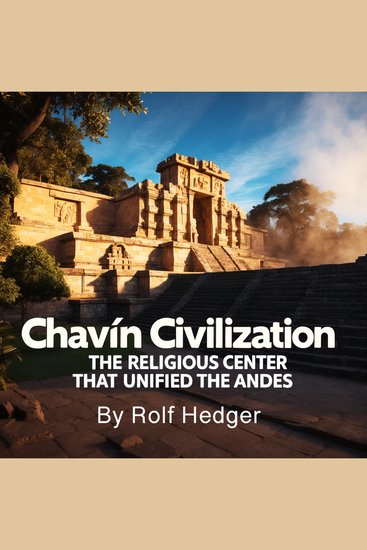
  • Chavín Civilization - The Religious Center That Unified the Andes - cover

    Chavín Civilization - The...

    Rolf Hedger

    • 0
    • 0
    • 0
    The Chavín civilization, one of the earliest and most influential cultures of ancient Peru, emerged in the Andean highlands around 900 BCE. It was a formative force in pre-Columbian history, laying the groundwork for later civilizations that dominated the region. The rise of Chavín was deeply connected to its strategic location, the innovations of its people, and the unique blend of religious and cultural influences that shaped its identity. 
    The Andean region, with its diverse geography of mountains, valleys, and coastal plains, played a crucial role in the development of early societies. The people who would come to form the Chavín civilization first settled in highland areas, where they mastered agricultural techniques suited to the challenging environment. The cultivation of staple crops such as maize, potatoes, and quinoa allowed for population growth and the establishment of permanent settlements. Llamas and alpacas provided transportation, wool, and meat, further supporting the stability of these early communities. Over time, these settlements evolved into more complex societies, characterized by social hierarchies and specialized labor. 
    One of the key factors that contributed to the emergence of the Chavín civilization was its strategic position at the crossroads of major trade routes. Chavín de Huántar, the civilization’s most important ceremonial center, was located in a valley that connected the coast, highlands, and jungle regions. This prime location allowed Chavín culture to serve as a unifying force in the Andes, facilitating the exchange of goods, ideas, and religious beliefs among different groups. As traders and pilgrims traveled to Chavín de Huántar, they encountered a sophisticated society with an advanced knowledge of art, architecture, and religion, all of which helped spread Chavín influence throughout the region.
    Mostra libro
  • The Spirit of VW - 50 reasons why we love them - cover

    The Spirit of VW - 50 reasons...

    Vaughan Grylls

    • 0
    • 0
    • 0
    A fascinating exploration of VW, one of the most revered and enduring international car brands, with dynamic photography and insightful text that explains why we love them and why you should want to own one.
    With a second-to-none reputation for reliability, innovation and style, Volkswagen is one of the world's best-loved car manufacturers. From the adorable and unforgettable Type One, otherwise known as the Beetle or Bug, which reached huge heights of popularity in the 1960s, to today's groundbreaking hybrid and electric vehicles, good design has always been at the forefront of VW's philosophy.
    This fascinating book, written by a long-time VW fanatic who is also an expert in art and design, traces the development of Volkswagen design throughout the years, examining the most exciting and stylish models – not only the Beetle but the huge range of family cars, camper vans, SUVs and modern city cars the company has produced throughout the years, and not forgetting the iconic Golf GTI.
    The perfect gift for the car aficionado in your life, whether they own a VW or not, this fun and quirky book explores everything that's great about this classic brand.
    Mostra libro
  • Cask Strength - The Story of the Barrel the Secret Ingredient in Your Drink - cover

    Cask Strength - The Story of the...

    Mike Gerrard

    • 0
    • 0
    • 0
    From its first use by the Ancient Egyptians, the barrel has left an unmistakable imprint on human history. The Romans used the barrel in all corners of their vast empire, and explorers could not have charted the globe or opened up trade routes without barrels to store their food and water. And in all its thousands of years of use, the barrel's basic design has barely changed at all—a testament to its sheer and simple perfection. 


    Cask Strength is more than a history book. In it, Mike Gerrard, an award-winning travel and drinks writer, investigates the making, buying, and selling of barrels and details how drinks like wine, tequila, rum, cognac, and others are enhanced by specific kinds of barrel production. 


    Today, modern distillers, brewers, and wine-makers continue to use barrels in new, creative ways—with the barrel providing up to 60-70% of their flavors. Without the barrel, we would have no bourbon, no oak-aged chardonnay, no barrel-aged stouts . . . and no tabasco sauce, either. 


    Gerrard's expertise and palpable passion for good beverages interestingly made will ignite the curiosities of booze fans and history buffs alike as Cask Strength traces the simple splendor of the barrel.
    Mostra libro
  • Cannabis and the Christian - What the Bible Says about Marijuana - cover

    Cannabis and the Christian -...

    Todd Miles

    • 0
    • 0
    • 0
    What does the Bible say about marijuana? If it doesn’t directly address marijuana, how can Christians know what to make of the legalization of recreational cannabis and the advocacy of medical marijuana?  In the past, Christians could easily answer the question of whether or not it was permissible to use cannabis by deferring to state prohibitions. We could simply say, “it’s against the law.” Today, that answer is no longer possible. Christians are now forced to do what they should have been doing all along: Think like disciples of the Lord Jesus Christ and bring to bear the wisdom of the sufficient Word of God.   Since cannabis is not explicitly mentioned in the Bible, we must understand what it is and how it affects the user. We also must understand what the Bible says about discipleship, healing, suffering, and what it is to be human. Only then can we answer the critical questions regarding the recreational use and the medical use of cannabis.  In Cannabis and the Christian, Todd Miles gives listeners:  Biblical wisdom applied to the question of recreational cannabis  Biblical wisdom related to the medical use of cannabis  A grid to think through other ethical questions that aren’t directly addressed in the Bible  Confidence to respond to challenging issues standing on the sufficient Word of God
    Mostra libro
  • Satavahana Empire - Buddhism Trade and the Power of the Deccan - cover

    Satavahana Empire - Buddhism...

    Rolf Hedger

    • 0
    • 0
    • 0
    The Satavahana Empire, one of the earliest and most influential dynasties in ancient India, emerged in the Deccan region after the decline of the Mauryan Empire. The origins of the Satavahanas remain a subject of historical debate, but they are believed to have belonged to the Andhra region, gaining prominence as local chieftains before consolidating their rule into a powerful dynasty. Their rise marked a significant transition in Indian history, bridging the gap between the Mauryan administration and later regional powers. 
    The early history of the Satavahanas is primarily reconstructed through inscriptions, numismatic evidence, and references in ancient texts. The Puranas mention them as the Andhra dynasty, while inscriptions such as the Naneghat and Nasik inscriptions provide valuable insights into their rulers and governance. The first known ruler of the dynasty, Simuka, is credited with establishing Satavahana rule by overthrowing remnants of Mauryan authority in the Deccan and expanding his control over parts of present-day Maharashtra, Telangana, and Andhra Pradesh. His successors continued to strengthen the empire, laying the foundation for centuries of Satavahana dominance. 
    Following Simuka, his brother and successor Krishna further expanded the territory, but it was under the reign of Satakarni I that the empire gained considerable power. Satakarni I led successful military campaigns, extending his influence northward to the Narmada region and challenging the Shunga and Kshatrapa rulers. His achievements were commemorated in inscriptions and coins, some of which depict him performing Vedic sacrifices such as the Ashvamedha, indicating his aspirations for imperial legitimacy. This period also saw the Satavahanas emerging as key players in trade, administration, and culture, integrating diverse communities into their governance system.
    Mostra libro
  • The Passenger: Rome - cover

    The Passenger: Rome

    Passenger The

    • 0
    • 0
    • 0
    The best new writing, photography, art, and reportage from and about Rome—in the series that’s “like a literary vacation” (Publishers Weekly). 
     
    If you believe recent chatter about Rome—in the media and by its residents—the city is on the verge of collapse. Each year, it slips further down the ranking of the world’s most livable cities. To the problems faced by all large capitals—hit-and-run tourism, traffic, the divide between elegant, Airbnb-dominated city centers and run-down suburbs—in recent years Rome seems to have added a list of calamities of its own: a string of failing administrations, widespread corruption, the resurgence of fascist movements, rampant crime. A seemingly hopeless situation, perfectly symbolized by the fact that Rome currently leads the world in the number of self-combusting public buses. 
     
    One might expect mass migration in the face of problems like these—yet the vast majority of Romans don’t think for a second of “betraying” their hometown, and the many newcomers who’ve populated it in recent decades resemble the natives in the profound love that binds them to the city. 
     
    The largest metropolis in Europe is a place of contradictions and opposites. We think of it as ancient, but it is profoundly modern—it was founded almost three millennia ago, but 92 per cent of its buildings have been built after 1945. To understand Rome and fix its problems, we should start considering it a normal city, not unlike Chicago or Manchester . . . just incomparably more beautiful. This volume is filled with portraits of Rome and thoughts not just on its famous past but its present and future, including: 
     
    Rome doesn’t judge you by Nicola Lagioia · The soul of the city by Matteo Nucci · 39 memos for a book about Rome by Francesco Piccolo · Plus: a guide to the sounds of Rome by Letizia Muratori; the feigned unrest and real malaise of the suburbs; the influence of the Vatican; the excessive power of real estate speculators and the rule of gangs; disillusioned trappers; football fans of every age, and much more . . .  
     
    “A pleasure to read.” —La Repubblica
    Mostra libro