Rejoignez-nous pour un voyage dans le monde des livres!
Ajouter ce livre à l'électronique
Grey
Ecrivez un nouveau commentaire Default profile 50px
Grey
Abonnez-vous pour lire le livre complet ou lisez les premières pages gratuitement!
All characters reduced
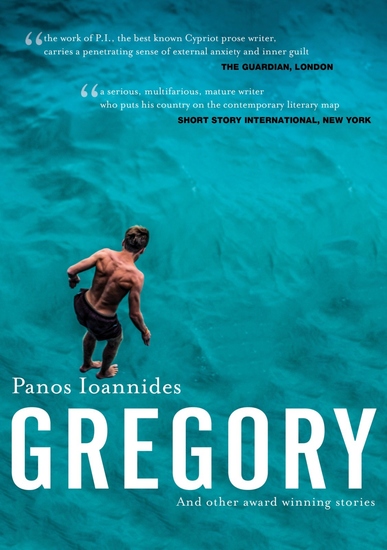
GREGORY and other stories - cover

GREGORY and other stories

Panos Ioannides

Maison d'édition: Armida Publications

  • 0
  • 11
  • 0

Synopsis

A translation of twelve award-winning short stories and novellas.
 
Gregory, The Bath, Uniforms, The Suitcase and The Escape have been adapted for the theater by the author and staged in theaters in Cyprus and abroad (such as Greece, England, USA and Germany) whereas all the short stories have been included in prestigious anthologies such as Short Story International, Sudden Fiction and others.
 
---
 
The prose works of P.I. reveal a serious, multifarious, mature writer who puts his country on the contemporary literary map. - Sylvia Tankel, Short Story International, New YorkThe work of P.I., the best known Cypriot prose writer, carries a penetrating sense of external anxiety and inner guilt. - Nik Skins & Mike Theodoulou, The Guardian, London
 
His Cyprus is a landscape made up of sleeper-agents and spies, of morally confused executioners and slippery leaders. His stories stretch back hundreds, sometimes thousands of years, and yet they always tackle contemporary themes. This collection deserves to spread its wings and travel much further than the sandy shores of the island of Cyprus. Because despite the highly localised nature of these stories, the themes are universal, just like Homer’s. -A J Kirby, The Short Review
 
---
 
GREGORIOS AND EFTHYMIOS
 
A St. Bartholomew night of massacre carried out in Medieval Cyprus by edict of the Pope and of the Vatican. A satanic intrigue masterminded by the Pope and the Vatican led to a bloodbath and the mutual annihilation of the military Orders of the Knights Templar and the Knights Hospitallers in enslaved Medieval Cyprus. Long before Dan Brown discovered and revealed The Da Vinci Code...
 
KYPRIANI
 
Slave woman and wet nurse, Kypriani exacts revenge on the Ottoman invaders and occupiers of her homeland, Venetian Cyprus of the Middle Ages, by spreading leprosy to newborns during breastfeeding.
 
GREGORY
 
The friendship, which develops between a group of EOKA guerrilla fighters and their British hostage Gregory, does not prevent them from executing him when the order arrives. Yet ignoring the order to place his body on public display, as an example, they bury their friend and victim.The short story has been translated and published in dozens of languages, including Braille.
 
VAGABOND STREET
 
Vagabond Street, a road and sanctuary inhabited only by people incurably damaged by war.
 
THE UNIFORMS
 
Can uniforms worn as camouflage, at a moment of deadly peril, by two young people from enemy camps - a young Turkish woman and a Greek Cypriot soldier – magically transform them into siblings, or mother and son? The answer given in the story is a poignant “yes”. 
 
THE UNSEEN ASPECT
 
An old refugee from Lapithos, Cyprus, and his granddaughter, live on a wasteland, a place of skulls, locked in an epic and tragic struggle with nature, in a defeat and a victory reminiscent of Hemingway’s classic novel “The Old Man and the Sea.” The short story has been translated into dozens of languages including Chinese. 
Disponible depuis: 25/10/2018.

D'autres livres qui pourraient vous intéresser

  • Time suspended in Nice - cover

    Time suspended in Nice

    Guillaume ROBIN

    • 0
    • 0
    • 0
    Summary: 
    “Some encounters can change a life.” Under the sun of Place Massena, two souls meet and talk. Between anecdotes about the city and shared moments, Davie and Léa explore the alleyways, iconic squares, and hidden gems of Nice together. A tender and lively interactive stroll, where every corner of Nice becomes a witness to the first steps of a budding friendship. 
    A Next-Generation Audio experience ! With an English audio tour, discover Nice for the first time in real time on a one-hour walking tour of five iconic locations, accessible at your own pace: starting at the Fontaine du Soleil in Place Masséna, then strolling through Old Nice, visiting Place Garibaldi, descending to Port Lympia, and returning along the Promenade des Anglais to your starting point. 
    It's an immersive experience where you don't just listen to a story, you live it. 
    When you purchase this experience, you follow the adventures of David and Léa, two strangers who meet in Nice and discover the city together. You hear the dialogue as if you were there. Each chapter is designed to be interactive : you can pause at any time and progress at your own pace, as if you were following the story while walking through the city. You discover the city, its alleyways, squares, and secrets as the story unfolds, all while remaining in control of your journey. The sounds you hear are the real noises of the city (fountains, footsteps, trams, crowds, etc.). You experience the moment alongside the characters in the story. 
    It's a romantic and sensory adventure, where you discover both the history and the secrets of the city through their eyes. In short, it's not just a book or a podcast: it's a new kind of walk, fully immersive and interactive. You are at the heart of the story, not just a spectator.
    Voir livre
  • Count of Monte Cristo The (version 3) - cover

    Count of Monte Cristo The...

    Alexandre Dumas

    • 0
    • 0
    • 0
    Le Comte de Monte-Cristo is an adventure novel and one of the author's most popular works. He completed the work in 1844. The story takes place in France, Italy, islands in the Mediterranean and in the Levant during the historical events of 1815-1838 (from just before the Hundred Days to the reign of Louis-Philippe of France). It deals with themes of hope, justice, vengeance, mercy and forgiveness. The book is considered a literary classic today. (Summary by David Clarke, ref. Wikipedia)
    Voir livre
  • Demir-Kaya - From their pens to your ears genius in every story - cover

    Demir-Kaya - From their pens to...

    Alexander Kuprin

    • 0
    • 0
    • 0
    Alexander Kuprin was born in Narovchat, Penza in Russia on 7th September 1870. 
    At 3 his Father died and he and mother moved to Moscow. By 10 he was enrolled at the Second Moscow Military High School and there his interest in literature began. The Alexander Military Academy followed and two years later he was a sub-lieutenant and posted to an Infantry Regiment for a further four years. 
    Despite his duties he was a now a keen writer and published his first short story at this time. His military duties also garnered him experiences for his breakthrough work ‘The Duel’.  Leaving the military he left for Kiev to work for local newspapers.  He continued to publish both stories and novels and by 1901 he was in St Petersburg becoming part of a group that included Chekhov, Ivan Bunin, Maxim Gorky and Leonid Andreyev.  
    In the years that followed further controversial works and acclaim followed.  His comments on the regime meant he was also put under secret police surveillance.   
    As World War I erupted, Kuprin opened a military hospital but was then given command of an infantry company in Finland. He was soon discharged on grounds of ill health.  
    The October Revolution saw him praise Lenin, but he warned that the Bolsheviks threatened Russian culture and might cause further widespread suffering to the peasants.  As Civil War raged he took his family to Helsinki and then on to Paris. 
    Exile saw his talents decline further and his succumbing to alcoholism. He became lonely and withdrawn. The family's poverty increased his malaise.   
    In May 1937, the Kuprin’s returned to Moscow.  He now saw his work published but wrote almost nothing new.  In 1938 his health rapidly deteriorated.  Already suffering from a kidney problems and sclerosis, he had now developed cancer of the oesophagus.  
    Alexander Kuprin died on 25th August 1938.
    Voir livre
  • A Cullenden of Virginia - From their pens to your ears genius in every story - cover

    A Cullenden of Virginia - From...

    Thomas Wolf

    • 0
    • 0
    • 0
    Thomas Clayton Wolfe was born at the family home, 92 Woodfin Street, in Asheville, North Carolina on October 3rd, 1900.  
    Aged 15, Wolfe began his studies at the University of North Carolina at Chapel Hill (UNC) where he enrolled in a playwriting course. Wolfe graduated in 1920 and enrolled at the Graduate School for Arts and Sciences at Harvard. Here he studied playwriting under the tutelage of George Pierce Baker. In 1922 he received his master's degree from Harvard.  
    Wolfe now began the transition from studying to commercial playwright. He went to New York in November, 1923 trying to sell his plays to Broadway.  The Theatre Guild came close to producing Welcome to Our City but in the end declined.  Wolfe now believed his style of writing was more suited to fiction.  Grasping the opportunity this afforded him he sailed to England in October 1924 to write and from there on to France, Italy and Switzerland. 
    In 1926 Wolfe began writing a novel, O Lost. This would eventually become Look Homeward, Angel. It was based on his years in Asheville. The original manuscript of O Lost was over 1100 pages. Maxwell Perkins, one of the great book editors of the age, worked at his publishers, Scribner’s and he began to focus the book, cutting and re-shaping it to center it on the character of Eugene.   
    The novel was published in 1929. It was a success.   
    Wolfe now committed the next 4 years to writing a multi-volume epic entitled The October Fair.  At Scribner’s Perkins once more decided to edit it down to a single volume; Of Time and the River.  It was even more successful than his first. It was hailed as the literary event of 1935 and cemented his reputation as one of America’s foremost novelists.  
    In 1938, after submitting his new opus, which ran to an incredible one million words, to his new editor, Edward Aswell, Wolfe left to tour the West, a part of the country he had never before visited. Whilst travelling Wolfe became ill with pneumonia and spent three weeks in a Seattle hospital. Complications arose. The prognosis was serious.  He was diagnosed with miliary tuberculosis of the brain. 
    On September 6th, he was sent to Baltimore's Johns Hopkins Hospital for treatment. The ensuing operation revealed that the disease had overrun the entire right side of his brain.  
    Thomas Clayton Wolfe never regained consciousness and died shortly before his 38th birthday on September 15th, 1938.
    Voir livre
  • The Shambler from the Stars - cover

    The Shambler from the Stars

    Robert Bloch

    • 0
    • 0
    • 0
    🎬 Experience the atmospheric visual edition plus narrator intro and outro of this tale by searching 'Jonathan Dunne Horror' on YouTube.  
    Title: The Shambler from the Stars 
    Author: Robert Bloch 
    Narrator: Jonathan Dunne 
    Original Publication: 1935 
    Public Domain: Yes 
    Series: Timeless Terrors 
    Number: 112 
    Description: 
    The Shambler from the Stars is a chilling tale of cosmic horror, forbidden knowledge, and the unknowable forces that lurk just beyond human perception. 
    Set in a world teetering between reality and nightmare, the story follows a scholar who uncovers fragments of an ancient, otherworldly text. As he delves deeper into its secrets, he begins to sense a presence — alien, malevolent, and utterly indifferent to mankind. Strange phenomena begin to manifest: unsettling visions, inexplicable events, and an escalating sense of dread that nothing in the natural world can explain. 
    Bloch’s prose masterfully conjures a universe of creeping terror, where the ordinary bends under the weight of the extraordinary. Beneath the surface horror lies a meditation on humanity’s vulnerability to forces it cannot comprehend — the peril of curiosity and the lure of forbidden knowledge. 
    Narrated by Amazon-bestselling horror author Jonathan Dunne, this performance captures the mounting dread, cosmic unease, and dark elegance of Bloch’s vision. The Shambler from the Stars is a haunting journey into the limits of perception, where the stars themselves may conspire against those who dare to look too closely.
    Voir livre
  • A Man with Two Lives - From their pens to your ears genius in every story - cover

    A Man with Two Lives - From...

    Ambrose Bierce

    • 0
    • 0
    • 0
    Ambrose Gwinnett Bierce was born on 24th June 1842 at Horse Cave Creek in Meigs County, Ohio. His parents were poor but they introduced him to literature at an early age, instilling in him a deep appreciation of books, the written word and the elegance of language.  
    Growing up in Koscuisko County, Indiana poverty and religion were defining features of his childhood, and he would later describe his parents as “unwashed savages” and fanatically religious, showing him little affection but always quick to punish. He came to resent religion, and his introduction to literature appears to be their only positive effect. 
    At age 15 Bierce left home to become a printer’s devil, mixing ink and fetching type at The Northern Indian, a small Ohio paper. Falsely accused of theft he returned to his farm and spent time sending out work in the hopes of being published. 
    His Uncle Lucius advised he be sent to the Kentucky Military Institute. A year later he was commissioned as an Officer.  As the Civil War started Bierce enlisted in the 9th Indiana Infantry Regiment.  
    In April 1862 Bierce fought at the Battle of Shiloh, an experience which, though terrifying, became the source of several short stories. Two years later he sustained a serious head wound and was off duty for several months. He was discharged in early 1865.  
    A later expedition to inspect military outposts across the Great Plains took him all the way to San Francisco. He remained there to become involved with publishing and editing and to marry, Mary Ellen on Christmas Day 1871.  They had a child, Day, the following year.  
    In 1872 the family moved to England for 3 years where he wrote for Fun magazine. His son, Leigh, was born, and first book, ‘The Fiend’s Delight’, was published.  
    They returned to San Francisco and to work for a number of papers where he gained admiration for his crime reporting. In 1887 he began a column at the William Randolph Hearst’s San Francisco Examiner.  
    Bierce’s marriage fell apart when he discovered compromising letters to his wife from a secret admirer. The following year, 1889 his son Day committed suicide, depressed by romantic rejection. 
    In 1891 Bierce wrote and published the collection of 26 short stories which included ‘An Occurrence at Owl Creek Bridge’.  Success and further works including poetry followed.  
    Bierce with Hearst’s resources helped uncover a financial plot by a railroad to turn 130 million dollars of loans into a handout. Confronted by the railroad and asked to name his price Bierce answered “my price is $130 million dollars. If, when you are ready to pay, I happen to be out of town, you may hand it over to my friend, the Treasurer of the United States”.  
    He now began his first foray as a fabulist, publishing ‘Fantastic Fables’ in 1899.  But tragedy again struck two years later when his second son Leigh died of pneumonia relating to his alcoholism.  
    He continued to write short stories and poetry and also published ‘The Devil’s Dictionary’.  
    At the age of 71, in 1913 Bierce departed from Washington, D.C., for a tour of the battlefields where he had fought during the civil war. At the city of Chihuahua he wrote his last known communication, a letter to a friend. It’s closing words were “as to me, I leave here tomorrow for an unknown destination,” Ambrose Bierce then vanished without trace.
    Voir livre